Acrobat Reader is a PDF viewer and converter, available as a free download from Adobe. Users can view, sign, collaborate on and annotate PDF files, or edit and convert PDFs into file formats like Excel and Word.
N/A
Bluebeam
Score 9.1 out of 10
N/A
Bluebeam Revu is a PDF management, control, and editing tool. It enables collaboration and markup within shared documents across projects’ life cycles and has takeoff and bid creation capabilities.
$349
per seat
Pricing
Adobe Acrobat Reader
Bluebeam
Editions & Modules
No answers on this topic
Revu Standard
$349
per seat
Revu CAD
$449
per seat
Revu eXtreme
$599
per seat
Offerings
Pricing Offerings
Adobe Acrobat Reader
Bluebeam
Free Trial
No
Yes
Free/Freemium Version
No
No
Premium Consulting/Integration Services
No
No
Entry-level Setup Fee
No setup fee
No setup fee
Additional Details
—
—
More Pricing Information
Community Pulse
Adobe Acrobat Reader
Bluebeam
Considered Both Products
Adobe Acrobat Reader
No answer on this topic
Bluebeam
Verified User
Anonymous
Chose Bluebeam
I believe Bluebeam is actually easier to learn and use versus Adobe Acrobat. With it’s how to videos and great customer support, there’s basically not a problem that cannot be figured out. As far as PDF modification, I believe Bluebeam’s tools and screen configuration is very …
After creating a document, converting it into Adobe Acrobat Reader is usually very easy for storage in my computer, sending/sharing via emails, etc. This also saves a significant amount of unnecessary printing and paper waste, which is great for reducing waste. I don't have to worry about not having the right software/app to view, edit, and share with anyone.
As stated before, the mobile application is a great companion to the desktop version. Either one works great in viewing, editing and saving documents. While the measurement tool is handy to have, we have found the precision to be lacking when measuring scaled drawings (construction design drawings). While it is a good rough place to start for measurements, we wouldn't recommend relying on the precision of the measurements taken on something with a very large scale.
Edit PDFs. One of the biggest challenges faced in document heavy workflows is editing a PDF. Adobe Reader DC does a fantastic job of allowing you to edit pdfs on the fly without having to go back to the original form and reconverting it.
Sign PDFs. I spend a lot of time signing contracts and approval forms. Adobe Reader DC allows me to do that quickly without having to use my mouse or another third party platform. I can do all I need right in the Adobe Reader DC workflow.
Merge PDFs. I find quite often that I need to put two or more documents together in one form. I can do that with just a few clicks in the Adobe Reader DC merge workflow.
If you have several tabs open and you try to drag one out for a side by side view then you do not have all the modification options and you have to combine them back together.
There is a lag time when hitting the print option.
There is also a lag time when opening files, sometimes I think the window is frozen.
I wish the basic version also had basic file editing, as in editing a document as Adobe does.
To be honest, I do not have any say in the renewal of Adobe Acrobat Reader DC. It is managed at an enterprise level, and the decision to renew or not renew is handled well above my pay grade as an external consultant.
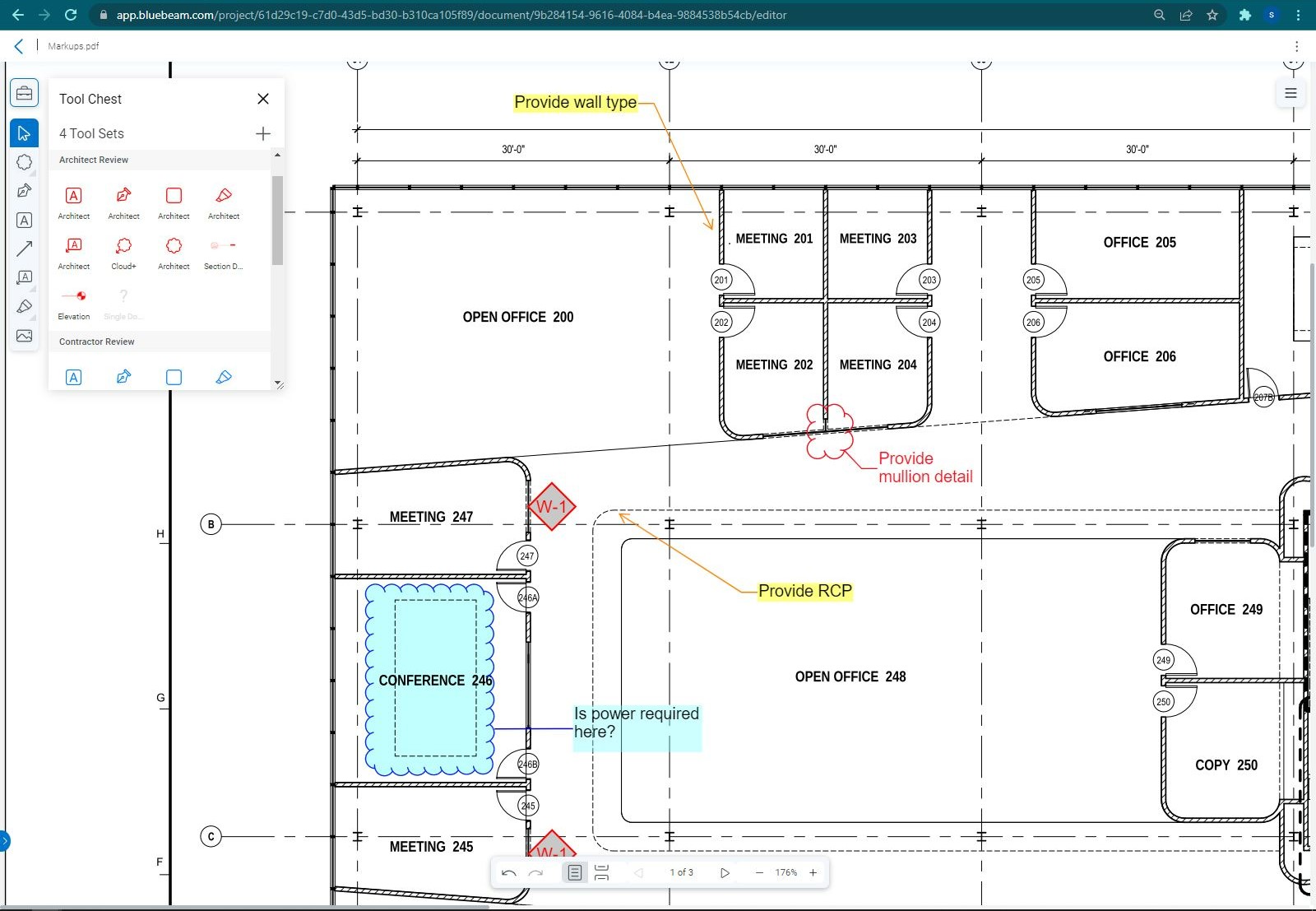
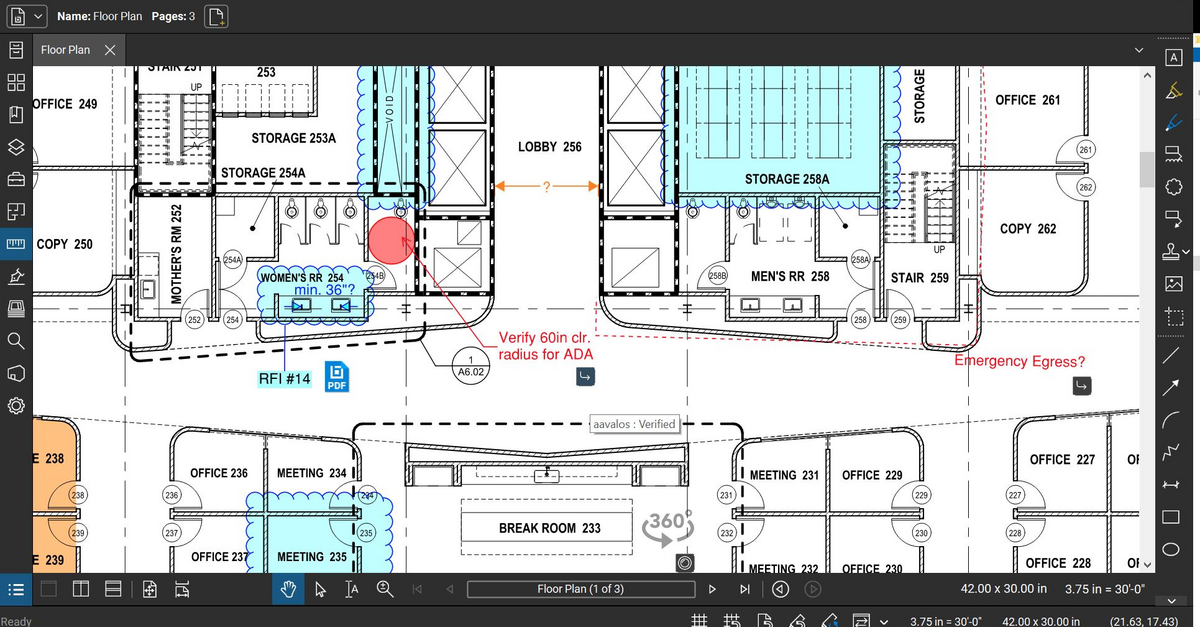
Bluebeam is a powerful PDF viewer and mark-up tool. We are more familiar with it than Adobe Acrobat Pro or other viewers, and it has more features geared towards construction document managers than Acrobat Pro does.
Again, Adobe Creative Suite is widely used and backed by an industry leader, making the experience very familiar and common for anyone who has used a PDF and wants more features to interact with it. It also makes copy text a lot easier than just previewing the file.
I'm constantly finding that Bluebeam Revu does more than I knew it could. And when I find something that it can't do, I've found that Bluebeam truly listens to its user base and will work to incorporate any good suggestion when feasible.
Its hard for me to give a rating on this one as we rarely have to use the support feature for Bluebeam. However, when we have used it, they have been ultra supportive in helping us get exactly what we needed. I know another engineer was trying to figure out a feature and the rep gave a detailed tutorial on how to complete the task
The Word app included with Office 365 offers similar collaboration functionality when compared to Adobe reader but with the option to fully change the original document while reviewing. This is both an advantage and disadvantage when compared with the Adobe reader app. Documents left in the Microsoft Word format also have a tendency to appear different depending on screen size and device used and this can be frustrating for some users. Basically, if you need what you have created and formatted to stay put and to appear as you intended and be printed as you intended if needed, use the Adobe PDF format.
Bluebeam is a diverse program with many functions and tools, whereas competitive programs only specialize in one or few tasks. Although there are many tools within the program, users can still quickly learn how to use the program to best fit their needs. There is always a help tab for any assistance needed.
It has had positive impact in that it has save considerable costs vs. investing in cloud-based/subscription based software.
In terms of security, it also has had a positive impact, in that it doesn't really require IT staff to take the time to patch the software or work on issues with the software.
It has also had a positive impact in that it has not required formal training for users to be able to use the software.
A major positive aspect is being able to take your computer home without taking the entire set of paper drawings. They have made it so easy to navigate a set of drawings that I can work at home using only the digital drawings.
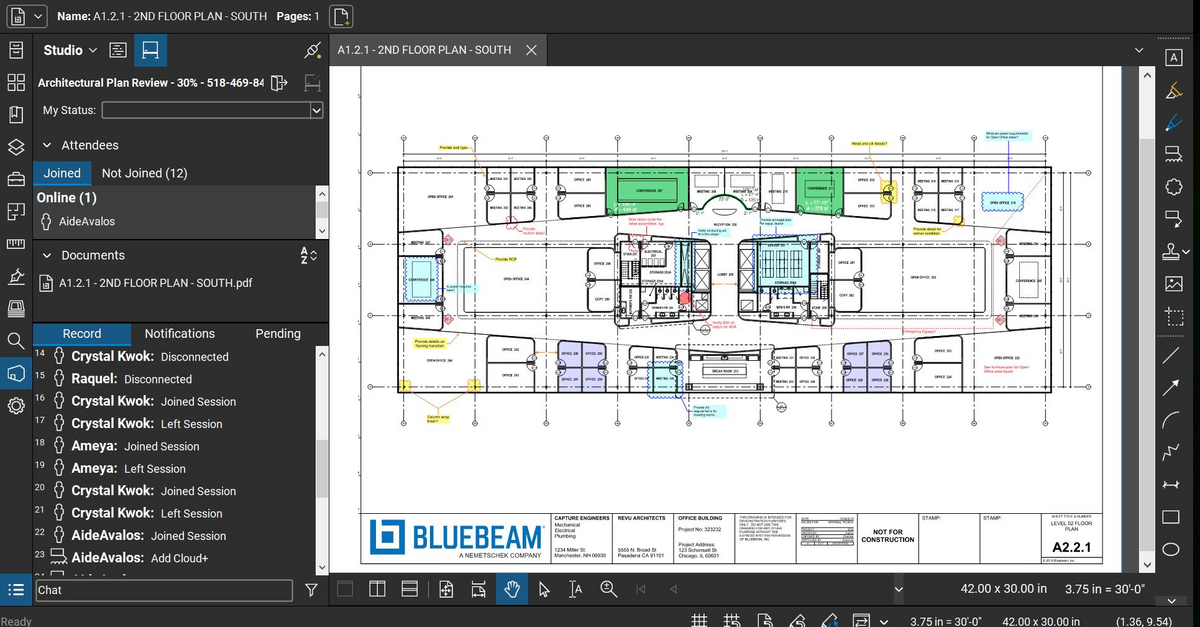
Collaboration with owners and architects has been a great feature. Setting up a Bluebeam studio and having everyone get in and mark things up, then having the architect be able to go in and see what markups have been added, has made the constructability review process much much better.
Even when not working on drawings, Bluebeam is a very good tool for working with standard PDF documents. The markup tools are very easy to use.
The negative aspect is the takeoff function because some people would like estimators to use the Bluebeam takeoff because it would make their job easier down the road; however, the actual act of doing a full scale takeoff in Bluebeam would require much more time.