
Bethany Williams
Multimedia Designer II
Chose Adobe XD
Adobe Illustrator CC, Adobe PhotoShop, Adobe InDesign and Adobe Acrobat

| Product | Rating | Most Used By | Product Summary | Starting Price |
|---|---|---|---|---|
 Adobe XD | N/A | Adobe XD is a prototyping and UX/UI option for website and mobile application design, featuring a range of UI tools and and templates, a versatile artboard and contextual layer panels, and deep integration with Adobe's creative suite of products for fast import of objects from these applications. | $33.99 per month per license | |
 InVision | N/A | InVision is a collaborative design and prototyping platform with features such as freehand drafting mode and interactive mockups, collaboration, idea management, user testing, and integration with Slack and other collaboration tools. According to the vendor, 1 million designers are using the free version. | $0 |
| Adobe XD | InVision | |||||||||||||||
|---|---|---|---|---|---|---|---|---|---|---|---|---|---|---|---|---|
| Editions & Modules |
|
| ||||||||||||||
| Offerings |
| |||||||||||||||
| Entry-level Setup Fee | No setup fee | No setup fee | ||||||||||||||
| Additional Details | — | — | ||||||||||||||
| More Pricing Information | ||||||||||||||||
| Adobe XD | InVision | |
|---|---|---|
| Considered Both Products |  Adobe XD Bethany Williams Multimedia Designer II Chose Adobe XD Adobe Illustrator CC, Adobe PhotoShop, Adobe InDesign and Adobe Acrobat  Parwinder Kumar Senior UX Designer Chose Adobe XD First off if we talk about Sketch, then Adobe XD has the upper hand because it supports both Windows and Apple Macintosh. Then coming on Axure RP, Adobe XD is far better than Axure. Because it comes with extensive features. Finally, about Figma, Figma is the only rival to Adobe …  Anmol Juneja UX Designer Chose Adobe XD Figma is also a very good product, but the reason we are still using Adobe XD is because we can grab this software and have multiple projects that are going on at the same time, so it's very hard for to move on to other software. ** The Repeat Grid Feature is super good and, in …  D Hendrik Mulyana DesignOps & Lead Chose Adobe XD If we compare with Sketch, I would still prefer Adobe XD. Sketch is a pioneer as a UI design tool, but the features and integration (without plugins) that Adobe XD provides are number 1, especially on the prototyping side.  Gonzalo Puig Content Team Manager Chose Adobe XD Before XD came to the company, screens were designed in Illustrator or Photoshop and a PDF presentation was generated, which was extremely time-consuming. XD saved us a lot of time (and money) by generating interactive prototypes, which are much more tangible for the client …  Noor Ul Huda Seller 1 Chose Adobe XD A little change in layout can lead to massive process in Wix, Although templates and ADI system is good it makes issues sometimes. ADOBE XD has more powerful tools than it and for a customized website, It works very well. basic designing particles in the library can be used …  Michael Prewitt Creative Director Chose Adobe XD Compared to Sketch, Adobe XD is perfectly capable for most prototyping needs that we have. And it's free! I am less familiar with Figma, but can only say that it was a cost-prohibitive choice at the time we were evaluating. I do believe that Figma has become more sophisticated …  Matthew Gardner Director of Customer Success Chose Adobe XD Highlighted previously, but Sketch is likely a better product. We have XD included in Creative Cloud so it was no additional cost, and half the team is on Windows. Otherwise would be paying for Sketch.  Andrew Folts Digital Strategist Chose Adobe XD I think in the next year XD will make Sketch irrelevant. It's sad to see giants like Adobe flat out copying independent companies, but it's hard to say no when XD is already included in my CC subscription. They have (mostly) the same features, so it's just a no-brainer.  Matt Railey Strategy & Design Practice Manager Chose Adobe XD We actually use Figma, Sketch, and InVision along with XD in our design practice. We mainly use XD on quick prototypes or experimentation for mobile projects. We always end up falling back to Sketch+InVision for our Design System Implementations and developer collaboration …  Chiyars Malhotra Android Developer Chose Adobe XD We have used Sketch software alongside Adobe XD to make prototypes and wireframes of our projects. There are some features which are exclusively available into Sketch and we don't want our clients to get shorted on any features, so that's why we use both.  Russ Blackburn Senior Interaction Designer (IxD), Red Hat UXD Chose Adobe XD Standard Adobe type expectations as far as integrating with other apps. |  InVision  Andrea Hester Director Of Operations Chose InVision InVision can be a powerful tool when paired with Sketch and other platforms like Freehand. However, Figma is currently the industry leader in terms of functionality and usability for collaborative UI design and prototyping. Invision's sharing and prototyping features are its …  Charles Fashana, MBA COO (Chief Operating Officer) Chose InVision We only tested out using Adobe XD for similar uses and found it to be more challenging to fit within our processes. It didn't have as robust a set of capabilities as InVision and wasn't as easy to use enterprise wide. I recall also having issues with working with Sketch.  Dmitry Pashkevich Senior Fullstack Engineer Chose InVision Zeplin seems to support everything that InVision does (including Inspect mode) plus reusable styles. That alone significantly speeds up development.  Prashant Mahajan Senior Product Manager Chose InVision Zeplin also allows to share design spec and collect feedback, but the ability to have prototype changes the game.
Also, other products like Craft plugin is cherry on the cake.  Wojciech Szafalowicz Project Manager Chose InVision Balsamiq is a better tool for interactive prototyping and dynamic transition. InVision is definitely better for handling various designs, separated by projects and shared with different access levels across multiple organizations.  Mitchell Clements UX Designer Chose InVision Other design tools have been creating their own prototyping functionality, which has made InVision less valuable over time. It is much more convenient to use the same tool for both design and prototyping, because it removes the unnecessary steps of exporting, importing, and …  Albert Ellenich Sr. Experience Designer Chose InVision InVision works seamlessly and easily when sharing and requesting comments from others. Other products I've used like Balsamiq and Dropbox (earlier versions) provided online displays of work, but no easy way to collect feedback or quickly update. InVision provides enterprise … |
| Adobe XD | InVision | |
|---|---|---|
| Small Businesses |  OmniGraffle Score 9.1 out of 10 | OmniGraffle Score 9.1 out of 10 |
| Medium-sized Companies | OmniGraffle Score 9.1 out of 10 | OmniGraffle Score 9.1 out of 10 |
| Enterprises | OmniGraffle Score 9.1 out of 10 | OmniGraffle Score 9.1 out of 10 |
| All Alternatives | View all alternatives | View all alternatives |
| Adobe XD | InVision | |
|---|---|---|
| Likelihood to Recommend | 5.5 (0 ratings) | 8.0 (0 ratings) |
| Likelihood to Renew | 7.7 (0 ratings) | 8.0 (0 ratings) |
| Usability | 5.5 (0 ratings) | 9.0 (0 ratings) |
| Support Rating | 8.3 (0 ratings) | 8.8 (0 ratings) |
| Implementation Rating | 10.0 (0 ratings) | - (0 ratings) |
| Adobe XD | InVision | |
|---|---|---|
| Likelihood to Recommend |
Gonzalo Puig Content Team Manager |
|
| Pros |
|
|
| Cons |
|
|
| Likelihood to Renew |
 D Walwyn e-Learning Analyst |
|
| Usability |
|
 Wilbert Kramer Digital Media Manager |
| Support Rating |
|
Wilbert Kramer Digital Media Manager |
| Implementation Rating |
D Walwyn e-Learning Analyst | No answers on this topic |
| Alternatives Considered |
|
|
| Return on Investment |
|
Charles Fashana, MBA COO (Chief Operating Officer) |
| ScreenShots | InVision Screenshots   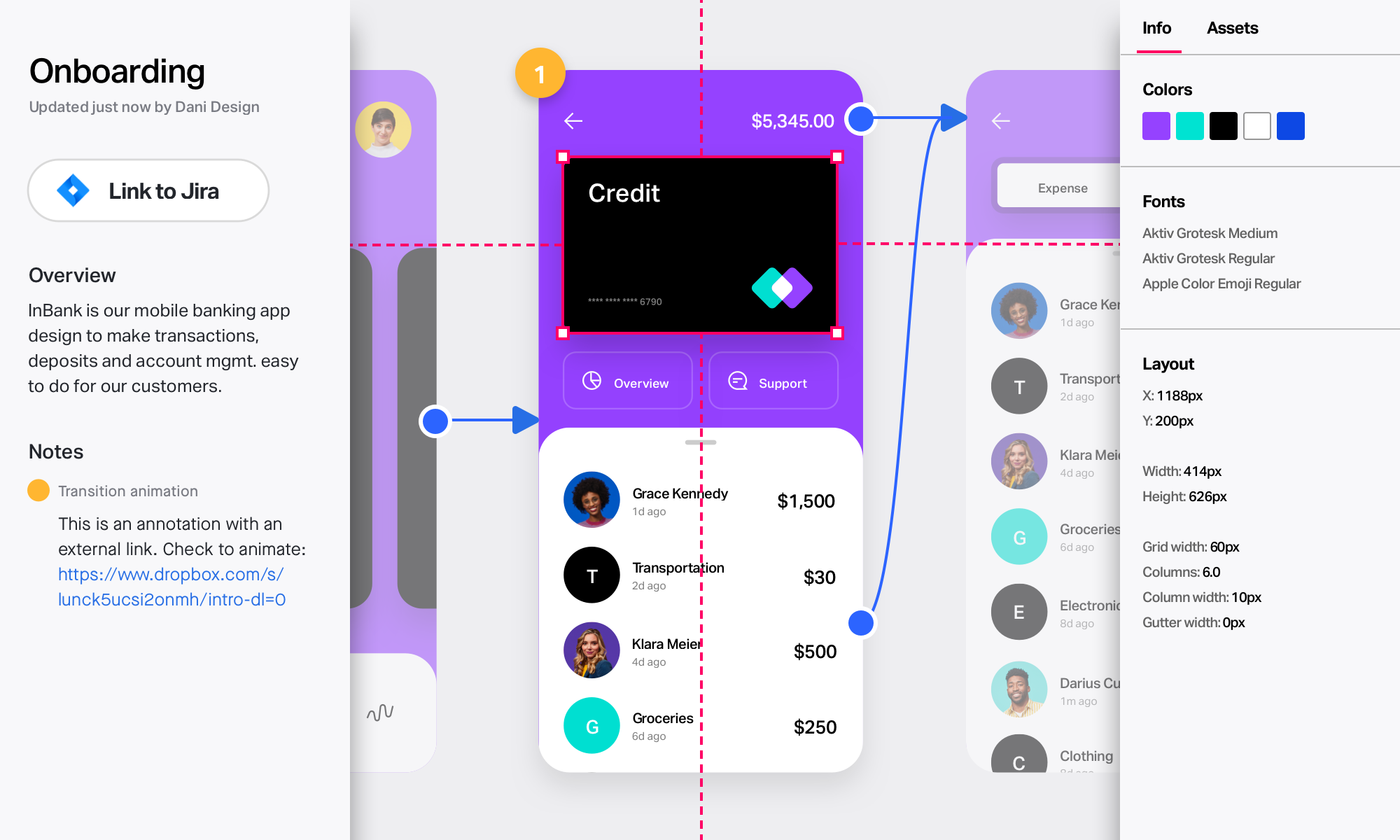 |