Amazon Elasticsearch Service is a fully managed service that enables users to search, analyze, and visualize your log data at petabyte-scale. As a fully managed service, Amazon Elasticsearch Service manages the setup, deployment, configuration, patching, and monitoring of Elasticsearch clusters, so users can spend less time managing clusters and more time building applications. With a few clicks in the AWS console, users create scalable, secure, and available Elasticsearch clusters. Amazon…
N/A
Super
Score 0.0 out of 10
N/A
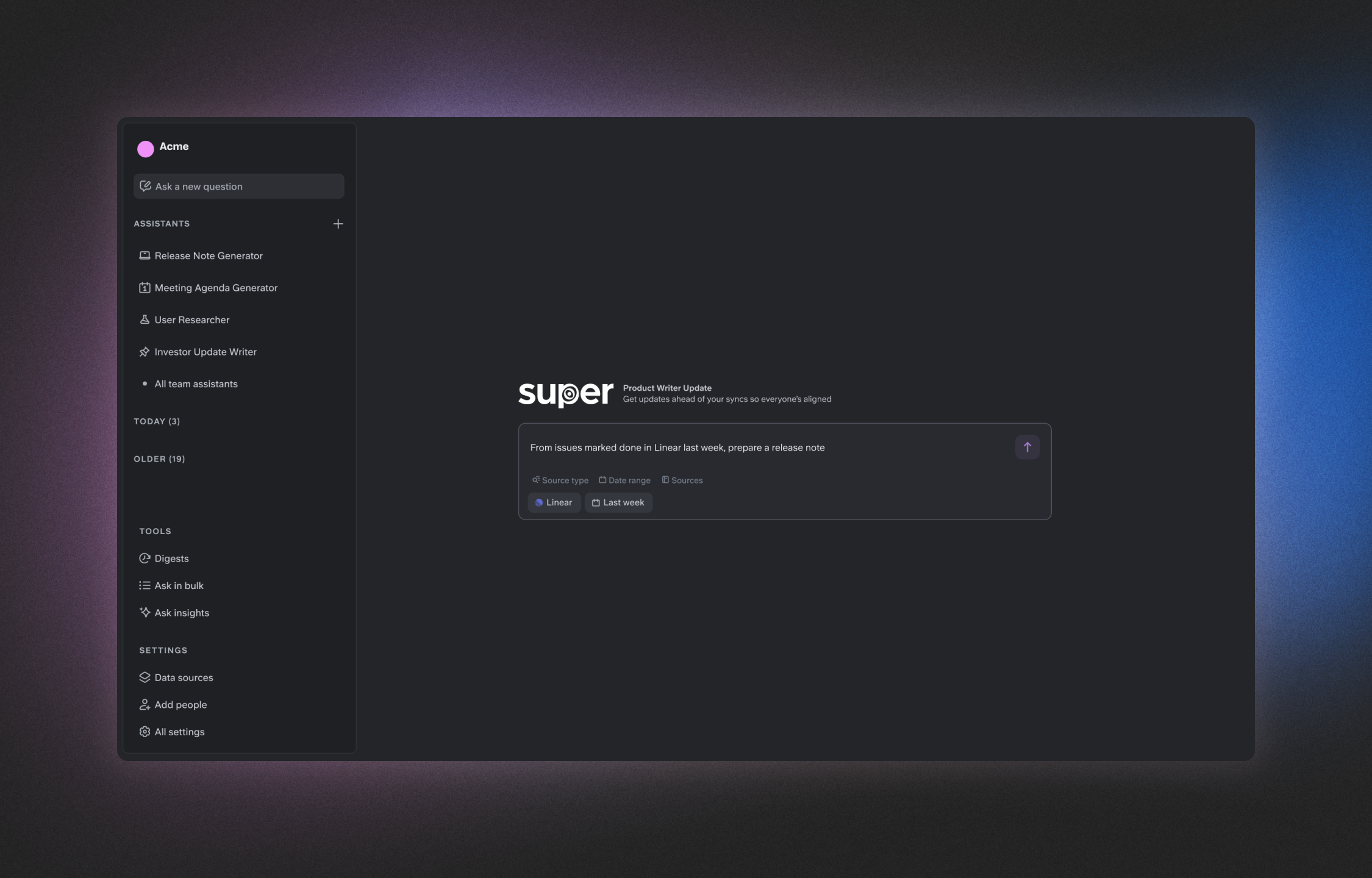
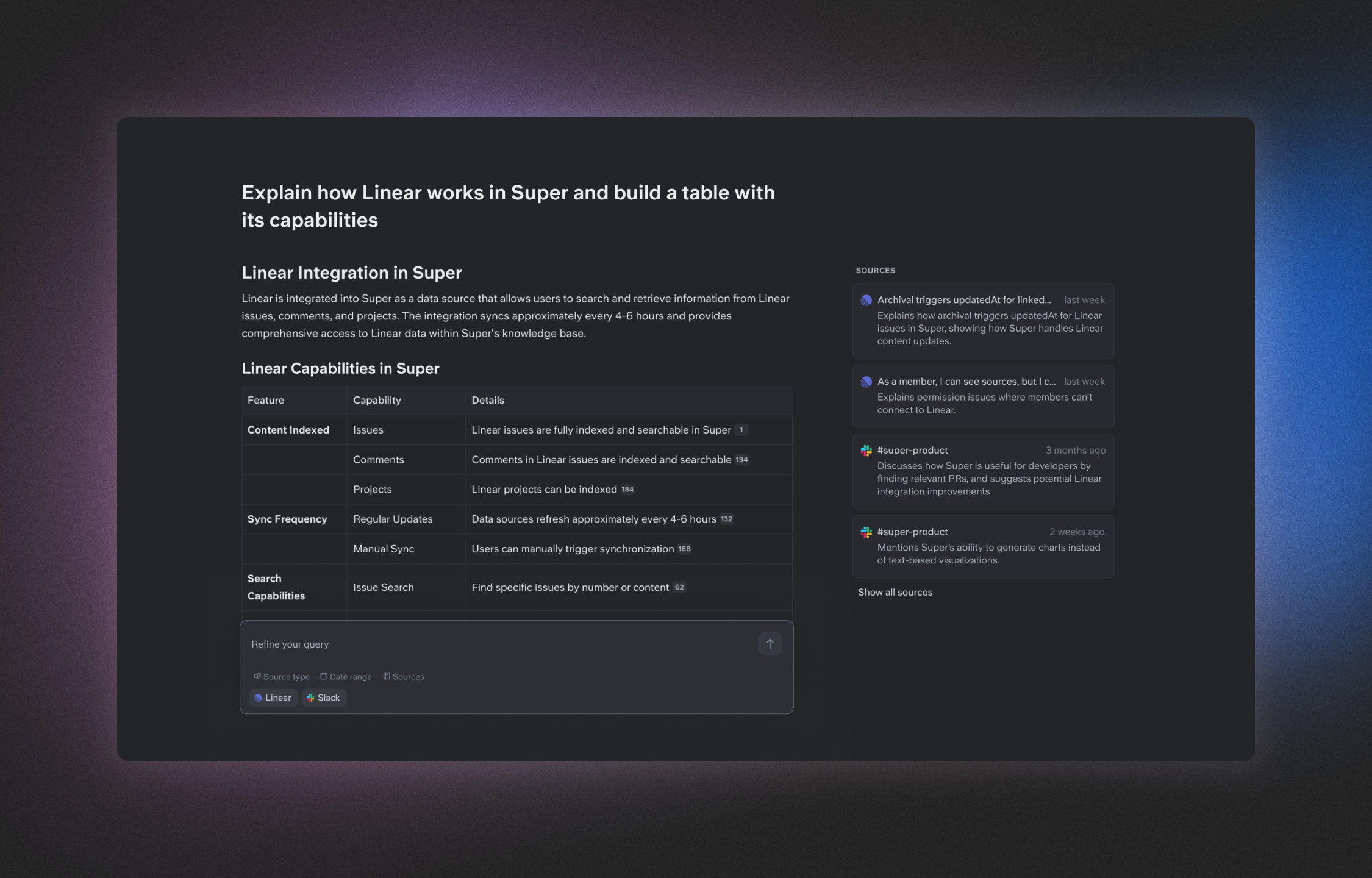
Super is an enterprise search solution used by teams to access and utilize collective knowledge. Built as Slite's intelligent search layer, Super connects workspace tools – from Slite and Linear to Slack and Google Drive – into a unified knowledge hub. Users can ask natural, nuanced questions and receive precise answers drawn directly from an organization's data: "What were the key blockers in Q3's product launch?" or "Show me the month-over-month progress on Project…
$20
per month per user
Pricing
Amazon Elasticsearch Service
Super
Editions & Modules
No answers on this topic
Core
$20
per month per user
Enterprise
Contact Sales
per year starting at 100 licenses
Offerings
Pricing Offerings
Amazon Elasticsearch Service
Super
Free Trial
No
Yes
Free/Freemium Version
No
No
Premium Consulting/Integration Services
No
No
Entry-level Setup Fee
No setup fee
No setup fee
Additional Details
—
Paid subscriptions have a minimum of 10 seats. A discount is available for annual billing.
More Pricing Information
Community Pulse
Amazon Elasticsearch Service
Super
Considered Both Products
Amazon Elasticsearch Service
Verified User
Anonymous
Chose Amazon Elasticsearch Service
Splunk is the most flexible of the 3 where you can manipulate the data to whatever fits your specific use case. Grafana has the most powerful capabilities but the steepest learning curve. Grafana also does offer the most flexibility as you can visualize almost any data source. …
Elasticsearch is a good alternative to relational databases for setting up complex searching of data. It's inbuilt features for slicing the data [in] different ways and its ability to add weights to search results makes it easy to set up complex searching scenarios. Given that data must be pushed to this service, it may be best suited for data that is not changing very rapidly.
It is an extremely powerful tool if the time is put in to learn it. There are basic skeletons of out of the box behavior, it involves having really dedicated people to learn how to use it to take full advantage of its capabilities. A 10 for the tool itself, minus 3 for the difficulty in learning and maintenance
Splunk is the most flexible of the 3 where you can manipulate the data to whatever fits your specific use case. Grafana has the most powerful capabilities but the steepest learning curve. Grafana also does offer the most flexibility as you can visualize almost any data source. Elastic is a solid middle ground between the 2