Amazon Relational Database Service (RDS) vs. Oracle Autonomous Database

Overview
ProductRatingMost Used ByProduct SummaryStarting Price
Amazon RDS
Score 8.7 out of 10
N/A
Amazon Relational Database Service (Amazon RDS) is a database-as-a-service (DBaaS) from Amazon Web Services.N/A
Oracle Autonomous Database
Score 9.1 out of 10
N/A
Oracle Autonomous Database provides a self-driving, self-securing, self-repairing cloud service that eliminate the overhead and human errors associated with traditional database administration. Oracle Autonomous Database takes care of configuration, tuning, backup, patching, encryption, scaling, and more.N/A
Pricing
Amazon Relational Database Service (RDS)Oracle Autonomous Database
Editions & Modules
Amazon RDS for PostgreSQL
$0.24 ($0.48)
per hour, R5 Large (R5 Extra Large)
Amazon RDS for MariaDB
$0.25 ($0.50)
per hour, R5 Large (R5 Extra Large)
Amazon RDS for MySQL
$0.29 ($0.58)
per hour, R5 Large (R5 Extra Large)
Amazon RDS for Oracle
$0.482 ($0.964)
per hour, R5 Large (R5 Extra Large)
Amazon RDS for SQL Server
$1.02 ($1.52)
per hour, R5 Large (R5 Extra Large)
No answers on this topic
Offerings
Pricing Offerings
Amazon RDSOracle Autonomous Database
Free Trial
NoYes
Free/Freemium Version
NoYes
Premium Consulting/Integration Services
NoNo
Entry-level Setup FeeOptionalOptional
Additional Details
More Pricing Information
Community Pulse
Amazon Relational Database Service (RDS)Oracle Autonomous Database
Considered Both Products
Amazon RDS
Chose Amazon RDS
AWS RDS supports many engines and is more efficient than just MySQL.
Chose Amazon RDS
It was based on previous experience and a few things that are good about AWS, like S3 and Lambda, the ease of integrating AWS's in-house services, and, of course, support. So, our organization has decided to use AWS.
Chose Amazon RDS
The AWS relational database service was selected because at the early stages of the implementation of the company product the team didn't have a lot of experience in creating and configuring database inside the company cluster, but there was a need to have a relation database, …
Chose Amazon RDS
Amazon Relational Database Service (RDS) stands out among similar products due to its seamless integration with other AWS services, automated backups, and multi-AZ deployments for high availability. Its support for various database engines, such as MySQL, PostgreSQL, and …
Chose Amazon RDS
In a few words, we are just to confortable working with oracle and sql server. Using RDS add another layer of distributed database in order to backup everything we have in case of a disaster and also complies with authorities locally and internacionally. All database we use, …
Chose Amazon RDS
Deploying PostgreSQL by yourself may appear easy at first but running a production PostgreSQL cluster with millions of records is a hard task, especially for compliance, scalability, and security. RDS automates all complex tasks so you can focus on building your database schema …
Chose Amazon RDS
RDS Provides broader range of database engine. Well integration capabilities with third party makes it unique
Chose Amazon RDS
With products like Google Cloud SQL, Azure SQL Database, AWS RDS stacks up quite well in all features. Features like licensing, performance, security comes to my mind the most. Another aspect is AWS's global reach.
Chose Amazon RDS
There are a lot of factor we took into consideration the most important ones are: Ease of use and setup - Compared to other similar options Amazon RDS is very easy to setup just clicking few options and its ready for POC and for production very easy and flexible Terraform …
Chose Amazon RDS
With the latest serverless technology Amazon Relational Database Service (RDS) has an edge over all its competitors, it works really fast with high log retention.
Chose Amazon RDS
Amazon RDS supports a wider range of database engines, including MySQL, PostgreSQL, Oracle, Microsoft SQL Server, and Amazon Aurora (MySQL and PostgreSQL-compatible) than Google Cloud SQL. When compared to Google Cloud SQL, AWS provides a larger global footprint with …
Chose Amazon RDS
Mongodb is nosql database and some clients prefer it. In our presentation we try to persuade them to use RDS with its pros and cons. The type of selection depends upon the actual need.
Chose Amazon RDS
Although the Rackspace service is not comparable, even though it is very good, it requires a lot of administration on my part.
Regarding Atlas, although it is not the same as RDS in terms of provisioning and administration panel, I mention it because I found it simpler and more …
Chose Amazon RDS
Previously used Media Temple database hosting (now GoDaddy). While that endeavor was also successful, the AWS RDS is more secure, with higher availability and better documentation.
Chose Amazon RDS
We have a strong preference for AWS managed services, and we find that RDS offers excellent integration with various AWS services, making it a seamless choice for our infrastructure. Furthermore, RDS supports integration with automation tools such as Terraform, enhancing our …
Chose Amazon RDS
The main area that stuck out to me in looking at AWS RDS compared to Azure Data Lake Storage was still that RDS is simple to get up and running with over its competitors. The only negative and it holds true for both solutions is that can both be hard to estimate cost control …
Chose Amazon RDS
RDS seems to be the best cross-section between cost, availability, deployment and throughput.
Chose Amazon RDS
Also ElephantSQL. Not as cost effective, but more integrated into our cloud environment.
Chose Amazon RDS
During the migration from MySQL installed on Linux to AWS RDS, we were almost surprised as it was done by few clicks rather than too much configurations ans steps in case of traditional DB migrations. In no time our platform was up and running.
Chose Amazon RDS
Installing, configuring, and managing Oracle Database can be challenging, especially for people who are new to Oracle products. Longer learning curves and higher operational overhead can be caused by this complexity. Amazon Relational Database Service is easy to understand and …
Chose Amazon RDS
We consider initially only to have the back up product. After analysing different products, we realize that we needed a more complete and robust product such as Amazon Relational Database Service (RDS). Then, the option to hire Amazon Relational Database Service (RDS) was …
Chose Amazon RDS
1: If your company is already deeply involved in the AWS ecosystem, such as AWS Lambda, Amazon S3, or Amazon Redshift, leveraging Amazon RDS might result in a more seamless integration of services. AWS offers a broad set of cloud services, which makes it easier to design and …
Chose Amazon RDS
Amazon RDS excels with its widely adopted and mature ecosystem, supporting various database engines. While Azure SQL Database offers a tiered pricing structure and automatic patching, and Cloud SQL provides straightforward pricing and easy scaling, Amazon RDS's extensive …
Oracle Autonomous Database
Chose Oracle Autonomous Database
Amazon did take the lead on this with multiple flavours of DB, but Oracle Engineering is unbeatable.
Chose Oracle Autonomous Database
Tight Coupling with ERP, Easier administration. Availability of performance metrics.
Chose Oracle Autonomous Database
Better management and security have helped decision-making easier.
Chose Oracle Autonomous Database
Oracle DB is levels of magnitude more rich in its functionality, it is much stronger in security, DR, HA, etc. However, the main drawback is its cost compared to MySql.
Chose Oracle Autonomous Database
Because I had a background with Oracle Database, and comparatively the autonomous database is very easy to scale up and to obtain performance information.
Chose Oracle Autonomous Database
Hands down it's the best. It's secure and extremely fast. It also doesn't need a lot of babysitting. It's running itself. It does its job as advertised. This is why I feel everyone should if they haven't already taken a hard look OAD. I feel it's the future of technology at its …
Chose Oracle Autonomous Database
I found Oracle Autonomous Database very secure to store data and private information.I always feel secure with Oracle Autonomous Databases disaster recovery features.It is very effective to build applications for mobile and desktop devices lesser code using a low code …
Chose Oracle Autonomous Database
I just find it more complicated than Aws
Chose Oracle Autonomous Database
Oracle Autonomous Database has the warehouse extension, whose performance has no question, and it increases the relevancy of the company's operations and fosters performance. Further, Oracle Autonomous Database generates high-performance options, which navigates all the …
Chose Oracle Autonomous Database
Oracle Autonomous Database is the right choice for multiple functionalities, for instance, the warehousing of databases, and transactional analytics. Besides, Oracle Autonomous Database generates a platform that makes the process of application development efficient and …
Chose Oracle Autonomous Database
Security, easy to install, [and] disaster recovery [are why we went with Oracle Autonomous Database].
Chose Oracle Autonomous Database
I selected Oracle Autonomous Database because of the scalability, and it's a perfect and stable database that supports multiple features at once.
Chose Oracle Autonomous Database
Before deploying Oracle Autonomous Database, we were doing manual work on our databases.
Chose Oracle Autonomous Database
We had already experienced people in the team on Oracle as Oracle Database was already being used in the organization. Also, when we compared all other possibilities, it came out as a less costly solution.
Chose Oracle Autonomous Database
Actually, we used both Oracle Autonomous Database for our Oracle-related environments and Azure SQL and Azure VMs hosting SQL Server for our SQL Server-related environments. We have different products, some of them are platform independent (can be deployed on Oracle, SQL …
Chose Oracle Autonomous Database
DB2 is a very old kind of database. SQL Server is not secured like Oracle, and I personally do not recommend it.
Chose Oracle Autonomous Database
Oracle Autonomous Database is easy to deploy and use. Provides various supports with security. So it is much better in terms of complexity and performance to manage our application in real time. Cost is also less as compare to other databases. Easy development and deployment is …
Chose Oracle Autonomous Database
Oracle Java SE Subscription
Chose Oracle Autonomous Database
Latest DB with automated features like self-driving cars.
Chose Oracle Autonomous Database
AWS and Digital Ocean are two of the major other systems we have and are still using. But we do use Oracle's systems far more than we use Digital Ocean and AWS. We selected Oracle Autonomous Database mainly because of the new cloud 2.0 benefits. They have convinced us to begin …
Features
Amazon Relational Database Service (RDS)Oracle Autonomous Database
Database Development
Comparison of Database Development features of Product A and Product B
Amazon Relational Database Service (RDS)
-
Ratings
Oracle Autonomous Database
7.2
Ratings
17% below category average
Version control tools00 Ratings6.20 Ratings
Test data generation00 Ratings5.70 Ratings
Performance optimization tools00 Ratings8.20 Ratings
Schema maintenance00 Ratings9.00 Ratings
Database change management00 Ratings7.00 Ratings
Database Administration
Comparison of Database Administration features of Product A and Product B
Amazon Relational Database Service (RDS)
-
Ratings
Oracle Autonomous Database
8.3
Ratings
1% below category average
User management00 Ratings9.00 Ratings
Database security00 Ratings9.10 Ratings
Database status reporting00 Ratings9.00 Ratings
Change management00 Ratings6.20 Ratings
Best Alternatives
Amazon Relational Database Service (RDS)Oracle Autonomous Database
Small Businesses
InterSystems IRIS
InterSystems IRIS
Score 7.7 out of 10
DBeaver
DBeaver
Score 9.2 out of 10
Medium-sized Companies
InterSystems IRIS
InterSystems IRIS
Score 7.7 out of 10
DBeaver
DBeaver
Score 9.2 out of 10
Enterprises
SAP IQ
SAP IQ
Score 10.0 out of 10
DBeaver
DBeaver
Score 9.2 out of 10
All AlternativesView all alternativesView all alternatives
User Ratings
Amazon Relational Database Service (RDS)Oracle Autonomous Database
Likelihood to Recommend
8.8
(0 ratings)
8.6
(0 ratings)
Likelihood to Renew
8.4
(0 ratings)
9.0
(0 ratings)
Usability
8.0
(0 ratings)
8.0
(0 ratings)
Availability
9.0
(0 ratings)
-
(0 ratings)
Performance
7.0
(0 ratings)
-
(0 ratings)
Support Rating
9.6
(0 ratings)
-
(0 ratings)
Online Training
10.0
(0 ratings)
-
(0 ratings)
Product Scalability
9.0
(0 ratings)
-
(0 ratings)
User Testimonials
Amazon Relational Database Service (RDS)Oracle Autonomous Database
Likelihood to Recommend
If your application needs a relational data store and uses other AWS services, AWS RDS is a no-brainer. It offers all the traditional database features, makes it a snap to set up, creates cross-region replication, has advanced security, built-in monitoring, and much more at a very good price. You can also set up streaming to a data lake using various other AWS services on your RDS.
Read full review
Scenarios where this is best suited are like where there are not large set of data which has to be analyzed and extracted.It helps in the efficiency of data .It is also well suited for medium size companies where you have to create a common data for everyone. As for large set of data, there can be network latency issues and thus there are some limitations of this software.
Read full review
Pros
  • Automated Database Management: We use it for streamlining routine tasks like software patching and database backups.
  • Scalability on Demand: we use it to handle traffic spikes, scaling both vertically and horizontally.
  • Database Engine Compatibility: It works amazingly with multiple database engines used by different departments within our organization including MySQL, PostgreSQL, SQL Server, and Oracle.
  • Monitoring: It covers our extensive monitoring and logging, and also has great compatibility with Amazon CloudWatch
Read full review
  • Robust - this product doesn't have a lot of downtime. It's less prone to errors than some other tools I've worked with.
  • Scalable - we can keep adding more things to it. We haven't hit any roadblocks when we've tried to do more with our database.
Read full review
Cons
  • It is a little difficult to configure and connect to an RDS instance. The integration with ECS can be made more seamless.
  • Exploring features within RDS is not very easy and intuitive. Either a human friendly documentation should be added or the User Interface be made intuitive so that people can explore and find features on their own.
  • There should be tools to analyze cost and minimize it according to the usage.
Read full review
  • There is no access to the physical host of the DB. This is expected from a managed DB. Everything must be done through the console or via API calls. This is a new learning curve for the DBAs.
  • Due to the lack of physical host access, certain features are not supported, such as Transportable tablespaces and Oracle LogMiner.
  • Certain special data types, (such as XMLType) are not allowed; be sure the app vendor certifies their product on this platform.
Read full review
Likelihood to Renew
We do renew our use of Amazon Relational Database Service. We don't have any problems faced with RDS in place. RDS has taken away lot of overhead of hosting database, managing the database and keeping a team just to manage database. Even the backup, security and recovery another overhead that has been taken away by RDS. So, we will keep on using RDS.
Read full review
Autonomous is the way of the future and this is one system which is crucial to any system and is also autonomous. It is self-tuning and self-maintaining which are major advantages.
Read full review
Usability
I've been using AWS Relational Database Services in several projects in different environments and from the AWS products, maybe this one together to EC2 are my favourite. They deliver what they promise. Reliable, fast, easy and with a fair price (in comparison to commercial products which have obscure license agreements).
Read full review
The product is continuously evolving and new features are added frequently. Management options through the OCI (Oracle Cloud Infrastructure) console and through the command line and API are being enhanced frequently.
Read full review
Support Rating
I have only had good experiences in working with AWS support. I will admit that my experience comes from the benefit of having a premium tier of support but even working with free-tier accounts I have not had problems getting help with AWS products when needed. And most often, the docs do a pretty good job of explaining how to operate a service so a quick spin through the docs has been useful in solving problems.
Read full review
No answers on this topic
Online Training
the online training & digital content available on the web from AWS was having sufficient information to deploy and run the service
Read full review
No answers on this topic
Alternatives Considered
Amazon Relational Database Service (RDS) stands out among similar products due to its seamless integration with other AWS services, automated backups, and multi-AZ deployments for high availability. Its support for various database engines, such as MySQL, PostgreSQL, and Oracle, provides flexibility. Additionally, RDS offers managed security features, including encryption and IAM integration, enhancing data protection. The pay-as-you-go pricing model makes it cost-effective. Overall, Amazon RDS excels in ease of use, scalability, and a comprehensive feature set, making it a top choice for organizations seeking a reliable and scalable managed relational database service in the cloud.
Read full review
Hands down it's the best. It's secure and extremely fast. It also doesn't need a lot of babysitting. It's running itself. It does its job as advertised. This is why I feel everyone should if they haven't already taken a hard look OAD. I feel it's the future of technology at its best. Everyone should be taking notice of how far technology has come and where it's going.

Read full review
Return on Investment
  • The overall cost increases, but we spect this and we can mitigate other risks.
  • Is easy to work from the cloud. Is reliable, but we keep our local solution as well where RDS works quite good.
  • RDS allow us to focurs on owr objetives instead of the other matters regarding databases.
Read full review
  • Oracle Autonomous Database has a wide range of warehouses, which is competent and of high performance.
  • The transactional processing power that Oracle Autonomous Database outlines are completely important and digital.
  • The efficiency of Oracle Autonomous Database data encryption fosters security measures, a form that demands more threat detectors.
Read full review
ScreenShots

Amazon RDS Screenshots

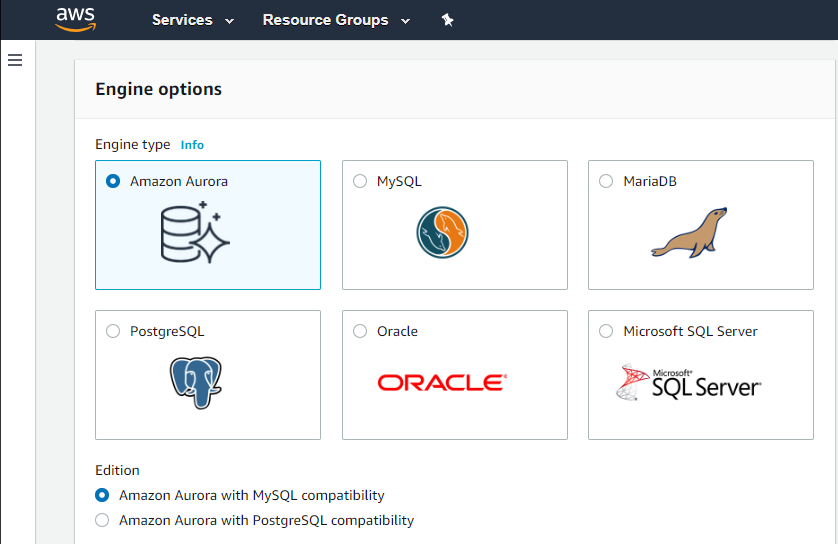
Screenshot of A look inside the RDS console.

Oracle Autonomous Database Screenshots

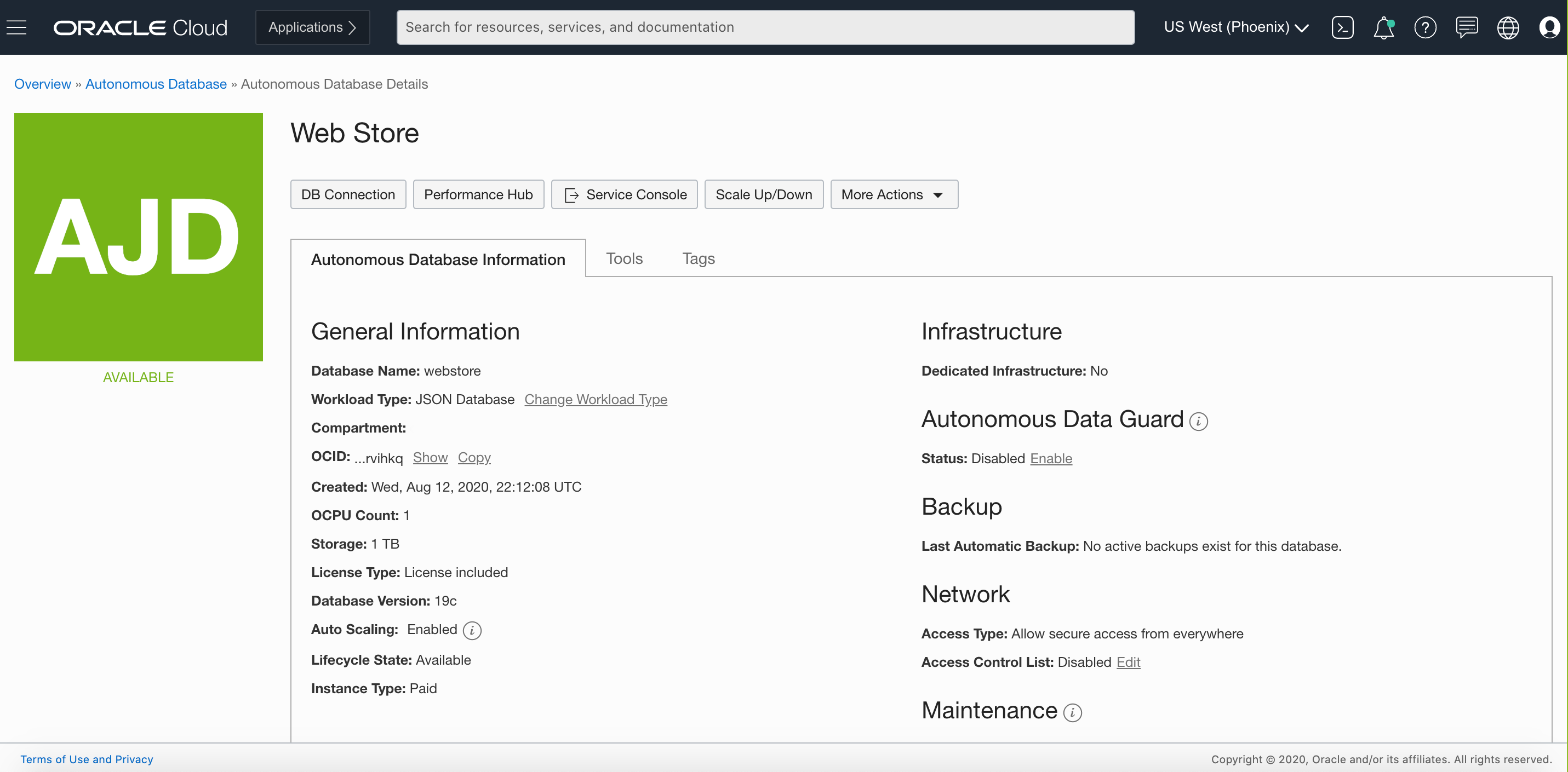
Screenshot of Oracle Autonomous Database is supported on Shared or Dedicated Exadata InfrastructureScreenshot of Oracle Autonomous Database supports workload-optimized cloud services for Data Warehouse, Transaction Processing,  JSON centric applicationsScreenshot of Oracle Autonomous Database supports  both License Included and Bring Your Own Licensing (BYOL) with  Yearly and Pay As You Go subscription pricingScreenshot of Oracle Autonomous Database provides built-in development  tools such as SQL Developer web, Performance Hub, APIs for data managementScreenshot of Oracle Autonomous Database provides native shell for API driven development