Apache Airflow vs. Zenaton

Overview
ProductRatingMost Used ByProduct SummaryStarting Price
Apache Airflow
Score 8.6 out of 10
N/A
Apache Airflow is an open source tool that can be used to programmatically author, schedule and monitor data pipelines using Python and SQL. Created at Airbnb as an open-source project in 2014, Airflow was brought into the Apache Software Foundation’s Incubator Program 2016 and announced as Top-Level Apache Project in 2019. It is used as a data orchestration solution, with over 140 integrations and community support.N/A
Zenaton
Score 0.0 out of 10
N/A
Developer framework to orchestrate multiple services and APIs into your software application using logic triggered by events and time. Build ETL processes, A/B testing, real-time alerts and personalized user experiences with custom logic. Workflows as code - Build sequences of steps to react to events from external services or user behavior and trigger actions.... Include loops, wait, parallel execution and more. Background Jobs Manager - Dispatch asynchronous jobs with one…N/A
Pricing
Apache AirflowZenaton
Editions & Modules
No answers on this topic
Offerings
Pricing Offerings
Apache AirflowZenaton
Free Trial
NoYes
Free/Freemium Version
YesYes
Premium Consulting/Integration Services
NoNo
Entry-level Setup FeeNo setup feeNo setup fee
Additional Details
More Pricing Information
Community Pulse
Apache AirflowZenaton
Considered Both Products
Apache Airflow
Chose Apache Airflow
Multiple DAGs can be orchestrated simultaneously at varying times, and runs can be reproduced or replicated with relative ease. Overall, utilizing Apache Airflow is easier to use than other solutions now on the market. It is simple to integrate in Apache Airflow, and the …
Chose Apache Airflow
Using Jenkins and Kafka, it is not for the same purpose, although it might be similar. I would say AirFlow is really what it says on the can - workflow management. For our organisation, the purpose is clear. So long your aim is to have a rich workflow scheduler and job …
Chose Apache Airflow
Apache Airflow is far superior!
Chose Apache Airflow
Much easy to deploy Apache Airflow as opposed to other products, with flexible deployment options as well as flexible integration with other tools and platforms.
Chose Apache Airflow
digdag (https://www.digdag.io/)- Digdag is a very simple build, run, schedule, and monitor complex pipelines of tasks with a simple implementation and no configuration. Easy to write YAMLs

Airflow has a better community and widely adopted. Has a better UI and better documentation
Chose Apache Airflow
Overall using Apache Airflow is easy to use compare than other other tools available in the market, It is easy to integrate in apache airflow and the workflow can be monitored and scheduling can be done easily using apache airflow, recommend this tool for Automating the data …
Chose Apache Airflow
Airflow was best suited in my use case for designing the ETL pipelines in a scripted manner for workflows & the UI was very good & easy to use.
Chose Apache Airflow
There are a number of reasons to choose Apache Airflow over other similar platforms- Integrations—ready-to-use operators allow you to integrate Airflow with cloud platforms (Google, AWS, Azure, etc) Apache Airflow helps with backups and other DevOps tasks, such as submitting a …
Chose Apache Airflow
Step functions are only available in AWS but Apache Airflow provides cross cloud access. Apache Airflow also provides flexibility to pause, start and re-trigger dags. Provides executors where we can run in-house calculations if needed and which requires no integration with …
Chose Apache Airflow
Apache Airflow is suited for a much wider set of use cases compared to Databricks. You can run it anywhere, and there is also no vendor lock-in. With Airflow, we can utilize almost any compute engine. Same thing we want to do with Databricks. There might be some level of …
Zenaton

No answer on this topic

Features
Apache AirflowZenaton
Workload Automation
Comparison of Workload Automation features of Product A and Product B
Apache Airflow
9.8
Ratings
17% above category average
Zenaton
-
Ratings
Multi-platform scheduling10.00 Ratings00 Ratings
Central monitoring10.00 Ratings00 Ratings
Logging10.00 Ratings00 Ratings
Alerts and notifications10.00 Ratings00 Ratings
Analysis and visualization10.00 Ratings00 Ratings
Application integration9.00 Ratings00 Ratings
Best Alternatives
Apache AirflowZenaton
Small Businesses

No answers on this topic

No answers on this topic

Medium-sized Companies
ActiveBatch Workload Automation
Score 7.5 out of 10
Apache Airflow
Apache Airflow
Score 8.6 out of 10
Enterprises
Redwood RunMyJobs
Redwood RunMyJobs
Score 9.6 out of 10
Redwood RunMyJobs
Redwood RunMyJobs
Score 9.6 out of 10
All AlternativesView all alternativesView all alternatives
User Ratings
Apache AirflowZenaton
Likelihood to Recommend
9.1
(0 ratings)
-
(0 ratings)
Usability
10.0
(0 ratings)
-
(0 ratings)
User Testimonials
Apache AirflowZenaton
Likelihood to Recommend
For a quick job scanning of status and deep-diving into job issues, details, and flows, AirFlow does a good job. No fuss, no muss. The low learning curve as the UI is very straightforward, and navigating it will be familiar after spending some time using it. Our requirements are pretty simple. Job scheduler, workflows, and monitoring. The jobs we run are >100, but still is a lot to review and troubleshoot when jobs don't run. So when managing large jobs, AirFlow dated UI can be a bit of a drawback.
Read full review
No answers on this topic
Pros
  • Apache Airflow is one of the best Orchestration platforms and a go-to scheduler for teams building a data platform or pipelines.
  • Apache Airflow supports multiple operators, such as the Databricks, Spark, and Python operators. All of these provide us with functionality to implement any business logic.
  • Apache Airflow is highly scalable, and we can run a large number of DAGs with ease. It provided HA and replication for workers. Maintaining airflow deployments is very easy, even for smaller teams, and we also get lots of metrics for observability.
Read full review
No answers on this topic
Cons
  • A local "dry run" or IDE plugin that can validate and simulate DAG execution without needing a full environment.
  • Better feedback on DAG parse errors in the UI or CLI.
  • Navigating large DAGs with hundreds of tasks can be slow and hard to understand visually.
Read full review
No answers on this topic
Usability
For its capability to connect with multicloud environments. Access Control management is something that we don't get in all the schedulers and orchestrators. But although it provides so many flexibility and options to due to python , some level of knowledge of python is needed to be able to build workflows.
Read full review
No answers on this topic
Alternatives Considered
Apache Airflow is suited for a much wider set of use cases compared to Databricks. You can run it anywhere, and there is also no vendor lock-in. With Airflow, we can utilize almost any compute engine. Same thing we want to do with Databricks. There might be some level of difficulty based on the support.
Read full review
No answers on this topic
Return on Investment
  • Most of the ETL processes were automated, cutting down on human labor.
  • Apache Airflow's user interface (UI) was very informative and straightforward.
  • Since ETL processes were providing data via airflow, we were able to gain a deeper comprehension of the data at hand.
Read full review
No answers on this topic
ScreenShots

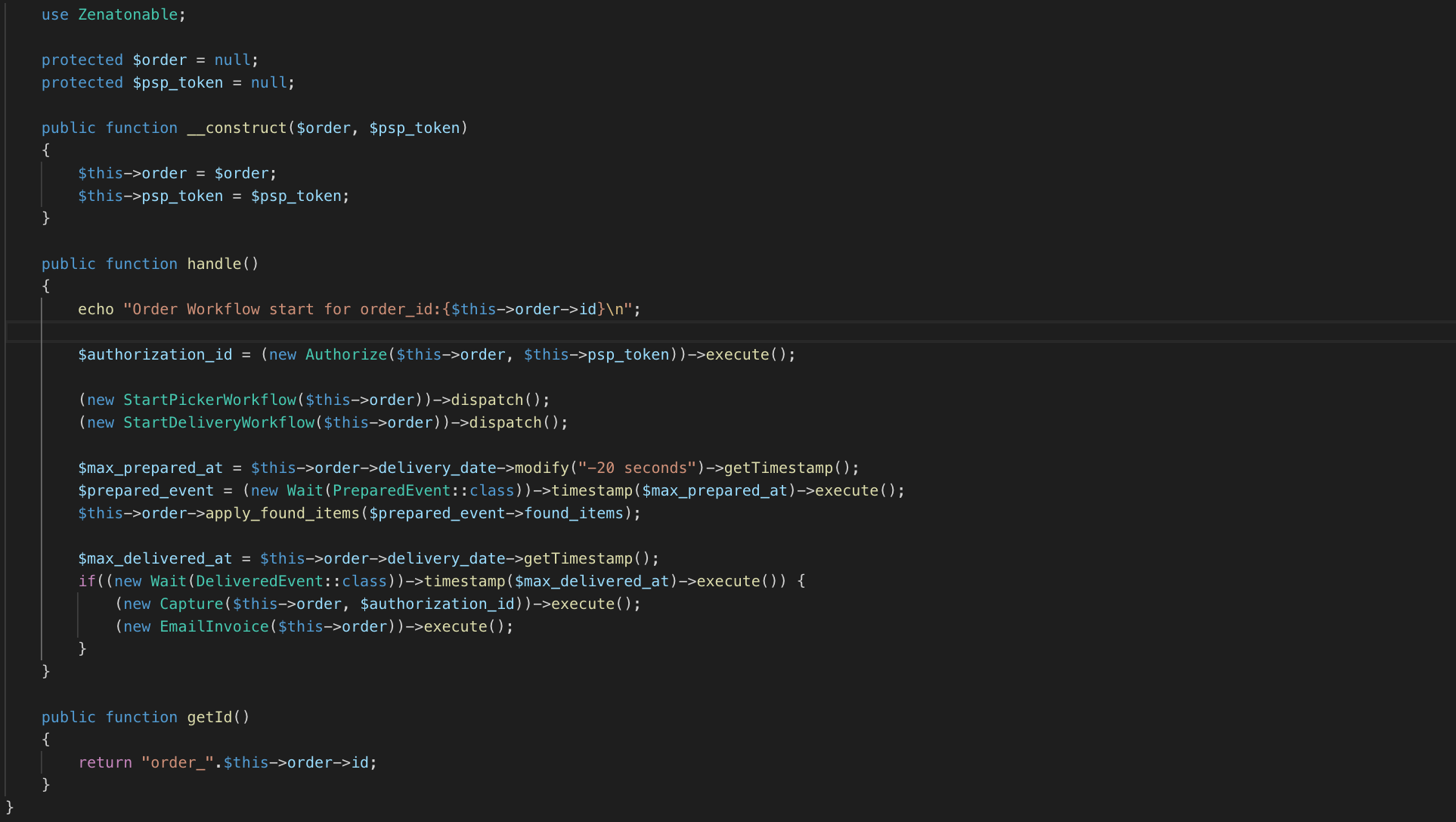
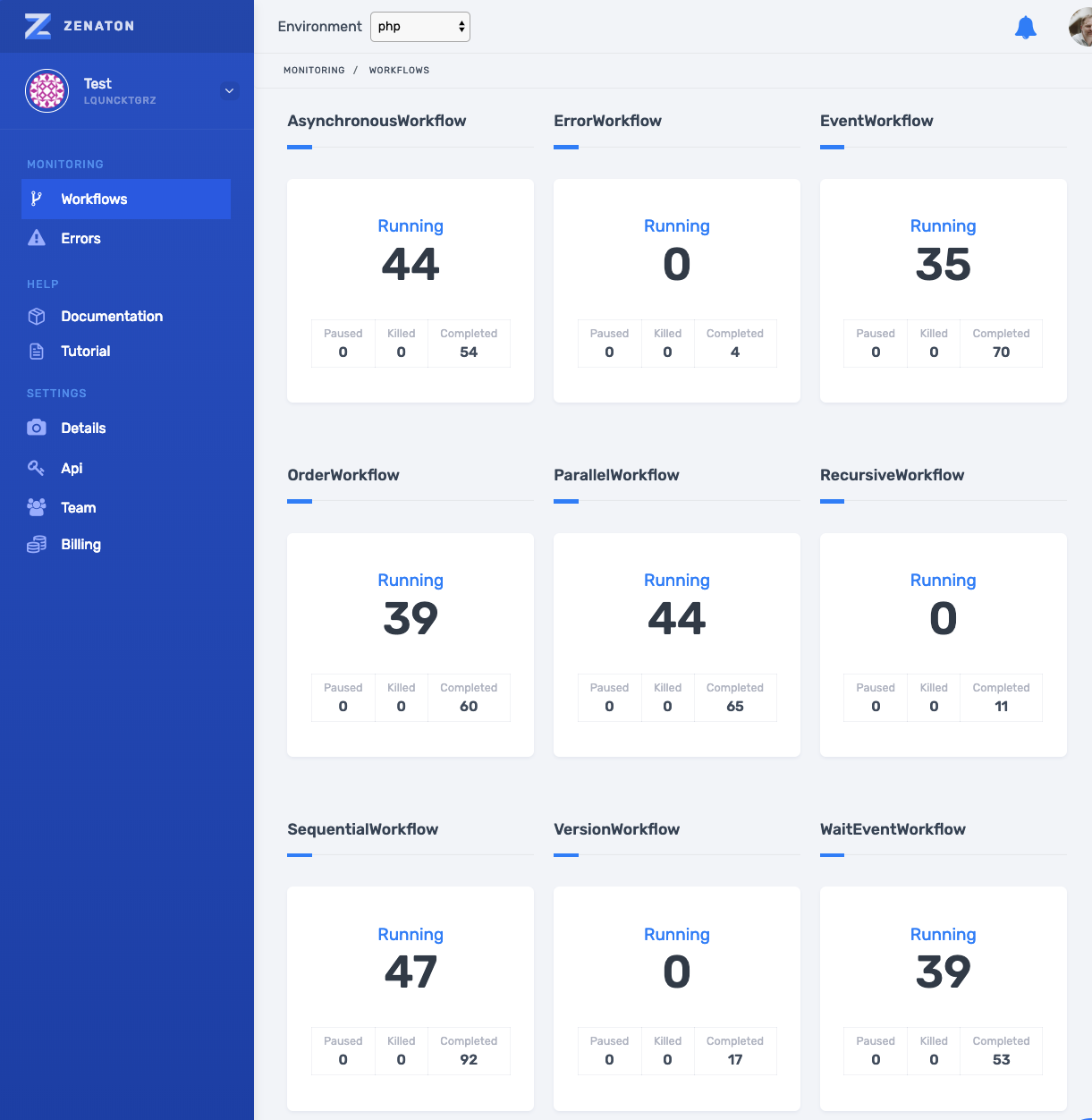
Zenaton Screenshots

Screenshot of Write Workflows as CodeScreenshot of Real-time executions with task properties and stacktrace if the task fails.Screenshot of Dashboard Overview