Apache Maven vs. DataKitchen DataOps Platform

Overview
ProductRatingMost Used ByProduct SummaryStarting Price
Apache Maven
Score 9.9 out of 10
N/A
Apache Maven is an open source build automation tool.N/A
DataKitchen DataOps Platform
Score 0.0 out of 10
N/A
The DataKitchen DataOps Platform aims to automate key functions of data development & production workflows so data teams can collaborate, quickly innovate & deliver error-free, on-demand insight. Tool-Agnostic DataOps Platform supports an array of native tooling integrations & flexible methods for integrating new tools as they come available. Meta-Orchestration Meta-orchestrates all the steps in production & development…N/A
Pricing
Apache MavenDataKitchen DataOps Platform
Editions & Modules
No answers on this topic
Offerings
Pricing Offerings
Apache MavenDataKitchen DataOps Platform
Free Trial
NoNo
Free/Freemium Version
NoNo
Premium Consulting/Integration Services
NoNo
Entry-level Setup FeeNo setup feeNo setup fee
Additional Details
More Pricing Information
Community Pulse
Apache MavenDataKitchen DataOps Platform
Considered Both Products
Apache Maven
Chose Apache Maven
Ant is useful if your build is heavily based on customs scripts running in the right order. Maven greatly simplifies the process to keep track of and download build dependencies compared with Apache Ant. If your build is based on multiple custom scripts running in a specific …
Chose Apache Maven
We evaluated many options to automate our build process including Apache Maven, Jenkins, Octopus Deploy and Azure DevOps Server. We found Apache Maven to be the easiest to use by far. We like the ability to customize our build process for individual departments. Apache Maven …
Chose Apache Maven
If there are competitor products out there, I've never heard of them. This is the solution for Java dependency management. From my experience, the alternative is "no solution, create your own."
Chose Apache Maven
Maven was chosen out of convention as a static build tool. Personally, I prefer Gradle's less verbose syntax and modularity. Same with Bazel and Sbt.
Chose Apache Maven
Integration with Java IDEs is fast and easy. It automatically fetches and resolves dependencies. It is a specification built tool.
Chose Apache Maven
Maven vs Gradle

  • Maven is much more mature vs Gradle and been around for a long time. Easy to get developers. Gradle is new but adoption is fast
Chose Apache Maven
Ant, Maven's opposing framework, is often a point of comparison. Although Ant does not require formal conventions, it is procedural in the sense that you must tell Ant exactly what to do and when. It also lacks a lifecycle, along with goal definition and dependencies. Maven, on …
Chose Apache Maven
It has a project object module and pre-defined structure that is better than Make and running Ant scripts for builds. There is fairly good support from the online open source community. Documentation from Apache is also very good.
DataKitchen DataOps Platform

No answer on this topic

Best Alternatives
Apache MavenDataKitchen DataOps Platform
Small Businesses
GitLab
GitLab
Score 8.7 out of 10
GitLab
GitLab
Score 8.7 out of 10
Medium-sized Companies
GitLab
GitLab
Score 8.7 out of 10
GitLab
GitLab
Score 8.7 out of 10
Enterprises
GitLab
GitLab
Score 8.7 out of 10
GitLab
GitLab
Score 8.7 out of 10
All AlternativesView all alternativesView all alternatives
User Ratings
Apache MavenDataKitchen DataOps Platform
Likelihood to Recommend
9.0
(0 ratings)
-
(0 ratings)
Usability
8.0
(0 ratings)
-
(0 ratings)
Support Rating
5.1
(0 ratings)
-
(0 ratings)
User Testimonials
Apache MavenDataKitchen DataOps Platform
Likelihood to Recommend
Building and automating packaging of software can be a challenging task. As the complexity of the project grows so do the dependencies on third-party artifacts. Using Maven we can define and manage the project structure centrally and it helps improve overall build times.
Read full review
No answers on this topic
Pros
  • Makes the build process simple and easy to do.
  • It provides a standard build system that can be adopted by multiple, different groups within an organization.
  • It's extensible with easy to use custom extensions which our developers take full advantage of.
Read full review
No answers on this topic
Cons
  • One of the issues with building software using Apache Maven is that its cache resolution is not optimal. It pulls down all the artifacts onto the developer's local machine and can sometimes result in conflicts.
  • The build process can vary in time and gets progressively longer as the project's complexity increases.
Read full review
No answers on this topic
Usability
The overall usability of Apache Maven is very good to us. We were able to incorporate it into our company's build process pretty quickly. We deployed it to multiple teams throughout the entire enterprise. We got good feedback from our developers stating that Apache Maven has simplified their build process. It also allowed to to standardize the build process for the entire enterprise, thus ensure that each development team is using the same, consistent process to build code.
Read full review
No answers on this topic
Support Rating
I can't speak to the support, as I've never had issues. Apache Maven "just works," and errors were user errors or local nexus errors. Apache Maven is a great build/dependency management tool. I give it a 9/10 because occasionally the error message don't immediately indicate a solution...but again, those errors were always user or configuration errors, and the Maven documentation is extensive, so I don't find fault in Maven, but in its users.
Read full review
No answers on this topic
Alternatives Considered
Ant is useful if your build is heavily based on customs scripts running in the right order. Maven greatly simplifies the process to keep track of and download build dependencies compared with Apache Ant. If your build is based on multiple custom scripts running in a specific order there is a lot of overhead in Maven compared to Apache Ant.

Read full review
No answers on this topic
Return on Investment
  • Maven has been the only tool for building Java apps for a long time. And it being open source has helped maximize ROI.
  • I can't think of any negative. With Gradle coming up as a newer and better technology for building, some teams are shifting towards it.
Read full review
No answers on this topic
ScreenShots

DataKitchen DataOps Platform Screenshots

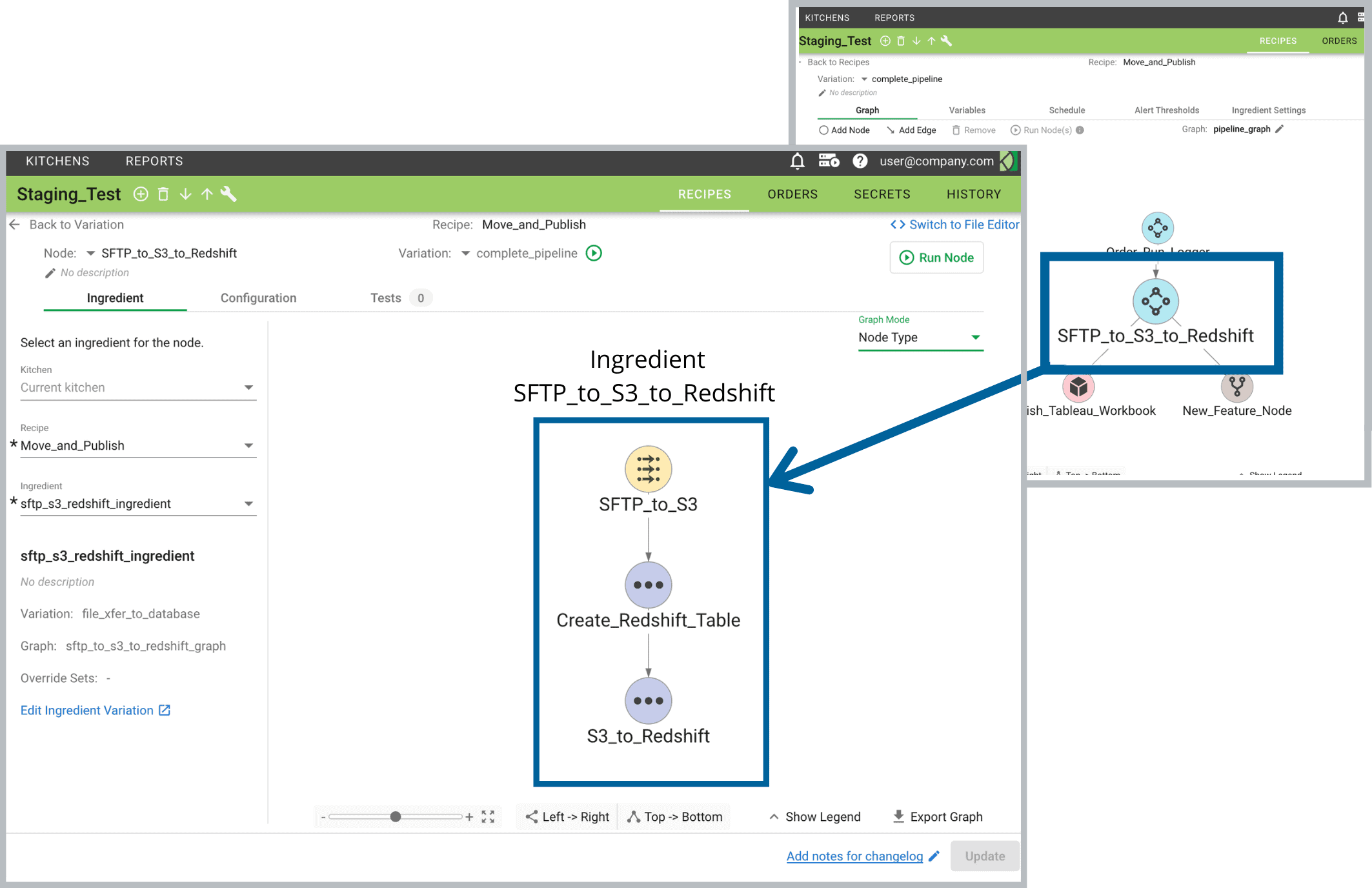
Screenshot of Meta-Orchestration
Data organizations may be hierarchical and siloed, but analytics production cuts across teams, locations, and environments. The DataKitchen Platform meta-orchestrates all the steps in your production and development pipelines (and even pipelines of pipelines), providing a coherent framework for inter-team collaboration that transcends heterogeneous toolchains and distributed data centers.Screenshot of Environment Creation & Management
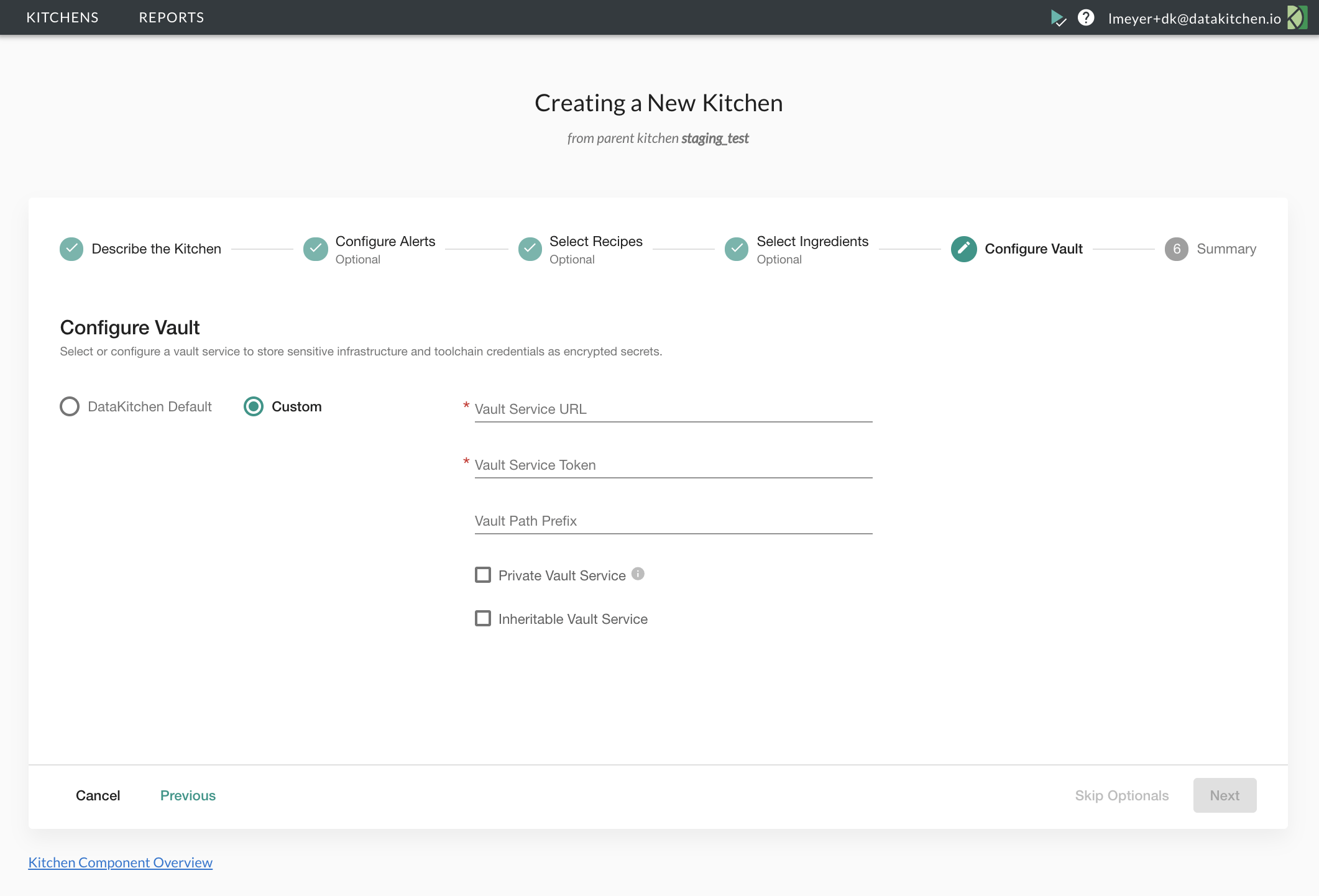
With the DataKitchen Platform, create Kitchen workspaces in minutes – not weeks or months – to provide developers with a controlled and secure space to work. Kitchens contain pre-configured tools, datasets, hardware, and tests – everything users need to create and innovate.  When new analytics are ready, Kitchens streamline an individual’s work into a team’s work and eventually into production by seamlessly merging to aligned environments.Screenshot of Continuous Deployment
Analytics can’t be agile with manual, error-prone, and time-consuming release processes. The DataKitchen Platform automates the end-to-end deployment process allowing analytics teams to test and release new analytics on-demand. Kitchens align and integrate toolchain environments so continuous deployment orchestrations can easily migrate analytics to production.Screenshot of Automated Testing & Monitoring
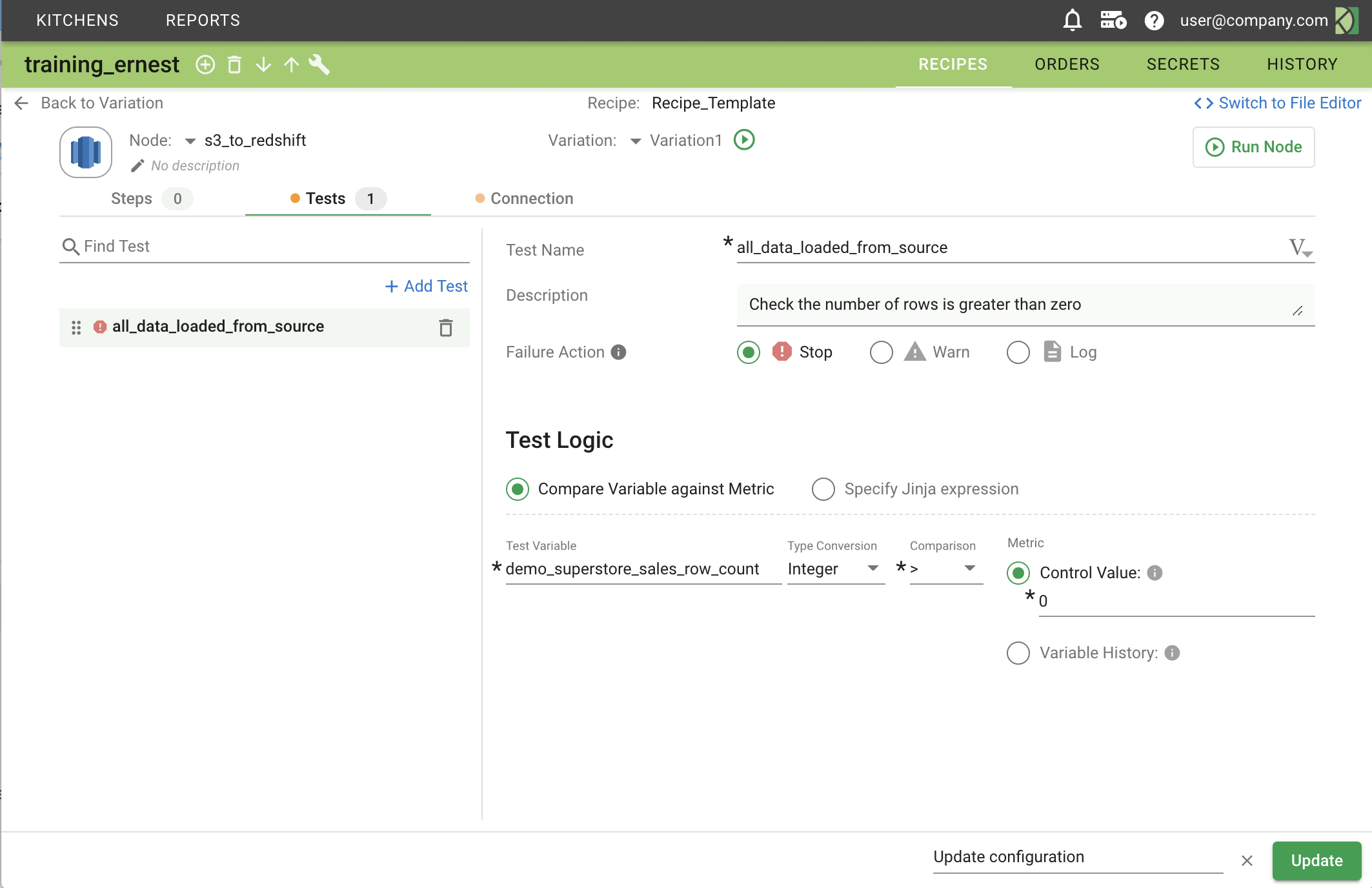
Automated testing and monitoring are foundational to DataOps. The Platform enables you to dramatically improve data quality by catching costly and embarrassing data errors early.  Embed automated tests at every step in your production and development pipelines. Use failures as an opportunity to add more tests and increase the reliability of your pipelines over time. Preset alerts to increase agility and reduce data downtime.Screenshot of Collaboration & Sharing
DataOps is a team effort, and the DataKitchen Platform fosters collaboration by providing a common place to work and a single view of the end-to-end analytic process.  Team members innovate and experiment in separate but aligned Kitchens, then integrate the collective work with confidence.  Teams can easily save and share commonly used parts of pipelines as Ingredients – a significant productivity multiplier.Screenshot of DataOps Process Analytics
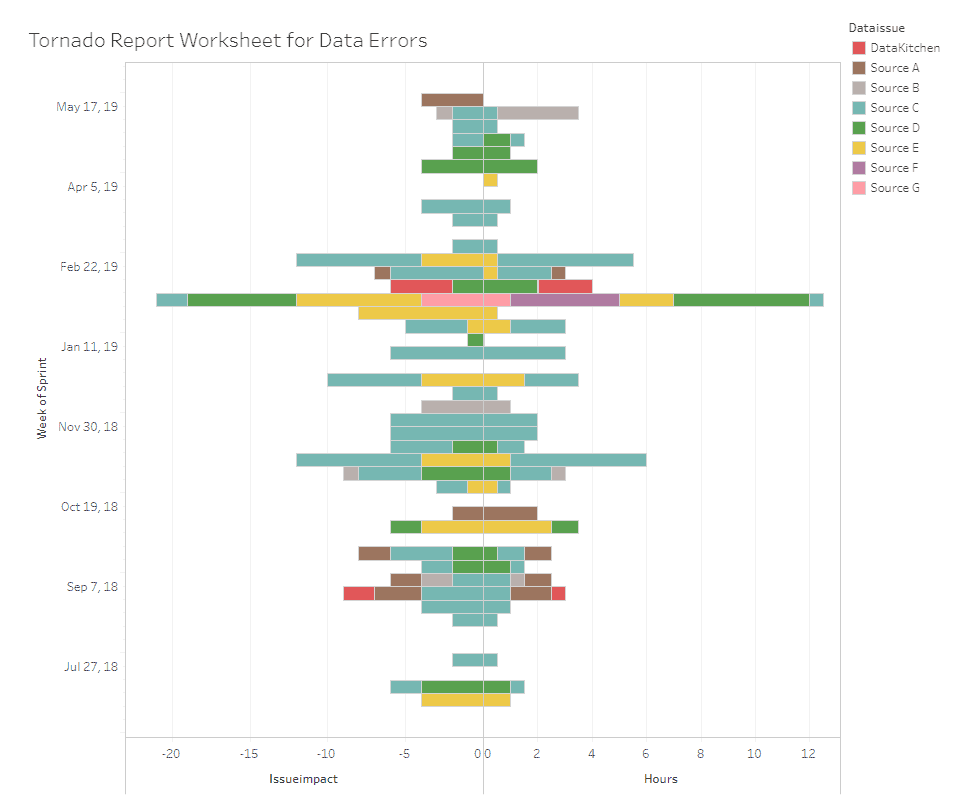
You can’t improve what you don’t measure. The DataKitchen Platform provides unprecedented visibility into the state of your data operations.  Process metrics show how your teams are increasing collaboration, improving productivity, expanding test coverage, reducing errors, speeding deployment cycle times, and consistently meeting deadlines.