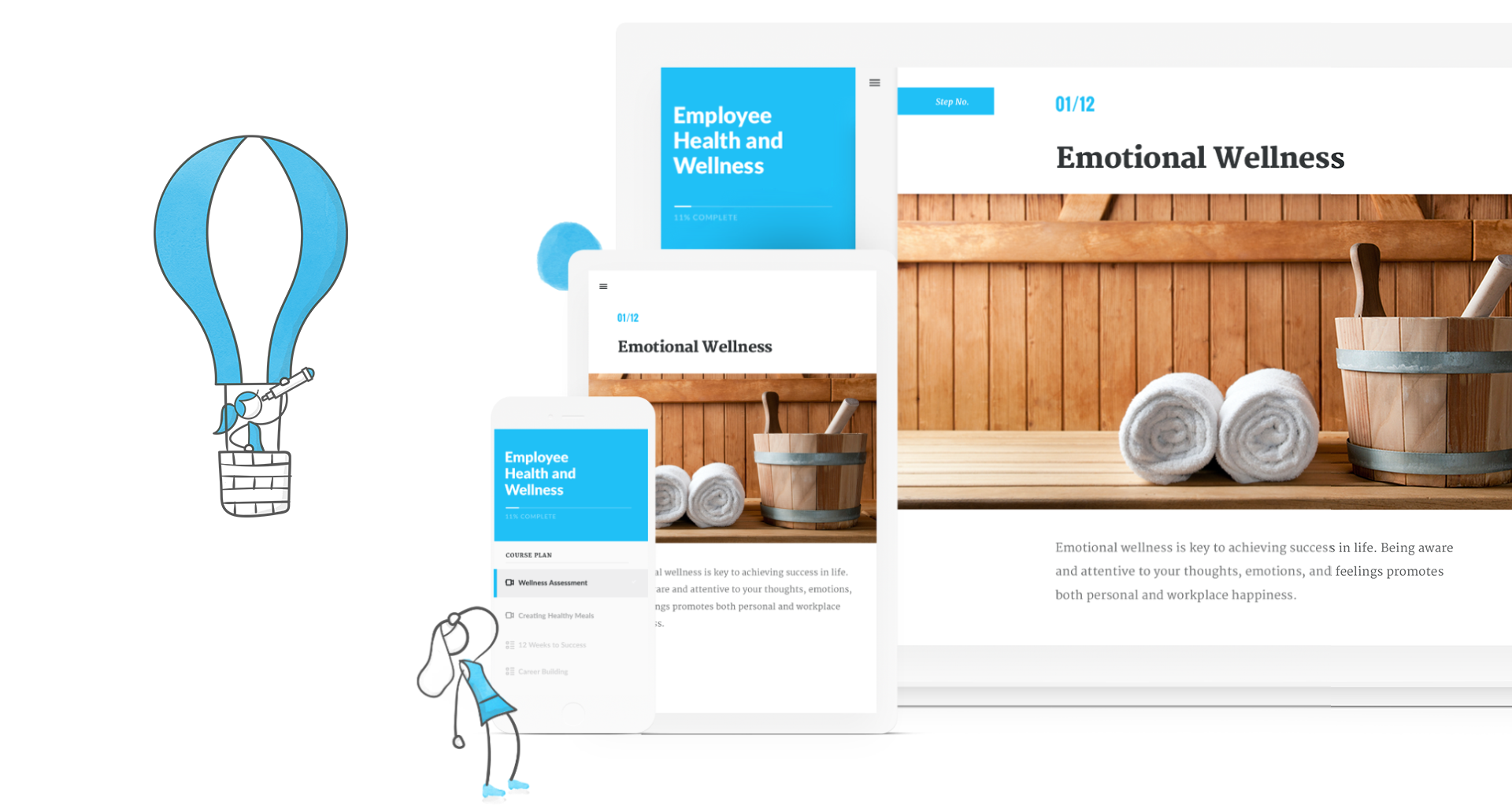
Articulate 360 is an e-learning platform for creating workplace training. Users can build engaging courses with AI-enhanced authoring, simplify collaboration, and quickly share content. A subscription includes robust onboarding resources and access to a community of 1.5M pros.
$1,124
per year
Microsoft Powerpoint Online
Score 6.9 out of 10
N/A
PowerPoint for the web, or Powerpoint Online (formerly PowerPoint Web App) is similar to the installed version, however it allows users to create presentations directly from a browser, with no need for an installation.
N/A
Pricing
Articulate 360
Microsoft Powerpoint Online
Editions & Modules
Articulate 360 Standard - Academic - Teams Plan
$1,124
per year
Articulate 360 Standard - Personal Plan
$1,199
per year
Articulate 360 AI - Personal Plan
$1,449
per year
Articulate 360 Standard - Teams Plan
$1,499
per year
Articulate 360 AI - Teams Plan
$1,749
per year
No answers on this topic
Offerings
Pricing Offerings
Articulate 360
Microsoft Powerpoint Online
Free Trial
Yes
No
Free/Freemium Version
No
No
Premium Consulting/Integration Services
No
No
Entry-level Setup Fee
Optional
No setup fee
Additional Details
If you’re new to Articulate 360, you can try it out free of charge for 30 days. After the trial period is over, you can subscribe to one of our packages.
Articulate 360 is available on the Articulate website and through Articulate Authorized Resellers.
We use Vyond in conjunction with Rise obviously. They work well together. Captivate I always found clunky and, like many Adobe products, unintuitive as all their products don’t have the same interface. Makes no sense.
I've observed it really didn't have much interest in it also. Well, in the past I've used Captivate was just so painfully difficult to use. It's not user-friendly or intuitive for learners to really understand how to use. I mean, it's powerful, but it's nothing like Articulate. …
So I started off, the very first authoring tool I ever used was Captivate over 10 years or 15 years ago, that kind of thing. I think that was just because that was the tool that the team was using at the time. That was my first experience ever with an authoring tool. I found …
We use Adobe Captivate and I wouldn't recommend that at all. I don't know, it's not quite the same. But we also, we use Camtasia and we use Adobe products. I know that that's not quite the same thing, but in terms of e-learning authoring, I can't think of another format that …
The only one that we've used with putting this together. We've tried Beyond, we've done things with that, but it's nowhere near what Articulate 360 can put together. I can't do testing and I can't do all these other features that come with Storyline or come with the Articulate …
I've used Adobe Captivate. I found that to be a little more complex than it needed to be. I've used Beyond as well, which is kind of not really a competitor, but I found these styles to be a little outdated.
The user interface is so similar to PowerPoint that it makes it easy to learn how to use the product. Adobe Captivate is ok, but the user interface is challenging to navigate for new users. Adobe Captivate also has an issue right now where they have new features in the "New" …
Compared to other products I’ve used such as Adobe Captivate, uPerform, Articulate Studio and more, Articulate 360 strikes the best balance between pre-built (yet customizable) interactions as well as having open-ended development capabilities, all in a very user-friendly …
I like Captivate because it allows for more coding. I don't like that things are so easy it looks so cookie cutter. Same style of graphics or interactions.
So far I've only used camtasia for its video editing. I don't know what else it has to offer really. But I am sorry to say that articulate doesn't hold a candle in the wind to what Camtasia has to offer in terms of the video editing capacity. Camtasia is a amazing product. I …
For most projects, Storyline is the best of all of these. Not sure what Adobe is doing with Captivate. The attention that Articulate pays to Storyline & updates vs Adobe doesn't to Captivate is telling.
In terms of overall performance (drive integration, media management, speed, collaboration) I think Microsoft Powerpoint Online is way behind Google Sheets or even FIGMA. General productiveness fell greatly after our company forced the usage of Microsoft Powerpoint Online, …
Microsoft Power is still the easiest product due to it have matured over the years and integrates well with the rest of the other MS Office products. Also since the product is very popular sharing or working together on a slide deck is simplified.
Powerpoint's ease of use makes it stand out. You can build custom presentations easily, and even those without extensive skills can do this. It makes it a good tool for a whole organization, rather than each team having its own tool.
Microsoft PowerPoint Online may not have all features of the desktop version, but still it has some necessary tools and features which is why we use it. We also use the desktop version, and Google slides [another presentation tool which helps us store files to drive]. …
I have used Prezi also in my last company along with Microsoft Powerpoint Online. But I feel that Prezi has also good features like designs, frames, themes etc but this tool is really complex to use as compared to Microsoft Powerpoint Online.
So other than Microsoft Powerpoint Online we are using Google slides which is available with the google drive, Creating presentations with Microsoft Powerpoint Online is much more easy and less time consuming.
I have used Canva and Google Slides and Powerpoint is any day better than them. Especially now Powerpoint is online too and hence Google slides is no more useful for us.
Microsoft PowerPoint online (and its offline sister) are the industry standard for a reason. They have been around the longest, and most people are familiar with how to use them. The competitive software packages are all built on the same foundation as PowerPoint, but none of …
The most similar online presentation I've found is google slides. PowerPoint online keeps more characteristics of the document (animations, text typography, etc.) when uploading from a desktop.
Articulate provides for simple, custom interactive training modules. There isn't much wrong with this software that I have found. Using Rise 360 for quick turnaround or fully customized training with Storyline 360. Articulate has made the possibilities limited only to my imagination. Their simple and well-thought-out toolbars make starting from scratch a breeze.
Anyone who needs to use Microsoft PowerPoint collaboratively with team members in different locations would do well to let PowerPoint online take care of the dirty work. If you experience issues related to version control - and who doesn't? - this is a worthwhile investment. Plus, PowerPoint online is really the gold standard. Other online software suites do things similarly, but learning curves are eliminated altogether if you are collaborating with a team member who's already familiar with PowerPoint.
It just seems to be very intuitive for instructional designers, especially nowadays from what I'm seeing with the new AI. But it's very intuitive. It's better than any other tool authoring tool that I've tried. I think it's just really outstanding in the industry and that's evidenced by every year. Demo Fest, like 95% of the best examples are all done in Articulate products.
The most hiccups that I've recently experienced are honestly involved with AI and just my trying to learn AI and figure out how we can maximize that for our business case. The AI voiceover is what I'm specifically curious about and trying to learn more. So in regards to the AI, there's still some shuffling needs to be done. SSML that needs to be added for it to read correctly. There is a very large amount of voices and dialects, which I think is beneficial. It was also a little overwhelming in trying to play around with it and find that right part. So just continuing to look through the community and find the guidance that I need to essentially make the audio, make the voiceover work better and read the words correctly. For example, one of my most popular courses that I sell is Record Your Time and it kept reading, it records your time, and I could not figure out how to make those words. We've submitted a ticket, you guys have been very helpful, but we can't really figure out how to make those little nuances work with the complex English language.
It goes without saying that Artculate's products are the easiest to use and offer a great deal of functions with flexibility. Once an eLearning author uses the product it becomes tempting to not use other methods, but one would be wise not to limit him or herself to a single learning authoring platform. On the other hand, if given a single choice of a tool for rapid eLearning development, Articulate's Storyline would be a top choice.
I would rather change to other tool if I could. Microsoft Powerpoint Online was top-down forced without a real technical (maybe financial only) reason, and I think the product itself looks like a poor adaptation of the offline version. In my experience, it cannot be properly used in real time collaboration, can't handle large media (images/videos), has low performance even for a single user, it is a nightmare.
Overall, Articulate is fairly easy to use and intuitive. They have excellent training materials in the training videos on the website, as well as good technical support. Someone with limited expertise doing content creation would be able to immediately pick up functions and get started in the software. I was able to create my first course within an hour or so of opening it up.
I rate the overall support for Articulate 360 with a 9. On the one hand because of the smooth and accurate support from Articulate's support team (usually within 24 hours) and on the other because of the commitment / use of a community (e-learning Heroes) where I have all kinds of insights from other helpful users.
The online training options given by the online tutorials, forums, and "E-Learning Heroes" community are simply awesome. Examples galore, easy to understand descriptions including step-by-step guides, images, occasionally videos, and the "Articulate Insiders" sub-community give you more materials to learn about Storyline than you are likely to be able to read.
It is pretty straight forward and easy to implement is you are already creating eLearning. If you have old courses created in other versions of Articulate I recommend you update them to the new version even though it is not necessary (especially From Storyline3 to 360) but if you don't you may find difficulty opening and keeping things straight
For me, since I had used Articulate prior to using Lectora, I found Lectora to be very archaic. It was cumbersome to create triggers, and I had issues getting my scenarios to play correctly. My company switched to Articulate after my request, and I was able to recreate all of our modules into Storyline. Now I am able to manage our scenarios with efficiency and ease. Articulate products are intuitive and very easy to understand
I have used Prezi also in my last company along with Microsoft Powerpoint Online. But I feel that Prezi has also good features like designs, frames, themes etc but this tool is really complex to use as compared to Microsoft Powerpoint Online
Definitely more accessible course creation. How we're able to add accessibility features into our trainings is unparalleled with captioning, with voice overing, with alternate texts for images. There's so many ways that it creates our trainings to be more accessible for our audience.
It has made it easier for the training to be well handled and transitioned to the work-at-home life faster.
a lot of people is used to the installed version of PowerPoint, the online version is a familiar look and feels to the times when we were working from the office, which made the transition faster and easier for everyone.