athenaIDX is an on-premise or cloud-hosted enterprise RCM solution that helps health systems, hospitals, billing services, and large practices optimize financial performance and successfully adapt to healthcare payment reform. It is based on the Centricity medical practice and EMR software that was formerly owned and supported by GE Healthcare acquired by Veritas Capital in 2018, spun off into a new entity (Virence Health), and then rebranded as a product of athenahealth (also a Veritas…
N/A
CareLogic EHR
Score 10.0 out of 10
N/A
Qualifacts, headquartered in Nashville, is the developer of the CareLogic enterprise electronic health record system. CareLogic provides scheduling, documentation, billing and reporting designed specifically for behavioral health and human services organizations across the United States.
N/A
Pricing
athenaIDX
CareLogic EHR
Editions & Modules
No answers on this topic
No answers on this topic
Offerings
Pricing Offerings
athenaIDX
CareLogic EHR
Free Trial
No
No
Free/Freemium Version
No
No
Premium Consulting/Integration Services
No
No
Entry-level Setup Fee
No setup fee
Required
Additional Details
—
—
More Pricing Information
Community Pulse
athenaIDX
CareLogic EHR
Considered Both Products
athenaIDX
Verified User
Anonymous
Chose athenaIDX
Athena IDX is more expensive, has less features, is less modern, interfaces with our modern systems poorly and has actively created more manual work across the company. Each of the systems above are better in every conceivable way compared to this program.
Athena IDX is more reliable than other platforms. It rarely has latency challenges where it has to be intermittently shut down or updated. It is accessible on multiple devices and overall, easy to use and navigate.
During my medical rotations I have used multiple products similar to Centricity, but I found Centricity to be one of the easiest to use and one of the easiest systems to learn.
I did not select Centricity. It was the hospital's main EMR during my rotation there. I would say Soarian is best, but only because I have used that EMR more than the others.
Cerner was much less organized, and users in our company generally felt it was harder to utilize. There was less options for customization that fit our specific use demographics, and crashing was much more frequent. Obtaining hard copies through Carelogic EHR, by Qualifacts is …
CareLogic is more a affordable that other competitors. CareLogic takes less time to understand and incorporate. I would say that it has its limitations and is not as intuitive. There is a lot of clicking back and forth between functions and can be annoying. There is also …
CareLogic is severely lacking compared to systems such as Allscripts and EPIC. Even NextGen has more options for medical professionals for charting, achieving quality improvement measures, and medication e-prescribing and tracking.
CareLogic is extremely user friendly and intuitive. It also has a very nice Windows-based user interface which is pleasant to look at and easy to read.
Athena is a well-suited electronic medical record system for those professionals that work in a medical center, hospital, clinic, and/or outpatient clinic that need to provide frequent and accurate documentation for insurance providers and all other members of the care team. It might be less appropriate for a small agency.
CareLogic is a fairly low-cost EHR. It would work well for a small practice/agency where you will be focused on one thing. Agencies with multiple areas (i.e. outpatient, inpatient, case management) should use caution as it is difficult to ensure a user is only accessing the information they should have access to. The ability to manage many different types of programs is difficult with this system. Any agency looking to be able to report on their data should look elsewhere.
One of the best things about Centricity is it is flexible. We are able to add a data point behind a term (CPS calls this an observation term) and track any data needed. These observation terms also allow us to pull information forward and display information needed to make a good decision or used to decrease errors. For example in our history forms given to the patients one of the questions is side of injury. This affected side displays on our EMR forms which helps providers and prevents mistakes.
CPS integrates with other programs. We are paperless and use DocuSign to send each patient their history, ROS and all new paperwork. This allows us to import the history into the forms and has saved us from adding extra staff (FTEs) to room and take history. The history form can be completed at home or in the waiting room. Each section has a observation term behind it and allows it to be placed into the note at the correct section. Since we have a fully integrated product we do not have to have another program to enter or transfer our charges from the EMR to the PM side of the program.
Our notes look great! We did a lot of customization which gave us the detail and look we wanted. It seems like a lot of work at first, but the outcome has so much efficacy. We increased our providers without having to increase our staffing and it is due to he efficiencies we gained by using the EMR.
One other note, Centricity is flexible but that means it is complicated. You can not have flexibility without it be complicated don't let that stop you the end results can be great.
Statements print only current open accounts, would be nice to print a total statement for patients so they can see if payments are split between open and closed/zeroed out accounts
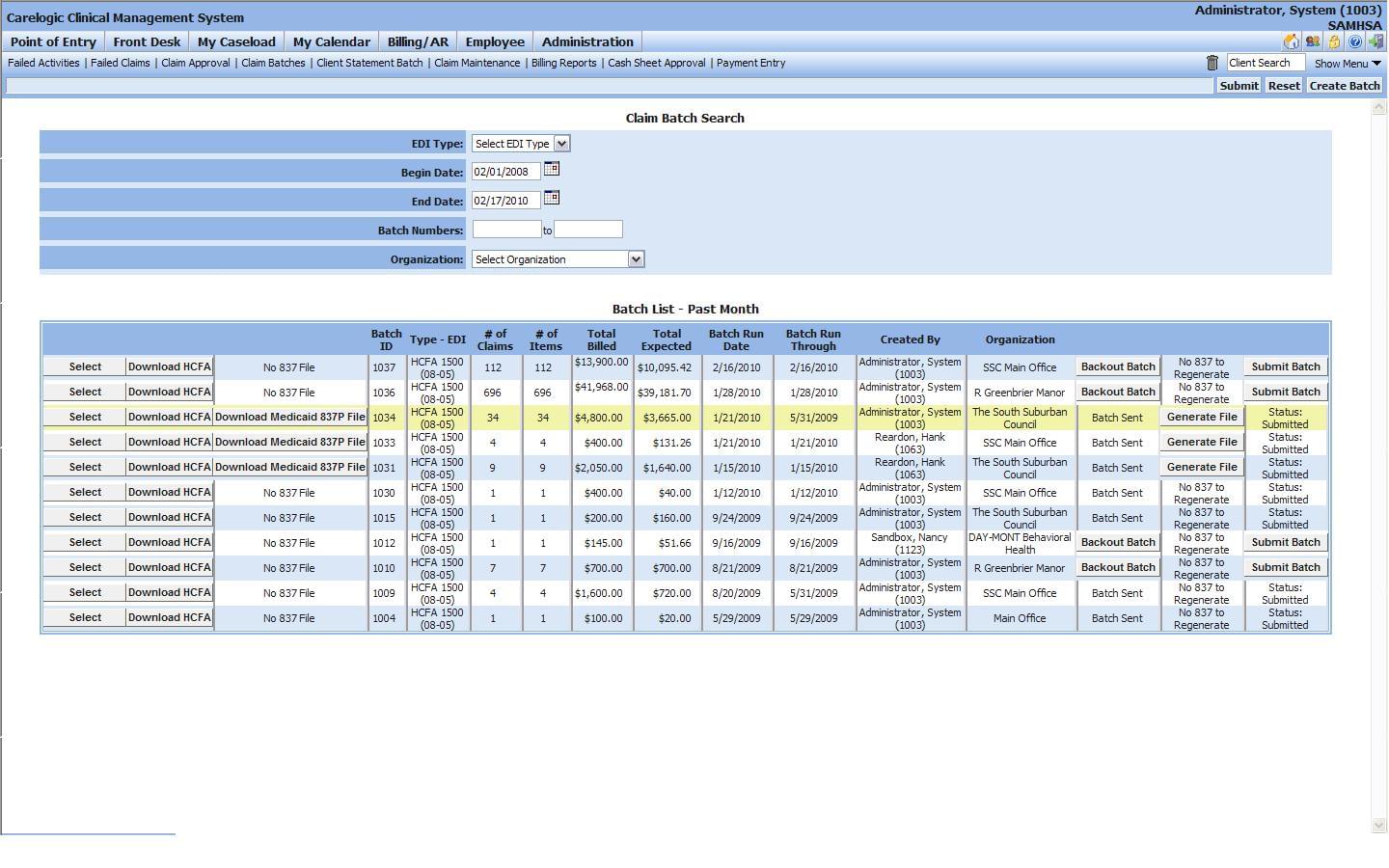
CareLogic needs to update its user interface. Outside of the fact that it looks like it's running on the Windows 2000 operating system, navigating takes a massive effort. Nothing seems to be where you would think it would be, however, if you favorite the items you use the most, they are only two to three clicks away.
Reporting functionality is terrible. Without an intimate knowledge of how the reports are configured, moving our billing data from CareLogic to our accounting system produces errors every month. We have had to hire a consultant to help us figure out the errors and why they keep occurring which brings me to my next point.
Customer service could be better. In my experience, I'm typically on hold and when I finally get someone on the phone they have no idea what the issue is. Since we use CareLogic throughout our organization, any amount of wait time on getting the system fixed causes massive chaos because we use the system to make notes in our client files.
The rating of "3" represents CareLogic's quick loading of pages, however, the reports are super slow and there is no progress bar or notification to let you know if a report is running or not. I've let a report run for an hour before only to find out that the interface never registered my click to run the report.
The customer support at Qualifacts is great. When you have an issue you can submit a ticket to support and they're on top of getting things straightened out and always available by phone as well. The struggle with the overall support is it doesn't seem like the needs of the users are heard. When you ask for what should be a simple fix or something that seems the system is missing, it gets labeled an Enhancement Request which is where requests go to pasture.
Training consists of overly specific points with no general process considerations. Trainers will regularly go 'into the weeds' on pointless edge cases while the meat of the training still needs to be addressed.
Athena IDX is more expensive, has less features, is less modern, interfaces with our modern systems poorly and has actively created more manual work across the company. Each of the systems above are better in every conceivable way compared to this program.
Cerner was much less organized, and users in our company generally felt it was harder to utilize. There was less options for customization that fit our specific use demographics, and crashing was much more frequent. Obtaining hard copies through Carelogic EHR, by Qualifacts is much easier as well with the print report radio button.
Extremely expensive software for the limited feature set. We're talking millions of dollars with off hours support (anything outside of 8-6EST) that starts at $1200 for the first hour and $300 for each hour afterwards.
Multitasking isn't a thing unless you assign more licenses (thereby increasing your costs). Users can quite literally only have one IDX window open at a time unless you assign more licenses. This slows down everyone as there are plenty of times where examining different parts of a patient's profile is useful.
Reporting has been nearly impossible as we use modern reporting software. IDX's analytics site is firmly stuck in the 1990s and lacks decades of innovation present in something like Power BI.
Nickel and diming philosophy. A limited API server costs ~$10k/month. Setting up a new facility in IDX costs you and requires a 4 month lead time. Many more instances of this.