Automox is an endpoint management solution used to keep desktops, laptops, and servers updated and ready for users anywhere in the world. Using automation, IT can fix critical vulnerabilities and boost user productivity.
N/A
ManageEngine Patch Manager Plus
Score 9.0 out of 10
N/A
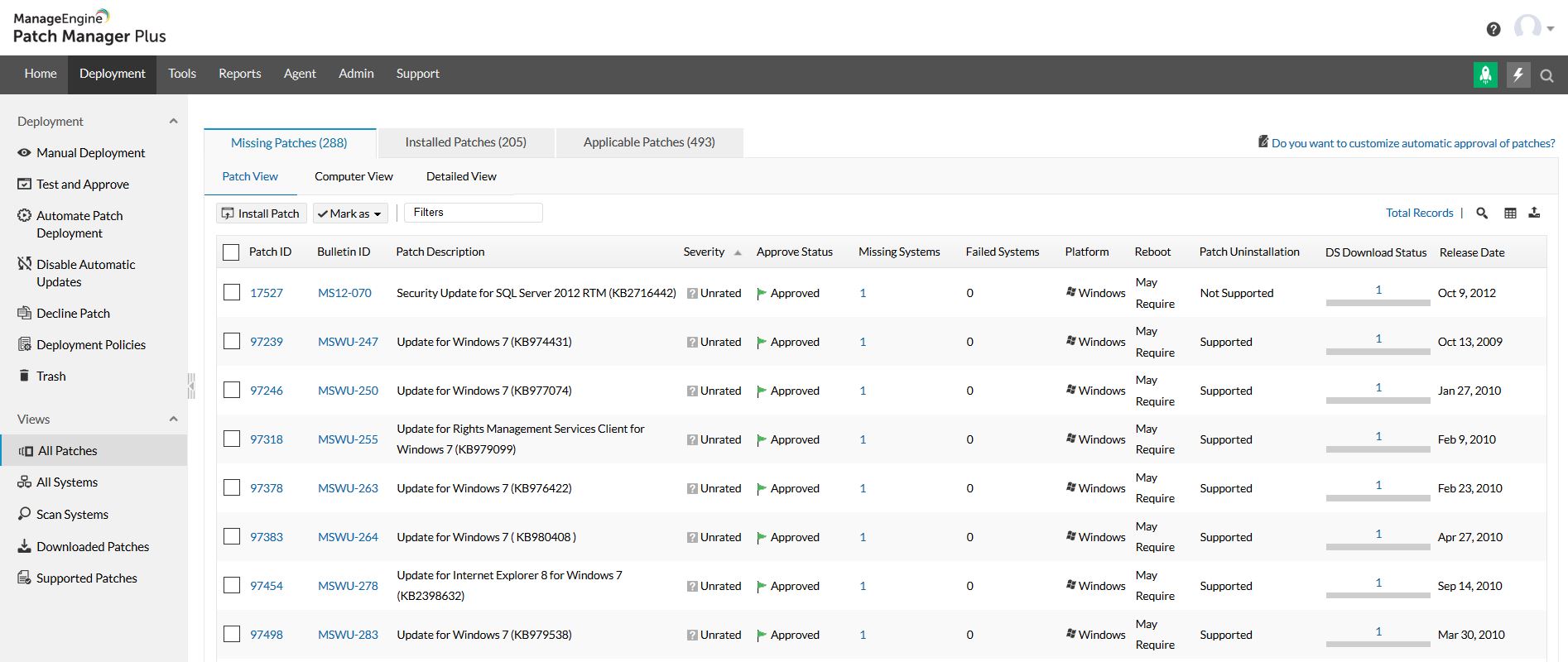
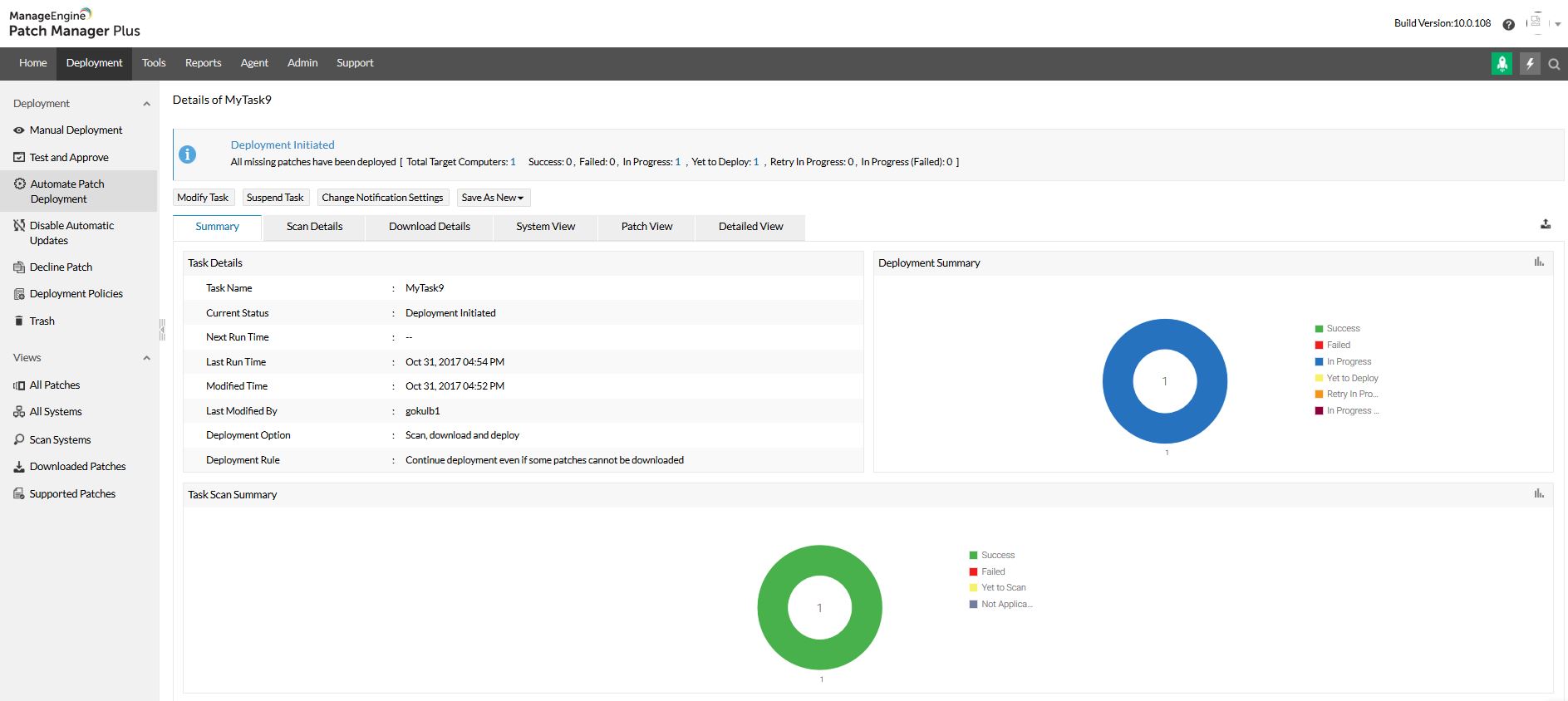
Patch Manager Plus is an automated patch management software that provides enterprises with a single interface for all patch management tasks. The vendor claims it works across platforms, helping users patch Windows, Mac, Linux & 300+ third-party applications. With Automated Patch Deployments, users can automate the entire process of patch management:…
$245
50 endpoints
Pricing
Automox
ManageEngine Patch Manager Plus
Editions & Modules
No answers on this topic
Professional
$245.00
50 endpoints
Enterprise
$345.00
50 endpoints
Professional
$345.00
50 endpoints
Enterprise
$445.00
50 endpoints
Offerings
Pricing Offerings
Automox
ManageEngine Patch Manager Plus
Free Trial
Yes
Yes
Free/Freemium Version
No
Yes
Premium Consulting/Integration Services
No
No
Entry-level Setup Fee
No setup fee
Optional
Additional Details
Automox can patch macOS, Windows, and Linux endpoints with PatchOS, an offering at $1 per endpoint/ month with an annual commitment.
The Automate Essentials or Automate Enterprise packages are for scaling IT automation, endpoint configuration, and software updates.
Modules are available with Automox Assist, a one-on-one remote endpoint control and assistance for helpdesk technicians.
—
More Pricing Information
Community Pulse
Automox
ManageEngine Patch Manager Plus
Considered Both Products
Automox
Verified User
Anonymous
Chose Automox
Automox's reliability, dashboards, automation tools put it over the top of any other tool.
Automox is cloud based vs PATCH MANAGER Plus which requires on premise servers. We consistently had issues with PATCH MANAGER Plus working on remote computers even with appropriate firewall rules and configuration. PATCH MANAGER Plus had an awkward interface. Automox …
Automox requires no server installation or maintenance. Pricing is competitive. It is cloud-based with a high level of uptime. I would recommend it to mid-sized businesses with a number of remote locations and different operating systems. It is simple to use and requires no …
The competitors I evaluated seem to be more focused on MSP customers, which is not our situation. Also I used Automox at a prior company with some success.
Automox is well-suited for managing workstations but lacks flexibility for server environments. It excels in scenarios where systems may not regularly connect to the corporate network but have internet access, ensuring devices can still check in and receive timely patches. This provides organizations with confidence in maintaining patch compliance across remote endpoints. However, effective use of Automox requires staff who are proficient in PowerShell scripting. The platform has limited native support for third-party applications, often requiring custom worklets to manage software updates. It performs best in environments that primarily rely on widely used, off-the-shelf software.
Its a best tool for managing and patching an corporate environment, specially the dashboards and the UI which is relatively easy to adapt for someone without prior knowledge of Patching as well. If a company has Secure Gateway Server, then the remote deployment is a plus, it helps to even remotely deploy patches to the remote employees.
This is a software that just works. Once configured its a set and forget kind of tool that keeps things up to date and alerts me if something is wrong. I was able to work through an expansion project to deploy an additional 500 devices in almost no time and create a robust self-patching environment.
It is super simple to set up and deploy, Maintaining it also easy as pie. It gives great detailed information daily on patches that succeed and ones that fail as well. with remote, patching, scanning, and monitoring all in one pane it has saved us money hand over fist with the tools we no longer need to have for our organization.
Very easy to use once you get used to it. It can be a little overwhelming at first since there is so many thing you can do. But as soon as you get use to it, it works like a charm.
1. Simplicity and Ease of Use 2. Cross-Platform Support 3. Powerful Automation with Worklets 4. Real-Time Visibility and Control 5. Fast and Reliable Cloud-Based Updates 6. Strong Security Focus
The support team at Patch Manager Plus has been awesome. Very responsive and knowledgeable. There are times when there is confusion between different tickets but there is still good service.
Implementing Automox successfully starts with a clear strategy for organizing and grouping devices based on operating systems, environments, or business criticality. This ensures that patching and configuration policies can be applied with precision. A phased rollout approach is essential—beginning with a pilot group allows teams to test patching schedules, reboot behaviors, and custom Worklets before scaling across the organization. Leveraging Worklets from the start can significantly boost automation by enforcing security baselines and performing routine system tasks. Integration with existing SOC tools, such as SIEMs, enhances visibility and response time by correlating patch compliance with threat intelligence. Additionally, aligning patching schedules with operational downtimes minimizes disruptions, and consistent monitoring and reporting helps maintain compliance and prepare for audits. Overall, Automox offers a streamlined and effective solution, but its true value is unlocked through thoughtful planning, testing, and integration with existing IT and security workflows.
We felt that Automox provided us with the functionality our MSP offered, including OS and device patching, as well as remote control capabilities, but in a better and more manageable way. We also felt the usability of the tool gave us the ability to be effective in our way of working, as well as integrating with Rapid7 was a massive benefit for us.
SolarWinds was not selected because it runs on top of SCCM which in itself is problematic and unreliable. We need an application that runs in standalone mode and does not rely on any other application. SolarWinds is also one of the most expensive. Kaseya and GFI LanGuard are overkill as they contain functionality that we do not need or already have. GFI LanGuard for instance does security auditing the same as Qualys that we already have. Kaseya is a full management and automation solution.
Being a start up, we have pivoted our strategies a number of times. The pay as you go model has worked very well for us, and has prevented us from overprovisioning
The time saved pulling reports to provide to auditors has been well worth our small spend on the solution
We have no need to maintain a scanning tool or invest in hardware thanks to the SaaS nature of Automox