Chose AWS CloudFormation
Since the product I'm involved is primarily hosted on AWS we use CloudFormation but in some other products where we have hybrid cloud deployments we prefer terraform which is opensource.

| Product | Rating | Most Used By | Product Summary | Starting Price |
|---|---|---|---|---|
 AWS CloudFormation | N/A | AWS CloudFormation gives developers and systems administrators a way to create and manage a collection of related AWS resources, provisioning and updating them in a predictable fashion. Use AWS CloudFormation’s sample templates or create templates to describe the AWS resources, and any associated dependencies or runtime parameters, required to run an application. Users don’t need to figure out the order for provisioning AWS services or the subtleties of making those dependencies work.… | $0 | |
 Red Hat CodeReady Workspaces | N/A | Red Hat CodeReady Workspaces uses Kubernetes and containers to provide any member of the development or IT team with a consistent, secure, and zero-configuration development environment. It is the next stage of the former Codenvy.io, owned and supported by Red Hat since the May 2017 acquisition, which was presented as a customizable containerized developer workspace that handles provisioning, scaling, and stopping. | N/A |
| AWS CloudFormation | Red Hat CodeReady Workspaces | |||||||||||||||
|---|---|---|---|---|---|---|---|---|---|---|---|---|---|---|---|---|
| Editions & Modules |
| No answers on this topic | ||||||||||||||
| Offerings |
| |||||||||||||||
| Entry-level Setup Fee | No setup fee | No setup fee | ||||||||||||||
| Additional Details | There is no additional charge for using AWS CloudFormation with resource providers in the following namespaces: AWS::*, Alexa::*, and Custom::*. In this case you pay for AWS resources (such as Amazon EC2 instances, Elastic Load Balancing load balancers, etc.) created using AWS CloudFormation as if you created them manually. You only pay for what you use, as you use it; there are no minimum fees and no required upfront commitments. When you use resource providers with AWS CloudFormation outside the namespaces mentioned above, you incur charges per handler operation. Handler operations are create, update, delete, read, or list actions on a resource. | — | ||||||||||||||
| More Pricing Information | ||||||||||||||||
| AWS CloudFormation | Red Hat CodeReady Workspaces | |
|---|---|---|
| Considered Both Products | AWS CloudFormation  Manuela Jacqueline Mercado Rodríguez Senior Full Stack Developer Chose AWS CloudFormation AWS CloudFormation has more features and robustness. It is suited for professional projects since it provides stability and a wide variety of options for configurations. These include not only dividing stacks by specific code changes, but also in regions. This allows more … | Red Hat CodeReady Workspaces No answer on this topic |
| AWS CloudFormation | Red Hat CodeReady Workspaces | |
|---|---|---|
| Small Businesses |  HashiCorp Terraform Score 8.5 out of 10 | HashiCorp Terraform Score 8.5 out of 10 |
| Medium-sized Companies |  Ansible Score 9.2 out of 10 | Ansible Score 9.2 out of 10 |
| Enterprises | Ansible Score 9.2 out of 10 | Ansible Score 9.2 out of 10 |
| All Alternatives | View all alternatives | View all alternatives |
| AWS CloudFormation | Red Hat CodeReady Workspaces | |
|---|---|---|
| Likelihood to Recommend | 7.6 (0 ratings) | 10.0 (0 ratings) |
| AWS CloudFormation | Red Hat CodeReady Workspaces | |
|---|---|---|
| Likelihood to Recommend |
|
 jafar shareef Software Engineer |
| Pros |
| No answers on this topic |
| Cons |
|
jafar shareef Software Engineer |
| Usability |
| No answers on this topic |
| Alternatives Considered |
| No answers on this topic |
| Return on Investment |
|
jafar shareef Software Engineer |
| ScreenShots | AWS CloudFormation Screenshots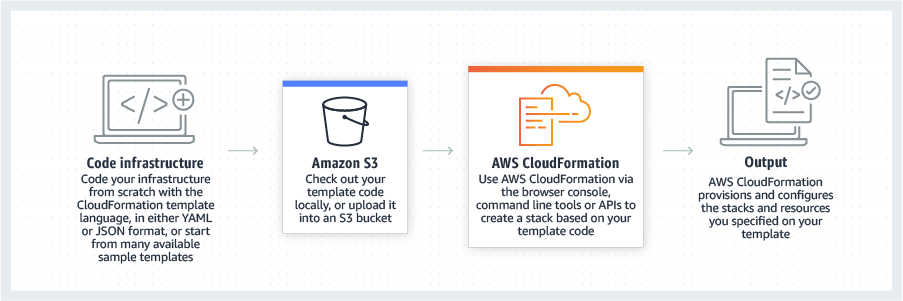    |