Chose Bonita Platform
We liked Bonita's architecture, the open-source framework, and the licensing and support model. Maybe fewer features than other BPM platforms but easier to implement and maintain.

| Product | Rating | Most Used By | Product Summary | Starting Price |
|---|---|---|---|---|
 Bonita Platform | N/A | Bonita is an open-source business process and workflow management platform created by the French National Institute for Research in Computer Science. It is available as a free community edition or as a commercial subscription product. | N/A | |
 Process Street | N/A | Process Street in San Francisco offers their application which allows teams to create simple recurring checklists, collaborate around them and track as they’re completed. | $0 per month per user |
| Bonita Platform | Process Street | |||||||||||||||
|---|---|---|---|---|---|---|---|---|---|---|---|---|---|---|---|---|
| Editions & Modules | No answers on this topic |
| ||||||||||||||
| Offerings |
| |||||||||||||||
| Entry-level Setup Fee | No setup fee | No setup fee | ||||||||||||||
| Additional Details | — | — | ||||||||||||||
| More Pricing Information | ||||||||||||||||
| Bonita Platform | Process Street | |
|---|---|---|
| Considered Both Products |  Bonita Platform  Edison Jovanny Lider BPM Chose Bonita Platform for its flexibility, which is greater, and support for open source  Antoine Chami Responsable du Developpement Chose Bonita Platform Far better design and more intuitive than other solutions. BDM is a great tool for non IT users and help[s] them understand how structured data will improve the work. Community Edition allows us to already manipulate the software and appreciate the power of the tool. I enjoyed …  Armando Miguel Brito Criado Lider BPM Chose Bonita Platform Bizagi and Bonitasoft have many similarities, an excellent process engine and integrated Data Model, unlike Kofax TotalAgility. But Bizagi beats it in the form designer.  Pranshu Sharma BSS Application Sr Specialist Chose Bonita Platform Bonita is lightweight. It is easy to configure as against SOA which requires heavy lifting and complex code/configuration management.  Maciej Michalak Software developer Chose Bonita Platform I found Bonita BPM a more friendly environment, especially when it comes to front-end development. It is also better suited for a gradual introduction to an organization - PoC with Community edition, later upgrade to one of the subscription editions as needed. Tibco's product …  John Wadie Solutions Architect Chose Bonita Platform Implementing Bonita was more cost effective than the other options.  richard gay IT applications manager Chose Bonita Platform
 Clive Rethman Authorised Partner Chose Bonita Platform Bonitasoft is easier to implement and support.  David Edson Principal Consultant - Solution Architect Chose Bonita Platform The extensibility or ability to add functions or modify existing capabilities is much easier and better supported in Bonita. The ability to integrate the Bonita system into customer solutions is much easier and allows for tightener coupling to the existing customer portals. The … |  Process Street  Avram Penner Accounting & Financial Systems Manager Chose Process Street We did not evaluate any alternatives to Process Street prior to implementing it. I had been searching for this particular software solution for years but didn't find anything quite as flexible until this came across my desk unexpectedly.  Malessa Brisbane Web Marketing Consultant Chose Process Street I've tried other checklist tools like Google Keep, but it was too simple. I've tried Flowster, which is very similar to Process Street, but I like Process Street better. The interface is a lot more balanced and pleasant to look at. I found Flowster to be a less appealing …  Nora Delolli Marketing & Listing Manager Chose Process Street The customer interface was not as user-friendly for either of these and the customer service was mediocre at best. I received exceptional customer service from PS and really enjoyed the simplicity of the facing pages.  Kevin Miller Owner Chose Process Street Before Process Street, I had seen nothing like this application before, as I'm a new business owner. This really stood out to me because it's something I didn't know that I needed until the sales and features pages floored me.  Hannah Schuele Customer Success Manager Chose Process Street I wasn't much involved with the selection of Process Street. In the past, we recorded most of the things that are now in Process Street using tools from Google Suite. Once we did switch over to Process Street, we started doing questionnaires in PS rather than doing on Google … Chose Process Street None in particular. I had never heard of process management systems until I heard about Process Street. Once I'd heard of Process Street, I've been using it since. |
| Bonita Platform | Process Street | |||||||||||||||||||||||||||
|---|---|---|---|---|---|---|---|---|---|---|---|---|---|---|---|---|---|---|---|---|---|---|---|---|---|---|---|---|
| Reporting & Analytics |
| |||||||||||||||||||||||||||
| Process Engine |
| |||||||||||||||||||||||||||
| Collaboration |
| |||||||||||||||||||||||||||
| Content Management Capabilties |
|
| Bonita Platform | Process Street | |
|---|---|---|
| Small Businesses |  Square 9 Softworks Score 9.1 out of 10 | Square 9 Softworks Score 9.1 out of 10 |
| Medium-sized Companies | Square 9 Softworks Score 9.1 out of 10 | Square 9 Softworks Score 9.1 out of 10 |
| Enterprises |  CMW Platform Score 8.9 out of 10 | CMW Platform Score 8.9 out of 10 |
| All Alternatives | View all alternatives | View all alternatives |
| Bonita Platform | Process Street | |
|---|---|---|
| Likelihood to Recommend | 8.2 (0 ratings) | 9.2 (0 ratings) |
| Likelihood to Renew | 6.4 (0 ratings) | - (0 ratings) |
| Usability | 7.7 (0 ratings) | - (0 ratings) |
| Performance | 8.0 (0 ratings) | - (0 ratings) |
| Support Rating | 4.6 (0 ratings) | 9.0 (0 ratings) |
| Implementation Rating | 4.5 (0 ratings) | - (0 ratings) |
| Ease of integration | 7.3 (0 ratings) | - (0 ratings) |
| Product Scalability | 7.5 (0 ratings) | - (0 ratings) |
| Bonita Platform | Process Street | |
|---|---|---|
| Likelihood to Recommend |
|
|
| Pros |
 William Wolf Architect |
Nora Delolli Marketing & Listing Manager |
| Cons |
Maciej Michalak Software developer |
Nora Delolli Marketing & Listing Manager |
| Likelihood to Renew |
| No answers on this topic |
| Usability |
| No answers on this topic |
| Performance |
Maciej Michalak Software developer | No answers on this topic |
| Support Rating |
|
Kevin Miller Owner |
| Implementation Rating |
| No answers on this topic |
| Alternatives Considered |
|
Malessa Brisbane Web Marketing Consultant |
| Scalability |
richard gay IT applications manager | No answers on this topic |
| Return on Investment |
|
|
| ScreenShots | Bonita Platform Screenshots   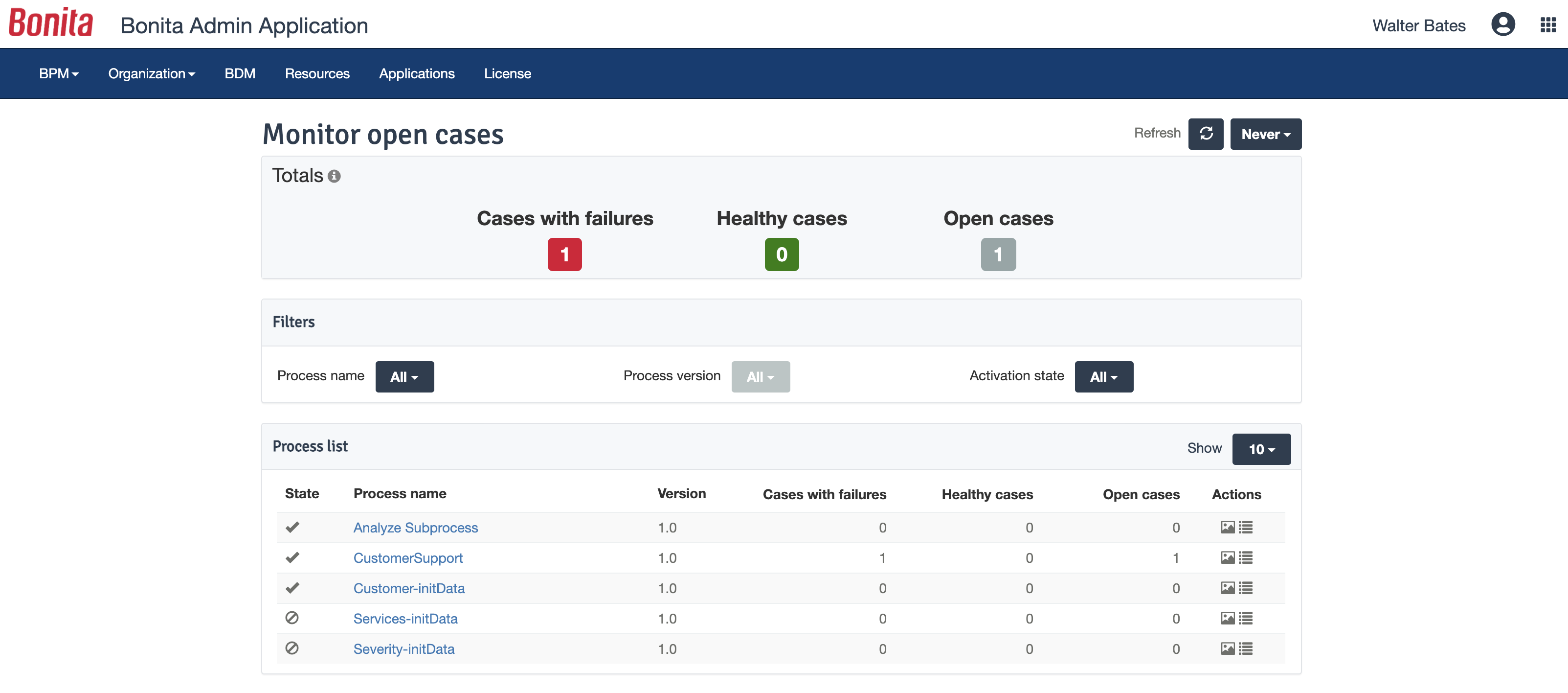  | Process Street Screenshots    |