Chose Boomi
Boomi is overall easier to manage that other SOA products we've used

| Product | Rating | Most Used By | Product Summary | Starting Price |
|---|---|---|---|---|
 Boomi | N/A | Boomi is a cloud-based, on-premise, or hybrid integration platform. It offers a low-code/no-code interface with the capacity for API and EDI connections for integrating with external organizations and systems, as well as compliance with data protection regulations. | $550 per month | |
 SnapLogic | N/A | SnapLogic is a cloud integration platform with a self-service capacity supported by over 450 prebuilt modifiable connectors. SnapLogic also offers real-time and batch integration processes for interfacing with external data sources, a drag-and-drop interface, and use of the vendors’ Iris AI. | N/A |
| Boomi | SnapLogic | |||||||||||||||
|---|---|---|---|---|---|---|---|---|---|---|---|---|---|---|---|---|
| Editions & Modules |
| No answers on this topic | ||||||||||||||
| Offerings |
| |||||||||||||||
| Entry-level Setup Fee | No setup fee | Optional | ||||||||||||||
| Additional Details | — | — | ||||||||||||||
| More Pricing Information | ||||||||||||||||
| Boomi | SnapLogic | |
|---|---|---|
| Considered Both Products |  Boomi  Fadi Dagher Solutions Architect Chose Boomi Boomi is one of the best integration platforms out there, but it still has its niche. It is suitable for most integration scenarios especially those that doesn't require very high throughput. The runtime could be hosted on-prem and in the cloud or even in a hybrid mode, which …  Lankit Patel AWS Developer | Laravel Developer Chose Boomi Compared to rest of the solutions, Boomi is centered around solving this exact problem not in just the landscape of SAP but many other backends. this puts them in place of very experienced in term of integration in wide range of scenarios. they most probably have encountered …  Jeffren Lorzano Business Solution Development Officer Chose Boomi MuleSoft and Boomi are built on totally different frameworks. Mulesoft is an API-led network whereas Boomi is an ETL middleware approach. In easy words, Mulesoft can connect to several apps and business units, can create and reuse multiple components. Boomi offers only …  Itay Rosenboim Development Manager Chose Boomi Specifically as an iPaaS solution, Boomi has a very good, easy to use, and fast to learn platform, which can be accessed from anywhere and any time.  Phi Hoang Senior Software Engineer Chose Boomi
 Cristian Bodnarasec Senior Software Development Manager Chose Boomi We have used Oracle SOA since 2010 for our custom on-premise applications integration purposes. To some extent we were successful but overall we did not manage to integrate and build other than several business processes with it. The main reasons were: - the IT …  Adam White Senior Systems Analyst Chose Boomi I would choose Boomi every day for real-time integrations. I really enjoy using it. I would struggle to recommend using it for a batch application unless you really had to. SSIS seems like it would be a better choice if doing batch jobs but the learning curve is much higher …  Rethwik Janardhanan Cloud Engineering Consultant Chose Boomi Dell Boomi is a low code cloud-based tool and it has a lot more inbuilt features compared with these tools.  Ankit Goyal Technical Consultant Chose Boomi Easy to use and supports of wide variety of systems  VenkataNaveen Kumar Senior Consultant EAI Chose Boomi We have evaluated Mulesoft as well before going with Dell Boomi. The only difference is the Complete Cloud architecture provided by Boomi and also the ease of using the software, where you don't need to install anything on a developer machine or testing machine or any quality …  Jake J. Darley Director of Finance, Revenue Operations Chose Boomi Even though Azuqua may be a bit more user friendly, Boomi can handle many more situations. Azuqua couldn't handle the majority of the processes we wanted to perform.  Britto Parthalomew Consultant Chose Boomi I have used other integration tools as well (with 10 years of integration experience). Eventually, I liked Boomi for its simplicity and easy graphical representation, development, installation, versioning and deployment. Testing Boomi processes is another plus because it is …  David Byrd Sr Integration Engineer - Dual Certified in Dell Boomi Developer 1 & 2, and Actian DataConnect Chose Boomi Our team has used Actian DataConnect since the Mid 1990's. It was formerly known as Data Junction and then Pervasive Data Integrator. We looked at Boomi as an additional tool to aid in our Integrations. We did compare it to Informatica and thought it was a better fit for … |  SnapLogic  Tony Kowalick Assistant Director of Enterprise Systems Chose SnapLogic Boomi was our runner-up product. The pricing model was much higher and cost-prohibitive. They were not as flexible with pricing on a non-profit higher education institution. We did love their integration code library shared across all clients. The user interface was on par …  Ângelo Alves Engenheiro de software Chose SnapLogic Strong user community Strong services expertise Strong consulting partnership Product functionality and performance Overall costs  Subhash Chandra Data Integration Lead Technical Architect Chose SnapLogic MuleSoft Anypoint Platform and Informatica Cloud Data Integration  Jacob Rasmussen Data Engineer Chose SnapLogic SnapLogic was a lot cheaper and does not have as steep of a learning curve |
| Boomi | SnapLogic | |||||||||||||||||||||
|---|---|---|---|---|---|---|---|---|---|---|---|---|---|---|---|---|---|---|---|---|---|---|
| Cloud Data Integration |
|
| Boomi | SnapLogic | |
|---|---|---|
| Small Businesses |  Make Score 8.9 out of 10 | Make Score 8.9 out of 10 |
| Medium-sized Companies |  IBM App Connect Score 9.5 out of 10 | IBM App Connect Score 9.5 out of 10 |
| Enterprises | IBM App Connect Score 9.5 out of 10 | IBM App Connect Score 9.5 out of 10 |
| All Alternatives | View all alternatives | View all alternatives |
| Boomi | SnapLogic | |
|---|---|---|
| Likelihood to Recommend | 9.0 (0 ratings) | 8.1 (0 ratings) |
| Likelihood to Renew | 10.0 (0 ratings) | 9.0 (0 ratings) |
| Usability | 8.0 (0 ratings) | 7.0 (0 ratings) |
| Performance | 7.9 (0 ratings) | - (0 ratings) |
| Support Rating | 6.0 (0 ratings) | 8.5 (0 ratings) |
| Implementation Rating | - (0 ratings) | 9.0 (0 ratings) |
| Boomi | SnapLogic | |
|---|---|---|
| Likelihood to Recommend |
|
|
| Pros |
Cristian Bodnarasec Senior Software Development Manager |
|
| Cons |
|
|
| Likelihood to Renew |
|
Tony Kowalick Assistant Director of Enterprise Systems |
| Usability |
Phi Hoang Senior Software Engineer |
Jacob Rasmussen Data Engineer |
| Performance |
| No answers on this topic |
| Support Rating |
|
|
| Implementation Rating | No answers on this topic |
Jacob Rasmussen Data Engineer |
| Alternatives Considered |
Jef L Business Solution Development Officer |
Tony Kowalick Assistant Director of Enterprise Systems |
| Return on Investment |
|
|
| ScreenShots | SnapLogic Screenshots  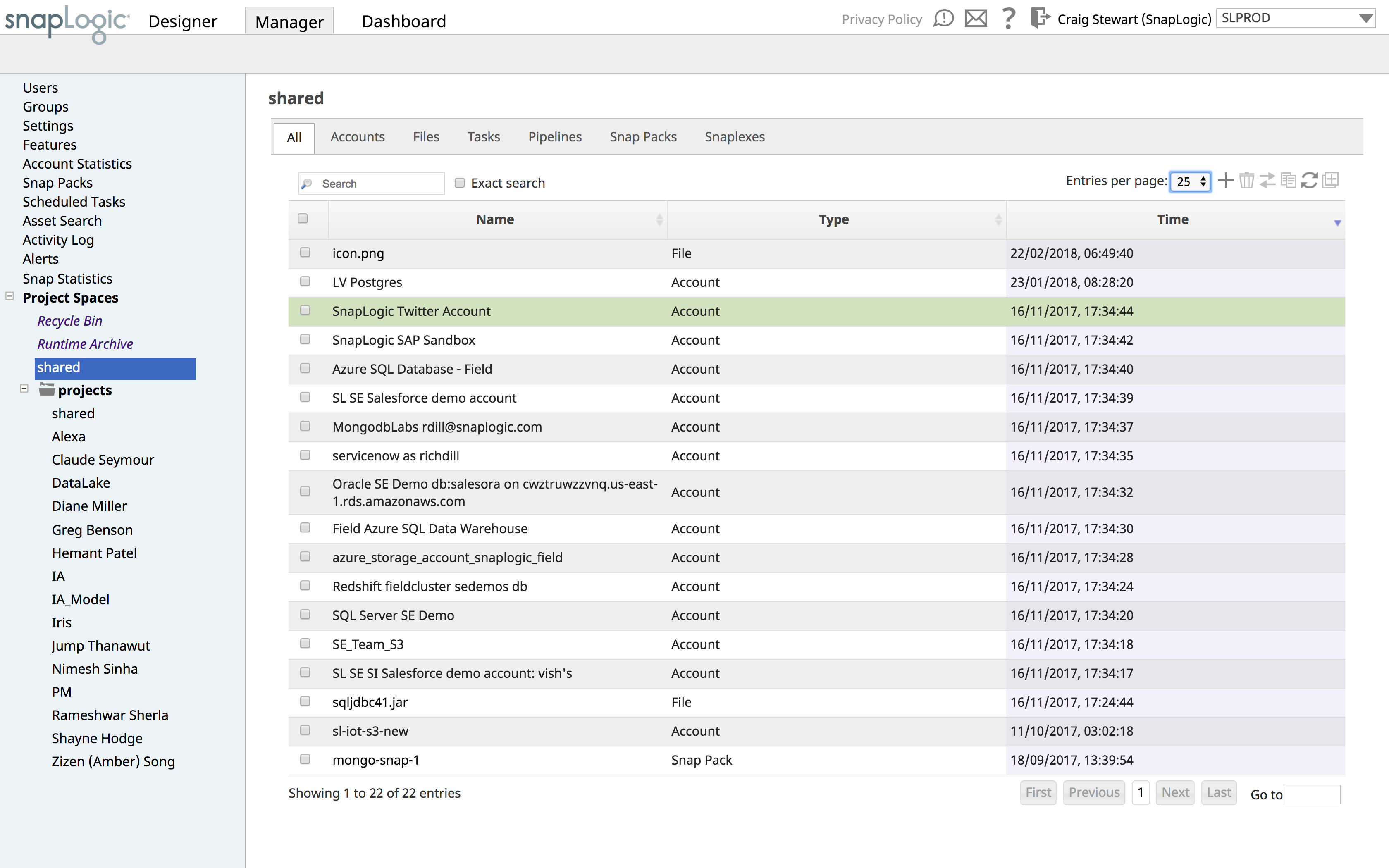 |