Chose D2L Brightspace
In my opinion, D2L Brightspace is inferior to CANVAS and Blackboard. I didn't choose it. It was selected by my employer.

| Product | Rating | Most Used By | Product Summary | Starting Price |
|---|---|---|---|---|
 D2L Brightspace | N/A | Brightspace is an academic and corporate learning management platform. It provides core e-learning features, as well as mobile accessibility and granular personalization and analytics insights. | N/A | |
 Moodle | N/A | Moodle is an open source learning management system with hundreds of millions of users around the globe and translated into over 100 languages, used by organizations to support their education and training needs. | N/A |
| D2L Brightspace | Moodle | |||||||||||||||
|---|---|---|---|---|---|---|---|---|---|---|---|---|---|---|---|---|
| Editions & Modules | No answers on this topic | No answers on this topic | ||||||||||||||
| Offerings |
| |||||||||||||||
| Entry-level Setup Fee | No setup fee | Optional | ||||||||||||||
| Additional Details | Must contact vendor for pricing information. 30-day free trial is available. | — | ||||||||||||||
| More Pricing Information | ||||||||||||||||
| D2L Brightspace | Moodle | |
|---|---|---|
| Considered Both Products |  D2L Brightspace  Traci Rushing Instructional Designer - Faculty Chose D2L Brightspace Brightspace is by far the most user-friendly LMS I have ever used. Faculty with a lower technical skill set have an easier time navigating Brightspace features. Teaching wise, I have also found Brightspace to be easier for students to navigate than its competitors. I adjunct …  John Bayerl Director of Teaching Excellence Chose D2L Brightspace In looking at Brightspace versus its competitors currently, it continues to provide the widest functionality, great value, and better ability to tailor the user experience of it to our organizations needs. The longer that our institution has had Brightspace, the more we've been …  Ai Ashe Instructor Chose D2L Brightspace This is the only other LMS I've used other than Schoology. I used Blackboard many years ago.  Joshua Melder Process Optimization Analyst Chose D2L Brightspace Brightspace offers one of the most tailored employee engagement learning platforms in existence. My organization has utilized a multitude of employee engagement and learning platforms and Brightspace has offered one of the most customized tools that we have used thus far. We …  Ho'omana Nathan Horton Graduate Teaching Assistant Chose D2L Brightspace Although it's been some time since I used Blackboard (as a student in my undergraduate degree), it felt much more intuitive at the time than Brightspace has when I've taken or taught classes. However, I don't feel especially comfortable comparing them since it's been quite …  Amanda Carpenter Administrative Office Technician Chose D2L Brightspace I used blackboard when I was in college, but that was very little. I just used it to register for classes and to view grades. Brightspace is leaps and bounds what Blackboard was when I last used it in 2010.  Tom Carlson Instructional Academic Staff Chose D2L Brightspace I have used Blackboard Learn 8 and 9. I am currently learning about Canvas. Blackboard is overall much clunkier and lacks the intuitive feel in some parts of D2L. Its grade book is much harder to control and manipulate than D2L's. Its navigation menu can be more radically …  Laura Abercrombie Adjunct English Professor Chose D2L Brightspace I was not involved in the selection process for my organization since I am only a professor. However, I have worked at 2 previous organizations that have used other online LMSs, and I think overall, D2L is at the top of the list of LMSs I find the most usable.  Terri Johnson Cisco Faculty Chose D2L Brightspace Desire2Learn was selected for me, but I find it to be simpler to navigate than Moodle, more intuitive. Blackboard was many years ago, but I find more flexibility in assigning due dates and end dates in the newer version of Desire2Learn.  Frances Wright Breland Adjunct Instructor Chose D2L Brightspace I was not involved in the choice to use Desire2Learn vs. Blackboard.  David Lloyd Faculty Development Coordinator & Emerging Technologies Specialist Chose D2L Brightspace Comparing Desire2Learn to Blackboard Vista, I actually believe that Blackboard has a better product, although it has its own set of challenges. We changed systems because of the extremely poor customer service and high level of faculty irritation with Blackboard at the time. I …  Erin Morrey Associate professor of biology Chose D2L Brightspace Desire2Learn is very good compared to Blackboard and has a lot more flexibility with presenting and organizing material. Desire2Learn is about the same as WebCT. There are similar features and while each one has its drawbacks, they are both acceptable for my current class …  Dr. Dale Shank, LCSW Mental Health Therapist Chose D2L Brightspace Comparable to Desire2Learn, many similar features to Blackboard Collaborate. Desire2Learn is more user friendly, and more stable.  Ed Lovitt Director, Distance Learning Chose D2L Brightspace The Desire2Learn system provided a greater ability to customize the learning environment than the Canvas system we evaluated. We did like the simpler interface that Canvas provides and the navigation was easy to follow. We also evaluated the Blackboard LMS and found a large …  Barbara Washington faculty Chose D2L Brightspace Blackboard does not compare  Randi Tucker Barr, MBA, PhD Online Course Professor Chose D2L Brightspace Desire2Learn is a strong competitor of Blackboard, Moodle, and Angel learning management systems. As an online course facilitator, I have used other online learning management systems and find that Desire2Learn is user friendly and provides options equal to the competition. |  Moodle  Pierre Tassel Phd, Researcher Chose Moodle Compared to Google classroom, Moodle is more flexible and more comprehensive. But the interface is a bit outdated and not very mobile-friendly. Additionally, Google classroom has nice integration with other Google's workspace tools. Google lack tools such as CodeRunner to be …  Mehmet Kanat CISO (Chief Information Security Officer) Chose Moodle Excellent community support, it is very affordable and also about costs.  Joe Foran Director Of Information Technology and HIPAA Privacy Officer Chose Moodle Moodle, being open source, is the foundation a lot of other tools like it are based on. It provides almost all of the same functionality and feature set as Google Classtoom, Canvas, etc., although those products are a bit more polished. All can do content delivery, progress …  Philip Mojares Math Teacher Chose Moodle For me, Moodle is more user-friendly because it has simpler graphical user interface and it provides the functionalities that my students and I enjoyed using. Moodle is more interactive as well and it provides efficiency in uploading, downloading, restoring and backing up …  Stacey Broughton Assessment Platform Coordinator Chose Moodle I have used other testing only platforms that have nowhere near as many functions and flexibility as Moodle.  Ramindu Deshapriya Lead Consultant - Technology Chose Moodle Moodle is better in terms of its price point (free) and its management learning curve.  Josh Musson ISR Chose Moodle It is hard to compare them with each other as they are so different. They really can't compare as they are two completely different platforms. But Moodle is great in all aspects, I like Slack for communication as well. But when it comes to tasks, Moodle handles it better …  Amy Westby High School Counselor Chose Moodle Moodle is similar to these programs, but it doesn't have all the social interaction several of these other programs have.  Grant Adendorff Human Resources Executive Chose Moodle Moodle is free and open-source, therefore deficient in a meaningful move in the training needle.  Suleman Ahmad Senior Software Developer Chose Moodle We have also developed of our own quiz launcher, but the features/flexibility that Moodle provides us can't be matched.  Christopher Power Virtual Enterprise Coordinator/Educator Chose Moodle Edmodo provides a simple platform but does not provide the depth of assignments that Moodle does. Moodle provides more assignment types, grading, deadlines, and shifting of assignments from one week to the next. Moodle is significantly more advanced in terms of what it can do …  Andrea Samadi Founder Chose Moodle When setting up our LMS in 2014, we started with a product called LearnDash that was not designed for the school market. When we moved to Moodle, we looked at Edmodo and went with Moodle for the cost to launch and get our courses up and running. We are a smaller company were … |
| D2L Brightspace | Moodle | ||||||||||||||||||||||||||||||||||||||||||
|---|---|---|---|---|---|---|---|---|---|---|---|---|---|---|---|---|---|---|---|---|---|---|---|---|---|---|---|---|---|---|---|---|---|---|---|---|---|---|---|---|---|---|---|
| Learning Management |
|
| D2L Brightspace | Moodle | |
|---|---|---|
| Small Businesses |  iSpring Learn Score 9.6 out of 10 | iSpring Learn Score 9.6 out of 10 |
| Medium-sized Companies |  Schoology Learning Score 9.7 out of 10 | Schoology Learning Score 9.7 out of 10 |
| Enterprises | Schoology Learning Score 9.7 out of 10 | Schoology Learning Score 9.7 out of 10 |
| All Alternatives | View all alternatives | View all alternatives |
| D2L Brightspace | Moodle | |
|---|---|---|
| Likelihood to Recommend | 1.0 (0 ratings) | 8.0 (0 ratings) |
| Likelihood to Renew | 9.0 (0 ratings) | 10.0 (0 ratings) |
| Usability | 6.4 (0 ratings) | 8.0 (0 ratings) |
| Availability | 9.0 (0 ratings) | 9.0 (0 ratings) |
| Performance | 9.0 (0 ratings) | 10.0 (0 ratings) |
| Support Rating | 10.0 (0 ratings) | 7.4 (0 ratings) |
| Online Training | 4.0 (0 ratings) | 6.0 (0 ratings) |
| Implementation Rating | 1.6 (0 ratings) | 9.8 (0 ratings) |
| Ease of integration | - (0 ratings) | 9.0 (0 ratings) |
| Product Scalability | 9.0 (0 ratings) | 9.0 (0 ratings) |
| D2L Brightspace | Moodle | |
|---|---|---|
| Likelihood to Recommend |
Joshua Melder Process Optimization Analyst |
|
| Pros |
Tom Carlson Instructional Academic Staff |
 Marianna Rader Assistant Professor of Psychology |
| Cons |
 Jennifer Hendryx Instructional Technology Coordinator |
|
| Likelihood to Renew |
|
 Steve Covello Instructional Designer/Rich Media Specialist |
| Usability |
Laura Abercrombie Adjunct English Professor |
 Rebecka Anderson eLearning Specialist |
| Reliability and Availability |
Randi Tucker Barr, MBA, PhD Online Course Professor |
 Pamela Akins eLearning Specialist, ITTS |
| Performance |
Randi Tucker Barr, MBA, PhD Online Course Professor |
 Helen Ware Director of Electronic Learning |
| Support Rating |
 Steven Mitchell Microcomputer Systems Specialist II |
Philip Mojares Math Teacher |
| In-Person Training |
Randi Tucker Barr, MBA, PhD Online Course Professor | No answers on this topic |
| Online Training |
 Ken Matthias Instructional Development Specialist |
 Mike Sebolt Instructional Technology |
| Implementation Rating |
Ed Lovitt Director, Distance Learning |
|
| Alternatives Considered |
John Bayerl Director of Teaching Excellence |
Joe Foran Director Of Information Technology and HIPAA Privacy Officer |
| Scalability |
Randi Tucker Barr, MBA, PhD Online Course Professor |
Pamela Akins eLearning Specialist, ITTS |
| Return on Investment |
|
 Robin Sargent Manager of Learning and Development |
| ScreenShots | D2L Brightspace Screenshots 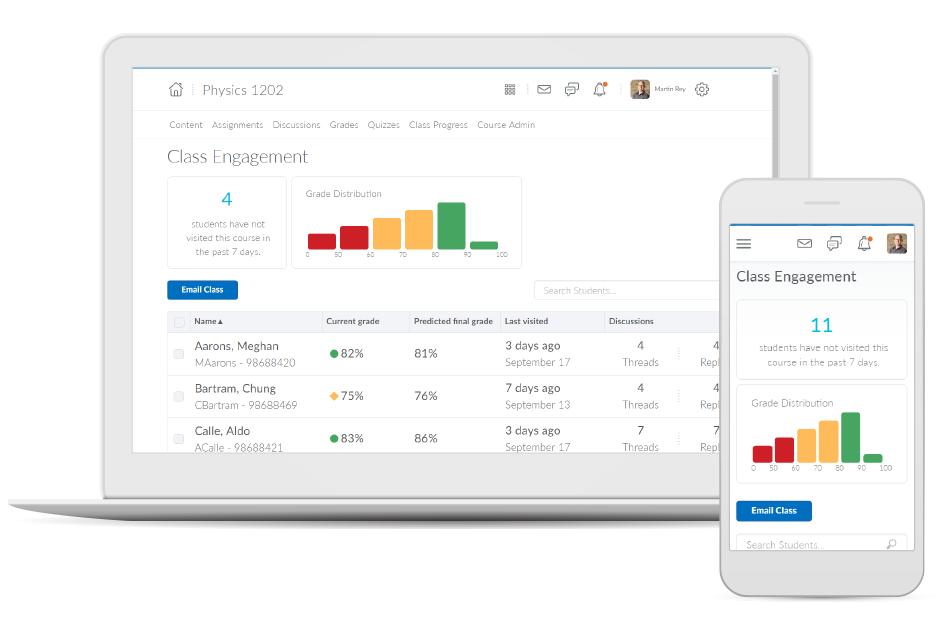     | Moodle Screenshots   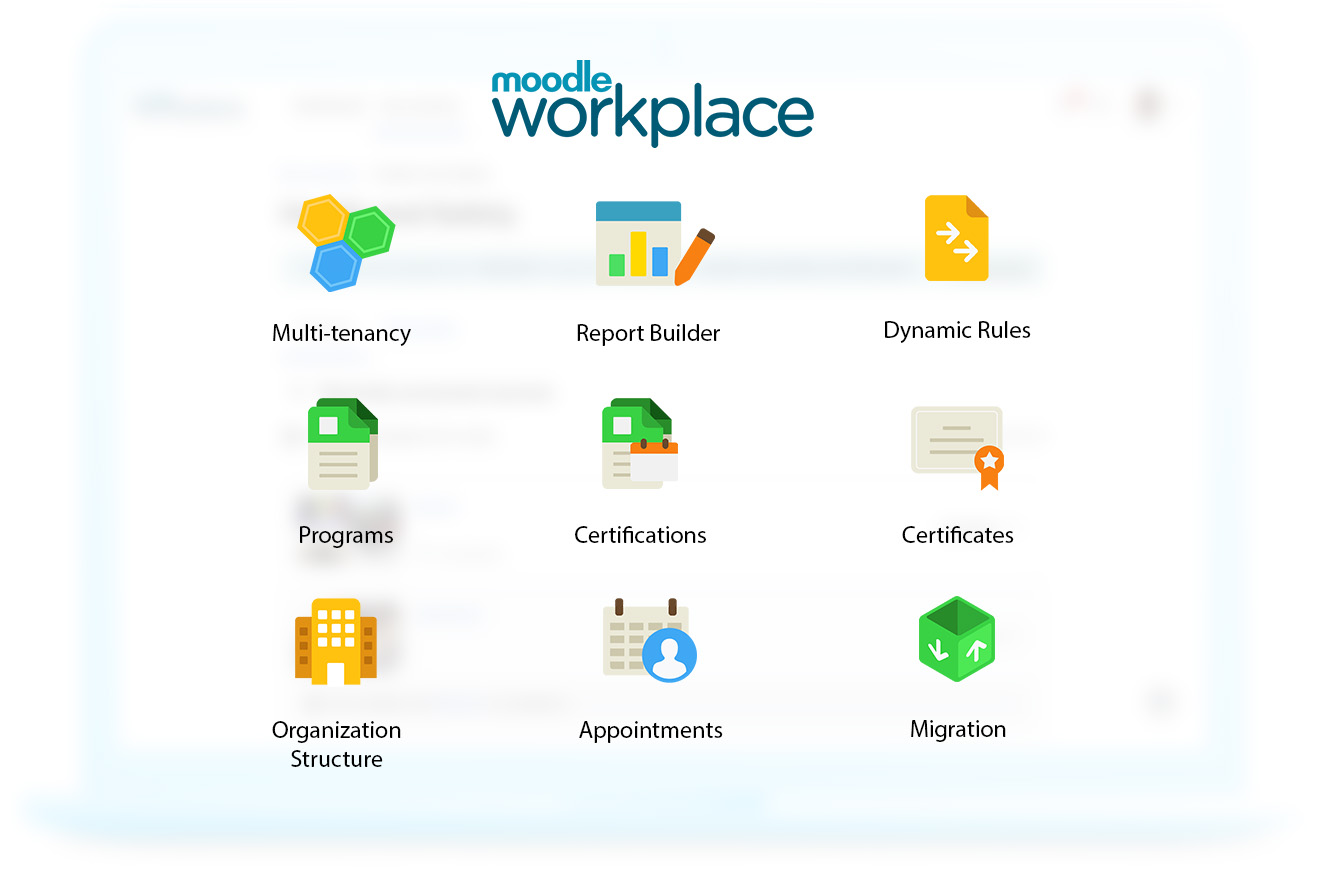   |