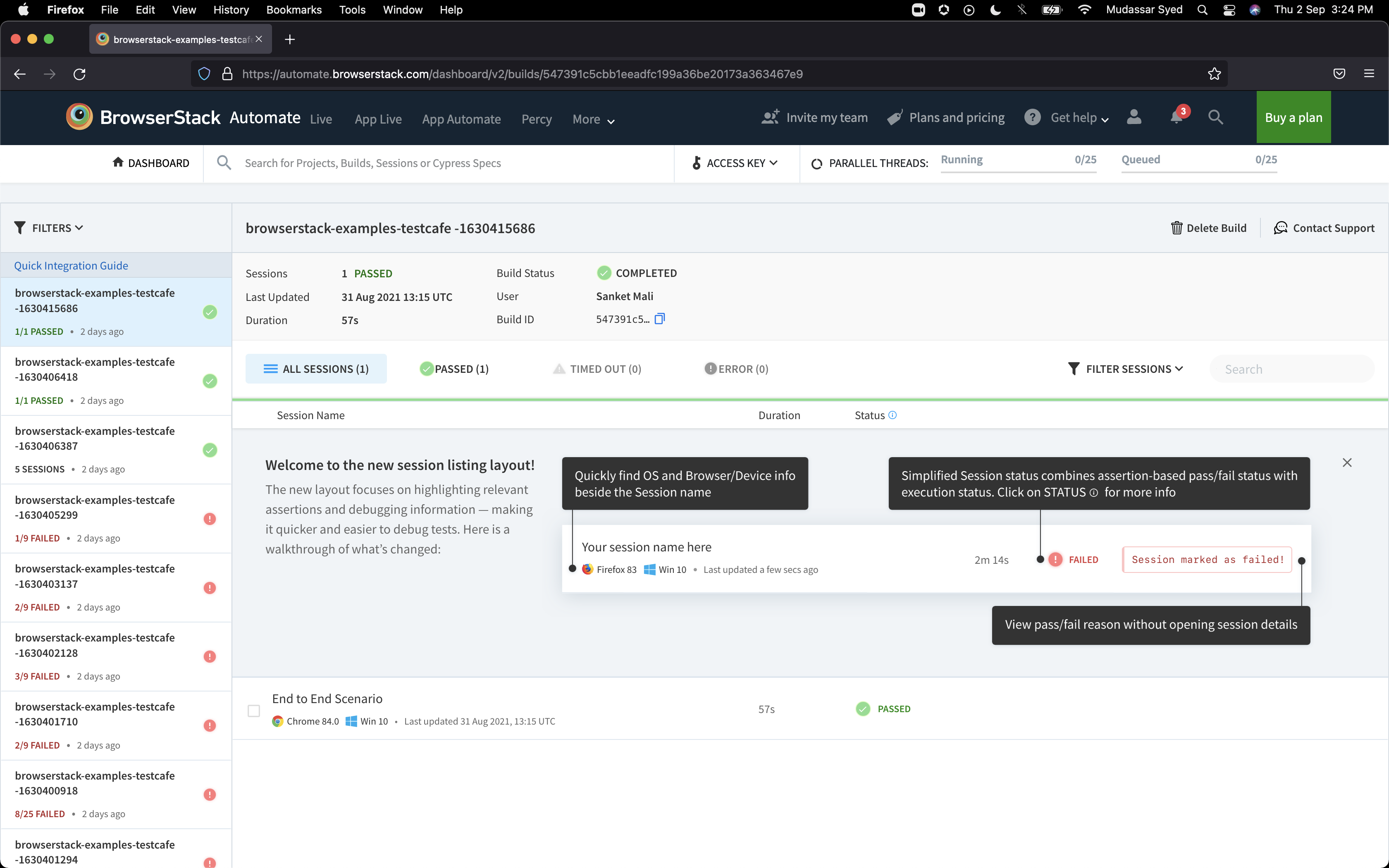
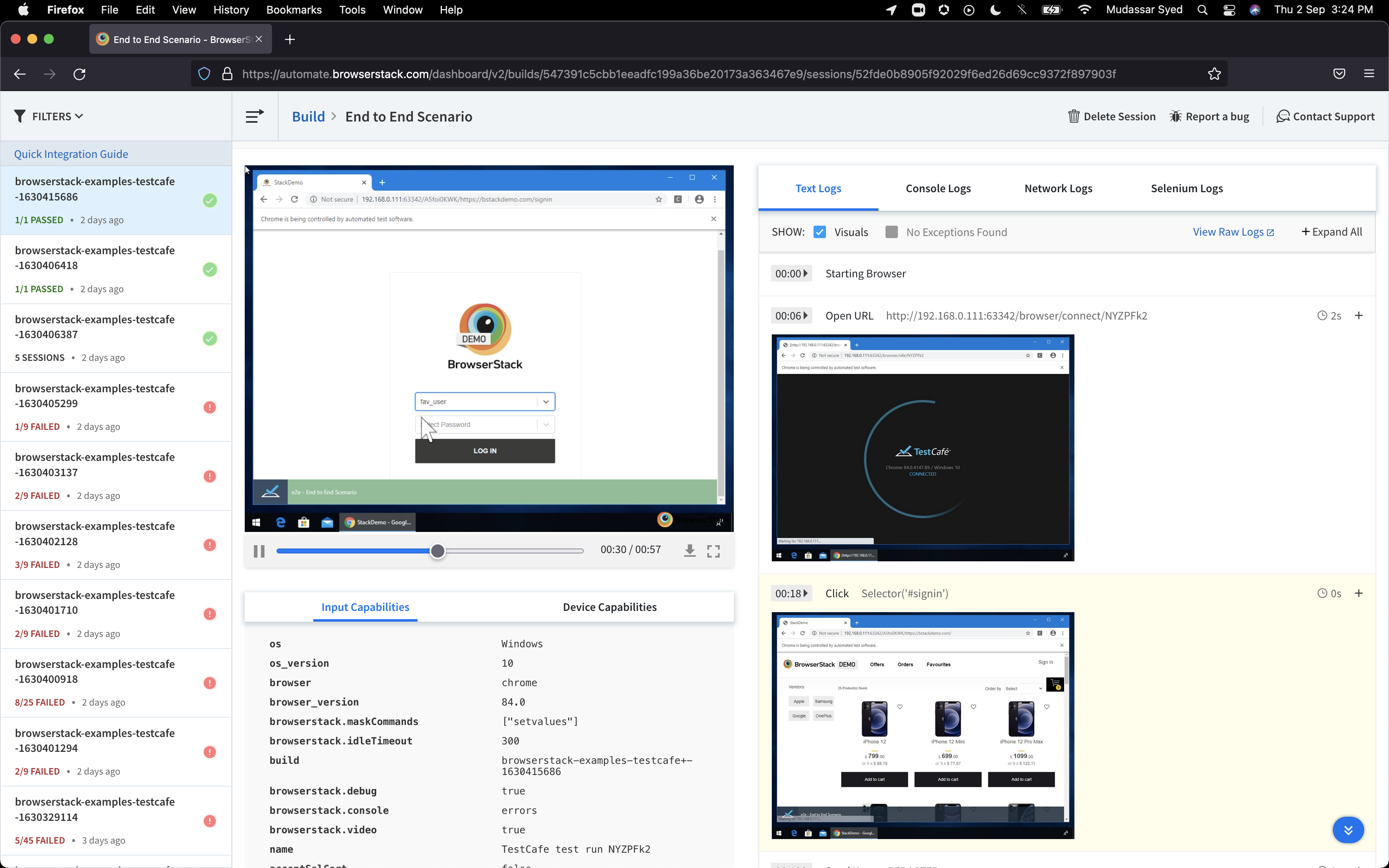
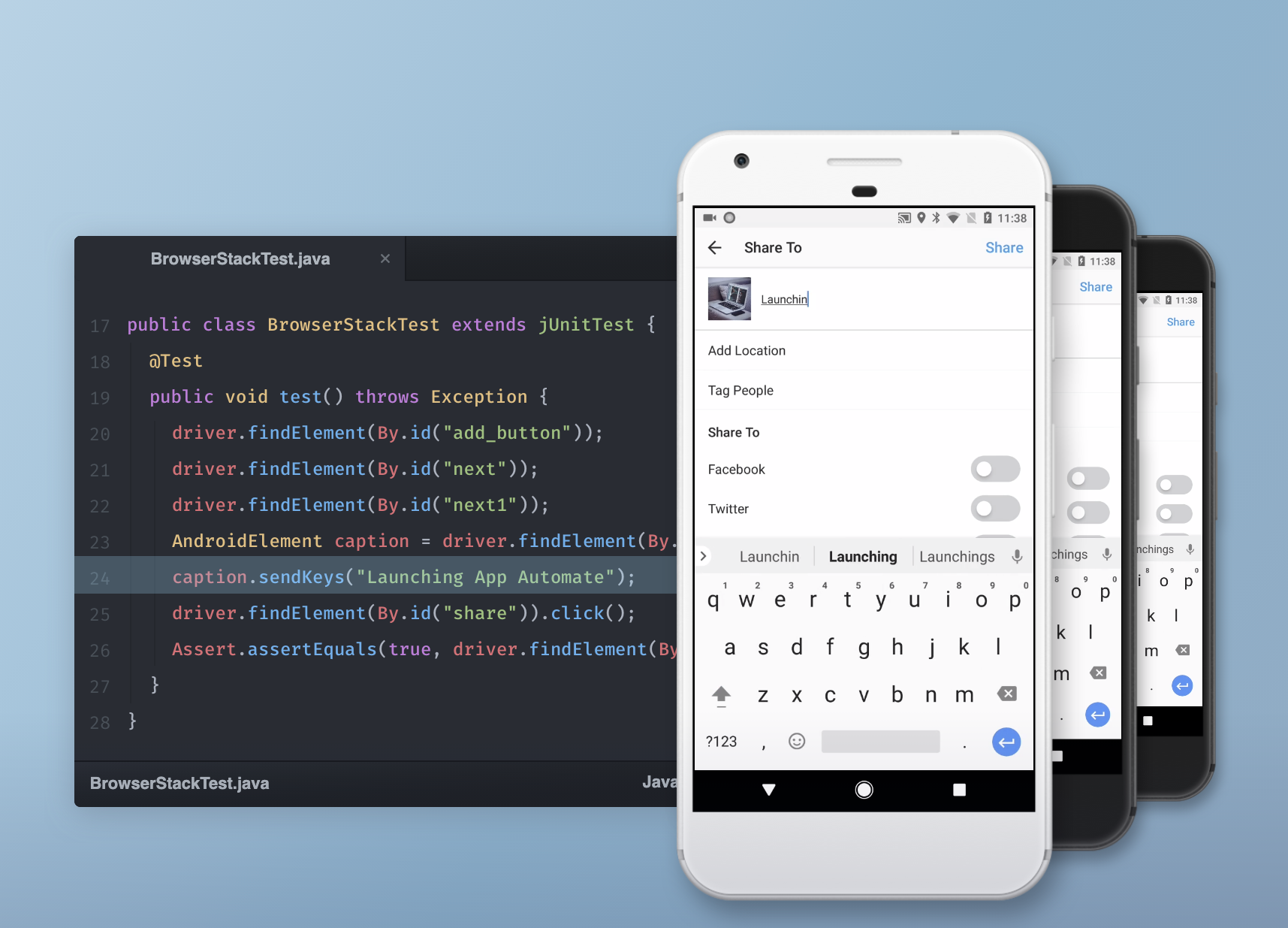
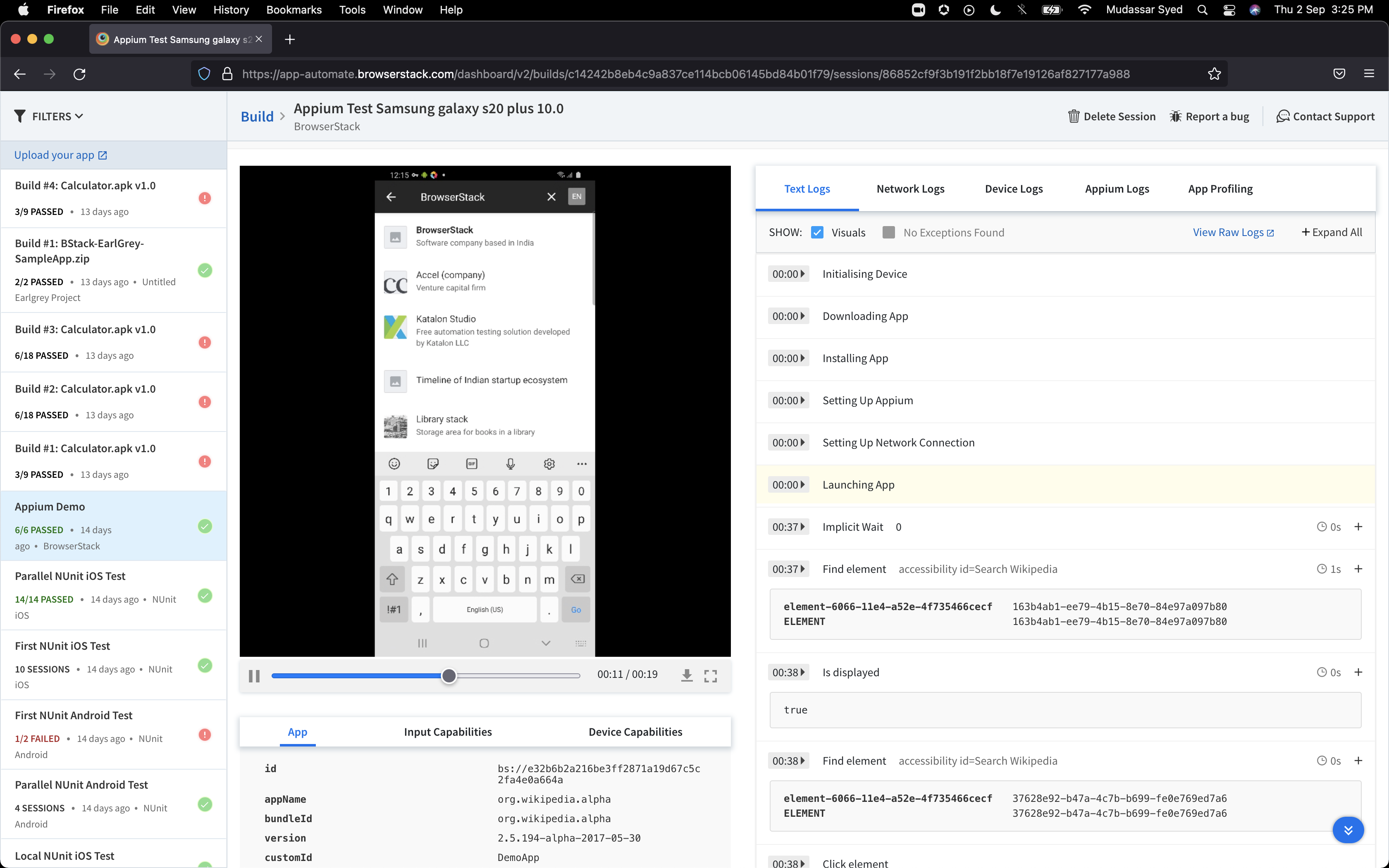
BrowserStack is a test platform built for developers and QAs to expand test coverage, scale and optimize testing with cross-browser, real device cloud, accessibility, visual testing, test management, and test observability. BrowserStack states it currently powers over a billion tests a year for customers who include Amazon, Paypal, Well Fargo Bank, Nvidia, MongoDB, Pfizer, GE, Discovery, React JS, Apache, JQuery and several others rely on BrowserStack to test their web and mobile apps.
$0
per month Unlimited users and 5000 free screenshots
Chrome DevTools
Score 9.6 out of 10
N/A
Chrome DevTools is a set of authoring, debugging, and profiling tools built into Google Chrome.
N/A
Pricing
BrowserStack
Chrome DevTools
Editions & Modules
Percy - Free
$0
per month Unlimited users and 5000 free screenshots
App Percy - Free
$0
per month 5000 free screenshots and 100 minutes of infrastructure
When it comes to cross-device testing, or what can be said as Live testing, BrowserStack is the best tool for testing with different devices with different OSs at a time. It gives users the liberty to test on iPhone, iPad, or Android devices and check the UI on all different …
Nothing else actually. BrowserStack was recommended to me as the best, simplest, go-to solution. I found it to be very user friendly and satisfied my requirements, so I was happy to stick with it and did not go elsewhere looking for anything else. This experience has been more …
BrowserStack provides User-friendly UI which helps me to easily use the tool and also configuration via code is easy, we have to just add the config JSON and update the devices there on which we want to automate. Realtime view of the app is a plus point, reporting is also there.
I haven't used any tool so I cannot rate any other tool. BrowserStack was the first tool we selected for our proof of concept and we liked it. We found some limitations and we reported those to BrowserStack and now they have added it in their roadmap to fix it. So overall, we …
I found Browserstack's website very informative and their documentation much more detailed than the other products I tried to explore. Also one more aspect where Browserstack stood out for me for other similar vendors is that they provide a 100 minute free trial for any newly …
SauceLabs was not intuitive. The launch response time was too high. It didn't offer flexibility in debugging, and the other testing features were not easily available.
We did a benchmark to compare multiple criterias: Security, reliability, Sound, Variety of devices, availability of devices, how long before new released devices are made available, easy to use, extra features, customer support, company reference, integration with our tools. …
The ease of BrowserStack usage is very good compared to other tools like LambdaTest. For each application or use case BrowserStack has solutions. What I think is when It comes to integrations with test automation frameworks BrowserStack can be improved and it needs to improve. …
UI of the BrowserStack is little bit better that other market competitors, and also it is little bit faster that other tools which are available in the market. BrowserStack also provides lots of real devices almost every device which are in the markets, other tools are not …
accessiBE is an accessibility only tool that cannot replicate browsers or devices. LambdaTest is comparable, however, after assessing the feature set, ultimately we decided BrowserStack was a better fit for our business. LambdaTest does have features that will meet most …
DevTools is more commonly available due to the huge market share and has become the familiar standard for this type of tool. The other tools work but not as smoothly and pleasantly.
AEM isn't really like Chrome DevTools but offers some ability to crop images once you see how the content would look on a particular device. So I would say AEM compliments this tool, rather than be considered as a replacement or competitor.
I have not used any other tools that are similar to Chrome DevTools. However, I have been thoroughly impressed by the Chrome DevTools service and its features. With its extensive features, I would imagine it would serve as a top leader in comparison to similar products and …
I find them pretty much the same, they have the same tools except Firefox doesn't provide the lighthouse functionality. I do prefer firefox's dark theme and colour palette. But I use Chrome Dev tools because of the Light house functionality that analyzes the page load and …
Chrome DevTools is a library of tools where others like a visual studio can only offer some under level. Chrome DevTools let also debug websites on the internet even if you don't own them. Chrome DevTools is really easy to use and you don't need a lot to understand how it is …
We can use code editors but by using DevTools we can write code and see output on the fly. We have similar alternatives like Firefox, and Microsoft edge but they did not provide this much flexibility and options. Chrome DevTools introduced some features like full screenshots. …
The main factor is that it does not need its own installation package, as it is part of the Google Chrome browser, other tools such as SysInternals and Wireshark have a certain release resistance on the part of IT and Information Security teams. Another reason is that with any …
Although it uses a lot of memory, we chose Chrome DevTools over Sentry since it comes pre-installed with the browser and has better performance overall. Manipulating the Document Object Model (DOM) and pseudo-classes in Chrome DevTools is a breeze, and you can even do it from …
It's just built into Chrome and is so easy to use. Any other extension within chrome is one step removed - the use of DevTools is just part of the fabric of Chrome and integral to my everyday tasks.
We selected DevTools against Firebug as there is no need to install any additional plugin because DevTools is part of the browser and the performance is incredible in spite of the amount of RAM it consumes.
Chrome DevTools outperforms similar tools in other browsers such as …
When we develop for Chrome, we use Chrome DevTools. If we asked to develop for other browsers, we use their tools. But Chrome is more frequently preferred by our clients
Front-End Web Developer, Office of Mediated Education
Chose Chrome DevTools
The main tool I've used that compares to Chrome DevTools is the Firefox built-in development tools. The one thing that I know I like better about Firefox is the screenshot support, which has many great features. Firefox even has a special developer edition of their browser …
Unable to enter Firefox Developer Tools above, but that was the main alternative. We do still use it on occasion as sometimes things look/work well in Chrome but not in Firefox. In general, however, Chrome DevTools are more commonly used as that is the browser most of our …
While I like the look and feel of Firebug a lot better than DevTools, the Chrome version is just better. Firebug has (or had? I haven't used it in several years) some serious performance issues that would slow Firefox down to a crawl if you didn't forget to turn it off. …
Chrome DevTools is our team's go-to solution for development and debugging, but most major browsers include similar tools. Firefox and Edge include tools that do just about every major item DevTools does, but Chrome's implementation is at least as polished as Firefox's and …
Chrome DevTools stacks up well against similar browser tools like those offered by Microsoft Edge and Firefox. It has plenty of strengths and while it may not stand out strongly from the crowd amongst its peers it has built a strong user base around it due to its constant …
I generally use the Internet Explorer developer tool that is also good but not as good as Chrome DevTool in every aspect.
In Chrome DevTool one can just hover over the object and can see the all detail but in IE developer tool you manually have to console it.
Because Chrome is the most popular tool out there, you can guarantee that if your website works for this browser, it will for the majority of people on the Internet. Also, for the same reason, you can find a lot of tutorials and documentation on how to use these tools.
Chrome is my browser of choice and so Chrome DevTools is the tool to use here. In the past I used Firebug in Firefox (now Firefox Developer Tools) and had a good experience with that tools too. They are very similar.
The only other comparable product I've used is FireBug, which is good but not quite as fully featured as Chrome DevTools in my opinion. It does a lot of similar things but it isn't built into the browser, it's an add-on that must be installed, updated, and if you decide you …
Multiple real devices available for testing across different OS, platform and browsers for both website and mobile application testing. Automate help to integrate existing project and testing suite to run across different devices. This reduce testing timeline and allow us to quickly release new features to users. Also provide automated accessibility report.
Chrome DevTools helps us identify areas to address such as optimising website performance, cross-browser compatibility, and responsive design. We use the Coverage and panel to identify any unused code, which can cause slow loading times, together with the Network panel which is crucial for analysing page load performance and optimising resources.
UI testing on different Devices like iOS, Android, MacOS, and Windows OS.
Automation testing with the help of Cypress gives automation access to different OS and devices.
Comparison with two devices how UI will look a like.
Bug Capture tool: Using this tool, a user can capture a bug while live recording it, and the tool captures action as well. This helps developers identify and fix the bug more easily.
Provides clear, easy to understand, and actionable intelligence on how the browser is retrieving, parsing and rendering the page.
Covers a wide gamut of front-end development tasks, from manipulating CSS rules to line-by-line debugging of JavaScript to helpful page and server insights.
Continuously incorporates new tools and helpful features. With nearly every major Chrome release there is a "What's new" update with at least one or two useful items.
I wish it didn't time out so quickly. I often move back and forth between my native Mac OS system and browsers to BrowserStack for Windows browsers and it often times out so I have to start over.
I am not sure why, but when I've been testing in BrowserStack for a long period of time - maybe over a couple of hours, it sometimes gets buggy and unresponsive or slow to respond. It makes it hard to tell if I'm experiencing an issue with the site I'm testing or if it's an issue with BrowserStack.
If I'm wishing for the moon and stars, I'd ask for the ability to use BrowserStack to also test with JAWS screen reader. But I'm happy having NVDA.
It would be nice in the elements panel, if clicking on a node scrolled the screen to that node. On some large pages its easy to get lost in the code and not know where the element you're inspecting resides on the screen.
It would be nice if, in addition to the console, there was a panel that behaved more like an editor instead of a command prompt. It may seem trivial but it would be very helpful when writing multi-line functions.
It's simply a must-have tool. As a designer, I have to ensure my work is at least functional in older browsers. I also have to ensure that, when I design for mobile devices, any differences between platforms aren't problematic. BrowserStack allows me to test my work in a fraction of the time, with a whole lot more accuracy.
It integrates directly in internal networks and local development. The point and click interface of choosing your device, pick the browser/version and you have a working emulation of that exact environment. What else could you ask for? I've set our least computer savvy users up with BrowserStack for testing in minutes. It feels like it's just part of your local environemnt.
While Chrome DevTools are very powerful, it's not the easiest thing to use, as there are so many different tools built in. It takes some exploring to discover all the options possible within DevTools, but with a little exploring, the DevTools become a very powerful asset. Accessing the basic HTML and CSS inspection is very easy though, and that's the most common usage for the DevTools.
I rated BrowserStack's availability a 10 because it is consistently reliable, with minimal to no downtime or unplanned outages. The platform is accessible whenever needed, ensuring uninterrupted testing. Its robust infrastructure and proactive monitoring ensure a seamless experience, allowing us to meet deadlines without delays caused by availability issues and all
The tests are fast considering the fact that they're Appium tests. I've seen tests reliably pass or fail when they're supposed to, with next to zero issues on the BrowserStack side of things. Tests launch only seconds after I kick off them off from my CLI.
I'm saying a 10 for support for BrowserStack only based on feedback from the development team. I myself have never had to reach out to support for any questions or issues, but others in the company have. From my conversations with them, the support was fantastic and had been a pleasure working with the BrowserStack team.
I'm not entirely sure what to rate the support for DevTools, because I don't have any experience dealing with official customer support for DevTools. I would guess the primary support for DevTools would be in a Chrome forum. Typically if I have a question or issue, I am able to find an answer from doing a quick Google search. It's pretty widely used, so it's not difficult to find answers.
Yes, it was online training on meet, and trainer looks like skilled and technical strong, he has covered end to end all the features and he has answers all the queries. because of this trainings we are able to implement it by our own in the organization, thank you for support and training.
It was a quick training from the support of browserstack, it was nice and easy to understand, thanks again for the support given by the team. and regularly I used to receive mails for training from support for any new feature they launch, I was able to spread same training to all my team and dev.
I rated the implementation satisfaction an 8 because while it went smoothly overall, there were some challenges during the initial learning phase and integration with existing tools. Key insights include the importance of providing sufficient training upfront and ensuring seamless integration with other systems to minimize disruptions and improve adoption speed.
N/A - BrowserStack was the first software I've tried to address these requirements. Previously we've been limited to testing on a handful of devices and browser combinations that our team has physical access to. We're also evaluating Litmus as a complementary service to BrowserStack for analysing our email templates and deliverability.
I find them pretty much the same, they have the same tools except Firefox doesn't provide the lighthouse functionality. I do prefer firefox's dark theme and colour palette. But I use Chrome Dev tools because of the Light house functionality that analyzes the page load and scores the website on desktop and mobile experience.
I may not be the best person to answer this as I am only using it for 1 department and at 1 site but will still try my best As far as Scalability for Devices for Mobile Automation is concerned, it gets a Solid 10, as the users can run cases on upto 10 device parallel and also have the best choices of devices to choose