CData DBAmp vs. IBM InfoSphere Information Server

Overview
ProductRatingMost Used ByProduct SummaryStarting Price
CData DBAmp
Score 9.0 out of 10
N/A
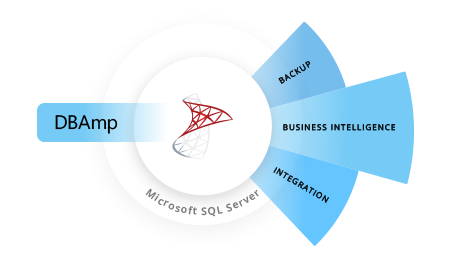
DBAmp is a Salesforce integration solution for any SQL DBA. With DBAmp, users can access Salesforce data in real-time using standard SQL. For many organizations, SQL Server plays a critical role in BI and operational reporting. Using DBAmp, users can extend the same SQL Server integrations they've built for BI, analytics, and reporting to Salesforce data.
$2,495
per user
IBM InfoSphere Information Server
Score 8.0 out of 10
N/A
IBM InfoSphere Information Server is a data integration platform used to understand, cleanse, monitor and transform data. The offerings provide massively parallel processing (MPP) capabilities.N/A
Pricing
CData DBAmpIBM InfoSphere Information Server
Editions & Modules
Single Server License One-year Subscription
$2,495
per user
No answers on this topic
Offerings
Pricing Offerings
CData DBAmpIBM InfoSphere Information Server
Free Trial
YesNo
Free/Freemium Version
NoNo
Premium Consulting/Integration Services
NoNo
Entry-level Setup FeeNo setup feeNo setup fee
Additional Details
More Pricing Information
Community Pulse
CData DBAmpIBM InfoSphere Information Server
Features
CData DBAmpIBM InfoSphere Information Server
Data Source Connection
Comparison of Data Source Connection features of Product A and Product B
CData DBAmp
-
Ratings
IBM InfoSphere Information Server
10.0
Ratings
17% above category average
Connect to traditional data sources00 Ratings10.00 Ratings
Connecto to Big Data and NoSQL00 Ratings10.00 Ratings
Data Transformations
Comparison of Data Transformations features of Product A and Product B
CData DBAmp
-
Ratings
IBM InfoSphere Information Server
10.0
Ratings
20% above category average
Simple transformations00 Ratings10.00 Ratings
Complex transformations00 Ratings10.00 Ratings
Data Modeling
Comparison of Data Modeling features of Product A and Product B
CData DBAmp
-
Ratings
IBM InfoSphere Information Server
9.7
Ratings
19% above category average
Data model creation00 Ratings10.00 Ratings
Metadata management00 Ratings10.00 Ratings
Business rules and workflow00 Ratings10.00 Ratings
Collaboration00 Ratings10.00 Ratings
Testing and debugging00 Ratings9.00 Ratings
Data Governance
Comparison of Data Governance features of Product A and Product B
CData DBAmp
-
Ratings
IBM InfoSphere Information Server
9.5
Ratings
16% above category average
Integration with data quality tools00 Ratings10.00 Ratings
Integration with MDM tools00 Ratings9.00 Ratings
Best Alternatives
CData DBAmpIBM InfoSphere Information Server
Small Businesses
Skyvia
Skyvia
Score 9.9 out of 10
Skyvia
Skyvia
Score 9.9 out of 10
Medium-sized Companies
IBM InfoSphere Information Server
Score 8.0 out of 10
dbt
dbt
Score 9.0 out of 10
Enterprises
IBM InfoSphere Information Server
Score 8.0 out of 10
InterSystems IRIS
InterSystems IRIS
Score 7.7 out of 10
All AlternativesView all alternativesView all alternatives
User Ratings
CData DBAmpIBM InfoSphere Information Server
Likelihood to Recommend
9.0
(0 ratings)
10.0
(0 ratings)
Likelihood to Renew
-
(0 ratings)
8.0
(0 ratings)
User Testimonials
CData DBAmpIBM InfoSphere Information Server
Likelihood to Recommend
Well suited as an inexpensive tool as "middleware" between your on-prem or hosted SQL Server. Not sure how well it will translate to cloud-based SQL as a platform (Azure SQL) as it relies on linked servers. This tool only applies to Salesforce CRM - not Marketing Cloud. For writing back to Salesforce we did run into Salesforce resource limitations when extensive triggers existed on the objects.
Read full review
You can use infosphere: -If you have multiple targets and source systems and they are different than each other. -If your infostructure is so big and unplaned well so you can't find what you want to see. -If your databases not so strong to process your data
Read full review
Pros
  • Connects & Links to Salesforce CRM databases - including custom objects.
  • Built in procedures to create copies of the database on SQL Server.
  • Built in procedures to Add, Update, and Delete data within Salesforce CRM.
  • Great Technical Support.
Read full review
  • It is very strong to make transformations/data derivations
  • It is very easy to connect to various external data sources. It has an interface (stages) for each connection that simplifies the task
  • It is a stable platform. And that parallelism helps make it fast for loading, if the process is well designed
Read full review
Cons
  • Because it uses Linked Servers, not sure how this will work in Azure SQL.
  • Replicated tables are based on user security - this means you have to pay for a license to set this up.
  • There is no built-in function to skip tables or fields on secured tables. This has to be done on the CRM side for fields and we built a function to skip tables in the replication logic.
Read full review
  • Lack of a strong web development environment.
  • Metadata propagation in Jobs is somewhat complex.
  • The possibility to develop jobs in Parallel and/or Server Engines is confusing.
Read full review
Likelihood to Renew
No answers on this topic
  • Scale of implementation
  • IBM techsupport
Read full review
Alternatives Considered
No answers on this topic
I particularly believe that Information Server, especially DataStage, is superior in many aspects to the Oracle Data Integrator tool. Several market analysts such as Gartner and / or Forrester better position DataStage on the Oracle solution.
Read full review
Return on Investment
  • Enabled automated marketing segments which enabled automated email series.
  • Helped us solicit donations for the right amount at the right time.
  • Helped us take on new marketing and fundraising campaigns without adding staff.
Read full review
  • Information Server can positively impact the costs of companies by increasing the productivity of development and therefore reduce their time and costs. It is estimated that DataStage can increase a developer's productivity by 40% on average.
  • Better data governance
  • Improve data quality and reduce bad data impacts
Read full review
ScreenShots

CData DBAmp Screenshots

Screenshot of Screenshot of