Certinia ERP Cloud automates financial management on the Salesforce platform. The customer-centric ERP software includes a general ledger, automated billing processes, and financial intelligence.
N/A
IFS Applications
Score 8.0 out of 10
N/A
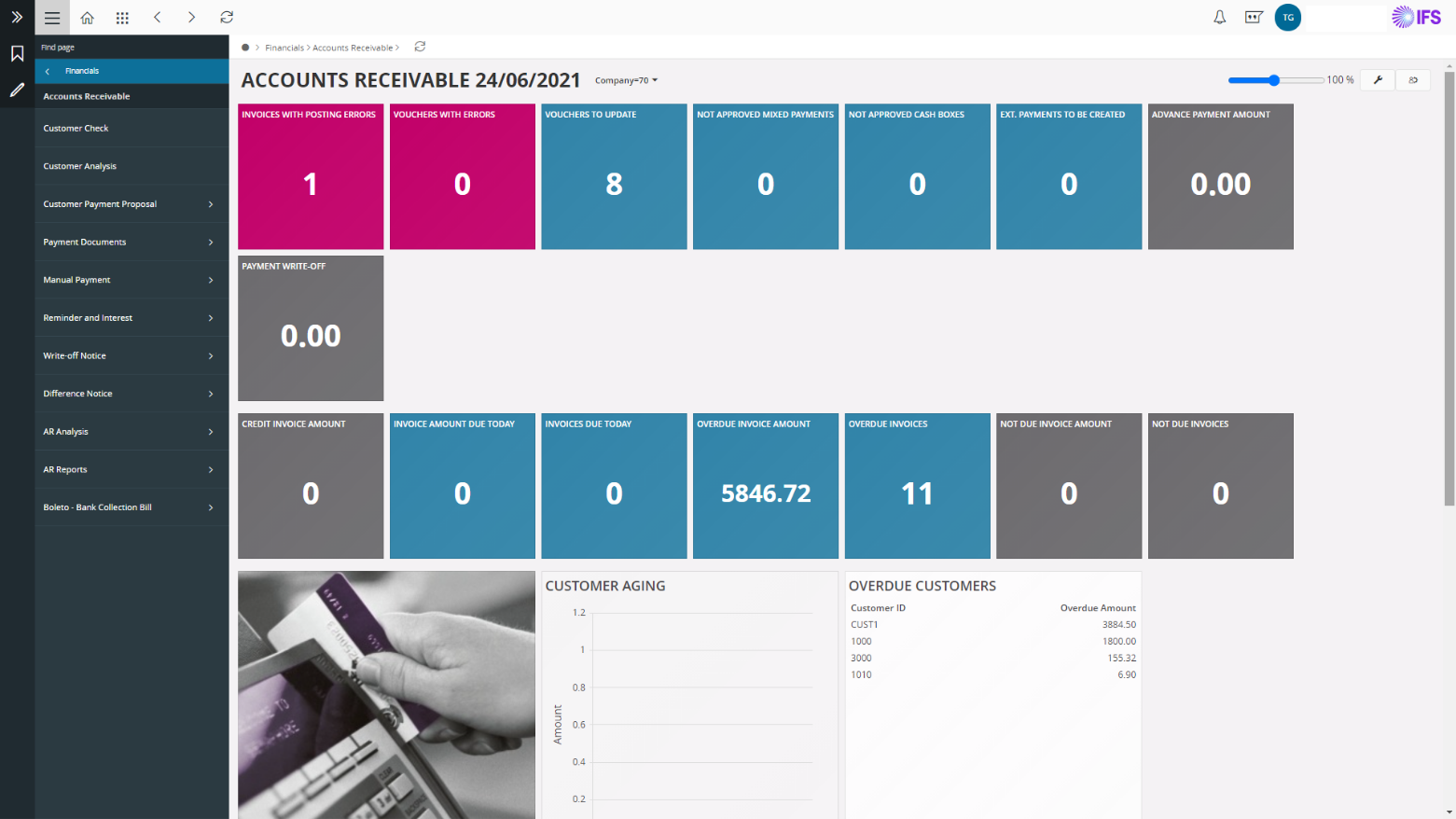
IFS Applications is presented by the vendor as an agile application suite that offers enterprise resource planning (ERP), enterprise asset management (EAM) and enterprise project management, handling 4 core processes: Service & Asset Management Full Enterprise Asset Management (EAM), Maintenance Repair and Overhaul (MRO) and Field Service Management (FSM) Manufacturing Enterprise Resource Planning (ERP) with support for process manufacturing, discrete manufacturing…
FinancialForce Subscription & Usage Billing has more features, more useability, and manages higher numbers of customers. The systems I have used in the past are easier to navigate but couldn't handle this number of customers.
Infinitely better. We are much happier with FinancialForce ERP rather than Netsuite. This allows us so much more flexibility and growth potential. There is a good chance we will use other functionality of FinancialForce in the future to stay within the same ecosystem. We …
FFA is built on the SalesForce platform, giving us one source of data for our KPIs. Unlike Dynamics, FFA allows us to create custom reports and dashboards through which we can share financial results. We were able to better automate and streamline accounts payable using FFA. …
NetSuite is much better in that it can produce financial statements, has a subscription module, and is just as customizable as FinancialForce. If you have a midsized company, NetSuite may be better suited for your business needs. FinancialForce requires a lot of in-house …
Compared to other accounting software FinancialForce Accounting has its good and bad aspects but overall it is a good option. Reporting directly from FinancialForce Accounting can be difficult to do, but standard accounting tasks are straightforward and not time-consuming to …
The initial allure of FinancialForce Accounting was the fact that we were very happy with Salesforce.com and the ability to integrate FinancialForce Accounting with Salesforce.com easily (although it was time-consuming). But after analyzing its functionality it was also …
Outside CPA was strong proponent of Quickbooks and it was evaluated initially, but size of company, complexity of transactions, eventual move to Salesforce and need for multi-company and multicurrency ruled it out almost from the start. As the only accounting system built …
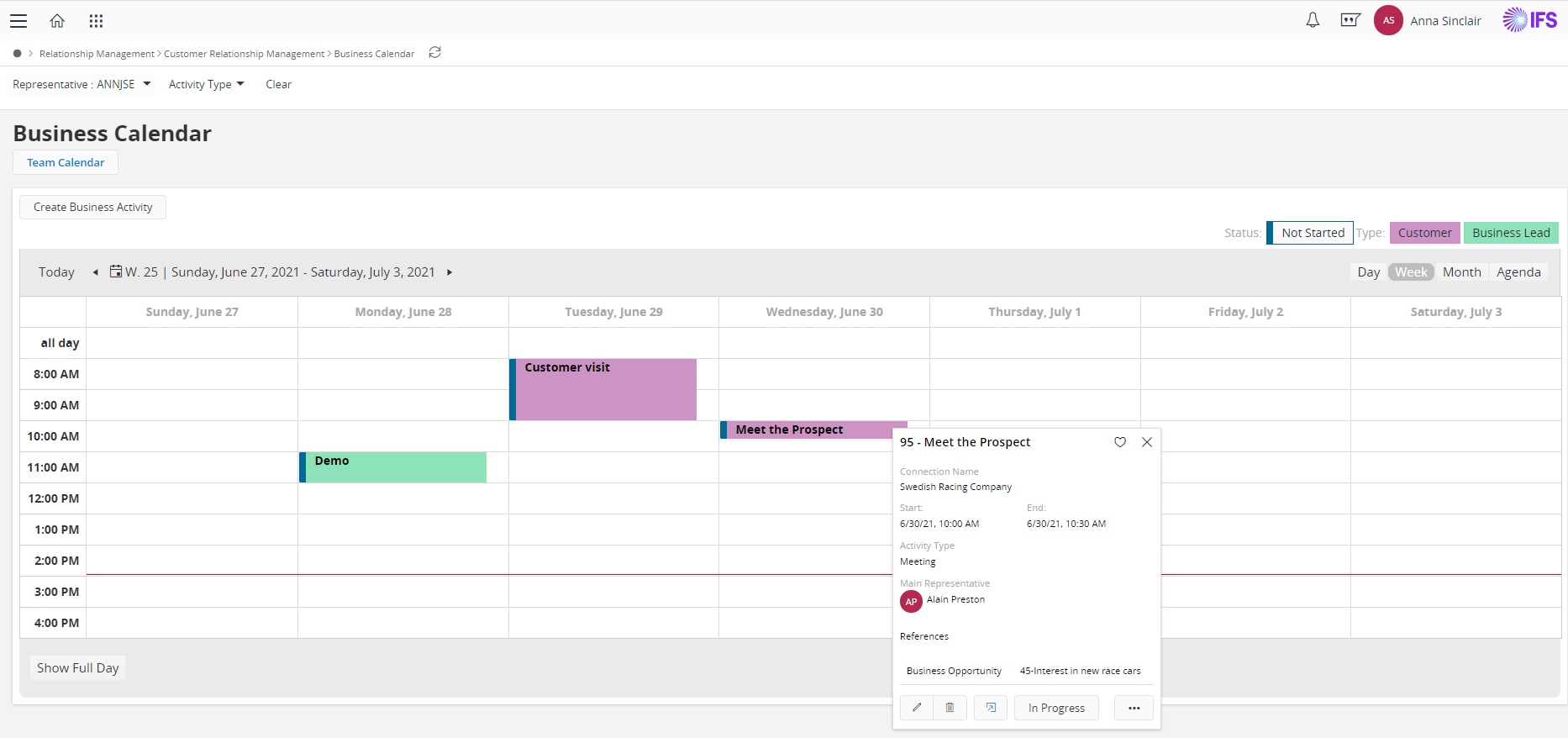
IFS Applications have a very UI rich interface compared to other systems. IFS Applications can be easily and quickly learned with the very good documentation, e learning portals and other learning platforms. The technical implementation of the IFS Applications is very …
IFS Applications is based on Agile Technology which allows organizations to reconfigure user interface as per user requirements and make it user-friendly. Other applications are lagging on many fronts like User Interface, Online help document availability, Implementation …
Microsoft AX, QAD (in continuation of our previous ERP), Sage X3 was an out of the box ERP that was part of initial RFP.
We have chosen IFS based on the compromise between costs & budget, functionality, technical features, and feedback from similar customers that gave their …
FFA is a good product if you want the ability to customize functionality and reporting. However, all the setup can be overwhelming if you are looking for an out-of-the-box solution. FFA is a great choice is you are already using Salesforce and want to report on KPIs directly from the source data. There are a lot of applications to help you feed data into the system or export it out in a usable format.
Not every Enterprise Resource Planning (ERP) System does not cover all the industry verticals and all the functionalities and requirements for a specific industry as built-in features. Although IFS Applications does not completely cover all the requirements and all the industry verticals, it can be implemented for any industrial company with minimum configurations and customization, which is very good when implementing an ERP system. Since it supports web and mobile versions of the application as well, the users ind it easy to use.
The company has now converted its legacy, "home grown" operations system and built it on the force.com platform, and the integration between it and FinancialForce is deeply entrenched. No other application would be able to replicate this functionality, and the company will be able to scale and leverage the force.com platform as it grows.
Change management is always an issue, but the evidence of the application's usability is that both long-time employees (used to the legacy systems for many years) and newer employees have been able to learn the system and improve their business processes.
In overall, the companies get many advantages, where we can forget most of the things which can be considered for room for improvement. The user interface is good. It supports mobile versions an has several mobile applications for specific areas with Android, IOS and Windows versions. It allows several deployment options such as remote hosting, IFS Cloud hosting and on-premise hosting of the servers. IFS Applications can be easily and safely integrated with other systems.
Unless the internet is completely unavailable - which has not happened yet - the application is always accessible. Since FinancialForce is built on the force.com platform, it's uptime is tied to Salesforce security and system performance standards
The response time for FinancialForce is exemplary. Immediate acknowledgement of the support request by automatically logging a case/ticket on the provider side, then less than 24-hour follow up by a support team member with specific questions, information or resolution for the issue.
We have been unable to get answers to our questions, solutions to our problems, and they don't seem interested in working in the construction industry.
Through its Xtra login website available to its customers, FinancialForce offers a complete set of online, video tutorials, training and documentation. Each tutorial is "bite-sized", meaning it imparts instructional, step-by-step information in 2-3 minute narrated videos. For a particular cycle or process, like invoices to payments for example, each tutorial builds on the last so that the user can get a complete picture of the steps and process in less than 10 minutes.
The company decided to run parallel for three months in order to soften the impact of the change from the legacy "system" - which users had been interfacing with for over a decade - to FinancialForce. While not recommended, this did provide time for the in-house "super user" team of 2 people to become completely familiar with the application, and thus provide hands-on training and be a resource for the users who would be processing the daily accounting transactions.
FinancialForce Subscription & Usage Billing has more features, more useability, and manages higher numbers of customers. The systems I have used in the past are easier to navigate but couldn't handle this number of customers.
Microsoft AX, QAD (in continuation of our previous ERP), Sage X3 was an out of the box ERP that was part of initial RFP. We have chosen IFS based on the compromise between costs & budget, functionality, technical features, and feedback from similar customers that gave their feedback. The project manager team and qualification level of technical or consultant teams were differentiating factors too. Finally IFS application was named in the Gartner’s mid-market ERP Magic Quadrant, along with SAP, and helped us to finalize our choice
We moved to a subscription business, and FinancialForce cannot facilitate it. After using FinancialForce for 4 years, we had to switch to NetSuite. We had a negative return on investment with all the resources we used to do in-house development in FnancialForce.
FinancialForce did not have a good way to match payments against invoices, and it was a very manual process. We spent a lot of human hours to get it done.
It was still relatively cheap, so for the 4 years that we used it, the actual cost of the product was what we could only afford at the time.