CloudFoundry is a free, open source cloud computing platform supported by the non-profit CloudFoundry. It is not tied to any particular cloud service, but can be self-hosted or run on any cloud service preferred.
N/A
CS-Cart Multi-Vendor
Score 8.6 out of 10
Mid-Size Companies (51-1,000 employees)
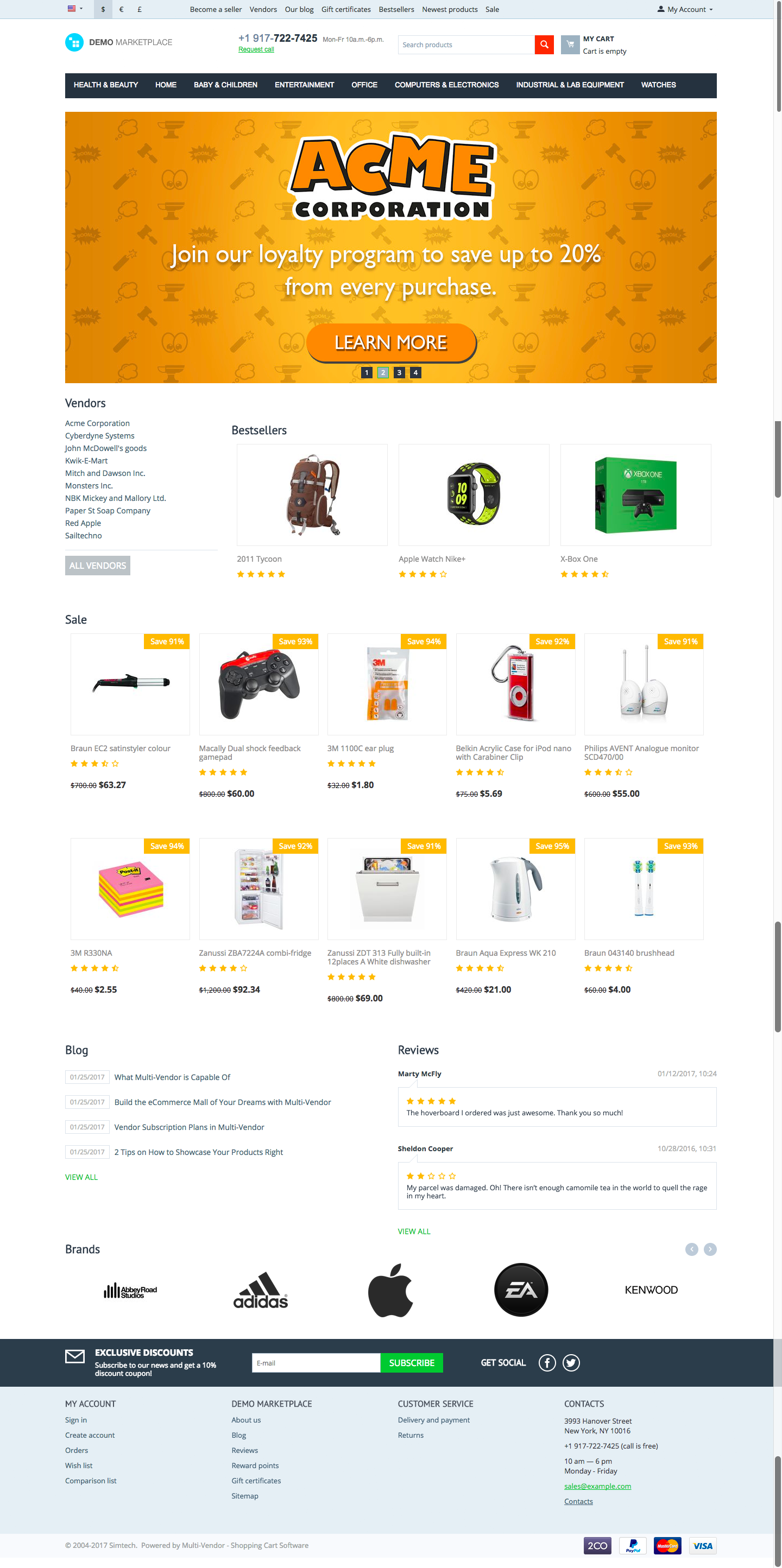
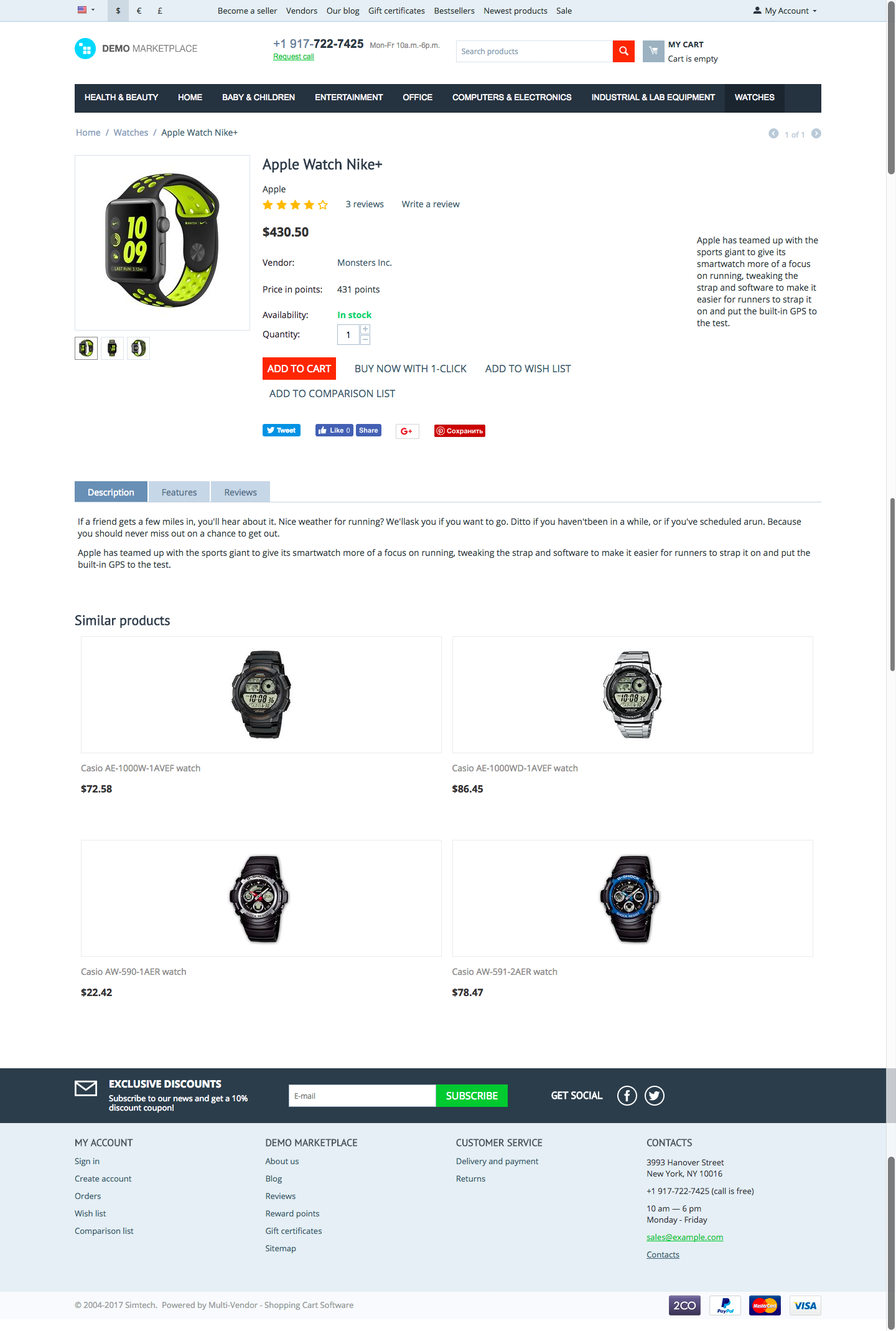
CS-Cart Multi-Vendor is an eCommerce marketplace software for SMBs available in cloud (No-Code) and self-hosted (On-Premises) versions. It allows users to open an online marketplace, where the user is the admin, and all the others—invited sellers. Each seller has his or her own micro-store with a customizable storefront, categories, filters, and search. Just like in Amazon. In the CS-Cart Multi-Vendor marketplace platform, managing vendors is designed to be simple:…
$660
per year
Pricing
CloudFoundry
CS-Cart Multi-Vendor
Editions & Modules
No answers on this topic
Standard
$660
per year
Plus
$1,320
per year
Ultimate
$3,300
per year
Unlimited
Contact Sales
one-time fee
Offerings
Pricing Offerings
CloudFoundry
CS-Cart Multi-Vendor
Free Trial
No
Yes
Free/Freemium Version
Yes
No
Premium Consulting/Integration Services
No
No
Entry-level Setup Fee
No setup fee
Optional
Additional Details
—
—
More Pricing Information
Community Pulse
CloudFoundry
CS-Cart Multi-Vendor
Features
CloudFoundry
CS-Cart Multi-Vendor
Platform-as-a-Service
Comparison of Platform-as-a-Service features of Product A and Product B
CloudFoundry
9.8
Ratings
20% above category average
CS-Cart Multi-Vendor
-
Ratings
Ease of building user interfaces
10.00 Ratings
00 Ratings
Scalability
9.00 Ratings
00 Ratings
Development environment creation
10.00 Ratings
00 Ratings
Development environment replication
10.00 Ratings
00 Ratings
Issue recovery
10.00 Ratings
00 Ratings
Upgrades and platform fixes
10.00 Ratings
00 Ratings
Online Storefront
Comparison of Online Storefront features of Product A and Product B
CloudFoundry
-
Ratings
CS-Cart Multi-Vendor
8.6
Ratings
9% above category average
Product catalog & listings
00 Ratings
8.80 Ratings
Product management
00 Ratings
8.90 Ratings
Bulk product upload
00 Ratings
8.30 Ratings
Branding
00 Ratings
8.70 Ratings
Mobile storefront
00 Ratings
8.00 Ratings
Product variations
00 Ratings
8.50 Ratings
Website integration
00 Ratings
8.60 Ratings
Visual customization
00 Ratings
8.70 Ratings
CMS
00 Ratings
8.80 Ratings
Online Shopping Cart
Comparison of Online Shopping Cart features of Product A and Product B
CloudFoundry
-
Ratings
CS-Cart Multi-Vendor
8.4
Ratings
9% above category average
Abandoned cart recovery
00 Ratings
8.20 Ratings
Checkout user experience
00 Ratings
8.50 Ratings
Online Payment System
Comparison of Online Payment System features of Product A and Product B
CloudFoundry
-
Ratings
CS-Cart Multi-Vendor
8.9
Ratings
7% above category average
eCommerce security
00 Ratings
8.90 Ratings
eCommerce Marketing
Comparison of eCommerce Marketing features of Product A and Product B
CloudFoundry
-
Ratings
CS-Cart Multi-Vendor
8.4
Ratings
9% above category average
Promotions & discounts
00 Ratings
8.80 Ratings
Personalized recommendations
00 Ratings
8.00 Ratings
SEO
00 Ratings
8.40 Ratings
eCommerce Business Management
Comparison of eCommerce Business Management features of Product A and Product B
Great for a quick and easy setup of a multi-vendor solution, supporting multiple stores / languages / payment options. Will probably need some tuning if you have 1 million products or so. Great if you have a PHP dev or team, probably not the best option if you don't know the language and need to customise backend logic.
Support for Orgs and Spaces that allow for managing users and deployables within a large organization.
Easy deployment, deploying code is as simple as executing single line from CLI, thanks to build-packs.
Solid and rich CLI, that allows for various operations on the instance.
Isolated Virtual Machines called Droplets, that provide clean run time environment for the code. This used to be a problem with Weblogic and other application servers, where multiple applications are run on the same cluster and they share resources.
SSH capability for the droplet (isolated VM's are called droplets), that allows for real time viewing of the App code while the application is running.
Support for multiple languages, thanks to build-packs.
Support for horizontal scaling, scaling an instance horizontally is a breeze.
Support for configuring environment variable using the service bindings.
Supports memory and disk space limit allocation for individual applications.
Supports API's as well as workers (processes without endpoints)
Supports blue-green deployment with minimal down time
Does not support stateful containers and that would be a nice to have.
Supports showing logs, but does not persist the logs anywhere. This makes relying on Cloud Foundry's logs very unreliable. The logs have to be persisted using other third party tools like Elk and Kibana.
The software consists of most of all e-commerce related features. Also, there are plenty of third party addons are available in the market which can improve our business. There are a lot of powerful themes available in the cs cart market which improve the look and feel on the front store. If CS-cart adjusted the price on their software license cost, controlling the third party addon cost and provide more freelancers with cheaper hourly rate for the customization on the cs-cart multi vendor software, the cs-cart company can be a master among other e-commerce software companies in the world.
While Docker shines in providing support for volumes and stateful instances, Cloud foundry shines in providing support for deploying stateless services. Heroku shines in integrating with Git and using commits to git as hooks to trigger deployments right from the command line. But it does not provide on-premise solution that Cloud foundry provides.
For big vision in doing something in online marketplace, I think CS-Cart can help to scale up and run business smoothly. CS-Cart started their business in 2005 and since [then has been] running successfully worldwide. It means they have a large scale of experience in implementing online marketplace based software and we can rely on them.
Positive impact, since it simplifies the deployment time by a huge margin. Without cloud foundry, deploying a code needs coordination with infrastructure teams, while with cloud foundry, its a simple one line command. This reduces the deployment time from at least few hours to few minutes. Faster deployments promote faster dev cycle iterations.
Code maintenance such as upgrading a Node or Java version is as simple as updating the build-pack. Without cloud foundry, using web logic, the specific version only supports a specific version of Java. So updating the version involves upgrading the version of web logic that needs to involve few teams. So without cloud foundry, it takes at least few days, with cloud foundry, its a matter of few mins.
Overall, happier Developers and thats harder to quantify.
From an investment point of view, it is naturally much more profitable to purchase CS-Cart Multi-Vendor than to assemble a team of developers and try to create such a platform from scratch.
Creating a marketplace is a rather risky business. If you don't know a lot about marketplace building technologies, consider investing in a different business. But if you have already decided on the idea, and all you have to do is find a suitable platform, then CS-Cart Multi-Vendor will probably be a profitable investment. And if your sales go at least half a year after purchasing this platform, then you will quickly enough recoup these several thousand dollars.