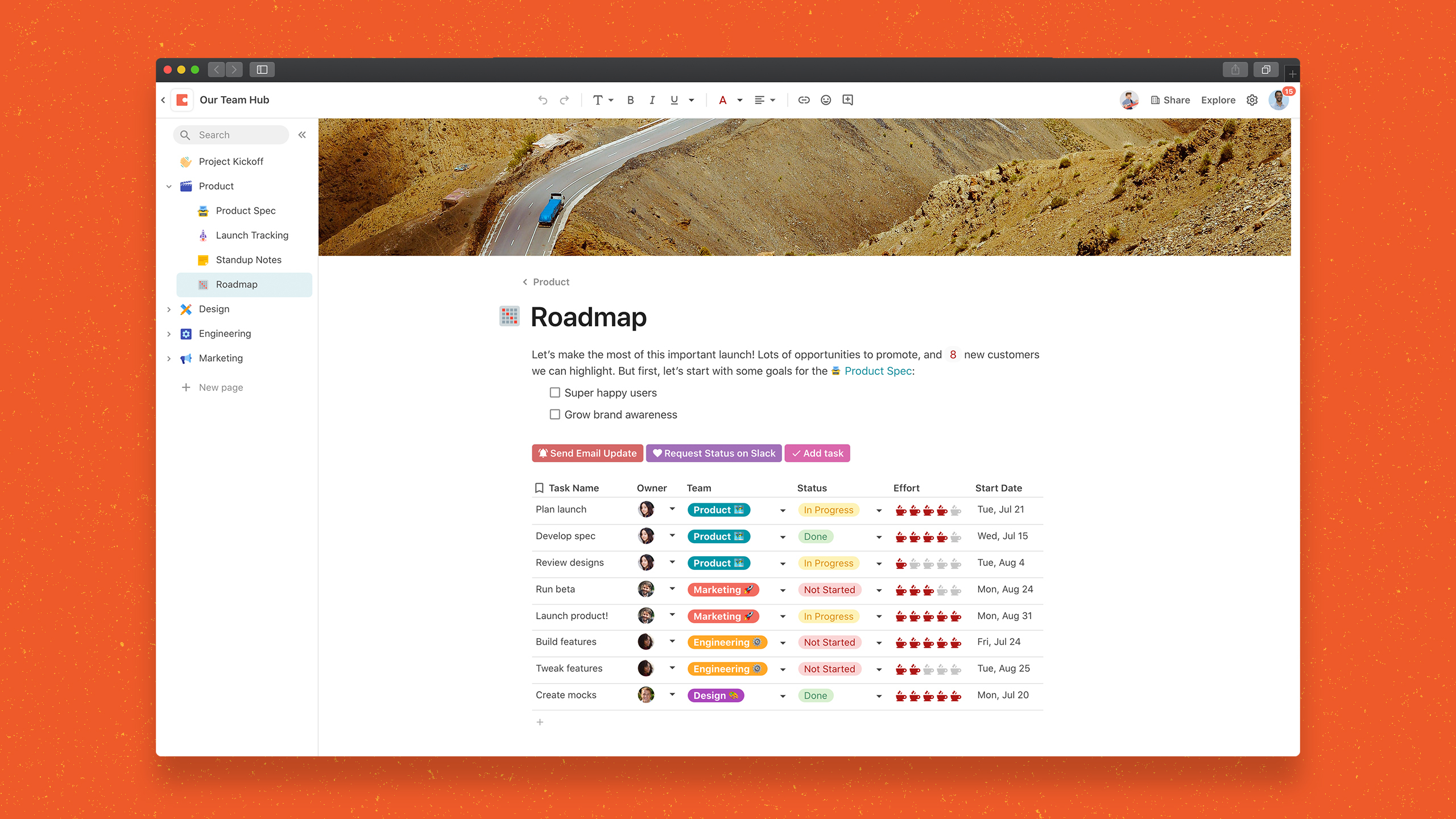
Coda, acquired by Grammarly in early 2025, is a template-based document creation and collaboration solution, supporting a variety of use cases.
$0
per month
ElaBoard
Score 8.6 out of 10
N/A
Based in New York City, ElaBoard is an online whiteboard platform for distributed team collaboration. The platform's limitless working canvas facilitates its more than 5M users to lead engaging workshops and meetings, innovate products, and brainstorm conceptions. It is excellent for cross-functional teams at organizations of all sizes, regardless of industry.
$7
per month per user
Pricing
Coda by Grammarly
ElaBoard
Editions & Modules
Free
$0.00
per month
Pro
$10.00
per month per doc maker; unlimited editors (paid annually)
Team
$30.00
per month per doc maker; unlimited editors (paid annually)
Enterprise
Custom Pricing
Starter
$7
per month per user
Professional
$14
per month per user
Business
$25
per month per user
Enterprise
$40
per month per user
Offerings
Pricing Offerings
Coda by Grammarly
ElaBoard
Free Trial
Yes
Yes
Free/Freemium Version
Yes
No
Premium Consulting/Integration Services
No
No
Entry-level Setup Fee
No setup fee
No setup fee
Additional Details
With Coda, you only pay for Doc Makers.
Often one person creates a doc, others edit it, and some simply observe from afar. Instead of charging for everyone, we only charge for the people who create docs.
Interested in enterprise pricing? Visit coda.io/enterprise
A 14 day free trial is available so you can try Elaboard before you buy. Elaboard has 4 pricing editions, ranging from $7 to $40 per user per month.
More Pricing Information
Community Pulse
Coda by Grammarly
ElaBoard
Considered Both Products
Coda by Grammarly
Verified User
Anonymous
Chose Coda by Grammarly
Coda is a more complete package that is very robust and will meet the needs of almost any organization who wants to track project and meet desired timelines. By implementing project trackers the team can easily collaborate together and get the work done. Coda is much easier to …
We previously used airtable, and I'm not sure why we switched, but it seems like Coda has more flexibility and is a little more user friendly for generic users and not power users.
Coda is not as great as ClickUp or Notion in many ways, but it surely has a better user interface and pricing in my view and allows good collaboration. However, integrations work much better with other competitors as compared with Coda, and would prefer others if pricing was …
Trello seems to be more focused on IT oriented projects where as Coda has wide scale applications across all departments. Coda was selected because of the perception it was more dynamic and I believe it has proven to be more dynamic. Coda is a very easy to use and understand …
I don't know why leadership choose Coda over Google, but I do see the value in the organization as well as diversity of what you can do with pages designs and integrations
We used Airtable for a while and looked at Notion briefly. Airtable is good, yet a bit technical and doesn't come with rich text and formatting capabilities--so less suitable for publishing/sharing with the rest of the organization. We haven't used Notion for real; I did look …
Coda is very aesthetically appealing and fun to create docs. The benefit of Coda is that it makes a lot automated, but what is sacrificed is the flexibility that other tools can offer.
For general use cases, Google Docs or Airtable are often a better starting place. But if things get complex or you're constantly pairing the two together, consider graduating to Coda to save yourself long-term headaches.
Notion is great for personal use, but the powerful …
The tables within Coda are similar to lists in SharePoint or Google Tables, but the document portion of Coda is what sets it apart. Having the ability to summarize that table data in a document is unique to Coda.
Coda is the only tool with the ability to fully customize your views and the behavior within a given data table. They've put a LOT of thought into this and are miles above and beyond Smartsheet, Airtable, and Notion (I've evaluated all three extensively).
We were looking for many different things to improve our internal processes before we came across Coda. A large part of my work involves marketing, project management, service management and data analytics. For a company like ours, we find Coda the most cost-effective and …
I first tried Notion and, although it can be easier to work with for some simple tasks, when it comes to tables and linked data, Coda is more versatile and comprehensive.
For the use we needed in the company, Coda was a way easier and simpler solution. Jira and the Atlassian suite is more complete and structured, but it is was way too complicated.
Coda's automation and flexibility makes it much easier and more interactive than other tools like Airtable. With Airtable, we couldn't get as much traction or flexibility, so we stopped using it after a few months. Jira, on the other hand, has proven to be more helpful for task …
I primarily use Mavenlink for scheduling purposes but with Coda, I'm able to do that, plus have an open way to communicate with the rest of my team when we want to add certain artists to a specific job. Instead of using another software for communicating across all of our …
They are similar but I like that Coda has more templates that are suited for marketing (GTM timelines, pulse updates, etc). One pain point for us is getting the engineering team on Coda but they seem to prefer Jira and Aha!
While all of the products listed have great features and platforms, there was always one thing missing from them that I would need to get from another application. Coda was the first one we used that really combined some of the best parts of those products and allowed us to use …
The price point is most attractive, they have a dedicated team of support agents/doc makers that provide valuable templates, and it really was the best option to fit our current needs as a startup team who will be scaling and the product can scale with us in the long run.
ElaBoard stands out among other similar products due to its integrations with a range of services and applications, as well as its range of pricing options to suit different needs and budgets. Additionally, ElaBoard has a user-friendly interface that makes it easy to use, and …
Trello and ElaBoard share the feature of allowing users to organize and collaborate on projects, tasks, and events. Both allow users to create boards to store and organize information, as well as add notes, files, tags, and comments for each item. It offers us a series of …
Interface of Ela Board is better and user-friendly. It is dependent on the G Suite and may not be considered as an independent Whiteboard. Very limited tools available. Media tools are not available. Being a google product, the we were not confident on the security front. …
I think Miro offers more features and faster performances when it comes to those features, but ElaBoard is better for our size organization (small to mid). We don't necessarily need a lot of the offerings in Miro, so ElaBoard suited our budget better.
Honestly, I like using both products (Miro and ElaBoard). I think Elaboard is a little easier to use and implement. They are similar, but Elaboard is a little more user-friendly. I do wish Elaboard had the variety of templates Miro offers.
Coda is great to build a place for your users to go to and see information. It is easy to navigate through and the variety of content creation is great. However, it is not always easy to create what you want and there is a lot of playing around and learning. Coda also sometimes misses some functionality which is expected. For example, downloading a list of users that have access to the platform. Being able to send push notifications when a new page has been created etc. Overall it is a good tool to use just be prepared to invest time!
It is visually appealing and any user may fall in love with the interface & overall design of the application. It is light and fast. It is a breeze for the organizations with remote team so that they can colloborate and discuss different things on the same page. Drag and drop features add value and easy of use. Creating and discussing the points is easy with Colored Markets and drawings. It helps to make the boring meetings, more productive, effective and fun.
One source of truth: It's incredibly easy to keep everything organized and easy to find.
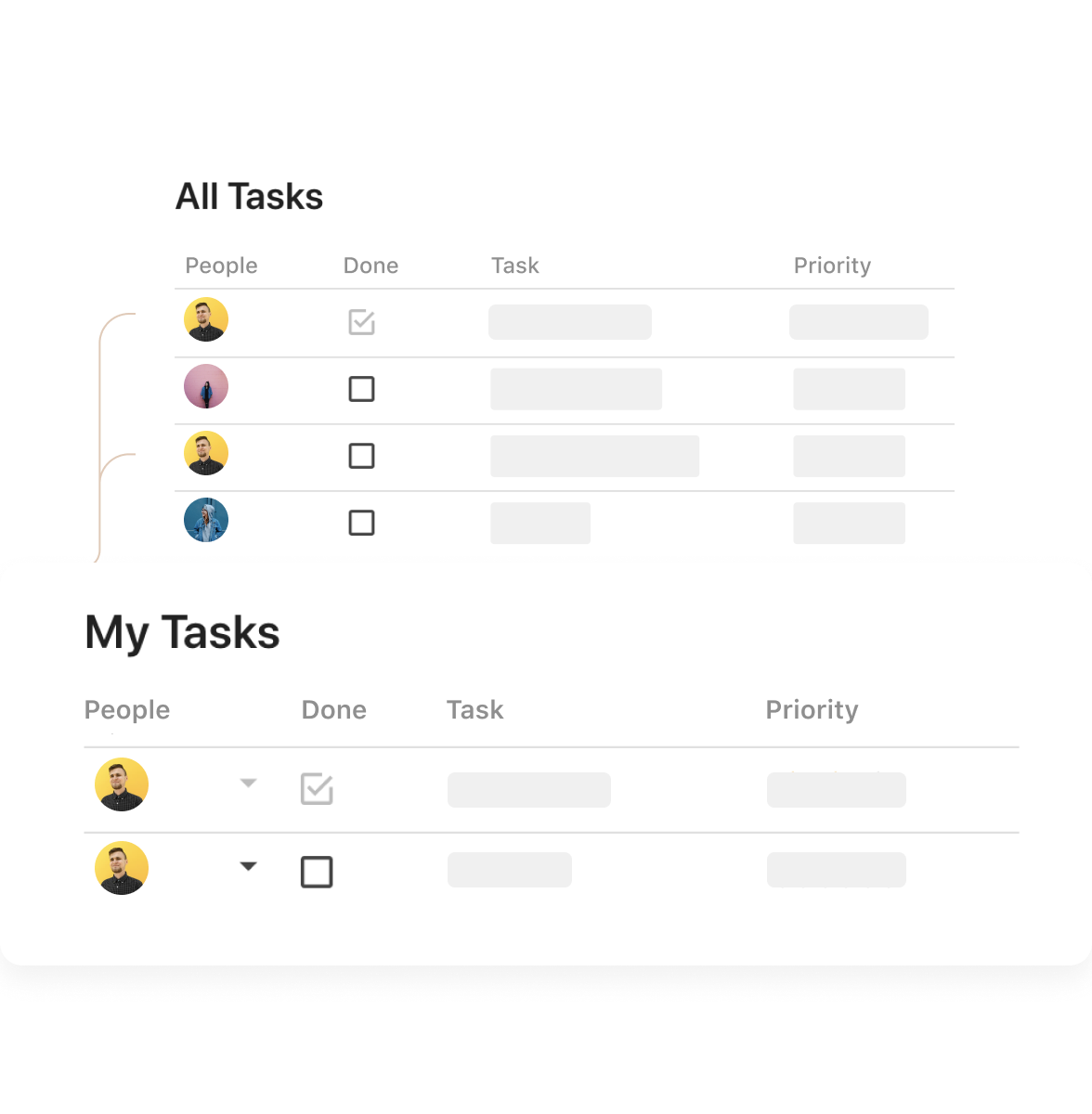
Being able to show different views of the same information throughout your doc makes it really easy to customize the information.
In general, I love the "coding" aspect of it, and being able to do advanced functions has helped us create some really interesting automation and streamline our process.
I like that we can collaborate all in one place without the need for multiple different windows or applications of different products to view necessary documentation across teams.
I love how easy to use it is and it took hardly any work at all to set up.
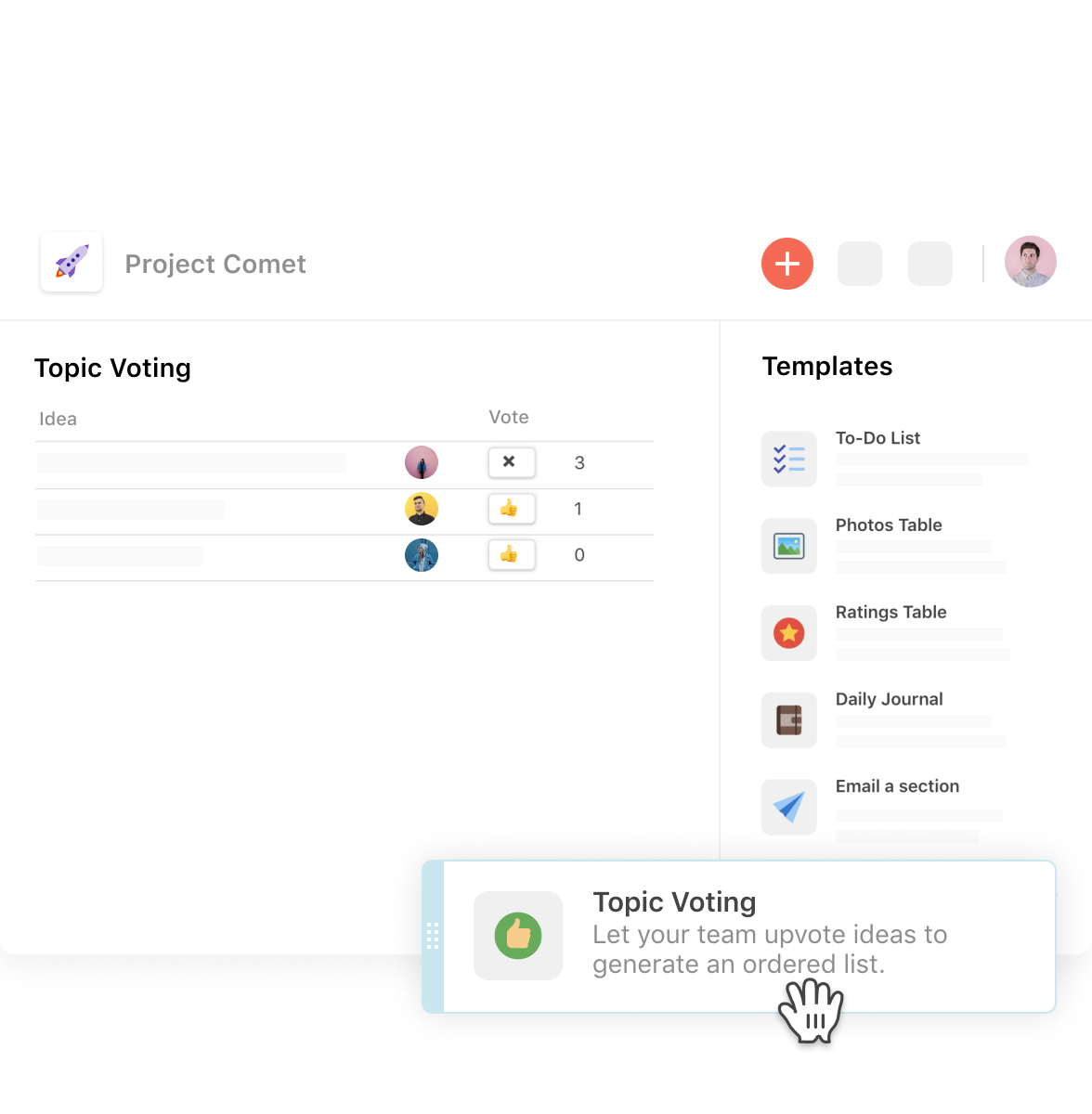
The use of templates really helps speed things up, so we're not left trying to assemble things all on our own.
Coda is definitely something that has been proven to drive positive impact in our organization. We have many divisions that can benefit from this that we have yet to explore. It would definitely be worth renewing.
We give ElaBoard a 10 out of 10 rating because it has proven to be an invaluable tool for our organization. ElaBoard has allowed us to easily set and track our goals, collaborate with cross-functional teams, manage our budget, forecast our expenses, develop successful products, and track progress on various projects. Additionally, ElaBoard has enabled us to quickly and easily visualize complex data sets, create custom workflows, and create presentation-style slideshows. These features, along with ElaBoard's intuitive user interface and responsive customer support team, make it an ideal choice for our organization and make us confident that it will continue to provide the features and functionality we need in the future.
There is a little bit of a learning curve on where to point and click to add in different elements and make edits. But it is still very manageable once you get the hang of it. I do still have some issues with some of my connected pages updating each other when I don't want them to sync. So I'll end up editing one page, and it will make the same edits on another page.
I gave ElaBoard an 8 rating for its overall usability because it provides an intuitive and user-friendly platform for teams to collaborate on a variety of tasks. The kindergarten management system was a great addition, as it allowed us to keep track of the kids inside the home or in the kindergarten. Additionally, the library of educational resources and games was also very useful. Furthermore, the platform is easy to set up and navigate, and the customer service team is responsive and helpful. Overall, ElaBoard makes it easy for teams to work together and efficiently get things done.
I gave ElaBoard a rating of 9 out of 10 for availability because it is designed to be extremely reliable, and it is backed by a team of experienced engineers and administrators who are dedicated to ensuring the product is available whenever it is needed. Additionally, ElaBoard has multiple layers of redundancy and failover built into the system to ensure that there are no single points of failure and that the system remains available even in the event of an unexpected outage. Furthermore, ElaBoard's servers are regularly monitored and maintained to ensure that the system is running optimally.
We haven't done any integrations - the initial part of our experience we found that for docs with complex formulas, the page tends to load slowly but in recent months, Coda has improved and optimized the loading times in general and we generally don't find any problems in terms of speed anymore.
I gave ElaBoard a rating of 9 out of 10 for performance because it is designed to be extremely fast, and it is optimized for both speed and efficiency. Pages on the platform load quickly, and reports tend to complete in a reasonable amount of time, given their complexity. Additionally, ElaBoard is designed to be light on resources, so it doesn't slow down other software or systems it might be integrated with. Furthermore, ElaBoard's servers are regularly monitored and maintained to ensure that the system is running optimally.
Mainly due to timezone differences. I think Coda's support in general is well implemented and executed. They know their stuff and are helpful. But since I'm not in the same timezone, solution rates are slower for me, and that's not something I prefer. I work in customer service, too, and more often than not, time is important. Shortening the solution time would be a much greater experience.
I give ElaBoard an 8 out of 10 rating because of the helpfulness and responsiveness of their customer service team. They have a knowledge base with detailed instructions and guides, as well as a dedicated customer service team that is available to answer questions. In my experience, the support team has been friendly, knowledgeable, and helpful in resolving my issues quickly and efficiently. Additionally, I found that the product itself was easy to use and had a wide range of features that met my needs.
I'm relatively inexperienced but this experience is meaningful. It would have been nice to have some guidance from Coda so that we understood more on Coda's purpose and potential.
Key insights regarding the implementation of ElaBoard include the importance of planning, gathering stakeholder buy-in, ensuring compatibility with existing systems, providing sufficient training and support, and monitoring the implementation process to ensure it achieves the desired outcomes. Additionally, it is important to consider the potential impact of the change on those affected by it and to ensure that data is migrated correctly. Lastly, it is important to ensure that the implementation process is completed on time and within budget.
For general use cases, Google Docs or Airtable are often a better starting place. But if things get complex or you're constantly pairing the two together, consider graduating to Coda to save yourself long-term headaches. Notion is great for personal use, but the powerful automation and collaboration features in Coda make it a better fit for teams in my experience so far.
Trello and ElaBoard share the feature of allowing users to organize and collaborate on projects, tasks, and events. Both allow users to create boards to store and organize information, as well as add notes, files, tags, and comments for each item. It offers us a series of advanced features, such as version control, change tracking and integration with other applications. The main difference between Trello and ElaBoard is that Trello focuses on collaboration while ElaBoard focuses primarily on project management and organization.
I think scalability is definitely good here since it's based on number of doc makers. Implementation into each dept becomes simpler. That being said, due to the nature of our work, we find it easier that we have a "super user" and then a team of other doc makers. This would make the doc creation and management more efficient.
I gave ElaBoard a rating of 9 out of 10 for scalability because it is designed to be flexible and easily configurable, allowing organizations to quickly and easily adjust the system to their needs. Additionally, the product can be easily deployed in a variety of environments and scales to meet the needs of the organization. Furthermore, ElaBoard provides a wide range of features and tools that make it easy to integrate and manage data from multiple sources, as well as to create custom visualizations and reports. All of these features make ElaBoard an excellent choice for organizations looking for a highly scalable solution.