Contractor Foreman is an online construction management software for contractors and boasts users among contractors in more than 75 countries.
$588
per year
LiquidPlanner
Score 8.3 out of 10
Mid-Size Companies (51-1,000 employees)
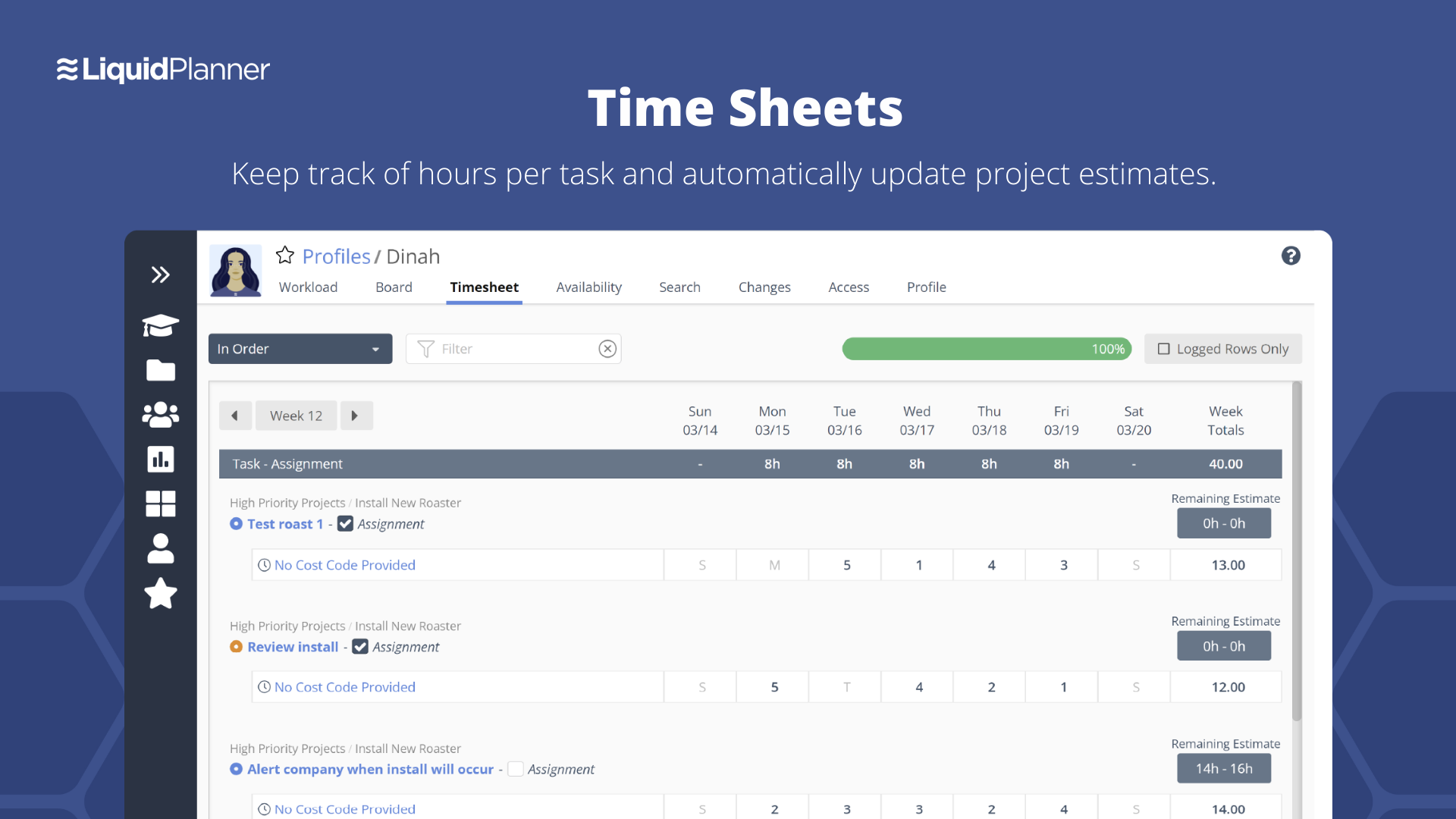
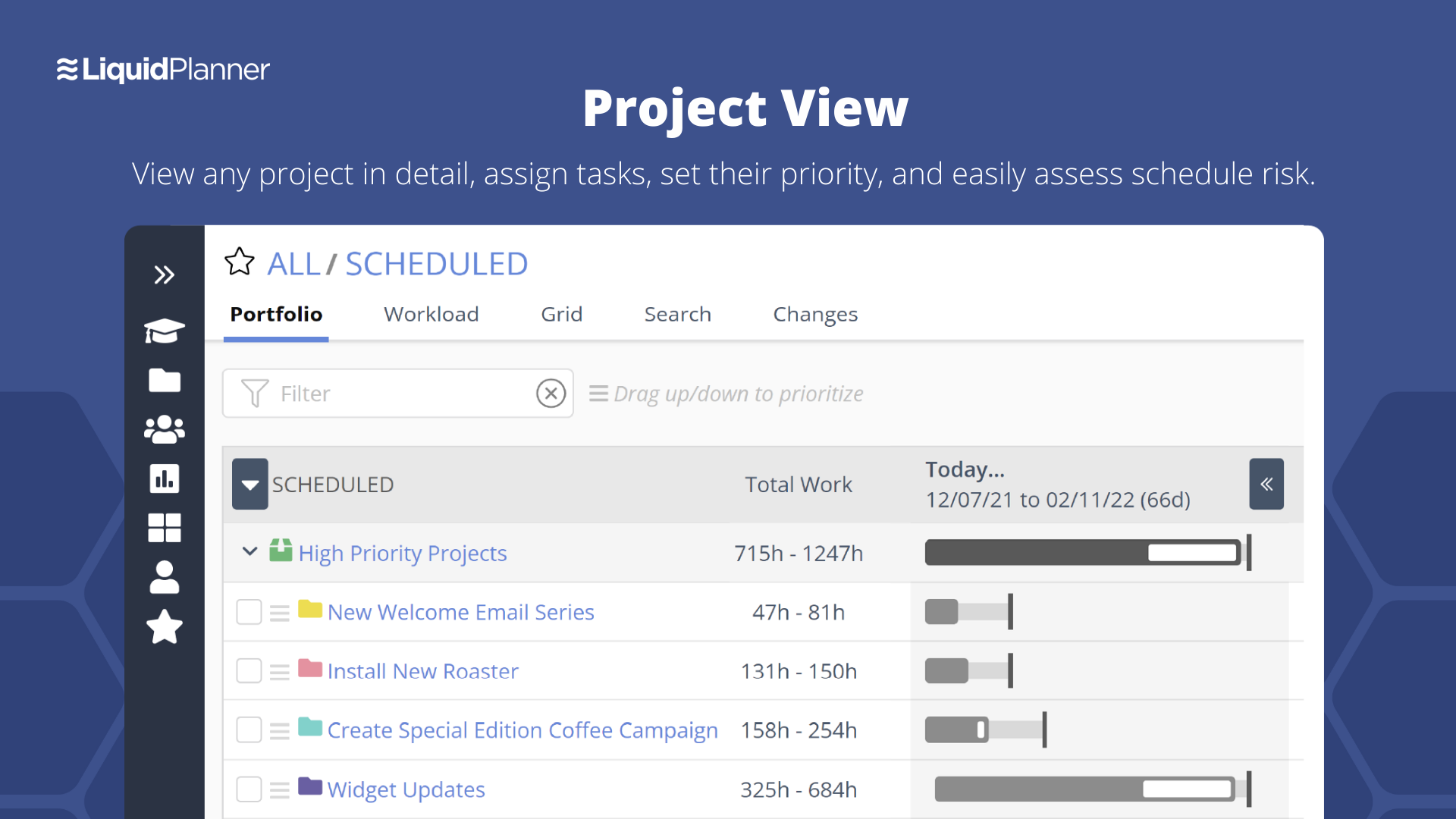
LiquidPlanner is a cloud based predictive project management solution. Some key features include: Dynamic Timeline View, Workload View, and Real-Time Activity Stream.
$0
per month per user
Pricing
Contractor Foreman
LiquidPlanner
Editions & Modules
Basic
$588
per year
Standard
$948
per year
Plus
$1,497
per year
Pro
$1,990
per year
Unlimited
$2,988
per year
Free
$0
per month per user
Essentials
$15.00
per month per user
Professional
$25
per month per user
Ultimate
$35
per month per user
Enterprise
CALL FOR VOLUME PRICING
Offerings
Pricing Offerings
Contractor Foreman
LiquidPlanner
Free Trial
Yes
Yes
Free/Freemium Version
No
Yes
Premium Consulting/Integration Services
No
No
Entry-level Setup Fee
No setup fee
No setup fee
Additional Details
Plans are based on features and licenses needed. Plus, Pro, and Unlimited plans include a 100-day money back guarantee.
—
More Pricing Information
Community Pulse
Contractor Foreman
LiquidPlanner
Features
Contractor Foreman
LiquidPlanner
Human Resource Management
Comparison of Human Resource Management features of Product A and Product B
Contractor Foreman
7.1
Ratings
7% below category average
LiquidPlanner
-
Ratings
Employee demographic data
7.50 Ratings
00 Ratings
Employment history
5.50 Ratings
00 Ratings
Job profiles and administration
6.50 Ratings
00 Ratings
Workflow for transfers, promotions, pay raises, etc.
7.80 Ratings
00 Ratings
Organizational charting
7.30 Ratings
00 Ratings
Organization and location management
8.40 Ratings
00 Ratings
Compliance data (COBRA, OSHA, etc.)
6.50 Ratings
00 Ratings
Payroll Management
Comparison of Payroll Management features of Product A and Product B
Contractor Foreman
6.5
Ratings
16% below category average
LiquidPlanner
-
Ratings
Pay calculation
6.10 Ratings
00 Ratings
Support for external payroll vendors
6.30 Ratings
00 Ratings
Off-cycle/On-Demand payment
4.50 Ratings
00 Ratings
Benefit plan administration
8.00 Ratings
00 Ratings
Direct deposit files
8.00 Ratings
00 Ratings
Salary revision and increment management
6.40 Ratings
00 Ratings
Reimbursement management
6.50 Ratings
00 Ratings
Asset Management
Comparison of Asset Management features of Product A and Product B
Contractor Foreman
7.5
Ratings
4% above category average
LiquidPlanner
-
Ratings
Tracking of all physical assets
7.50 Ratings
00 Ratings
Reporting & Analytics
Comparison of Reporting & Analytics features of Product A and Product B
Contractor Foreman
6.6
Ratings
14% below category average
LiquidPlanner
-
Ratings
Dashboards
6.70 Ratings
00 Ratings
Standard reports
6.60 Ratings
00 Ratings
Custom reports
6.60 Ratings
00 Ratings
Data exportability
6.60 Ratings
00 Ratings
Construction Project & Field Management
Comparison of Construction Project & Field Management features of Product A and Product B
Contractor Foreman
7.0
Ratings
8% below category average
LiquidPlanner
-
Ratings
Plan distribution & viewing
6.90 Ratings
00 Ratings
Plan markups & sharing
6.50 Ratings
00 Ratings
Issue tracking & punchlists
6.80 Ratings
00 Ratings
Photo documentation
6.80 Ratings
00 Ratings
Jobsite reports
6.90 Ratings
00 Ratings
Document sharing
6.70 Ratings
00 Ratings
RFI tools
8.90 Ratings
00 Ratings
Collaboration & approvals
6.80 Ratings
00 Ratings
Mobile app
6.50 Ratings
00 Ratings
Submittal design and management
6.70 Ratings
00 Ratings
Checklists
6.80 Ratings
00 Ratings
Meeting Minutes
8.10 Ratings
00 Ratings
Specifications
7.40 Ratings
00 Ratings
Change orders
6.80 Ratings
00 Ratings
Estimating
Comparison of Estimating features of Product A and Product B
Contractor Foreman
6.9
Ratings
15% below category average
LiquidPlanner
-
Ratings
Takeoff tools
7.50 Ratings
00 Ratings
Job costing
6.80 Ratings
00 Ratings
Cost databases
6.70 Ratings
00 Ratings
Cost calculator
6.70 Ratings
00 Ratings
Bid creation
6.70 Ratings
00 Ratings
Project Management
Comparison of Project Management features of Product A and Product B
Contractor Foreman
-
Ratings
LiquidPlanner
8.1
Ratings
6% above category average
Task Management
00 Ratings
8.70 Ratings
Resource Management
00 Ratings
8.60 Ratings
Gantt Charts
00 Ratings
8.60 Ratings
Scheduling
00 Ratings
8.80 Ratings
Workflow Automation
00 Ratings
8.40 Ratings
Team Collaboration
00 Ratings
8.90 Ratings
Support for Agile Methodology
00 Ratings
7.70 Ratings
Support for Waterfall Methodology
00 Ratings
8.40 Ratings
Document Management
00 Ratings
9.90 Ratings
Email integration
00 Ratings
7.90 Ratings
Mobile Access
00 Ratings
4.80 Ratings
Timesheet Tracking
00 Ratings
7.20 Ratings
Budget and Expense Management
00 Ratings
7.60 Ratings
Professional Services Automation
Comparison of Professional Services Automation features of Product A and Product B
Contractor Foreman has been a great tool for managing a variety of projects, from home remodels to large-scale builds. It works especially well for keeping everything organized in one place, whether it’s estimates, schedules, or job costs. One scenario where it’s been really useful is in managing multiple jobs at once. With several remodels and new construction projects happening at the same time, having a centralized system to track progress, store documents, and communicate with subcontractors has helped keep everything on schedule. It’s also great for estimating—being able to quickly generate and send professional proposals has made bidding much more efficient. It’s especially well-suited for projects that require a lot of moving parts, like tracking permits and compliance documents. For larger jobs, like school construction, it helps ensure that all approvals, budgets, and schedules stay on track without getting lost in a mess of paperwork. Where it’s less ideal is for smaller, one-off jobs where a full project management system might be overkill. If it’s just a quick repair or a simple remodel, sometimes it’s easier to just handle things manually. The mobile app could also be a bit more intuitive for on-site use, especially for field updates and quick changes. Overall, it’s a strong tool for contractors managing multiple projects, budgets, and teams. It keeps things organized and saves time, especially on jobs that require detailed tracking and coordination.
LiquidPlanner is amazing for any time of project management scenario where you have to manage several teams and details. Running a project through LiquidPlanner is so easy because it lets you break down the project into sections and folders and small tasks that you can assign to specific people. With a small to medium size team-- LiquidPlanner is amazing for organizing and tracking details. If you have a huge team or not a ton of details to track LiquidPlanner might not be right for you because it is a software that requires some good training to learn and has tons of functions that can be utilized so it seems better suited to be used by a smaller group looking to coordinate or for people who have lots of details that can be difficult to track.
Priority based planning. Every other planning software we've used relies on dates and therefore needs constant attention. Priority based planning means that the plan is always up to date.
Ease of use. LiquidPlanner has a very short learning curve. This is critical to getting team members to use it.
Forecasting. LiquidPlanner makes it very easy to run scenarios by simply dragging and dropping projects and reassigning resources.
Awesome Support. I get personal responses very fast. Usually within a couple hours. And, they listen and ask for more information.
LiquidPlanner's mobile app definitely needs some work. It doesn't display properly, having many things on the right hand side cut off. It doesn't update/refresh well. I can't imagine the mobile app will ever have the functionality of the Web version, but it needs to come a lot closer.
LiquidPlanner requires that everyone actively participate in order to maximize its benefit. However, it can be difficult for everyone to be on top of all of their responsibilities all of the time. Not sure on a solution, but it can be a lot to manage.
We may not renew LiquidPlanner's contract, but only because my company has recently been acquired and we'll be adopting some of the software that they're using to standardize process. LiquidPlanner's development team releases new features pretty often, so it seems like the gaps and inefficiencies are slowly getting smaller/less frequent
Mostly great, especially for the price. The features appear to have definitely been designed by a team with a depth of construction specific experience. I also highly rate the usability because of the vast vast amount of customizability inherent in the system. It appears that almost all forms and features are customabizable on the company level and even specific to different individual users.
Many times we had issues that turned out to be errors and bugs. At first, we would be told forcefully that there were no bugs, then we would document them, and we would get an acknowledgement but no apology for essentially either gaslighting us or being ignorant of their system
Absolutely top notch! They were always there to help and immediately. Very happy with the communication they provided and the knowledge they had of their product. I would venture to say that they are one of the best in terms of support in their space.
They have been great in trying to come up with creative solutions to help us do what we want to do with the platform. I would say their support has been exceptional because we have hit them with some complex requests.
I used Projul and Buildium when I was primarily managing rental properties rather than full home builds. Projul was great for estimating and invoicing, while Buildium served its purpose well at the time. Now, as a small construction company, Contractor Foreman provides everything we need in one platform, making project management much more efficient.
We had a "homebrew" time track program previously. It did one thing and it did it well--track time spent on an individual tactic or project, and it was deployed across all departments. It did not, however, capture the conversations or the work that could shed light on where problems occurred or issues were encountered.
Cost Savings. Integration with QuickBooks and Bills improved financial control. 0-15% cost savings per project.
Time Savings: Streamlined project management led to a 20-30% reduction in administrative time, boosting on-site productivity, and with project tracking a 15-20% reduction in project delays.
Enhanced Collaboration: Centralized documentation and real-time updates improved team communication, increasing collaboration by 5-10%.
Overall, CF has provided a 10-15% return on investment annually through increased efficiency and cost control.
LiquidPlanner has improved everybody's visibility into tasks, decreasing the communication load required and increasing client communication and status updates, effectively increasing client satisfaction and likely helping to generate more business.
LiquidPlanner has improved our estimation and communication about changing estimates. Allowing us to keep a running estimate of the remaining work lets our account managers bill appropriately for overages ahead of time, preventing issues with customers who may not want to pay for work that was done.
LiquidPlanner sometimes takes time to navigate, find the right tasks, etc. and in this way, it may have added time to our day that we are not getting paid for. However, this is fairly negligible.