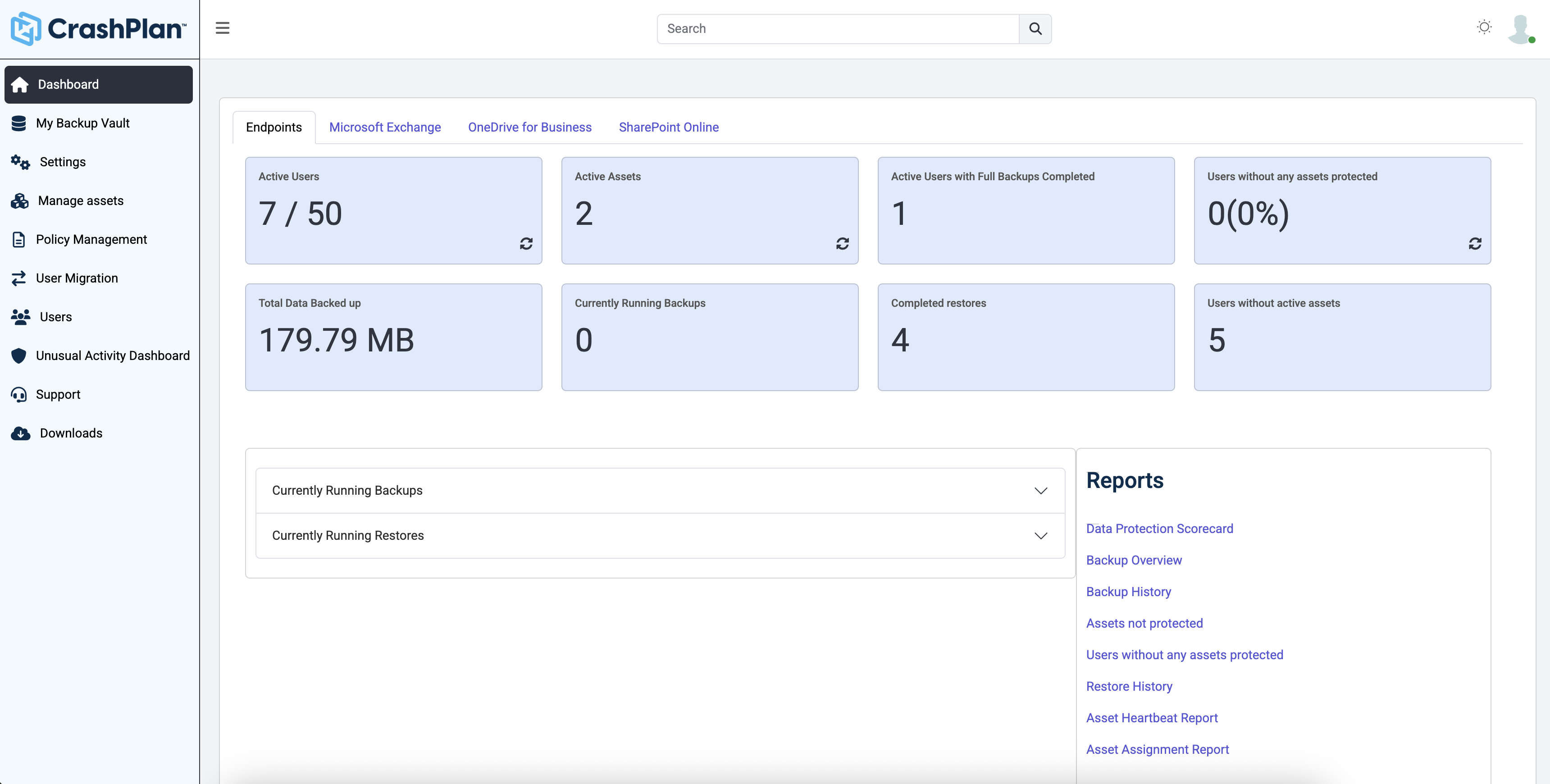
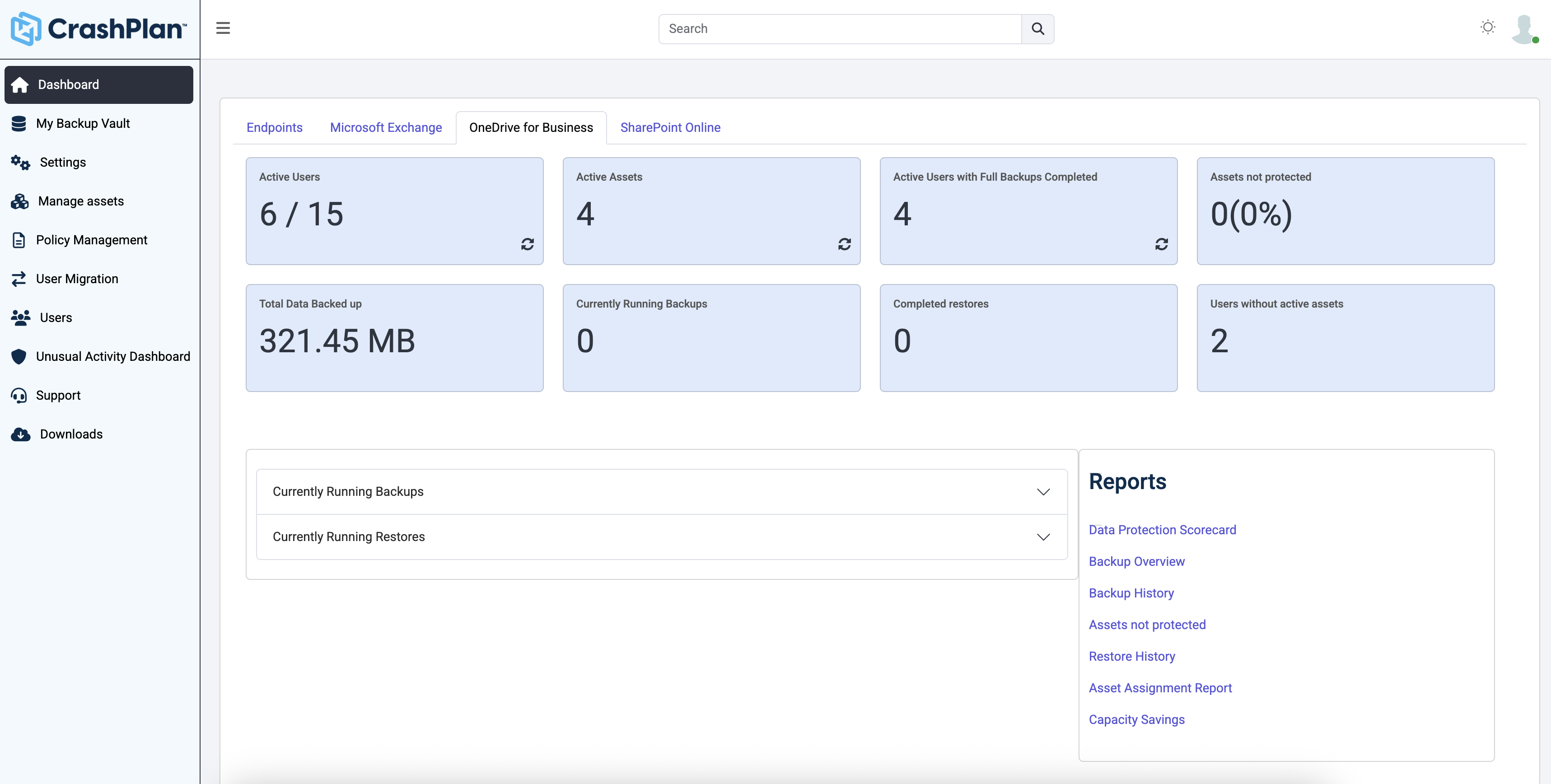
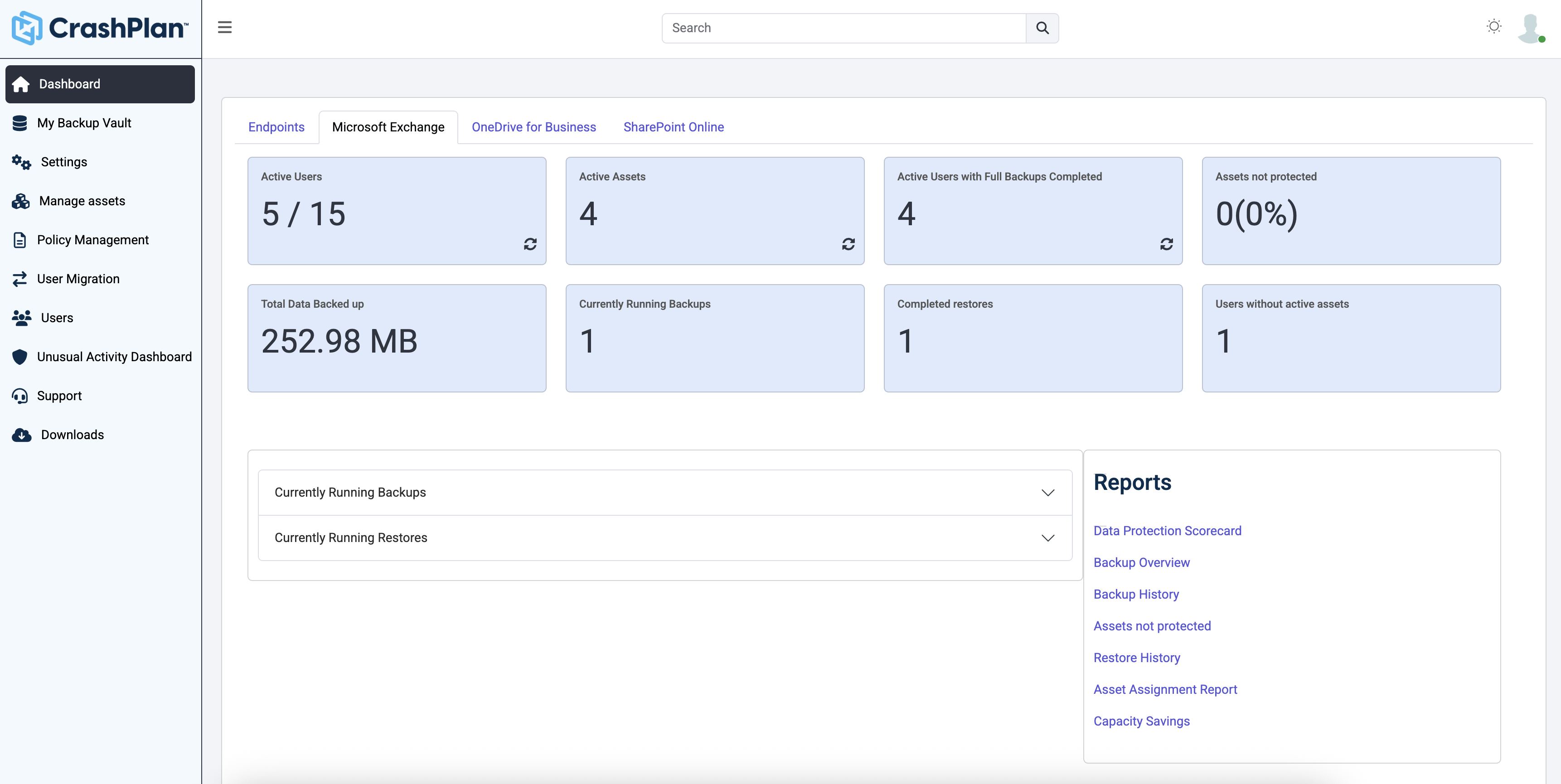
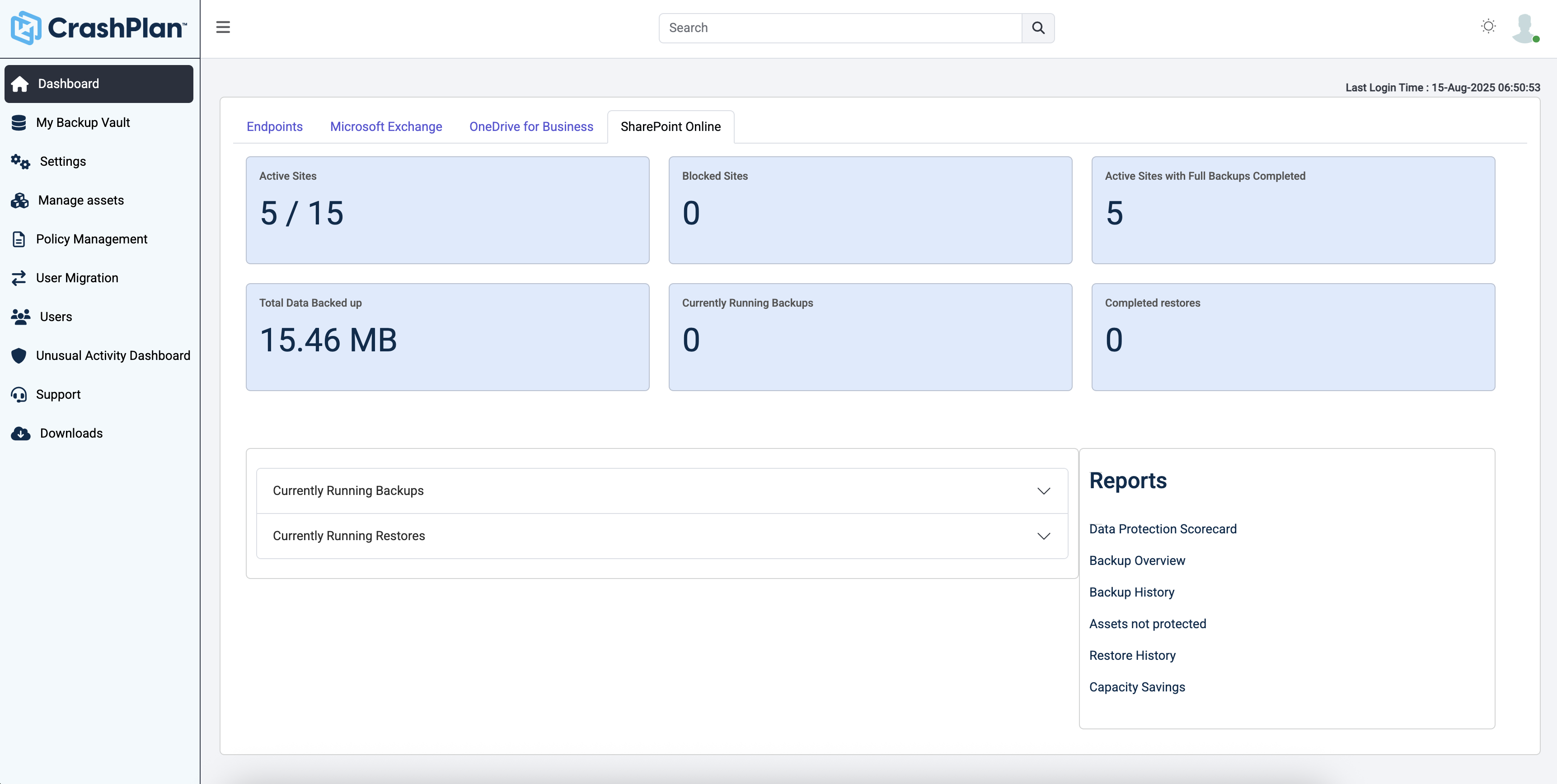
CrashPlan® provides secure, scalable, and straightforward endpoint data backup, to help organizations recover from any worst-case scenario, whether it is a disaster, simple human error, a stolen laptop, ransomware, or an as-of-yet-undiscovered calamity.
N/A
Dell Avamar
Score 6.9 out of 10
N/A
Dell Avamar is a hardware and software data backup and deduplication product. It provides protection and recovery through a complete software and hardware solution when paired with Dell Data Domain for virtual environments, remote offices, enterprise apps, NAS servers, and desktops/laptops.
CrashPlan (in my specific case the CrashPlan Pro or CrashPlan for Small Business (there seems to be somewhat of an ongoing identity crisis with the products) is significantly lower overhead, in terms of cost and complexity, when compared to the other two products I have …
Mostly the price is what drew me to CrashPlan -others I have used are expensive per GB storage and difficult to manage. Carbonite was costing $1000.00 a year for 1 server with 2 TB of data. CrashPlan helps keep down the cost and the client spends much less time paying me to …
Both of the entries I put need a dedicated VM or physical server to be utilized. VEEAM can be installed as a VM or on a physical server, but Unitrends has a dedicated server needed as a purchased product in order to get the backups running. CrashPlan is a simple install on any …
Unitrends is our primary backup solution here at my place of employment, and I have no complaints. It does on-prem backups to a storage pool and with that, we chose not to also use Unitrends could storage as the cost was pretty high. Crashplan has a low cost and we were …
Both AppAssure and Acronis Disaster Recovery Service was used in the IT business management firm in which I worked. AppAssure required off sight storage. It was challenging in that the size of offsite storage was an additional cost and rolling up could take hours. Restoring …
I have used SOS online backup. SOS might have had some advantages and was fairly easy to use, especially when searching for files. This is not to say that Code42 is difficult. But I did not feel that using SOS was justified given the exorbitant pricing scheme used by SOS.
We've been using Nakivo and Code42 together. It works great as we are able to have the peace of mind of having data backed up offsite (Code42) and locally (Nakivo) I found this combo worked better than the costly and complicated setup of both Unitrends and Zerto. My biggest …
Have used Veritas, Symantec, Mozy, and Carbonite. Veritas and Symantec Backup Exec from my tape days, and Mozy and Carbonite when I wanted to move to a modern backup service. Code42's interface, cost, simplicity of use, versioning, security, and low-impact sold me. No contest …
I formerly used SOS Online Backup. It was a very similar system, originally offering unlimited backups at a price similar to Code42. After more than a year of backups, SOS informed me that they'd be reducing my storage from unlimited to 2tb, and, increasing my monthly rate by …
The main advantage that CrashPlan has on competing services is it's ability to back up network drives and keep your backup archives indefinitely. While Backblaze costs significantly less ($50/year/computer vs. $10/year/computer - or $120/year/computer), it does not have the …
OneDrive is not a good backup solution for endpoints. It is for storing a few files and sharing those files but not for business backup. Druva is a very good product that we never had any problems with and I'm not exactly sure why we switched from it. Code42 has some extra …
For our business model, Carbonite was not as economical. CrashPlan offered unlimited backup and unlimited deleted file retention for similar cost. Additionally, we had better results with support during evaluation with CrashPlan.
I have used several tape drives over the years with Symantec Backup Exec. Tapes have so many negatives associated with them, I would never recommend them as a backup system. I have also tried a couple of other disk based backup systems. Compared to all other backup solutions …
CrashPlan just makes backups simple. It's LDAP integration isn't locked in to only AD (i.e., Commvault) and the product is much more solid and reliable than the end user portion of Tivoli's CDP offering that was replaced in our environment by CrashPlan. I can't stress enough …
We compared CrashPlan with other choices and they were either too expensive or didn't have the backup capacity we required at the time. For lack of a better solution, we were very close to signing with Mozy, and this was years ago when CrashPlan was still a new player in the …
I like Crashplan's centralized nature and flexibility with support for all platforms. Their support has been the best of all other competitors' solutions.
I have not used the product, but it appears to be in the same league as the Crashplan product. I tend to think Crashplan is better only because of naivete of the other product and the fact that the entire experience with Crashplan has been fantastic from setup to updating to …
We use Windows Server to backup our in-house associates as they are connecting to the domain and it is easy to keep track of. Our remote associates do not connect to the domain as often so we had to find a solution to enable us to get a secure, accurate backup of their data. …
CrashPlan demonstrated a more advanced development than other products we were evaluating. A number of them didn't compress and dedupe, which affected performance on the machine as well as the network. The controls and reporting of crashplan were way more intuitive and …
We looked at file sync solutions that require an end user to move data independently, and two major things stuck out:
1. The human error factor was high. You cannot trust people to move files, even if they are important or they've agreed to move them on a certain schedule, and …
Avamar has a light and simple management interface. Backup operations can be configured easliy. Job tracking is detailed and descriptive. Platform-independent working flexibility is a big advantage.
We had an agreement with Dell so we got a good deal on the IDPA appliance. Unfortunately we didn't review other solutions, which was a horrible mistake.
The upside to Avamar versus Veeam is that Avamar has a machine tied to the software. Veeam is good software but it is only as good as the back-end storage.
EMC Avamar is always incremental and deduplication rate is higher for variable block-level deduplication, restoration is faster as compared to other tools, backups cannot be accidentally deleted as there is an option for retiring the backups, retention is straightforward. EMC …
Avamar has simplied the back up approach in their VE edition and is much easier to use than Data Protector. Backing up multiple VMs takes minutes instead of hours now. Creating policies, retentions, and schedules, is vastly improved and much easier.
EMC Avamar offers backup and recovery for desktops and laptops, allowing users to extend the power of Avamar "deduplication" backup software with the aim of eliminating the risk of data loss. Backup processes are performed automatically and in the background to ensure …
Each one of these products did one thing well. Avamar was able to backup all of the different OS types and different types of data. Also, the reliability and support of Avamar are so much better.
I personally would put Dell EMC Avamar at the top of the list for backup/restore data protection. Given the size of the deployment and the technical expertise of the engineers the implementation was flawless and timely. We vetted other companies backup solutions against Dell …
Unfortunately, Avamar has stayed behind solutions like Solarwinds Backup and Datto in many different things, like the management of the applications being only desktop, the old fashion interfaces and configurations and specially the fact that it doesn't work as a business …
Avamar was selected for me to use by our corporate office. The user interface of Backup Exec was easier to use, but as far as reliability, Avamar was much better. I always had failures with Backup Exec backups and restores. That is one thing I never had to worry about with …
BackupExec and NetBackup both would choke on data that was being replicated by DFSR. I needed a product that could handle that data, as well as do client side deduplication and compression.
Originally, we evaluated CommVault with Avamar and due to some differences at the time we decided to go with Avamar. Some of those reasons against CommVault no longer exist, but we have been satisfied with Avamar. Other more current products have been reviewed such as Rubrik …
We were considering going with the newer version of the tape backup method we have been using for years. However tapes deteriorate and off site storage adds up. Backups are slow, recovery from incremental backups is slow and unreliable.
We had different backup system before. We used 2 different ones the last 2 years but we ended up with Avamar. Since then we never really change our backup system because we got the result we wanted from Avamar.
I started with Avamar as a tape backup replacement. I had drives at each location and a tape robot at the central data center. Moving to disk backup with no tape switch out was incredible. With tech today, almost all backup is disk backup. Avamar's quality hardware and …
This is a great Cloud backup solution. The cost is low, the bandwidth is managed well within the application, and the footprint for the client on a machine is very small and provides a notification menu icon with info about what is happening now or very recently. This does not backup to anything locally, so if that is a requirement, it will not meet that need. It used to be able to backup from one machine to another remote machine at one time, but now it is only cloud-based.
It's well suited when you are looking for something to keep your on-premise environment safe and you don't want to spend a lot of time doing the setup. It's easy to scale and a very reliable solution. I think it is not a really nice solution in terms of pricing, so the challenge here is to check if the value [is] worth it.
Code42 is the most affordable backup system offering unlimited storage that I could find. I came from SOS Online Backup, which I ultimately decided to drop after my monthly rate for their unlimited plan increased by 20x.
With Code42's unlimited storage option, I don't have to worry about the fact that my backups are significant in space. As a photographer with thousands of images at stake, I need to run large backups often.
Code42 runs continuously and silently in the background of my desktop computer. It is truly "set and go", so I don't have to think about it when I'm away. It runs until the designated drive has been fully backed up to my cloud storage. It will then automatically email me once the backup is complete (or, it will email me if it encounters any errors).
Customer service is above par. Anytime I need help, a chat agent is available (chat is my communication preference), they are always friendly, and go above and beyond to resolve my needs.
The CrashPlan program installed on your computer is Java-based vs. a native application. While this makes development for CrashPlan easier, there are a lot of drawbacks to Java programs including more resources usage, less stability, and overall more clunky interface.
While this was also in the Pros category - CrashPlan is an extremely powerful and flexible program, which adds a great deal of complexity. Setting up CrashPlan isn't always a simple procedure, and depending on the complexity of your backup set, can take a while to tinker around with the settings to get everything to work properly.
The CrashPlan desktop program consists of a Java program front end, as well as a backend service - there are times when the backend service will crash, and the front end Java program will refuse to load. Typically, restarting the service or restarting the computer will resolve the issue, but sometimes more in-depth troubleshooting is required.
Perhaps one of the biggest downsides to CrashPlan is its price - at $10/month/computer CrashPlan is more than double the price of some existing backup services such as Backblaze (priced at $50/year/computer). To add salt to the wound, about a year and a half ago, CrashPlan discontinued their consumer options - which were very reasonably priced at $60/year for a single computer or a family plan priced at $150/year for up to 10 computers. When these options were discontinued, the cost of backing up with CrashPlan was effectively doubled for the same feature set.
Along with the previous example, CrashPlan had the option to back up to a remote machine on a different network with a free Crashplan account. This option was eliminated when the consumer line of services were discontinued.
While the backup service provided by CrashPlan are still first in class, the above two controversial changes have broken some trust between CrashPlan and its clients.
I have been using the product for over five years. This has performed so well that with the current system reaching its End-of-Life with EMC next year, I have proposed replacing it with the latest version of the product. Now that it integrates with Data Domain, the cost has been greatly reduced. Instead of the need to purchase many nodes, one Data Domain can replace them creating a significant cost savings.
The system overall is easy to monitor and see your backup/restore status. The user interface could use updating as it relies on Java and any updates to Java cause the interface to stop working need to be reinstalled
Friendly and knowledgeable support team available to assist with this product. Code 42 (formerly CrashPlan) offers unlimited storage options for reasonable costs, so you really can't go wrong with this product. They have been a reliable resource for our company, and I would recommend to others looking for an easy setup with unlimited storage.
Support is very convincing, always eager to solve issues from the root rather than workaround, don't hesitate to take webex, describe the issues to the core and recommend configuration to avoid further issues. We can ask few questions other than the main issue. They don't hesitate to answer.
CrashPlan (in my specific case the CrashPlan Pro or CrashPlan for Small Business (there seems to be somewhat of an ongoing identity crisis with the products) is significantly lower overhead, in terms of cost and complexity, when compared to the other two products I have evaluated/used. The downsides are that it is also significantly less functional than the other products. CrashPlan is, as I have said a good value simple point solution.
Unfortunately, Avamar has stayed behind solutions like Solarwinds Backup and Datto in many different things, like the management of the applications being only desktop, the old fashion interfaces and configurations and specially the fact that it doesn't work as a business continuity tool, which makes it mostly and out-dated application when you compare it with how the market is evolving.
Tremendous cost savings as the amount of data you backup doesn't impact cost. One flat rate!
Implementation time was minimal and requires little to no maintenance. Since installation, I've not had to correct or fix any issues. It just works.
We opted to supplement Code42 with another solution that allowed us to backup data to a local repository due to the amount for data that changes in our firm.