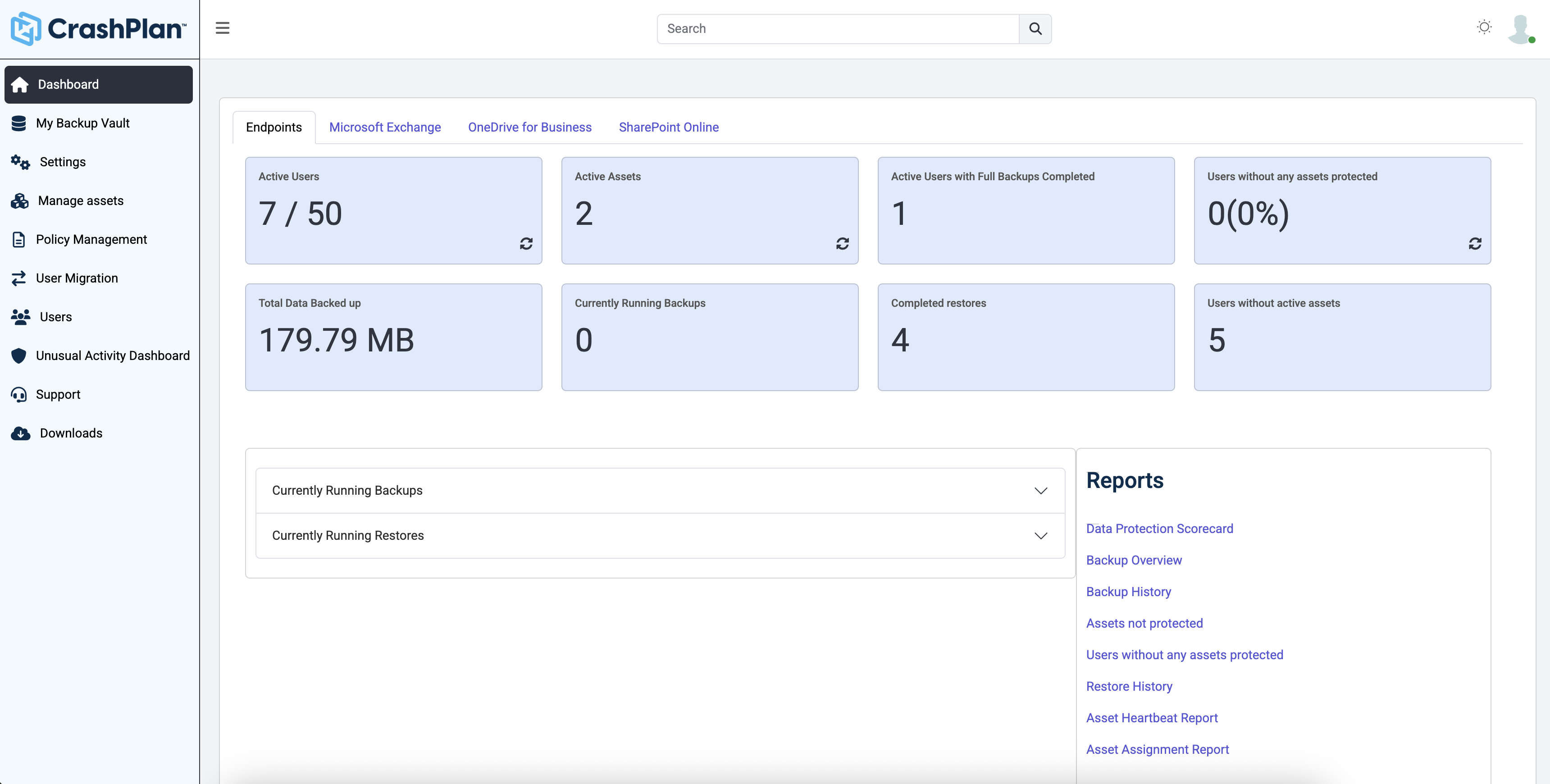
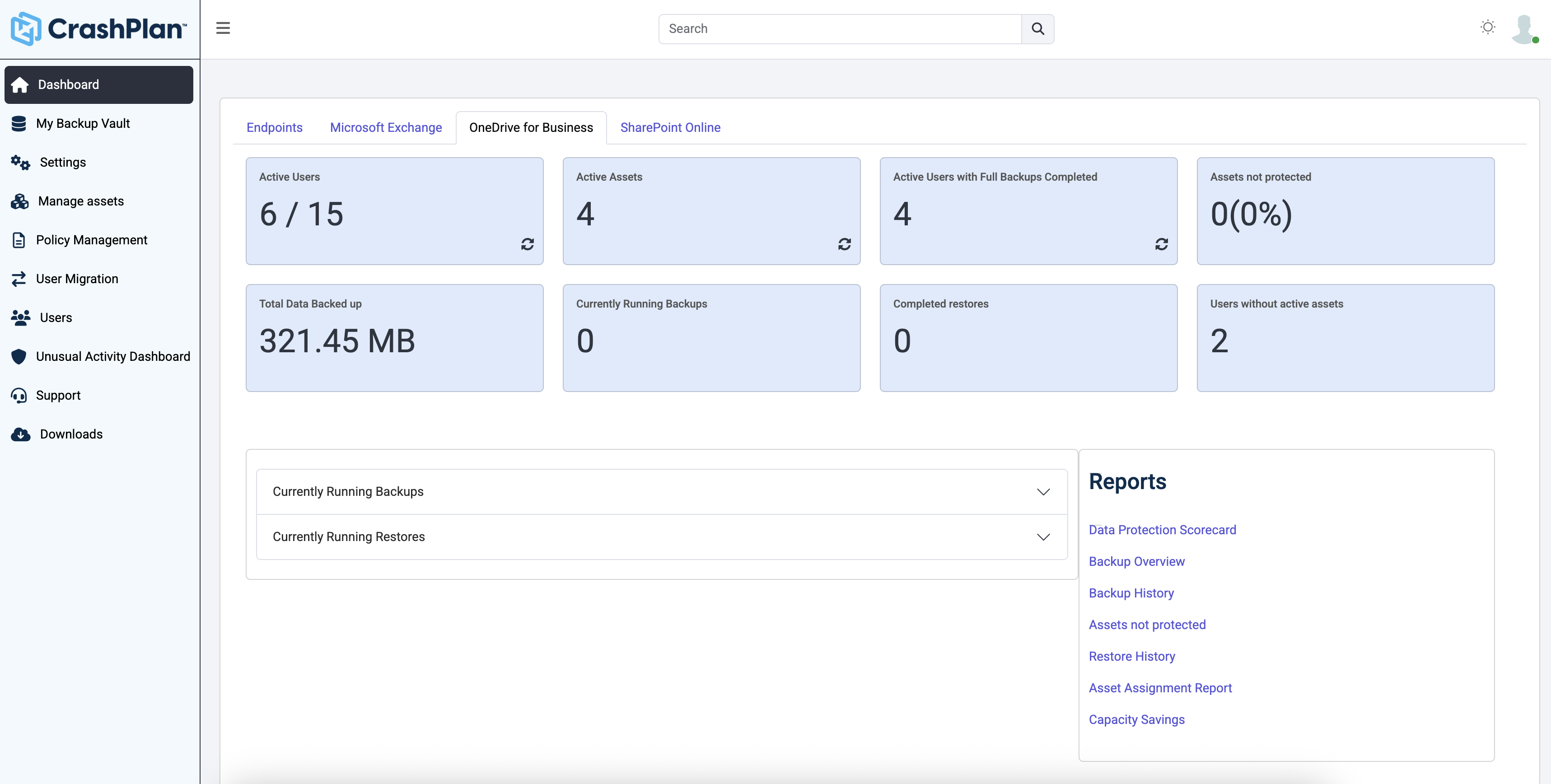
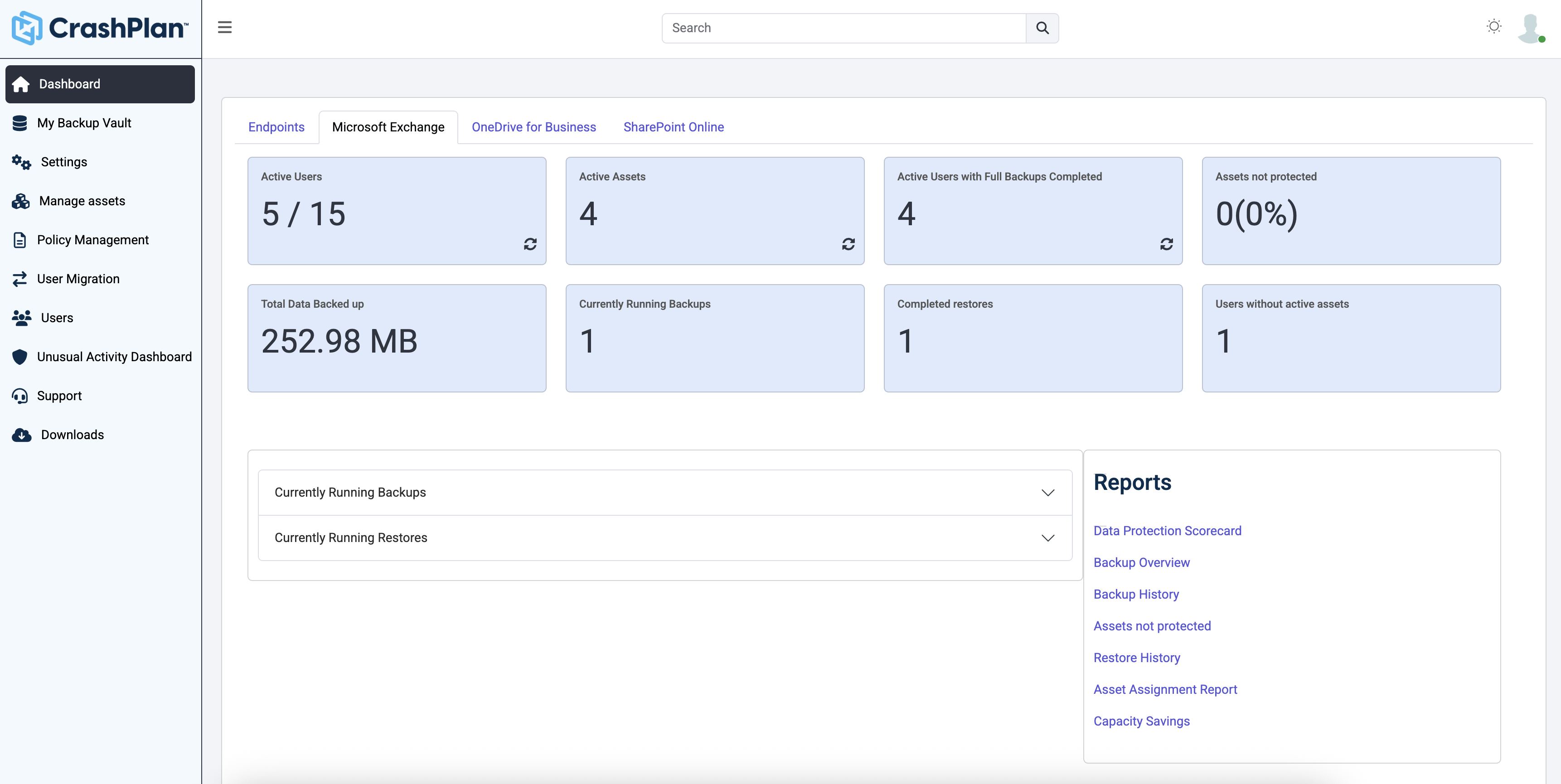
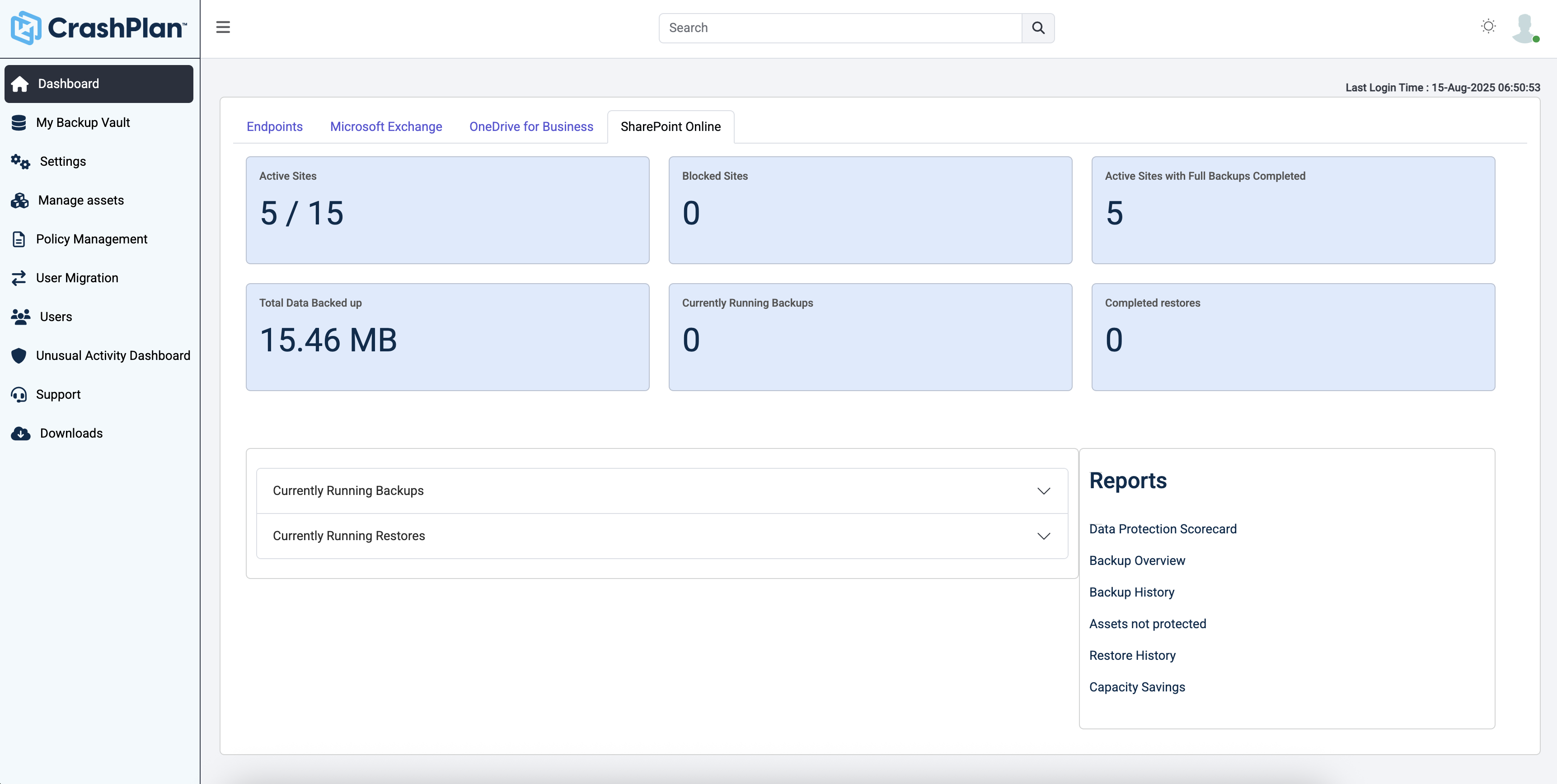
CrashPlan® provides secure, scalable, and straightforward endpoint data backup, to help organizations recover from any worst-case scenario, whether it is a disaster, simple human error, a stolen laptop, ransomware, or an as-of-yet-undiscovered calamity.
N/A
Veeam Backup for Azure
Score 7.1 out of 10
N/A
Veeam® Backup for Azure delivers native, policy-based protection for reliable recovery from accidental deletion, ransomware and other data loss scenarios. With an API-first approach, immutable backups and full- and file-level restores ensure resilient protection that’s easy and cost-optimized, freeing up time and resources for more strategic IT priorities. Immutable and Encrypted - Data integrity through WORM state and encryption Logically…
$40
per year per Azure VM (Back up and recover in Azure only with 24/7 production support)
Pricing
CrashPlan
Veeam Backup for Azure
Editions & Modules
No answers on this topic
BYOL edition
$40
per year per Azure VM (Back up and recover in Azure only with 24/7 production support)
Free Edition
Free
Backup up to 10 Azure VMs FREE with no limitations on features or number of restores.
BYOL edition (Hybrid-/multi-cloud)
VUL Portable licensing
Backup and recover anything, anywhere via Veeam Universal License for any supported workload – cloud, virtual and physical – interchangeably
CrashPlan (in my specific case the CrashPlan Pro or CrashPlan for Small Business (there seems to be somewhat of an ongoing identity crisis with the products) is significantly lower overhead, in terms of cost and complexity, when compared to the other two products I have …
Mostly the price is what drew me to CrashPlan -others I have used are expensive per GB storage and difficult to manage. Carbonite was costing $1000.00 a year for 1 server with 2 TB of data. CrashPlan helps keep down the cost and the client spends much less time paying me to …
Both of the entries I put need a dedicated VM or physical server to be utilized. VEEAM can be installed as a VM or on a physical server, but Unitrends has a dedicated server needed as a purchased product in order to get the backups running. CrashPlan is a simple install on any …
Unitrends is our primary backup solution here at my place of employment, and I have no complaints. It does on-prem backups to a storage pool and with that, we chose not to also use Unitrends could storage as the cost was pretty high. Crashplan has a low cost and we were …
Both AppAssure and Acronis Disaster Recovery Service was used in the IT business management firm in which I worked. AppAssure required off sight storage. It was challenging in that the size of offsite storage was an additional cost and rolling up could take hours. Restoring …
I have used SOS online backup. SOS might have had some advantages and was fairly easy to use, especially when searching for files. This is not to say that Code42 is difficult. But I did not feel that using SOS was justified given the exorbitant pricing scheme used by SOS.
We've been using Nakivo and Code42 together. It works great as we are able to have the peace of mind of having data backed up offsite (Code42) and locally (Nakivo) I found this combo worked better than the costly and complicated setup of both Unitrends and Zerto. My biggest …
Have used Veritas, Symantec, Mozy, and Carbonite. Veritas and Symantec Backup Exec from my tape days, and Mozy and Carbonite when I wanted to move to a modern backup service. Code42's interface, cost, simplicity of use, versioning, security, and low-impact sold me. No contest …
I formerly used SOS Online Backup. It was a very similar system, originally offering unlimited backups at a price similar to Code42. After more than a year of backups, SOS informed me that they'd be reducing my storage from unlimited to 2tb, and, increasing my monthly rate by …
The main advantage that CrashPlan has on competing services is it's ability to back up network drives and keep your backup archives indefinitely. While Backblaze costs significantly less ($50/year/computer vs. $10/year/computer - or $120/year/computer), it does not have the …
OneDrive is not a good backup solution for endpoints. It is for storing a few files and sharing those files but not for business backup. Druva is a very good product that we never had any problems with and I'm not exactly sure why we switched from it. Code42 has some extra …
For our business model, Carbonite was not as economical. CrashPlan offered unlimited backup and unlimited deleted file retention for similar cost. Additionally, we had better results with support during evaluation with CrashPlan.
I have used several tape drives over the years with Symantec Backup Exec. Tapes have so many negatives associated with them, I would never recommend them as a backup system. I have also tried a couple of other disk based backup systems. Compared to all other backup solutions …
CrashPlan just makes backups simple. It's LDAP integration isn't locked in to only AD (i.e., Commvault) and the product is much more solid and reliable than the end user portion of Tivoli's CDP offering that was replaced in our environment by CrashPlan. I can't stress enough …
We compared CrashPlan with other choices and they were either too expensive or didn't have the backup capacity we required at the time. For lack of a better solution, we were very close to signing with Mozy, and this was years ago when CrashPlan was still a new player in the …
I like Crashplan's centralized nature and flexibility with support for all platforms. Their support has been the best of all other competitors' solutions.
I have not used the product, but it appears to be in the same league as the Crashplan product. I tend to think Crashplan is better only because of naivete of the other product and the fact that the entire experience with Crashplan has been fantastic from setup to updating to …
We use Windows Server to backup our in-house associates as they are connecting to the domain and it is easy to keep track of. Our remote associates do not connect to the domain as often so we had to find a solution to enable us to get a secure, accurate backup of their data. …
CrashPlan demonstrated a more advanced development than other products we were evaluating. A number of them didn't compress and dedupe, which affected performance on the machine as well as the network. The controls and reporting of crashplan were way more intuitive and …
We looked at file sync solutions that require an end user to move data independently, and two major things stuck out:
1. The human error factor was high. You cannot trust people to move files, even if they are important or they've agreed to move them on a certain schedule, and …
Our organization selected Veeam Backup for Azure as it is a cloud-native backup and recovery solution what is designed especially for Microsoft Azure. Another feature of Veeam Backup for Azure is it support hybrid cloud computing environments. Such feature enables for …
Veeam Backup for Azure is a much easier product to setup and configure vs other options we've used in the past, the initial install and setup is very straight forward and the interface to manage on-going backups and settings isn't confusing either.
Backup Exec was a very clunky application and took forever to backup to and restore from. We would backup to SSD external hard drives from a flash array, but the process still took forever to finish. Sending our data to the Azure blob storage via Veeam is a faster and more …
Veeam came recommended to over other options based on how our resources are set up and used by end-users. Some machines are bare-metal, virtual, and a few resources are mobile. Veeam also supports Windows, Mac OS and Linux. While we are trying to move to more easily supported …
Veeam Backup for Microsoft 365 is an excellent backup solution that provides fast and reliable backups. The software is easy to use and has a great interface. The backup process is quick and efficient, and the software provides excellent support. I would highly recommend Veeam …
Veeam allows much more flexibility in scheduling backup jobs, It also allows you to copy backups to an on prem server or another cloud if you wanted to, it also allowed you to restore Azure VMs on premise or to another cloud.
The other products we considered had higher overall costs and appeared to offer less functionality/customisation. We had also experienced reliability issues with one of the other products so did not have confidence it would provide a suitable backup and DR solution.
Azure Backup services give reliable backups with the bare minimum needed to get the job done. Veeam Backup takes it several steps further with better management, better features, better reporting and better integration with on-prem backups. It does the same job, it just does it …
Compared to others where it has been quite complicated, Veeam has a good GUI which is self explanatory and doesn't require too much experience on the same tool.
Veeam Backup for Azure is very similar to all the above. its just how large a backup set you have, what backup storage systems do you have, backup network requirements, recovery point objectives, ransomware protection level you want, recoverability options, and how much you …
Veeam is the best tool i have seen because of how well it works natively with azure but also with my on prem datacenter. I think its the best tool in the industry.
It is much faster, easier to use, has multiple scale out repositories that are immutable. Azure backup works but it is slow when processing backups, and restoring backups. It is not flexible compared to Veeam.
We were already using an older version of Veeam in one data center, so the only other solution we really looked at for the Azure side was the free Microsoft Azure Backup Server and it was way too slow and clunky, as well as crashed constantly so it was definitely not worthy of …
This is a great Cloud backup solution. The cost is low, the bandwidth is managed well within the application, and the footprint for the client on a machine is very small and provides a notification menu icon with info about what is happening now or very recently. This does not backup to anything locally, so if that is a requirement, it will not meet that need. It used to be able to backup from one machine to another remote machine at one time, but now it is only cloud-based.
When migrating from on Prim to AWS then to AZure the process was a little challenging because of some of the way we configured up front but once we went from AWS to Azure it was no looking back. We didn't have the extra storage to move things around like most companies to but it worked out great and we were also able to store more cold backups on Azure due to the low cost of cold storage.
Code42 is the most affordable backup system offering unlimited storage that I could find. I came from SOS Online Backup, which I ultimately decided to drop after my monthly rate for their unlimited plan increased by 20x.
With Code42's unlimited storage option, I don't have to worry about the fact that my backups are significant in space. As a photographer with thousands of images at stake, I need to run large backups often.
Code42 runs continuously and silently in the background of my desktop computer. It is truly "set and go", so I don't have to think about it when I'm away. It runs until the designated drive has been fully backed up to my cloud storage. It will then automatically email me once the backup is complete (or, it will email me if it encounters any errors).
Customer service is above par. Anytime I need help, a chat agent is available (chat is my communication preference), they are always friendly, and go above and beyond to resolve my needs.
Reduce storage costs and minimizing the impact on network consuption.
Veaam Backup for Azure provides application-aware backups for Microsoft SQL Server, ensuring that our data is backed up and available for recovery correctly.
Replication: Veeam Backup for Azure helps us to replicate our workloads to another Azure region or on-premises environment for disaster recovery purposes and compliance needs.
The CrashPlan program installed on your computer is Java-based vs. a native application. While this makes development for CrashPlan easier, there are a lot of drawbacks to Java programs including more resources usage, less stability, and overall more clunky interface.
While this was also in the Pros category - CrashPlan is an extremely powerful and flexible program, which adds a great deal of complexity. Setting up CrashPlan isn't always a simple procedure, and depending on the complexity of your backup set, can take a while to tinker around with the settings to get everything to work properly.
The CrashPlan desktop program consists of a Java program front end, as well as a backend service - there are times when the backend service will crash, and the front end Java program will refuse to load. Typically, restarting the service or restarting the computer will resolve the issue, but sometimes more in-depth troubleshooting is required.
Perhaps one of the biggest downsides to CrashPlan is its price - at $10/month/computer CrashPlan is more than double the price of some existing backup services such as Backblaze (priced at $50/year/computer). To add salt to the wound, about a year and a half ago, CrashPlan discontinued their consumer options - which were very reasonably priced at $60/year for a single computer or a family plan priced at $150/year for up to 10 computers. When these options were discontinued, the cost of backing up with CrashPlan was effectively doubled for the same feature set.
Along with the previous example, CrashPlan had the option to back up to a remote machine on a different network with a free Crashplan account. This option was eliminated when the consumer line of services were discontinued.
While the backup service provided by CrashPlan are still first in class, the above two controversial changes have broken some trust between CrashPlan and its clients.
Still clunky compared to the on-prem version but getting better with every release. It does what it needs to do, and does it well. They are stuck with some limitations in the way Azure works so I don't know how much better they can make it but they've just added 365 backup management all from the same pane so it seems they're not done yet.
Friendly and knowledgeable support team available to assist with this product. Code 42 (formerly CrashPlan) offers unlimited storage options for reasonable costs, so you really can't go wrong with this product. They have been a reliable resource for our company, and I would recommend to others looking for an easy setup with unlimited storage.
CrashPlan (in my specific case the CrashPlan Pro or CrashPlan for Small Business (there seems to be somewhat of an ongoing identity crisis with the products) is significantly lower overhead, in terms of cost and complexity, when compared to the other two products I have evaluated/used. The downsides are that it is also significantly less functional than the other products. CrashPlan is, as I have said a good value simple point solution.
Backup Exec was a very clunky application and took forever to backup to and restore from. We would backup to SSD external hard drives from a flash array, but the process still took forever to finish. Sending our data to the Azure blob storage via Veeam is a faster and more secure process than saving to the external hard drives with Backup Exec.
Tremendous cost savings as the amount of data you backup doesn't impact cost. One flat rate!
Implementation time was minimal and requires little to no maintenance. Since installation, I've not had to correct or fix any issues. It just works.
We opted to supplement Code42 with another solution that allowed us to backup data to a local repository due to the amount for data that changes in our firm.
We have had fast recovery of documents when needed; sub 10 minutes from start of restore to complete and in the users hands
Easily a value add for backing up files outside of the given Microsoft retention period; piece of mind
Easy tool to use with minimal training required to use it and set up backups
When you do change your cloud licensing it does require manual intervention to update backup data requirements. if the business makes changes then your backup person may not know to make these changes