Databricks in San Francisco offers the Databricks Lakehouse Platform (formerly the Unified Analytics Platform), a data science platform and Apache Spark cluster manager. The Databricks Unified Data Service aims to provide a reliable and scalable platform for data pipelines, data lakes, and data platforms. Users can manage full data journey, to ingest, process, store, and expose data throughout an organization. Its Data Science Workspace is a collaborative environment for practitioners to run…
$0.07
Per DBU
DataRobot
Score 8.2 out of 10
N/A
The DataRobot AI Platform is presented as a solution that accelerates and democratizes data science by automating the end-to-end journey from data to value and allows users to deploy AI applications at scale. DataRobot provides a centrally governed platform that gives users AI to drive business outcomes, that is available on the user's cloud platform-of-choice, on-premise, or as a fully-managed service. The solutions include tools providing data preparation enabling users to explore and…
If you need a managed big data megastore, which has native integration with highly optimized Apache Spark Engine and native integration with MLflow, go for Databricks Lakehouse Platform. The Databricks Lakehouse Platform is a breeze to use and analytics capabilities are supported out of the box. You will find it a bit difficult to manage code in notebooks but you will get used to it soon.
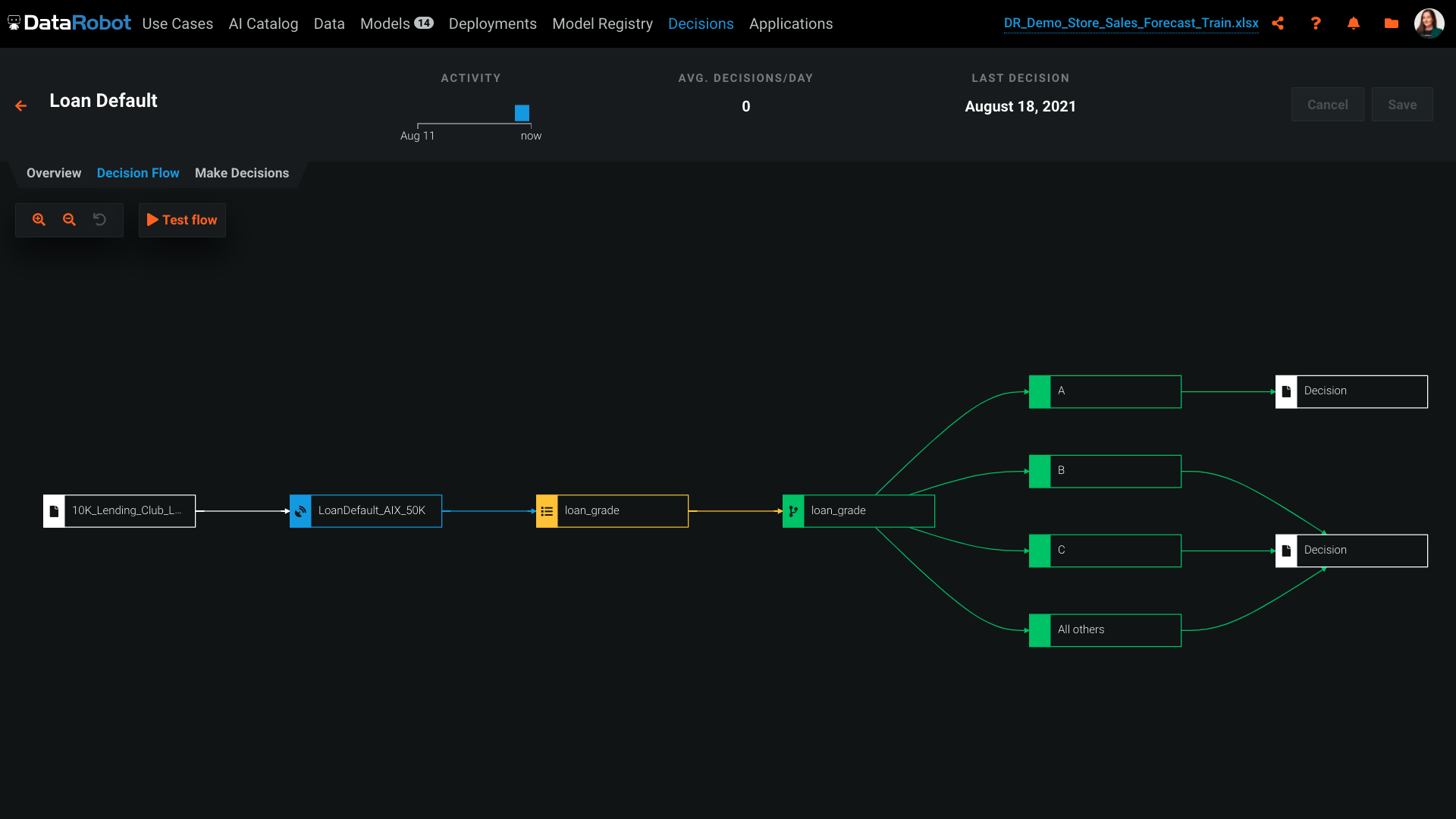
DataRobot can be used for risk assessment, such as predicting the likelihood of loan default. It can handle both classification and regression tasks effectively. It relies on historical data for model training. If you have limited historical data or the data quality is poor, it may not be the best choice as it requires a sufficient amount of high-quality data for accurate model building.
There is databricks community, which is a free version. It is available for beginners to have an easy start with a big data platform. It does not have every feature of the full version but is still adequate for extremely new coders.
There are many resourceful training elements that are available to developers, data scientists, data engineers and other IT professionals to learn Apache Spark.
Connect my local code in Visual code to my Databricks Lakehouse Platform cluster so I can run the code on the cluster. The old databricks-connect approach has many bugs and is hard to set up. The new Databricks Lakehouse Platform extension on Visual Code, doesn't allow the developers to debug their code line by line (only we can run the code).
Maybe have a specific Databricks Lakehouse Platform IDE that can be used by Databricks Lakehouse Platform users to develop locally.
Visualization in MLFLOW experiment can be enhanced
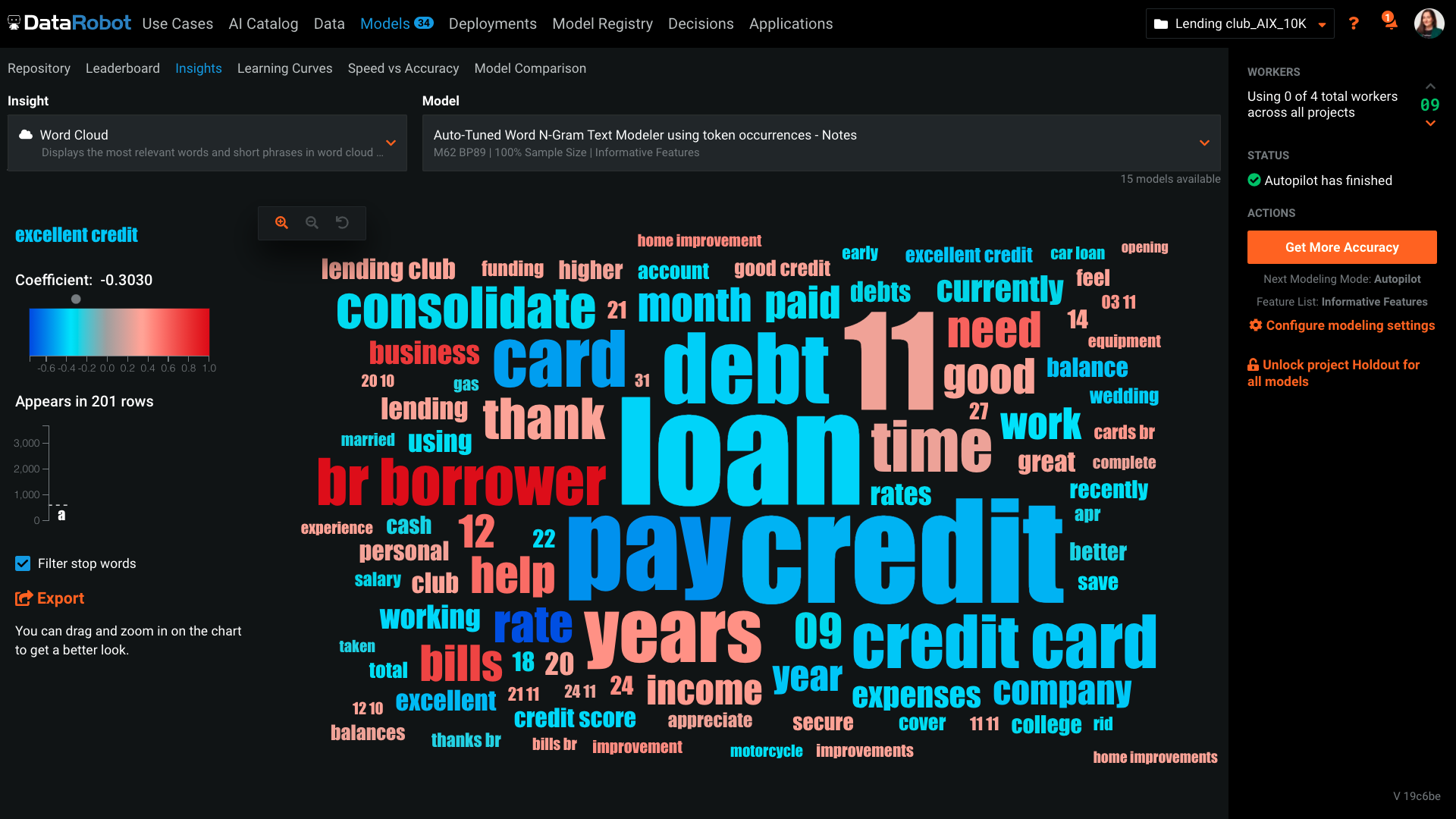
Further improvements to their text analysis tool, to be more like the Qualtrics text analysis tool, would be a great addition. Qualtrics has templates built into their text analysis tool for customer service, quality control, etc, and will automatically slot your text responses into categories associated with certain sub areas of those larger categories.
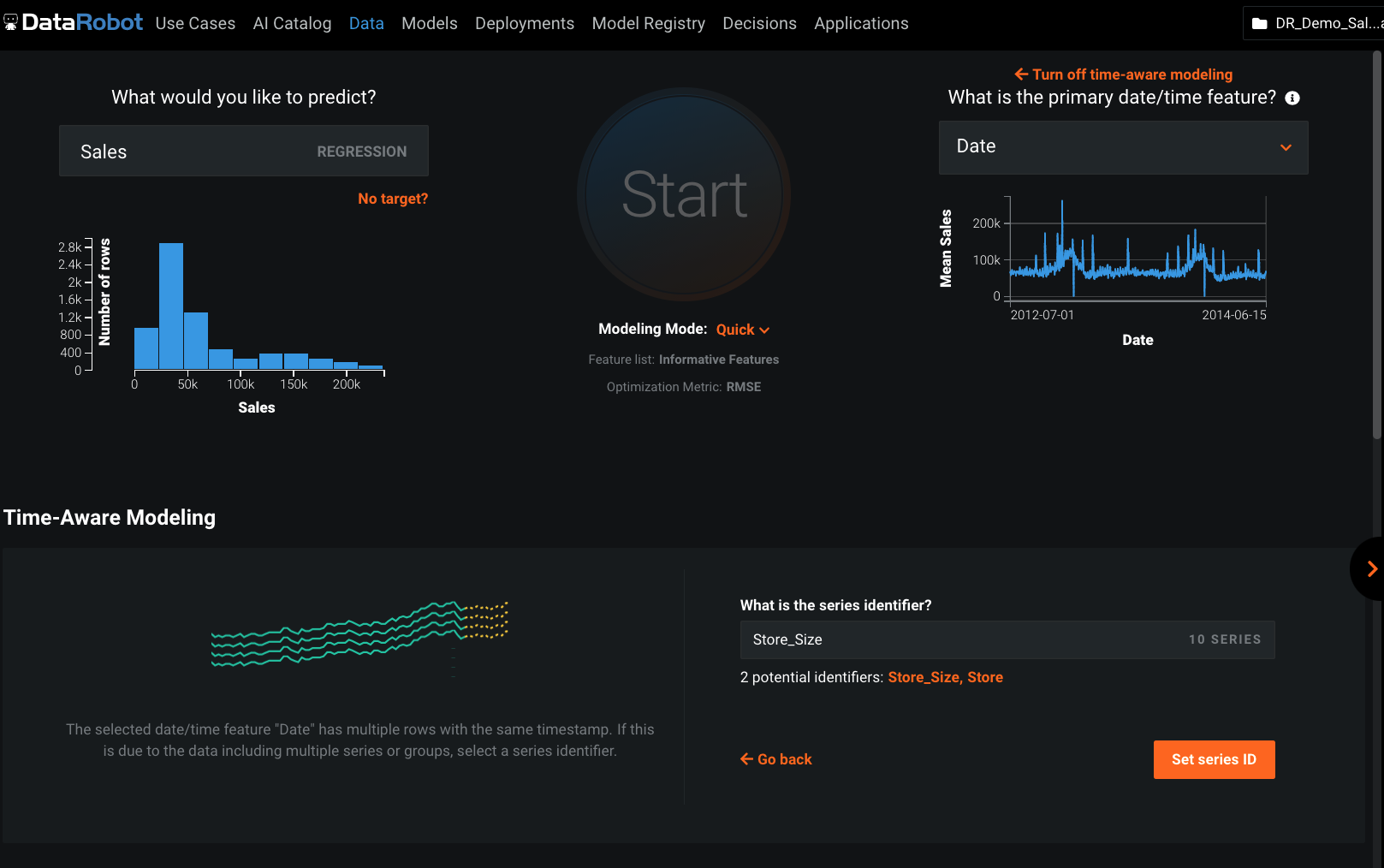
DataRobot presents a machine-learning platform designed by data scientists from an array of backgrounds, to construct and develop precise predictive modeling in a fraction of the time previously taken. The tech invloved addresses the critical shortage of data scientists by changing the speed and economics of predictive analytics. DataRobot utilizes parallel processing to evaluate models in R, Python, Spark MLlib, H2O and other open source databases. It searches for possible permutations and algorithms, features, transformation, processes, steps and tuning to yield the best models for the dataset and predictive goal.
Because it is an amazing platform for designing experiments and delivering a deep dive analysis that requires execution of highly complex queries, as well as it allows to share the information and insights across the company with their shared workspaces, while keeping it secured.
in terms of graph generation and interaction it could improve their UI and UX
One of the best customer and technology support that I have ever experienced in my career. You pay for what you get and you get the Rolls Royce. It reminds me of the customer support of SAS in the 2000s when the tools were reaching some limits and their engineer wanted to know more about what we were doing, long before "data science" was even a name. Databricks truly embraces the partnership with their customer and help them on any given challenge.
As I am writing this report I am participating with Datarobot Engineers in an complex environment and we have their whole support. We are in Mexico and is not common to have this commitment from companies without expensive contract services. Installing is on premise and the client does not want us to take control and they, the client, is also limited because of internal IT regulations ,,, soo we are just doing magic and everybody is committed.
Databricks is a true all-in-one platform, and at the time of implementation, it had more features available to us, making it a clear choice over Snowflake. Moving our workloads from local computing to the servers in Databricks gave our start-up staff a great quality of life boost.
I've done machine learning through python before, however having to code and test each model individually was very time consuming and required a lot of expertise. The data Robot approach, is an excellent way of getting to a well placed starting point. You can then pick up the model from there and fine tune further if you need.