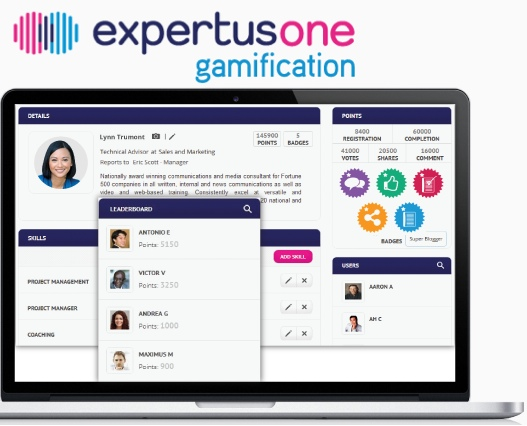
ExpertusONE is an award winning cloud LMS that is ideally suited for medium to large complex enterprises and large extended enterprises that include partners and/or customers -- in all industries. Expertus has over 17 years of experience working with enterprise-class organizations around the world and in a wide array of business learning environments.
According to the vendor, ExpertusONE learning management system has transformed LMS technology by moving away from…
N/A
Moodle
Score 7.7 out of 10
N/A
Moodle is an open source learning management system with hundreds of millions of users around the globe and translated into over 100 languages, used by organizations to support their education and training needs.
Compared to Google classroom, Moodle is more flexible and more comprehensive. But the interface is a bit outdated and not very mobile-friendly. Additionally, Google classroom has nice integration with other Google's workspace tools. Google lack tools such as CodeRunner to be …
I think Moodle blows most of these systems out of the water. While every system as something or lacks something, Moodle is a consistent and reliable learning partner. Despite being born from OpenSource, the community has worked very hard to improve it. The investment shows as …
These are not very similar tools, Moodle allows a lot more options and you can even integrate a miro board into Moodle. I would say Moodle is a lot more complete, allows for the wide range activities that need to be undertaken during a master course, from readings, to lectures, …
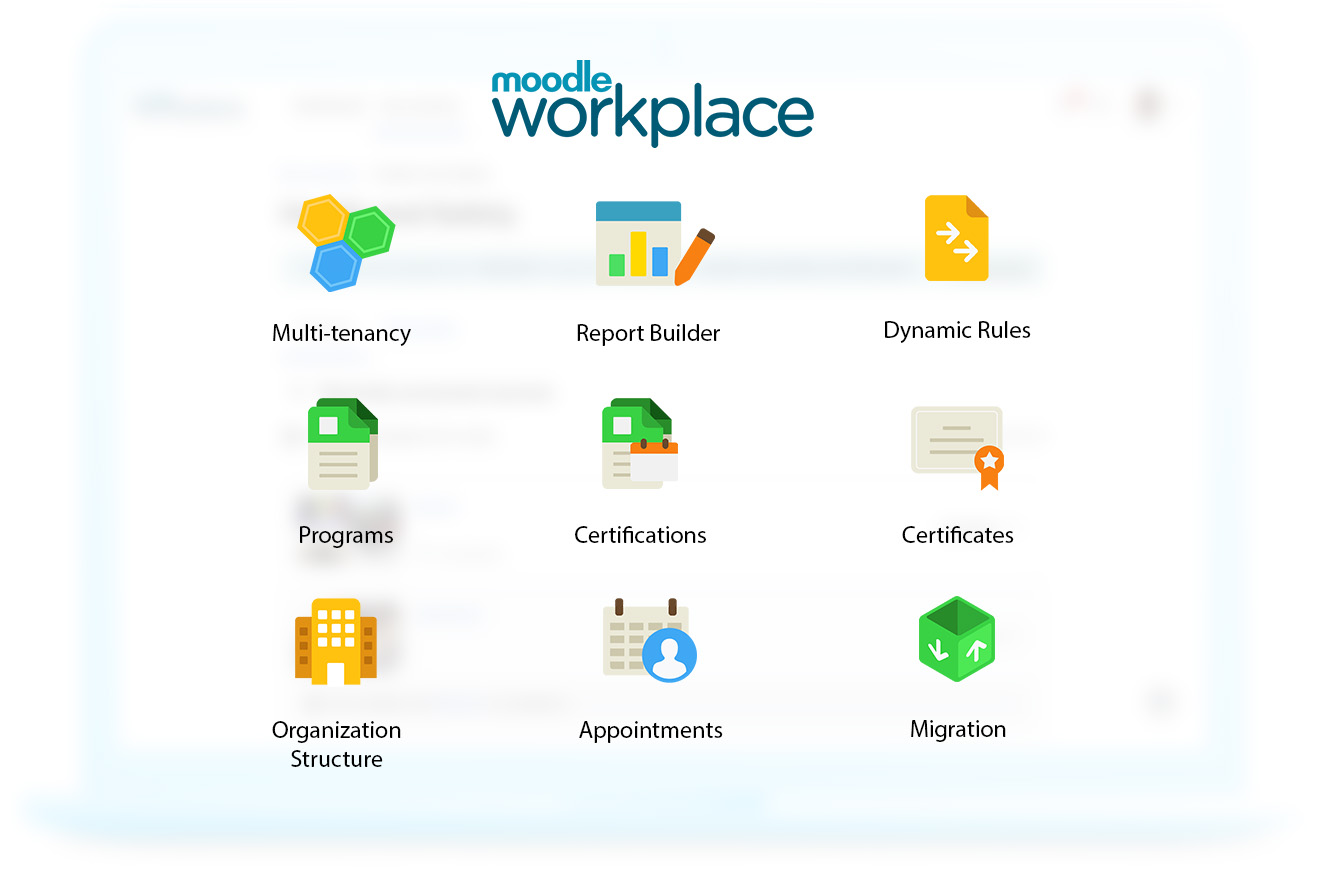
The decision to go ahead with Moodle Workplace was not in my territory, but I guess that the mobile-friendly app is the best part of Moodle Workplace. It has been easier to set up courses customized and integrated with features as required and the delivery has so far been …
Director Of Information Technology and HIPAA Privacy Officer
Chose Moodle
Moodle, being open source, is the foundation a lot of other tools like it are based on. It provides almost all of the same functionality and feature set as Google Classtoom, Canvas, etc., although those products are a bit more polished. All can do content delivery, progress …
For me, Moodle is more user-friendly because it has simpler graphical user interface and it provides the functionalities that my students and I enjoyed using. Moodle is more interactive as well and it provides efficiency in uploading, downloading, restoring and backing up …
The user dashboard in Canvas is a little more appealing to look at. Moodle is a little more straight to the point in course presentation, which for me as an educator, doesn't bother me. I think if it were being geared towards use with students in high schools or middle …
Really all of the low-cost LMS offerings are about the same. You are getting what you pay for. You can spend a little money and a lot of time customizing it to meet your brand and your need or you can buy a higher-end LMS that already does a lot of what you need.
Overall, Blackboard was a clunky, unintuitive system that provided the bare minimum for offering online learning modules/educational courses. Users would complain that it was difficult to use and often couldn't find materials relevant to them in terms of finding courses, grades …
It is hard to compare them with each other as they are so different. They really can't compare as they are two completely different platforms. But Moodle is great in all aspects, I like Slack for communication as well. But when it comes to tasks, Moodle handles it better …
Being completely free, Moodle comes out on top for any situation where the school is small or the budget it tight. Most of these other tools have paid services where there are professionals to assist with set-up or problem-solving. However, there is tons of information online …
Edmodo provides a simple platform but does not provide the depth of assignments that Moodle does. Moodle provides more assignment types, grading, deadlines, and shifting of assignments from one week to the next. Moodle is significantly more advanced in terms of what it can do …
When setting up our LMS in 2014, we started with a product called LearnDash that was not designed for the school market. When we moved to Moodle, we looked at Edmodo and went with Moodle for the cost to launch and get our courses up and running. We are a smaller company were …
We didn't really entertain the idea of Canvas for long since the Open Source version didn't have nearly the reference and support material that Moodle did for guiding a successful setup. We did consider adding the assessment and outcomes module from our existing Learning …
Moodle is a Learning Management System and is best suited for just that. We didn't like the assessment piece of our full scale Learning Management System (nor did we want to purchase the entire assessment module) so we chose to use Moodle for this, and it works well. Installing this application with the intention of only using a portion of its capabilities can be successful in environments where you have technical skills and a broad understanding of integration between your systems. For institutions that lack these, you're better suited to using a full scale of an LMS with assessment inside that same application.
Rubric Management. This may have been addressed in a plugin module.
Better tools for examining outcomes from exams and rubrics across a class, course, or organization. This may have been addressed in a plugin module.
Improved content management within the default installation. While there are modules that support products such as Drupal, building into the default product would ease adoption.
We use it because it is what have committed to back in 2011. Perhaps Moodle will evolve and advance in a positive way that will alleviate most of our user-based gripes? Perhaps it will not appear to be as cost effective given the need for a certain level of engineering and support staff to maintain it at a future level of sustainability? It's hard to say. As an enterprise scale critical application, we like it, but don't love it. Our instructors don't particularly like it at all.
I've been able to figure out Moodle through my own experimentation and some help from the Moodle support pages. It's not always obvious where to make certain some changes and It can be a little confusing in determining which pages blocks will appear. If this is your first time using Moodle as an admin/course designer you should expect to spend a some time experimenting because knowing where to make certain changes isn't always intuitive. Additionally, plan to explore the course as a student vs. as admin because the UI is different based upon your settings
I have worked in Moodle for over 10 years in two different organizations, and I have never experienced an outage. We have about 600 courses in our current account and the only outage we have had is FlashChat add-in we use for live chats, within Moodle, hence the reason for the nine (9). If you all know of Moodle vendors willing to help us upgrade from 1.9, Please wend me their info.
Moodle is an excellent LMS in relationship to any other one that I have seen or used. The pages load quickly and the reports complete in a reasonable time frame. Moodle has taken on Respondus, StudyMate, BigBlueButton, Turning Tech, Turnitin2, Certificates, Attendance, Tegrity, Questionnaire, Virtual Programming Lab, and Badges. All of these programs work right in with Moodle and do not cause any issues. Instructors may also use Camtasia and Snagit software as well as using webcams, downloading videos from the Internet, adding into books, or any of the many other areas within Moodle. Our instructors use the grade books without many problems and really don't ask questions much anymore. We upgrade Moodle every semester and are currently on 2.9+. Our instructors have basically learned to use most of the resources and activities.
I can consider Moodle as one of the pioneer in providing online learning. Before the introduction of other Learning Management Software, Moodle has been in place already in the field of education and so I believe that Moodle is definitely one of a kind software that all teachers should try and utilize in making sure that the online learning is a good experience.
Find a partner who will work with you during the implementation process. Be sure to provide ample training for veteran users on the changes and for newbies on the overall product.
Moodle, being open source, is the foundation a lot of other tools like it are based on. It provides almost all of the same functionality and feature set as Google Classtoom, Canvas, etc., although those products are a bit more polished. All can do content delivery, progress tracking, attendance, reporting, etc. with ease, but Moodle also does this as a completely open source product that can be code-reviewed, audited, modified, extended, etc. at will, provided the expertise is present.
Well, I administer Moodle for a dozen of our divisions and there is a wide range of flexibility between offerings. I have course instructors who use every module i their course, chock full of videos, pictures, links to web tools for synchronous sessions within the asynchronous course. I also have others who are content with a syllabus, a few pdfs, links to podcast lectures and a few simple assignments. No matter if your organization is big or small, or if your requirements are strict for credentialing or non-existent (for internal know-how), Moodle can accommodate you.
Moodle has allowed the business to track all training initiatives. Since, November 2014 we have loaded 54 courses, 339 users, 889 resources, issued 719 badges, and created over 100 course modules.
Our company just got a new applicant tracking system for the recruiters to use. In order to get all of the employees up to speed we created trainings that we loaded into Moodle. The participants and participation was tracked and we were able to find correlations between users engaged in training and their activity in the new applicant tracking system. This is a significant win for the training department, our learners, our company, and especially Moodle.
Moodle also provides great customer service for our internal employees. They now have one place to go to find all their resources, all their training, and all the help they need for any training questions. Instead of scattering information on the intranet. Training is more official when it has its own domain.