FigJam is an online interactive whiteboard from Figma headquartered in San Francisco, presently in beta (2021) but available to the public in a free trial. The vendor states that in 2022, FigJam will have plans for $0, $8, and $15 per editor, per month.
$36
per year per editor
Lucid Visual Collaboration Suite
Score 8.5 out of 10
N/A
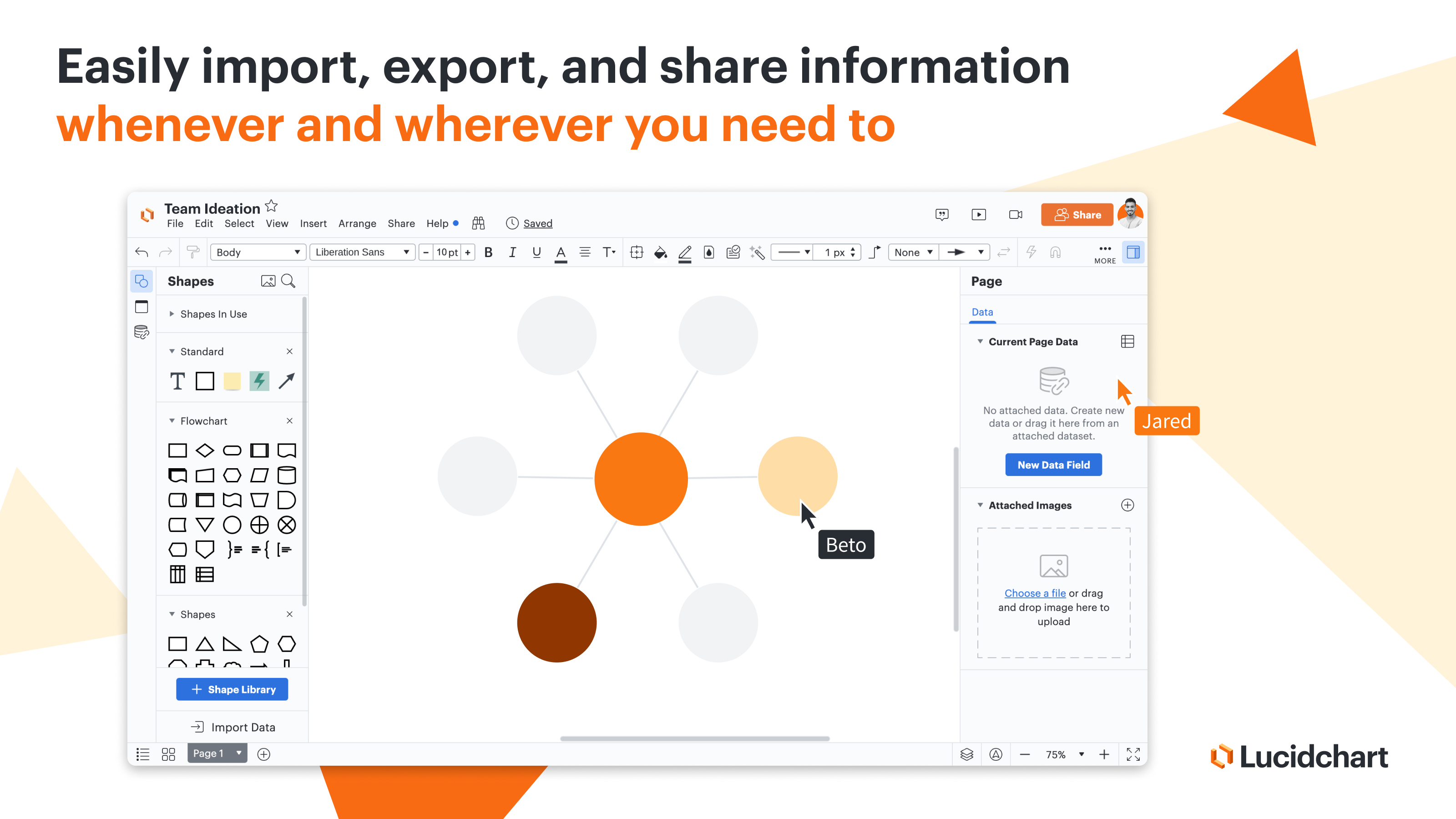
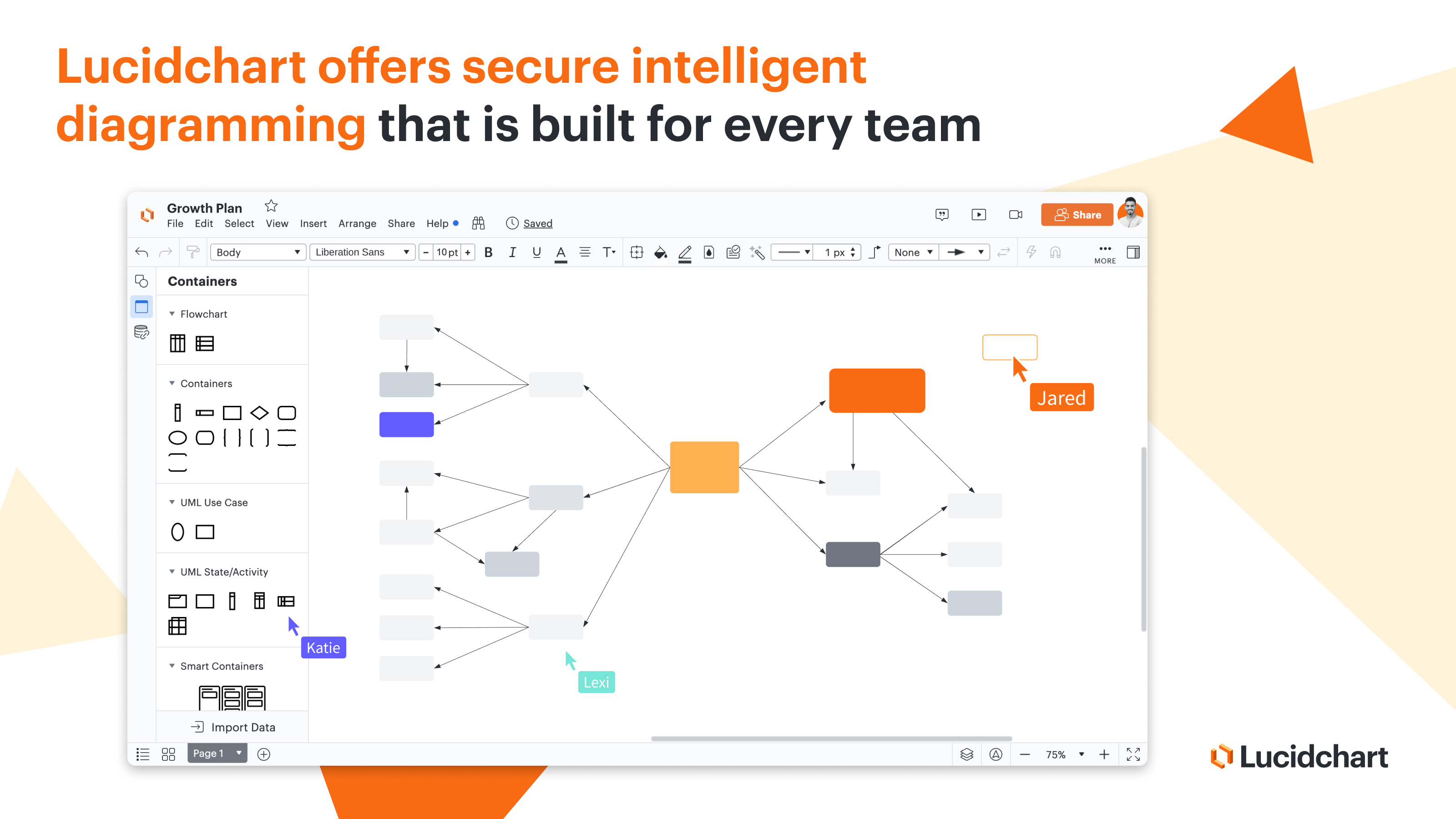
The Lucid Visual Collaboration Suite empowers teams to ideate, plan, design, build, and launch game-changing solutions from a shared infinite canvas.
$0
Pricing
FigJam
Lucid Visual Collaboration Suite
Editions & Modules
FigJam Professional
$36
per year per editor
FigJam Organization
$60
per year per editor
Free
$0
Individual
$9
per month per user
Team
$10
per month per user (3 user minimum)
Enterprise
.
per year
Offerings
Pricing Offerings
FigJam
Lucid Visual Collaboration Suite
Free Trial
Yes
Yes
Free/Freemium Version
Yes
Yes
Premium Consulting/Integration Services
No
No
Entry-level Setup Fee
No setup fee
Optional
Additional Details
—
—
More Pricing Information
Community Pulse
FigJam
Lucid Visual Collaboration Suite
Considered Both Products
FigJam
No answer on this topic
Lucid Visual Collaboration Suite
Verified User
Anonymous
Chose Lucid Visual Collaboration Suite
FigJam is another good tool but I find it less graphically appealing and less intuitive than Lucidchart.
If it's solo work, I prefer Lucidchart over all its competitors. For larger group collaboration, Lucidspark or Miro is much much preferred than Lucidchart. Figma is ok for some basic use but can't handle complex stuffs. MURAL and Visio are just terrible products to use in …
FigJam is perfect for the early stages of a project, where every member from cross-functional teams can participate, because it’s intuitive and has a very low entry barrier.
It is hard to think of ways in which Lucid Visual Collaboration Suite would not be best suited to provide an effective tool for any organization to find success in its use. Whether it is a visual display to map an organizational structure, a collaboration to find an answer of how to improve workflow, or even to display the upcoming budget needs, working in Lucid can seamlessly provide that!
Serverless. You don't need to install another program to create diagrams, you just open a new tab and there you are, ready to go.
Collaboration. You don't need to update your colleague diagram by creating a new file and creating a new file version, you both are in the same diagram and you and all the team are free to update it at any time, at the same time, you are seeing the same thing. That is really helpful and time-saving.
Shapes. It has any shape that you can think of and Lucidchart is always updating them, I can create an Azure solution architecture, an AWS one, an old on-premise solution. Or just put standard shapes to describe a business process. Providing so many specific shapes help the diagram to express specific information, and for specific teams, that's less text and more visual information, you don't need to put a text below a standard database shape (this is an Azure SQL database), you just put the azure shape and done. That....is beautifully helpful.
I don't use it often, because the organization I work in uses a different environment on a commo basis. This is rather used between the designers, who prototype the solutions in Figma - they just have it as a workbook/notebook for their ideas. However, if those need to be shared with stakeholders or other organization members, the designers are expected to use a different environment.
The interface is easy to use and understand and most features feel very familiar from the start. There are so many features and functions that users may not know it can be done without some instruction. Lucid's champion network is a great, fun resource to learn more about the product.
I would rate the overall support for Lucidchart as a 9. The support provided is generally robust and responsive. Their help center, tutorials, and webinars offer extensive resources for users. The ticket-based support system is effective, providing timely resolutions to most issues. Moreover, they actively gather user feedback, demonstrating a commitment to continuous improvement
It is similar, but it provides more usable solutions for brainstorming sessions and presentation purposes. Now empowered with AI and some new cool stuff, it may be the most dangerous competitor to FigJam. However, it will win the race if FigJam is more responsive and gets more attached to Figma, where the prototyping takes place.
Based on my personal experience, Lucid Visual Collaboration Suite is head and shoulders above any other competitor. Canva is good, but not intuitive at all. Miro is good as well, but not nearly as appealing and still lacks some of the logical functions that LucidSpark has. I’ve also used Apple FreeForm quite a bit, which is a free software with Apple. Once again you can accomplish the same things in any of these software, but Lucid Visual Collaboration Suite is so much better to the point that it is 3-4 times faster to use Lucid than Free Form or Canva.
Though I can't necessarily provide hard numbers, I can confidently say that Lucidchart has saved countless hours for myself and my teams as we don't need to try to develop some type of complex diagram using markup or any kind of code.
I have previously been able to build a complete ERD using Lucidchart in a past position, which the company never had before. It ended up being used by countless teams in the company and ultimately in a large-scale data stack migration effort.