Flow Technologies in British Columbia offers the Flow task management app, featuring a range of tools like kanban board, checklist, timeline, and other features for tracking projects from start to finish.
N/A
Planview AgilePlace
Score 9.9 out of 10
N/A
AgilePlace is a project management solution built around flexibility, data-driven analytics, and workflow automation. The software was acquired by Planview in December 2017 to expand that company's capabilities.
Flow, unlike Trello, offers its users a more organized interface and much more complete tools to carry out project management, which is why I consider that for the management of business projects of medium or large companies this tool covers the needs of each. In addition, its …
Flow and Asana have many similar properties. The largest difference would be the flow desktop app - which we love. On the other hand, Asana allows free and paid users, as well as guests. The feature gap, however, has been narrowed even more in recent months.
Asana and Freedcamp are similar, but I feel Flow is easier to hit the ground running with. Add a strong mobile component (apps) and great customer support I feel they are doing PM software the right way. However, Asana is huge and constantly adding features, so over time the …
Teamwork is better than Flow when it comes to reporting, as Teamwork lets you better track estimated time and look at the workloads of different team members. However, Flow has a much more beautiful interface and easier to use. Flow is also superior with its "catch up" feature …
Flow is the best all-in-one solution. It is better than Todoist because of it's more robust features and the ability for project nesting and is way easier to use than Basecamp. It is not as effective at content management as Trello or Airtable because it is not designed for …
Originally, we had evaluated two other tools next to Planview LeanKit: Kanbantool and Kanbanflow. The latter was a close contestant for productive use, as it was also very customizable and a joy to work with and look at. It also had lower user fees and a mobile integration.
Both VersionOne and Trello are good products. VersionOne is for the real hardcore Agile shops who want to track and report on everything related to the Agile process. Trello is a tool that works for Agile, but really is just a simple list making/tracking tool. Both tools serve …
I have used Trello, which is not as robust for tracking and customizing workflows as LeanKit is. It does not scale well to big teams. JIRA is the standard project management software but does not support Kanban well.
AgilePlace is better than JIRA when it comes to ease of use and intuitiveness of the tool. Card based model and ability to customize/tailor the way you want makes AgilePlace is a great tool. Look and feel as well as colored cards, makes the board layout much more easier to …
All these tools are different and have different uses. Depending upon SDLC your organization uses, you would use any of these tools. They all have their plusses and minuses.
Front-End Web Developer, Office of Mediated Education
Chose Planview AgilePlace
I use Trello a bit for personal use. It's much less powerful than LeanKit, but it's also a better design and simpler to use. ServiceNow has some kanban board stuff built-in, but I wasn't super impressed with it. JIRA seemed to be even more complex than LeanKit for the short …
I think that LeanKit is very similar to Asana's Kanban feature and Trello, but is much less sleek looking than Asana. Asana's clean and sleek UI makes me enjoy project management much more than LeanKit. It might sound silly that the UI makes so much of a difference to me, but …
Our company uses LeanKit, Pivotal Tracker, and Trello. It all depends on what team you're on. There's even a team that just does KanBan on a whiteboard. In the end, I would tank LeanKit above Pivotal Tracker, but below Trello. The differences are relatively subtle between …
Nearly all the other tools I evaluated against are free, so that's one area where LeanKit is not as competitive. LeanKit does allow the experience to be much more customizable, though.
Being from QA I prefer Spiratest and QC for the fact my team can do all our work in one program and it is linked. But the tech department as a whole prefers Leankit as it is the tool of choice based on ease of use and overall performance.
While LeanKit was not designed for project and task management, we selected it because of its collaborative nature as a project and task management platform for our marketing team. It was also selected because our engineering and product management teams were using Leankit. We …
Flow is great for a team that is managing many projects with a lot of different players involved. It lets people really drill down into the projects that they are a part of without getting distracted by everyone else's work. The features like "focus work" and muting notifications are great for a fast-paced workplace which creates distractions. It is too robust for smaller teams or individual work.
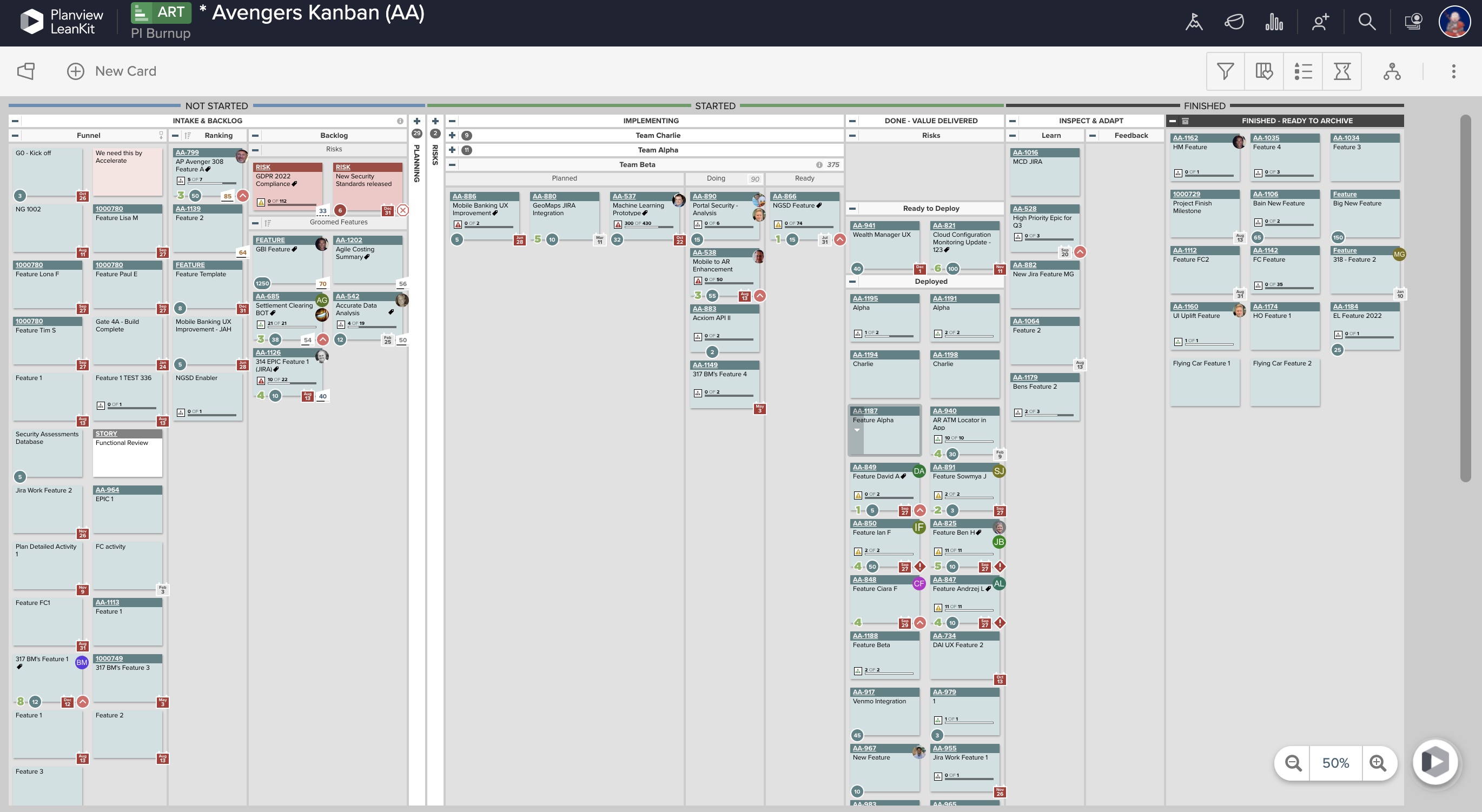
AgilePlace is a great way for teams, or individuals, to bring visibility to the work in process and in their backlog. The color coding and icon use helps to quickly analyze the type of work or status of the work. The product team is doing a good job at listening to their user's feedback and implementing improvements. Where it falls short is when reporting needs to occur.
The “catch up” tab is especially helpful for staying up to date with all the projects you are part of.
Being able to overview all of the projects and their status within a team helps give our top-level leaders a snapshot of where we are at any given moment.
Okta Integration: We love using SSO for all our SaaS apps, and as new team members join, they can be automatically joined to the appropriate LeanKit boards.
Filtering and viewing: Can filter and refine by several fields as well as custom fields. Assigned Users, Tagged, Card Type, Date, etc
Their analytics and reporting can be helpful for PMs, especially if they have several teams they oversee.
LeanKit isn't the best designed Kanban system I've seen, but overall it's pretty usable. The boards I've used are pretty complex, so it can be difficult to find things. I found that searching and filtering for specific cards was somewhat of a challenge. Dragging a card from one lane to another is kind of a fun way to get things done though.
Every time I have reached out to the AgilePlace support team I have received a timely response in addition to professional & personal feedback. Their consultants are knowledgeable and the management team is happy to jump in and help when needed.
Asana and Freedcamp are similar, but I feel Flow is easier to hit the ground running with. Add a strong mobile component (apps) and great customer support I feel they are doing PM software the right way. However, Asana is huge and constantly adding features, so over time the big players may easily address their pain points. There are so many similar programs like this now.
Originally, we had evaluated two other tools next to Planview LeanKit: Kanbantool and Kanbanflow. The latter was a close contestant for productive use, as it was also very customizable and a joy to work with and look at. It also had lower user fees and a mobile integration. In the end, we picked Planview LeanKit because of several reasons: Aesthetics: The look was much more clean and professional. Reporting: It was obvious from the start that we could use Planview LeanKit as a tool for improvement. API: We needed to integrate the Kanban into our central systems and Planview LeanKit API was (and still is) a way to do it. Card Headers: This sounds like a simple thing, but the headers above the titles fit our work perfectly and looked perfect, which helped the decision.