GoodData is an analytics platform used by organizations to deliver real-time, governed insights, embedded into products, customized for users, and integrated into any data environment. At the heart of GoodData is a universal semantic layer: a shared, code-defined model that maps raw data into consistent business concepts, metrics, and logic. Metrics are authored once and reused across every dashboard, app, or API, to ensure accuracy, governance, and trust wherever analytics are…
N/A
QlikView
Score 7.2 out of 10
N/A
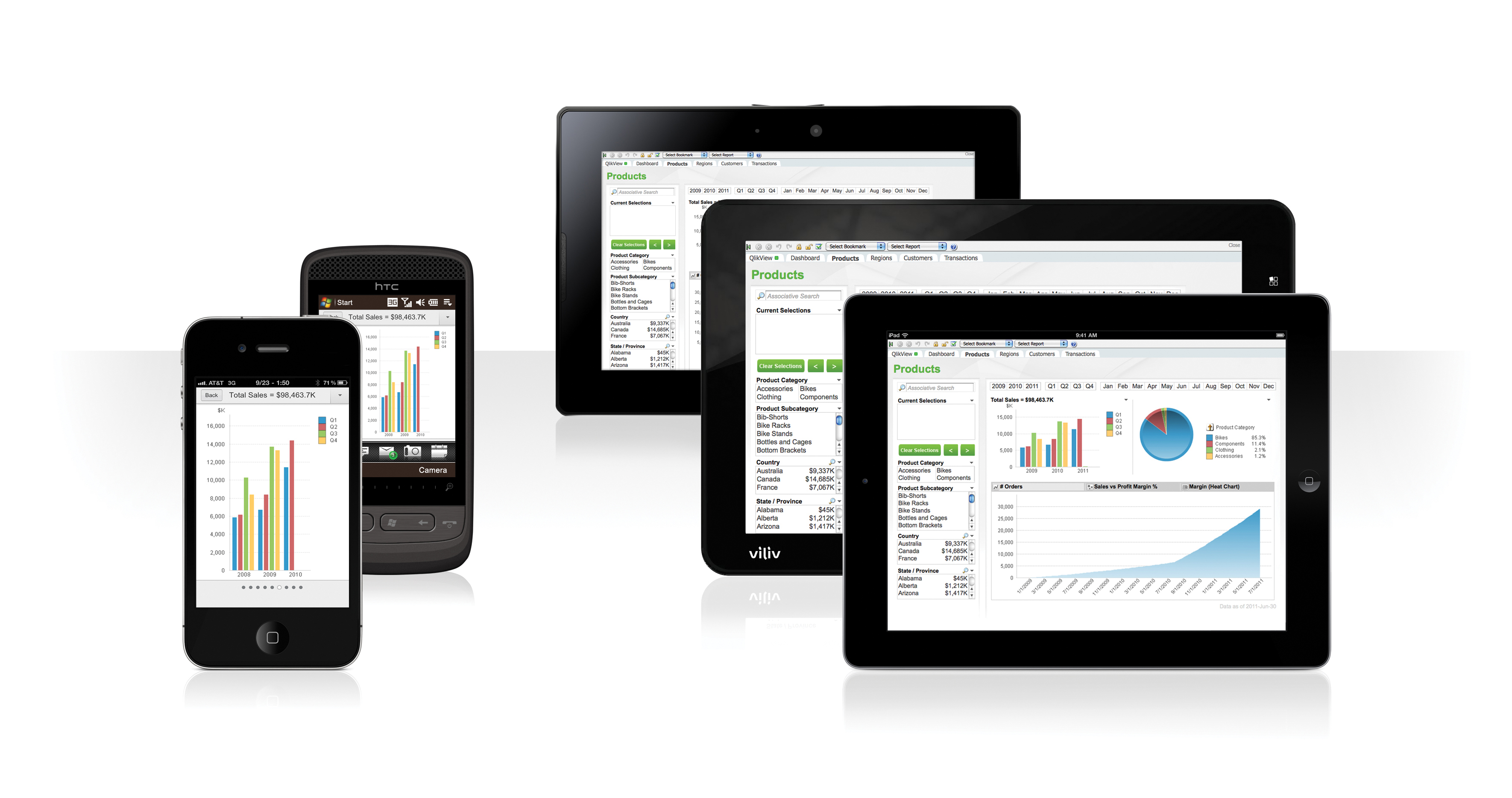
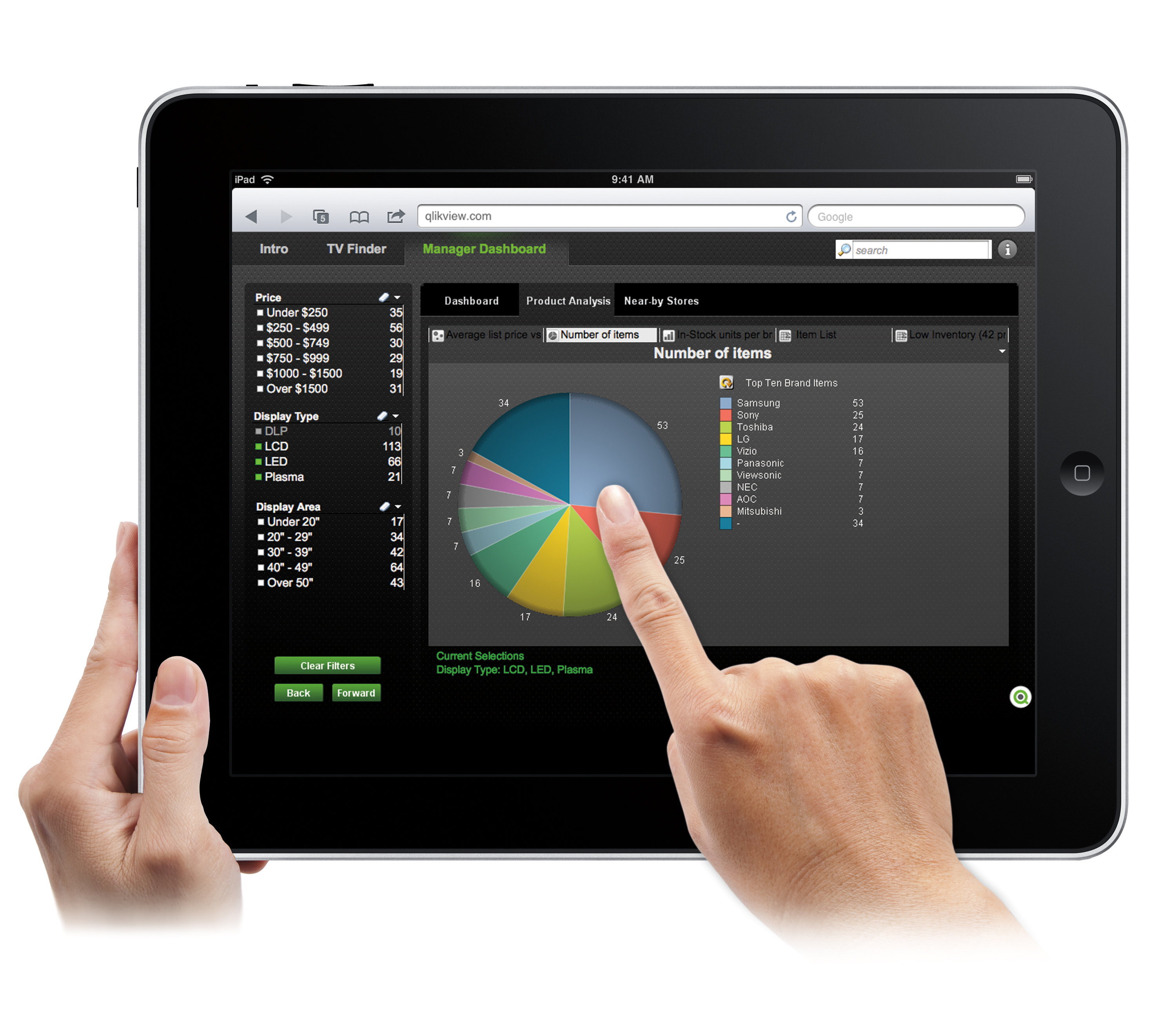
QlikView® is Qlik®’s original BI offering designed primarily for shared business intelligence reports and data visualizations. It offers guided exploration and discovery, collaborative analytics for sharing insight, and agile development and deployment.
N/A
Pricing
GoodData
QlikView
Editions & Modules
No answers on this topic
QlikView
Custom
per user
Offerings
Pricing Offerings
GoodData
QlikView
Free Trial
Yes
Yes
Free/Freemium Version
No
No
Premium Consulting/Integration Services
No
No
Entry-level Setup Fee
Optional
Optional
Additional Details
—
On an perpetual license basis, based on server plus number of users.
Contact vendor for pricing.
GoodData is much more customisable in our case so we choose this. Also when it comes to pricing part GoodData is the best economically as well and in terms of features and functionalities. As compared to others similar products I believe that GoodData is much more reliable with …
GoodData has been proven best for us as it has given the most accurate analytical insights on our data. I've used other tools too but no one has been this good in terms of reporting, handling data, decision making. Using GoodData for almost every organisational decision and …
GoodData comparing to other platform is very easy to use, customer support and on-boarding support. Set of features, speed of integration in our platform. Also great benefit for us was very competetive pricing.
All of the tools have their plusses and minuses. The one thing that stands out with Qlik is that it allows for two-way API integrations with Salesforce. This means that analytics reporting results can interact with the Salesforce application.
The primary reasons GoodData was selected was data modeling capability, ability to standardize complex metrics, quality of viaualization and multi-tenancy
The hosted GoodData platform is simple to set up and provides a clean dashboarding experience that can be shared with users easily. Other products can often try to fill the self-service and dashboard roles in one interface which can be a bit full on.
GoodData provides the largest amount of OOB features that meet our end-user needs. It means a lot that we don't need to perform development on our own. At some point, it may make sense to take items in house, but its hte best current fit.
I have used all softwares in my past 10 years of experience. GoodData stands out with its seamless data integration, advanced predictive analytics, and collaborative features. Unlike Tableau and Power BI, GoodData offers scalable solutions with a user-friendly interface for …
Choosing between GoodData and other platforms was clear for me as the superiority of GoodData over others due to our needs. GoodData stands out for its awesome dashboards, robust predictive analytics, reports, and analysis. Data integration helps us for business intelligence …
Tableau is fantastic for visuals, and Zoho Analytics is user-friendly, but GoodData takes the cake with its seamless integration and powerful analytics. It stacks up well because it's not just about pretty graphs but it's about making data work for you. It's the perfect fit for …
GoodData is best among every other platform I used because it's a cloud based platform and way to easy to use. Its robust predictive analytics and unified data view set it way apart. While Power BI and Tableau excel in visualization, GoodData's focus on comprehensive business …
GoodData was more cost effective and did not necessitate additional spend on internal resources. The end user interface was easy to use and did not require additional set up or customization. The clients required little support from the Prometric staff to use the product.
I was involved in the decision making but not final decision maker. Ease of implementation for GoodData vs Cognos (used for 15 years in multiple companies). I think Tableau's visualizations are better, but there is much that just can't be done in Tableau that GoodData handles …
I was only involved with the final selection and did not actually go into detail on other platforms, I did confirm the findings of my colleague, but I did have a hand in the final decision.
Looker and GoodData are both powerful BI platforms, but they have distinct strengths. Looker offers seamless integration with Google Sheets, enabling easy data import and analysis. On the other hand, GoodData excels in data modeling, providing a user-friendly interface for …
QlikView, Tableau, and SiSense are all very good BI tools for analysis and reporting. Tableau was better at intuitively matching fields of disparate data and more visually appealing, but I think QlikView is faster. Tableau was also easier for someone to use to build and …
I think it all comes down to personal preference and integration compatibility with the existing systems in the organization. However, I would argue that Qlik and PowerBI are the top-tier available solutions due to robust features and capabilities, and I would put solutions …
With QlikView and Qlik Sense the users can answer their own questions more interactively. They also can build their own visualizations without waiting [for] someone from IT to create a new report. The users can navigate through the data finding out relevant information. Through …
We have not necessarily used any direct competitors to QlikView, but we have used other analysis and reporting software that has worked better for us because of the type of data that we are analyzing. There are also cheaper options out there that are definitely better.
When integrating the tool years ago, we looked at other options including the out of the box reporting features from our current ERP software, The user interface and report-ability was very difficult to use and scale across may different business models in our group. We also …
There are more than 1700 partners in the world that could implement a QlikView solution, and these associates tend to have a long and close relationship with the customer, and ultimately lead up to understanding the customer's needs at 100%. Also, the software is very scalable …
MS Power BI and other BI tools have similar functions to QlikView and some of them also have much cheaper price. However, the strength of QlikView is that it is much easier to use and to learn. If you need to train a new person to learn the tool, it costs around 1-2 days.
QlikView has its own data warehouse, which is the most important reason why would I choose QlikView over any other tools. Apart from that, the feature options are good for the ones who know the tool well but created a steeper learning curve in the beginning. Once you went …
Qlik was less intuitive than Paxata, but less expensive than either MicroStrategy or PowerBI. Qlik has enough breadth to accommodate most use cases without breaking the bank.
It is inexpensive and cost prohibited software. Has alot of canned reports that you would need and doesn't request much development work. Widely adopted as an industry leader and works well with many of the top data source applications. Very easy to use and intuitive in the …
We use it as a part of our Office 365 tool. With that tool, we do not have an option to download the reports and send them to customers, but with Qlikview we can.
QlikView is very similar to Tableau. However, I believe it is a cheaper solution, and that is why our company has chosen QlikView. It has been able to handle large, large amounts of data sets, and has been pretty agile for our business needs.
My use of Cognos was as an embedded BI tool inside of a cloud HCM. At the time, you could not marry up data from other external sources with that version. QlikView makes it easy to connect data from multiple sources. As a BI tool I do prefer the Cognos set up, but that's more …
Data Quality Management Software Development Manager
Chose QlikView
QlikView was already chosen and implemented before I started [to work here], but it is very easy to learn (for me) and I started to solve problems within a day or two.
Product Specialist - Walls Product Line Management
Chose QlikView
While I may have to export the data, I was doing so anyway to get it into excel to drive better visualizations of the data. When I discovered PowerBI and all it had available I no longer had a need for QlikView.
The first thing we liked about QlikView was the price. For a small amount per user, I can have a very useful software to manage the whole data set our company uses. The Tableau desktop has very high pricing for the software, and for just one user, not the whole organization. …
Qlikview is more outdated compared to Qlik Sense. Qlik Sense puts more of the power onto the users to create their own dashboards while QlikView tends to be managed by BI teams.
If you have consistently formatted data, that you want regular reports on, plus flexibility to let end users build their own reports, GoodData is perfect. Especially if your end users are less technical. If you want to be able to embed your reporting into your app, GoodData excels, though the start up process can be involved. If your data structure varies, it could be more challenging to integrate. It may also not be worth the integration if you have people who can already run their own SQL queries.
Sales data validations have helped manage our justifications in the past, especially with regard to new product development and new business introduction. It has also been helpful in identifying trends with business impact and direction specific to quarter and monthly sales from ERP data as well as decisions to purchase equipment of staffing based on run rates and product demand.
One thing that can get out of hand is data output - if you aren't careful in your query, you may be overloaded with data dumps and drown in the amount of info you have to filter through. This is a user caution, not a comment on the software itself.
GoodData helps in simplifying complex data into easy-to-understand visuals. We can create personalized dashboards & tailor them as per requirements. This data can be used from an executive level employee to a team lead employee in the business
GoodData is a very user friendly platform. The collaborative features simplify sharing and discussing reports among team members which promotes a culture of data-driven decision-making.
GoodData connects with various data sources and consolidate information from multiple platforms. This flexibility proves invaluable for businesses dealing with data spread across different systems as they can access large amount of data on a single platform.
We found that QlikView can be a bit slow in supporting some forms of encryption. It is web-based and we needed to upgrade all of our server to not support the older SSL and TLS 1 protocols, only support TLS 1.2 and TLS 1.3. However, QlikView could not run with TLS 1.2 and TLS 1.3. We had to wait over six months to get a version that would handle the newer TLS versions.
There are so many options with QlikView that you can get lost when developing a visualization. There are still items I have not yet figured out, such as labeling a graph with the name of a selected detail item.
QlikView works by pulling the data it is going to use for visualization into its database. I am a security reviewer and I need to make certain that PII and PHI is not pulled by QlikView for a visualization, otherwise this could become a reportable indecent.
Each client I have worked with and spoken too has renewed their GoodData subscription. I know of not one to date that has cancelled. The GoodData platform has a very high rate of renewal from the discussions I have had with their internal teams as well
Ease of use, ability to load from pretty much any data source. today I created an application that loaded time sheets from excel that are not in a table format. With Qlik's "enable transformation steps" I was able to automate loads of multiple spreadsheets and multiple tabs easily. Could not do that with any other tool.
GoodData provided us with strong overall usability and provided us a platform for various business analytics. Its user-friendly and insightful reports and also the dashboards. Me and my team really appreciate the platform's ability to streamline decision-making processes. However, there is a learning curve during initial setup as I mentioned before. Continuous improvements in the onboarding could further enhance GoodData's usability as well.
I do think there is a steep learning curve to the program and that it requires a high level of experience or a data scientist background to fully take advantage and implement dashboards, and users will require ongoing training to maximize ROI, but it is absolutely worth it considering the impact it can make on an organization.
The fast and comprehensive responses we got from GoodData regarding the doubts we had experienced while starting to use the products and metrics were of great help in ensuring the metrics we were obtaining were accurate to what we wanted to know about our customers' experience and our product areas of opportunity.
The documentation presented by QlikView is very clear and exact. This makes the process of implementation more easy. If any questions arise while creating the reports it is very easy to access the QlikView documents through the internet. QlikView also has a Qlik Community, full of different questions and answers. This helps a lot to resolve issues even without contacting the support team.
My team attended, but I cannot myself rate, but I think it was good as they've successfully launched a training program at our company themselves for users. It was 3-4 day training.
Training was as expected. The demo environments tend to be more fully featured that our own environment, but the training was clear and well delivered.
It has taken some time to get used to Qlikview and the backend team behind it. From understanding the new regulations on using less images and also pushing for more tools (such as full compatibility on desktop, laptop, ipad, phone). We were given training on this and have helpful tips to find analytics behind Qlikview but it is very much also a learn as you implement system.
GoodData comparing to other platform is very easy to use, customer support and on-boarding support. Set of features, speed of integration in our platform. Also great benefit for us was very competetive pricing.
With QlikView and Qlik Sense the users can answer their own questions more interactively. They also can build their own visualizations without waiting [for] someone from IT to create a new report. The users can navigate through the data finding out relevant information. Through QlikView color code, users can get aware of the relationship between the different data points.
Speed to market is the really big thing. You can attach to multiple data sources quickly and build a consumable model for a dashboard. It doesn’t require IT talent to build. We have built more dashboards and added more users in the last year, then in our entire history. I was at a company of 30k+ employees before, and we didn't have near this level of BI adoption.
As a result, we are seeing benefits across business function. For example, within sales, our pipeline has much more visibility. It allows for much faster decisions on things like quotas. One of our biggest power users is in sales ops. She feels her dashboards load 10x faster than our previous tool and she can make changes on the fly.