Chose Google Cloud Operations Suite
Nagios XI and Prometheus

| Product | Rating | Most Used By | Product Summary | Starting Price |
|---|---|---|---|---|
 Google Cloud Operations Suite | N/A | The Google Cloud Operations Suite (formerly Stackdriver) is an APM platform based on three tools for error detection, tracing, and resolution. It manages cloud-based or on-premise applications in live or mid-production environments. | $0.01 per 1,000 read API calls | |
 SolarWinds AppOptics | N/A | SolarWinds AppOptics (formerly Librato) is an IT infrastructure monitoring service and APM, based on technology acquired by SolarWinds with Librato in 2015 to expand its cloud monitoring portfolio. | N/A |
| Google Cloud Operations Suite | SolarWinds AppOptics | |||||||||||||||
|---|---|---|---|---|---|---|---|---|---|---|---|---|---|---|---|---|
| Editions & Modules |
| No answers on this topic | ||||||||||||||
| Offerings |
| |||||||||||||||
| Entry-level Setup Fee | No setup fee | No setup fee | ||||||||||||||
| Additional Details | — | — | ||||||||||||||
| More Pricing Information | ||||||||||||||||
| Google Cloud Operations Suite | SolarWinds AppOptics | |
|---|---|---|
| Considered Both Products |  Google Cloud Operations Suite |  SolarWinds AppOptics  Nikhil Kumar Sharma Associate Consultant Chose SolarWinds AppOptics Everyone used to know the names of AppDynamics and Dynatrace when it comes to APM or Application Tracing Monitoring. Since these tools were the evolver of this particular technology, I still believe that these tools are the market player. But SolarWinds AppOptics is not less, …  Dave Costantino CTO (Chief Technical Officer) Chose SolarWinds AppOptics We felt the competitors were both more expensive and more difficult to configure and deploy. We selected SolarWinds AppOptics because it provided better value both in terms of cost and user experience. |
| Google Cloud Operations Suite | SolarWinds AppOptics | |||||||||||||||||||||||||||||||||||||||
|---|---|---|---|---|---|---|---|---|---|---|---|---|---|---|---|---|---|---|---|---|---|---|---|---|---|---|---|---|---|---|---|---|---|---|---|---|---|---|---|---|
| Application Performance Management |
|
| Google Cloud Operations Suite | SolarWinds AppOptics | |
|---|---|---|
| Small Businesses |  GitLab Score 8.7 out of 10 | GitLab Score 8.7 out of 10 |
| Medium-sized Companies |  ManageEngine Site24x7 Score 9.8 out of 10 | ManageEngine Site24x7 Score 9.8 out of 10 |
| Enterprises | ManageEngine Site24x7 Score 9.8 out of 10 | ManageEngine Site24x7 Score 9.8 out of 10 |
| All Alternatives | View all alternatives | View all alternatives |
| Google Cloud Operations Suite | SolarWinds AppOptics | |
|---|---|---|
| Likelihood to Recommend | 8.2 (0 ratings) | 7.8 (0 ratings) |
| Likelihood to Renew | - (0 ratings) | 9.1 (0 ratings) |
| Usability | - (0 ratings) | 9.6 (0 ratings) |
| Support Rating | 10.0 (0 ratings) | 9.0 (0 ratings) |
| Google Cloud Operations Suite | SolarWinds AppOptics | |
|---|---|---|
| Likelihood to Recommend |
|
|
| Pros |
|
|
| Cons |
|
|
| Likelihood to Renew | No answers on this topic |
|
| Usability | No answers on this topic |
|
| Support Rating |
|
Nikhil Kumar Sharma Associate Consultant |
| Alternatives Considered |
|
|
| Return on Investment |
|
|
| ScreenShots | SolarWinds AppOptics Screenshots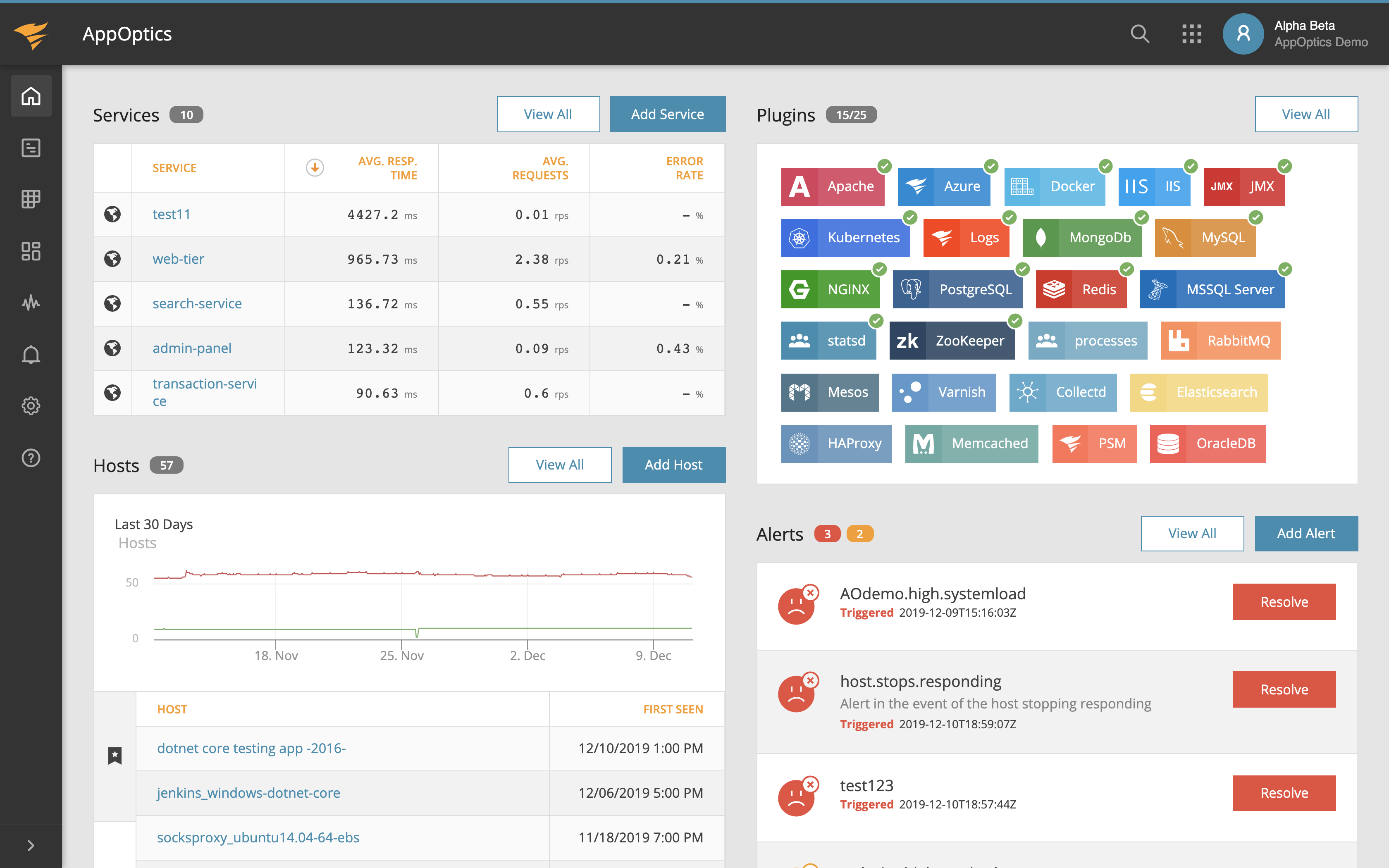   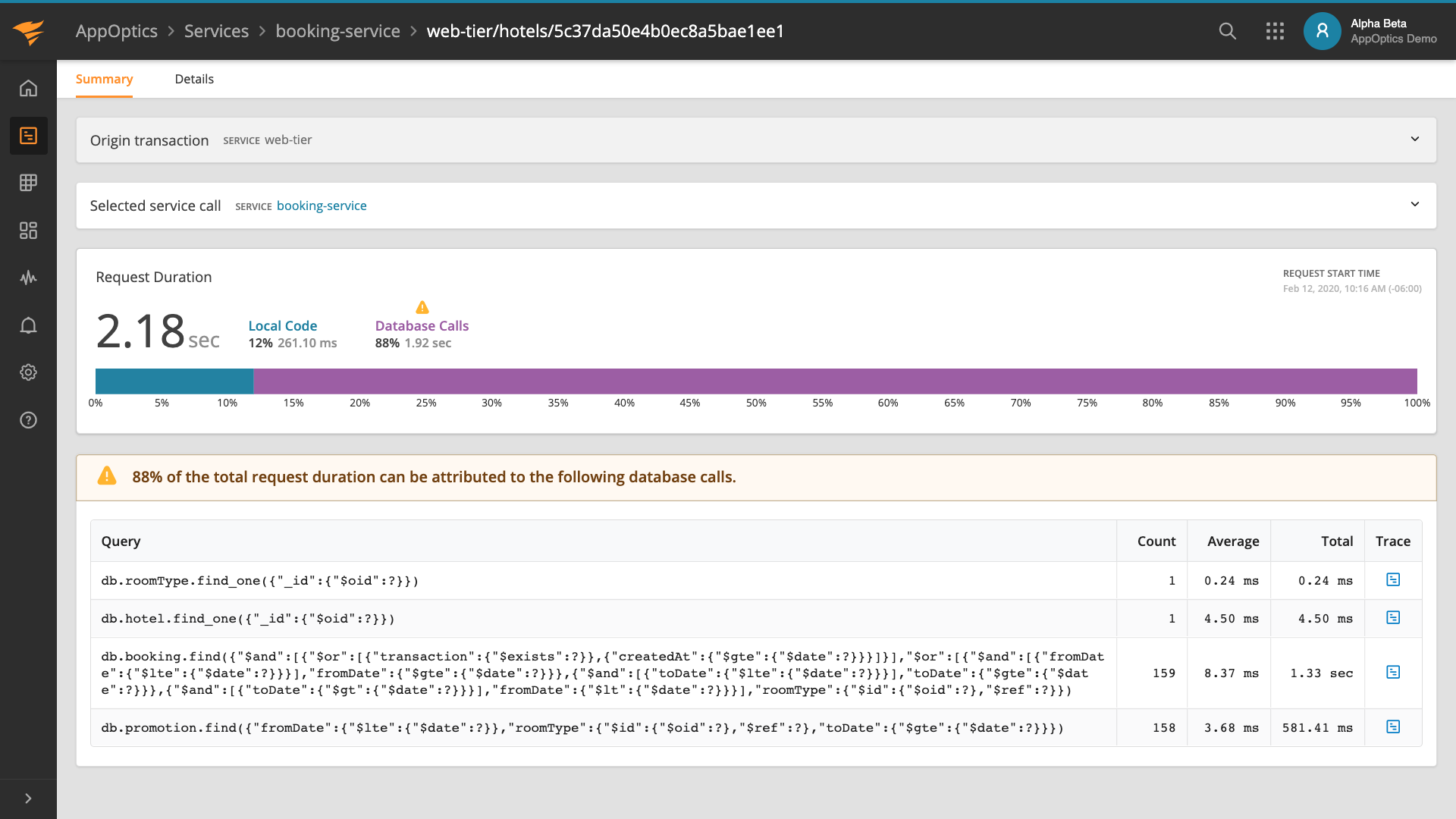   |