Flutter by Google vs. MicroStrategy Mobile

Overview
ProductRatingMost Used ByProduct SummaryStarting Price
Flutter
Score 7.8 out of 10
N/A
Flutter is an open-source mobile application development framework created by Google. It is used to develop applications for Android and iOS, as well as being the primary method of creating applications for Google Fuchsia.N/A
MicroStrategy Mobile
Score 8.0 out of 10
N/A
MicroStrategy Mobile enables users to bring analytics, transactions, mapping, multimedia, and business workflows to life in custom mobile apps, personalized for any industry or any role. Users can convert any information system or web application into a user-friendly, highly-performant native mobile app—optimized for both iOS and Android. Users can scale to the most demanding enterprise needs in terms of user numbers and data volume. With multi-factor and biometric…N/A
Pricing
Flutter by GoogleMicroStrategy Mobile
Editions & Modules
No answers on this topic
Offerings
Pricing Offerings
FlutterMicroStrategy Mobile
Free Trial
NoNo
Free/Freemium Version
YesNo
Premium Consulting/Integration Services
NoNo
Entry-level Setup FeeNo setup feeNo setup fee
Additional Details
More Pricing Information
Community Pulse
Flutter by GoogleMicroStrategy Mobile
Considered Both Products
Flutter
Chose Flutter
Flutter is well documented and powered by Google. Flutter's user interface and user experience is slightly better than React Native.

Chose Flutter
I have experience with react and react native. I would say that the idea behind all those frameworks are quite similar.
However, I found the javascript-based frameworks a bit more accessible as you could utilise your javascript knowledge. Here, Flutter works with its own …
Chose Flutter
I have used Flutter for cross-platform applications which are unique in the tech industry, I like the user interface created with Flutter.
Chose Flutter
- Like it better than other solutions, or building native on both platforms.
- React Native has a good advantage with language and amazing web support.
- React Native is easier to jump in for web engineers.
Chose Flutter
I have not used Dev Express Universal and Selenium Web Driver much besides in the demos that were provided to our company. We compared the demos and went with Google Flutter because it worked well and looked noticeably better than the other products. While I am unsure of the …
Chose Flutter
Flutter is a bit different from Android Studio, the latter one being an Integrated Development Environment (IDE) while Flutter itself is a Cross-Platform Mobile Development SDK (Software Development Kit). Flutter provides the access to the native features and built-in plugins …
Chose Flutter
I selected Flutter because of Flutter's awesome, pre-build UI components. It makes my life as an indie dev easy and fun. At the time, I had never built an application with React Native, so this was a fantastic introduction to cross-platform development. That said, as someone …
Chose Flutter
I think that Flutter is now much better than Microsoft's Xamarin and the old Apache Cordova. I was able to go from a concept design to a working application in almost no time and with almost no experience with Dart at all. It helps (but it is not a requirement) to have some …
Chose Flutter
Way less tweaking to have a cross-platform experience, better performance, and feels more like a native app.
But the community, while growing, is still smaller than React Native. This can cause issues with specific use cases as it's harder to find help online.
Chose Flutter
React Native seemed like a comparable and equally valid choice to Flutter. Performance, ease of development, and support are roughly equal between the two products. Dart, to me, felt easier to work with than Javascript or Typescript. Flutter SDK tools and VSCode extensions made …
Chose Flutter
The app generated by Flutter doesn't change upon OS versions as in native apps or other cross-platform apps. The running speed of apps is much faster than its competitors like react-native and Cordova. It's lightweight and faster to compare to other cross-platform. The hot …
Chose Flutter
The main alternative to Flutter I have experience with, is Qt framework. For a long time, Qt was the go-to if you wanted a cross platform desktop application, probably written in C++ or Python, that could take on the 'look and feel' of the target platform. However, Qt is …
MicroStrategy Mobile
Chose MicroStrategy Mobile
Better graphics.
Friendly interface for the end user.
Best Alternatives
Flutter by GoogleMicroStrategy Mobile
Small Businesses
Swiftify
Swiftify
Score 9.0 out of 10
Swiftify
Swiftify
Score 9.0 out of 10
Medium-sized Companies
Swiftify
Swiftify
Score 9.0 out of 10
Swiftify
Swiftify
Score 9.0 out of 10
Enterprises
Swiftify
Swiftify
Score 9.0 out of 10
Swiftify
Swiftify
Score 9.0 out of 10
All AlternativesView all alternativesView all alternatives
User Ratings
Flutter by GoogleMicroStrategy Mobile
Likelihood to Recommend
7.9
(0 ratings)
8.4
(0 ratings)
User Testimonials
Flutter by GoogleMicroStrategy Mobile
Likelihood to Recommend
Flutter is well known for native app development, if you have android studio installed on your system, you can quickly start using it. This might not be the best choice for you if you do not wish to learn a new language, i.e. Dart and you do not know it already.
Read full review
One of best business intelligence enterprise reporting tools, it has loads of rich features available to the business user with ease of use and advanced analysis in a single end-to-end solution. I like MicroStrategy's simplicity in creating complex multi-pass SQL reports, visualizations over varied data sets, and the breath of areas in which the product can be used. I like mostly everything. I think there are some remaining improvements that could be done in the area of data visualization.
Read full review
Pros
  • It is powered by Google, so a great technical community is backing it.
  • The development of native apps is an easy process using Flutter.
  • As it is an open-source tool, we can use it without paying anything.
  • It provides nice UI options.
Read full review
  • Flexibility.
  • Excellent visualization.
  • High definition graphics which are readable for any user.
Read full review
Cons
  • Occasionally updates to the Flutter SDK result in wide-sweeping changes that seem to not be thoroughly tested and considered. Flutter sometimes evolves too fast for its own good.
  • While the 3rd-party Flutter package ecosystem is vast and rich, 1st-party support for basic things (audio/video playback, battery information, Bluetooth services, etc.) are lacking. You are occasionally forced to rely on an open-source package for use-cases that other platforms have native support for.
  • Documentation, particularly around testing, is lacking. While there are some great docs, like the Dart Style Guide, many Flutter-focused support documents are lacking in quality and real-world usability.
  • Flutter allows you to architect an app however you want. While this is a great feature, it also adds complexity and leads to the current state of Flutter's state management, where there are 50+ options on how to organize your app, with very little official guidance or recommendations from the Flutter team. For a beginner, this can create decision paralysis.
Read full review
  • More documentation of communication between the layers of the infrastructure so security discussions can better be facilitated.
  • Reloading the data when you reboot the server takes time depending on the infrastructure.
  • It can also be a bit slow due to the amount of data we have, but that's more of a data problem.
  • I have not been able to figure out how I can control table joins within reports, so I have to create free form SQL reports, which is messy to upkeep.
Read full review
Alternatives Considered
I have experience with react and React Native. I would say that the idea behind all those frameworks are quite similar. However, I found the javascript-based frameworks a bit more accessible as you could utilise your javascript knowledge. Here, Flutter works with its own language. This has advantages and disadvantages sometimes. I found the community around javascript frameworks bigger and therefore sometimes more helpful. However, Flutter does a good job here as well. I think the main argument for Flutter is its usability for less experienced developers. If you do not have knowledge in javascript or other programming languages then I think it is much easier to start with Flutter than with another framework like react. I think the package that you get form scratch is better than in the other frameworks were you have to set up and learn a lot more before you can start.
Read full review
MicroStrategy is much better.
Read full review
Return on Investment
  • The rapid development capabilities of Flutter allow us to build apps we could not have previously considered commercially viable, opening new revenue streams.
  • Free and open licensing made adoption very easy (ie. free/low cost!).
  • In comparison to Qt, our time spent arguing with build tools and perfecting development environments has decreased substantially.
Read full review
No answers on this topic
ScreenShots

MicroStrategy Mobile Screenshots

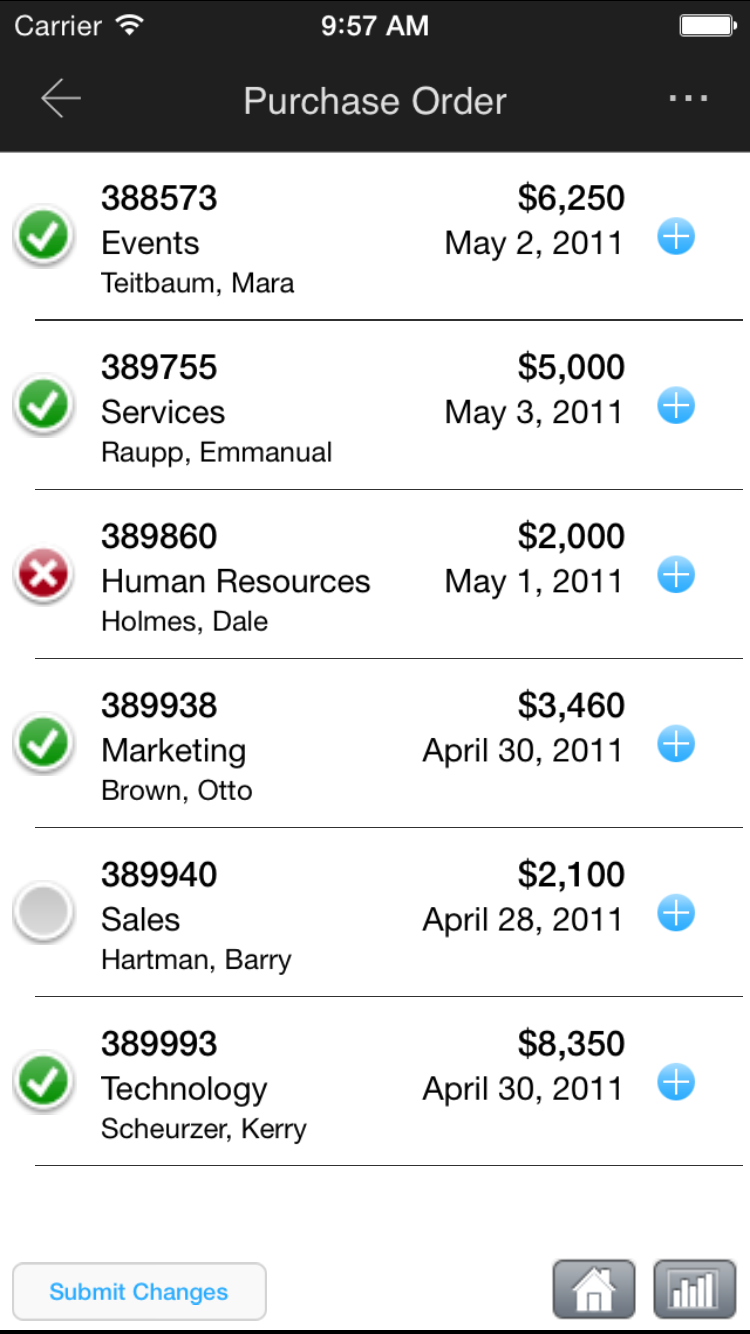
Screenshot of Monitor operational KPIs wherever, wheneverScreenshot of Look up detailed customer information while out in the fieldScreenshot of Log touchpoints or update CRM informationScreenshot of Approve or deny corporate requestsScreenshot of View customer buying trends and capture notesScreenshot of View performance and ranking