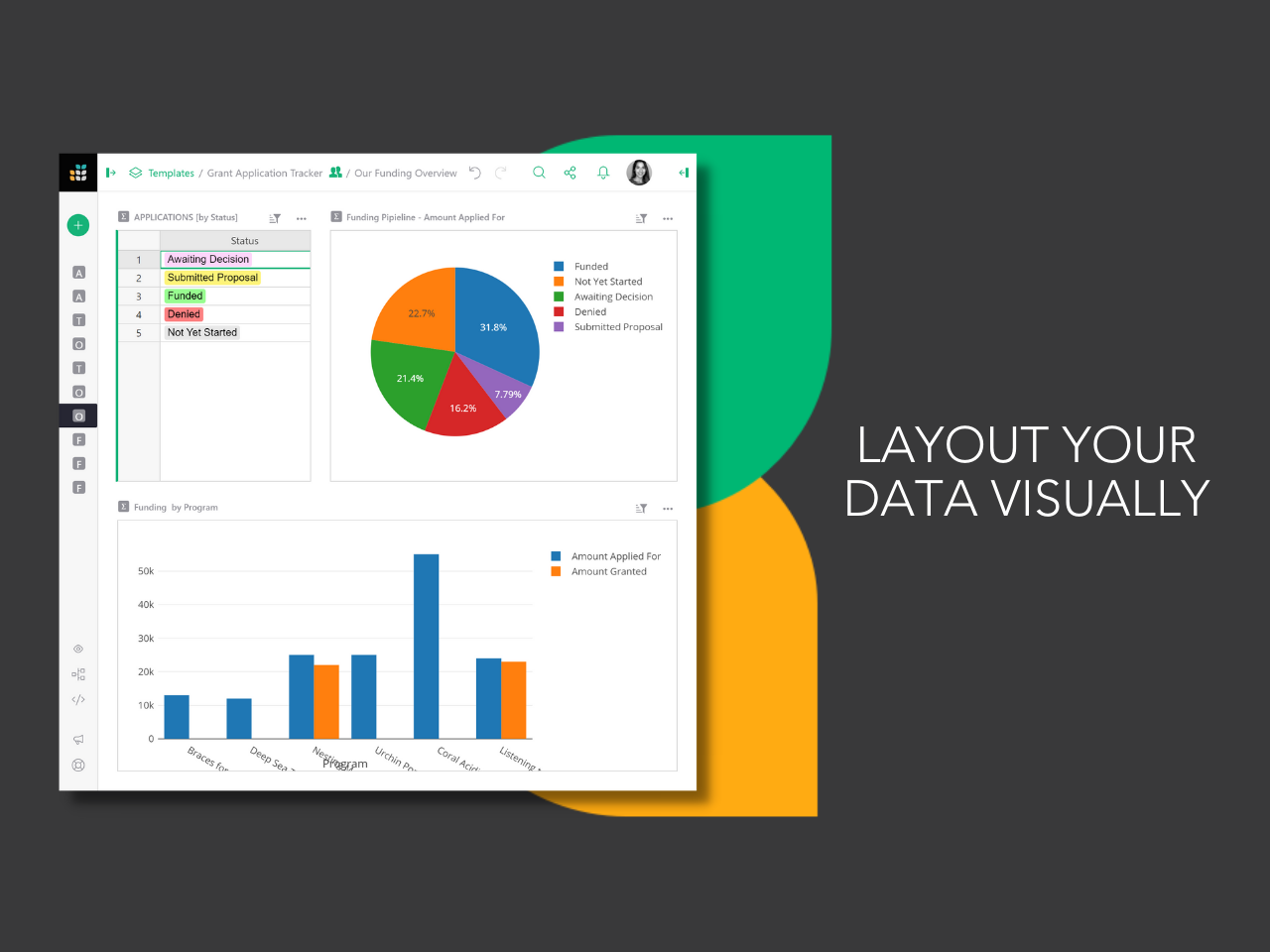
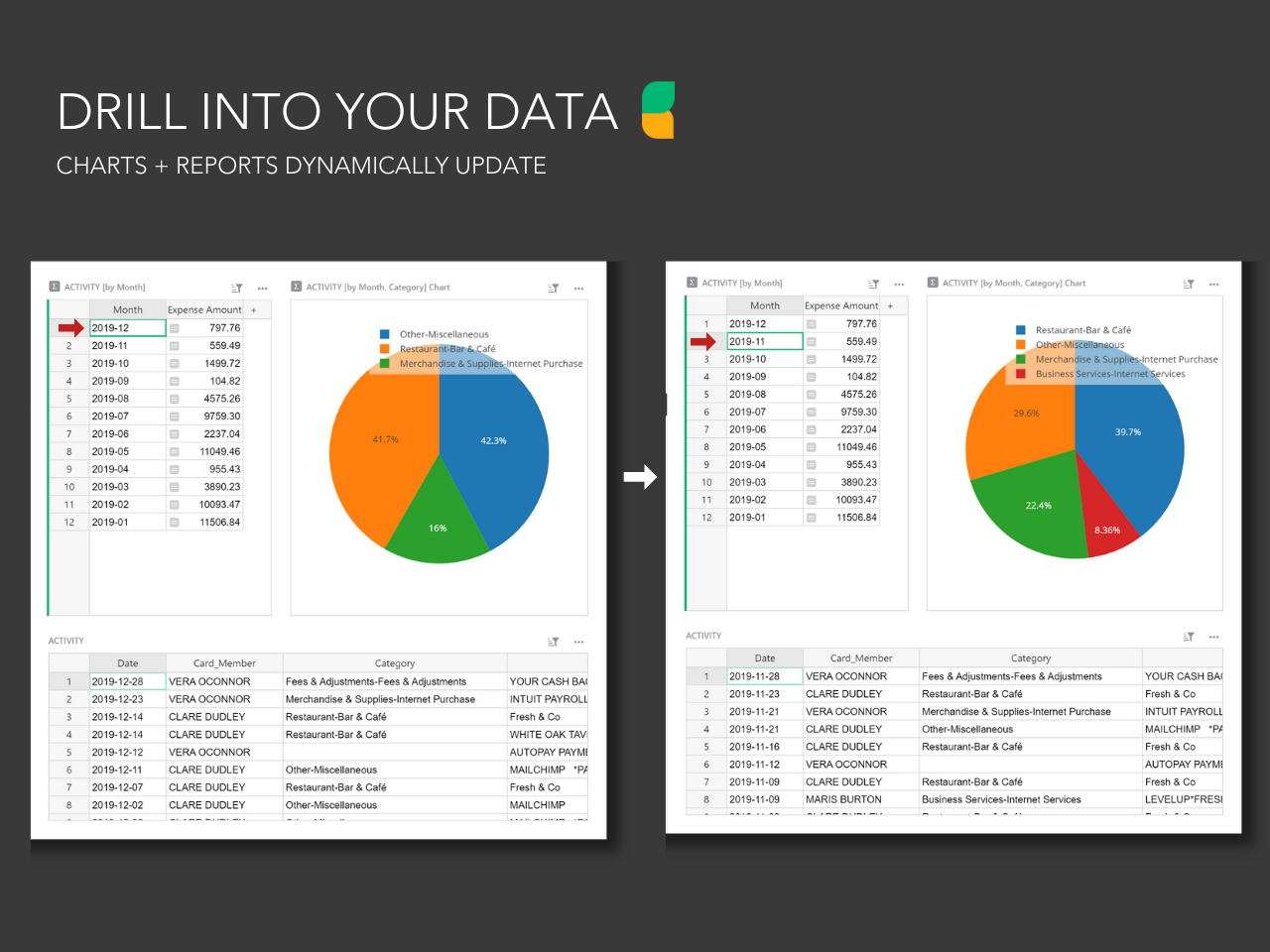
Grist combines the capabilities of spreadsheets, databases and app builders. Using a familiar spreadsheet interface, information can be organized as a relational database, and dashboards built using drag-and-drop. Solving spreadsheet problems Ensures data is well-structured and stored in one place with no duplication, no spreadsheet-wrangling, no merging documents. Collaboration on sensitive data Data is protected…
$8
per month per user
Microsoft Access
Score 7.6 out of 10
N/A
Microsoft Access is a database management system from Microsoft that combines the relational Microsoft Jet Database Engine with a graphical user interface and software-development tools.
$139.99
per PC
Pricing
Grist
Microsoft Access
Editions & Modules
Pro
$8
per month per user
Enterprise
Contact Sales
Microsoft Access
$139.99
per PC
Offerings
Pricing Offerings
Grist
Microsoft Access
Free Trial
Yes
No
Free/Freemium Version
Yes
No
Premium Consulting/Integration Services
No
No
Entry-level Setup Fee
No setup fee
No setup fee
Additional Details
—
—
More Pricing Information
Community Pulse
Grist
Microsoft Access
Considered Both Products
Grist
Verified User
Anonymous
Chose Grist
Grist is easier to use, faster, and loads quicker with heavy data.

I still have subscriptions to both of the above and use them sporadically. Infinity is less user friendly in terms of copying data and moving around the tables, entering data using the keyboard only as I tend to do on a spreadsheet. For this reason, I tended to move across to …
Microsoft Access is a superb software in database management system. I have been using it for many years without any hesitations. The software is making it different from other software with its awesome features. The software is cost effective for the organisation. It also …
Excel is a fantastic - robust application that can do so much so easily. Its easy to train and understand. However - excel does not provide a reporting function and that is typically where we will suggest a move to [Microsoft] Access. [Microsoft] Access requires a little more …
With [Microsoft] Access I am able to quickly create simple database driven solutions with built in UI and reporting in one tool. Advanced coding is not necessary and the tool guides you through building out. Opponents for a robust, end-to/end product.
Having used Snowflake, I can definitely say that both of these tools are very easy to use and value for money. Although for me, the aspects where Microsoft Access stacks up are its low cost and usability. Snowflake is good with its cloud-based system but for startups where the …
I haven't really used another database product other than Microsoft Access since the mid-90s. I don't even remember which program I did use, but needless to say, it did not have as much functionality nor was it as user friendly as databases today. So I really can't say how …
Crystal is easier for report writing, but isn't a database solution. Salesforce is lovely, but much more expensive than an old copy of Microsoft Office. For a small budget, [Microsoft] Access was really the only viable option. I only wish it was easier to write complex reports.
[Selected Microsoft Access for] employee learning simplicity, attractive graphical environment and features of Microsoft 365 with responsive Microsoft support.
Visual FoxPro is a discontinued software, and no longer has support. Also, very few people still use it, or ever know how to use it. Excel is very popular, but [Microsoft] Access can do things like data joins much easier and faster
Although SQL is a full-blown platform for heavy database management, Microsoft Access serves the purpose perfectly for small and mid-scale enterprises. It is also perfect for people just getting started with database management. The graphical user interface is a major plus …
Microsoft Access is better for large files and backlogs than Excel because it can handle the workload. Excel is great as well, but filtering and searching is limited, and it can crash rather easily. You don't see those problems with Access.
We've actually started to use both of these programs. There are pros and cons to both. Microsoft Access is best for linking two sets of data that already have a common shared field (i.e. both sets of data include a student ID number, social security number, etc) Airtable is best …
SharePoint is good for simple data structures, use of workflow, integration with AD, etc. But SharePoint does not support fully relational data or complex reporting, whereas Access absolutely does.
Being a similar "Windows application" it's easier to start to use as part of Office. Also, the GUI capabilities are much more advanced than other high-performance databases.
Tableau is not even a 'switch-out' tool, it's for visualization so it's not a fair comparison. Against other databasing tools, MySQL is still my favorite may be simply due to being a creature of comfort because that's where I first learned to manage DB. However, Microsoft …
MS SQL is a more powerful tool but I love the reporting feature in MS Access. MS Excel is useful for complex calculations but to me, MS Access helps me organize that data. InfoPath is similar to MS Access in that you can create forms for data entry, but it does not include …
Microsoft Access is a bit dated compared to other database tools. It is slower, not able to handle quantities of data that are as large as the other tools, and a bit more finicky. However, it is sometimes the preferred tool for some clients. It also has a lower barrier to entry …
Filemaker Pro focuses more on data collection in a single, flat file while Access allows for relationships to be drawn between data tables the reduces duplication. I have not worked with FileMaker Pro for several years but found it to be very unwieldy for my needs which were …
We tried Salesforce, which was expensive and not as customizable as Access. QuickBase also was pricey compared to already having an MS license with the existing package, and QuickBase was not very intuitive. The other option was an open source version which was less intuitive …
Microsoft Access is much easier to understand and use than SAP. There are a lot of menus in SAP which can be very difficult to navigate. If you are familiar with Microsoft Word/Excel it is very similar and should be easy to learn. Also maintaining databases in Access is much …
Microsoft Access databases are more suitable for us because we are a smaller team. It's easy for us to export the reporting. It's also easy for people to create their own databases as well! Microsoft Access is honestly a one-stop-shop for us, and we figured we were not at a …
We came to Grist from monday.com. Grist is a clean layout and not cluttered. The ease of use is great and it's to the point. There are some areas that are not right out of the box easy to use, such as their formulas and python coding. However, they will help you achieve what you need. Amazing customer service. They not only showed me an example of what I was looking for but explained step by step how to get there. Which in return teaches me about their software. You will need some patience for this is not a quick and go type of spreadsheet software. But no worries, it can get the job done. Thank you, Grist :)
Having worked at startups, I can say Microsoft Access is most suited for their needs. Some of the reasons for that can be the ease and ability to create tables, design an entity-relationship diagram, define the relationship between different tables, feeding data into the tables, and retrieving data. All of this can be curated very easily into a process for small to medium-size enterprises. But a serious limitation can be observed where Access does not provide better features for large-scale companies. Another limitation is for companies where Mac is used as work computers.
One good aspect of Microsoft Access is how the software can be customized for different applications. This is very useful because we are able to use this software for multiple applications, which makes it cost-friendly.
Another strong point of Microsoft Access is the skill required to customize, the amount of programming required is less than most other database programs. This is good for a beginner looking to get into database management.
Microsoft Access is one of the more cost-friendly database applications, and most of the time it comes with Microsoft Office. Other database programs can be expensive and not as easy to use.
I and the rest of my team will renew our Microsoft Access in the future because we use and maintain many different applications and databases created using Microsoft Access so we will need to maintain them in the future. Additionally, it is a standard at our place of work so it is at $0 cost to us to use. Another reason for renewing Microsoft Access is that we just don' t have the resources needed to extend into a network of users so we need to remain a single-desktop application at this time.
Microsoft Access is easy to use. It is compatible with spreadsheets. It is a very good data management tool. There is scope to save a large amount of data in one place. For using this database, one does not need much training, can be shared among multiple users. This database has to sort and filtering features which seem to be very useful.
While I have never contacted Microsoft directly for product support, for some reason there's a real prejudice against MS Access among most IT support professionals. They are usually discouraging when it comes to using MS Access. Most of this is due to their lack of understanding of MS Access and how it can improve one's productivity. If Microsoft invested more resources towards enhancing and promoting the use of MS Access then maybe things would be different.
I still have subscriptions to both of the above and use them sporadically. Infinity is less user friendly in terms of copying data and moving around the tables, entering data using the keyboard only as I tend to do on a spreadsheet. For this reason, I tended to move across to Stackby prior to using Grist instead of using Infinity. Stackby works well, and has some features that are better than Grist (Predominantly the powerups that I use, and integrations that I don't). However, Grist is still a level above in manipulation of data using python (or Excel functions too), the ability to use widgets and the table duplicated in a seperate page.
Excel is a fantastic - robust application that can do so much so easily. Its easy to train and understand. However - excel does not provide a reporting function and that is typically where we will suggest a move to [Microsoft] Access. [Microsoft] Access requires a little more knowledge of data manipulation.
It's saved a lot of time in both creating an advertising database and managing it week to week effectively. I had previously created in others that haven't worked, and this does, saving me a good 1 hour weekly, and 5 hours or more each time I had problems with the last ones
Being able to stay on track with this has meant I'm following up at the right time (advertisers) and keeping a professional manner and not losing business due to missed communication
Saving me $ from buying a program like Access (or Airtable monthly) and then the learning curve that that has. This has a much easier learning curve to say the least.
Microsoft Access has had a mostly positive impact on our business objectives in that most of our work is funded by grants and those grants need reports with data about our projects. Microsoft Access makes getting and organizing that data very easy.
Another positive is that since it is built on an Excel backbone, Excel files can be easily imported into Microsoft Access and also it is easy to export Microsoft Access reports, data sheets, etc. into Excel and some other programs as well. That might help more people who already use Excel learn how to work in a database.
I can't really think of a negative impact other than not many people at my workplace have ever used or understand how to use a database. Most people tend to use Excel rather than a database, like Microsoft Access.