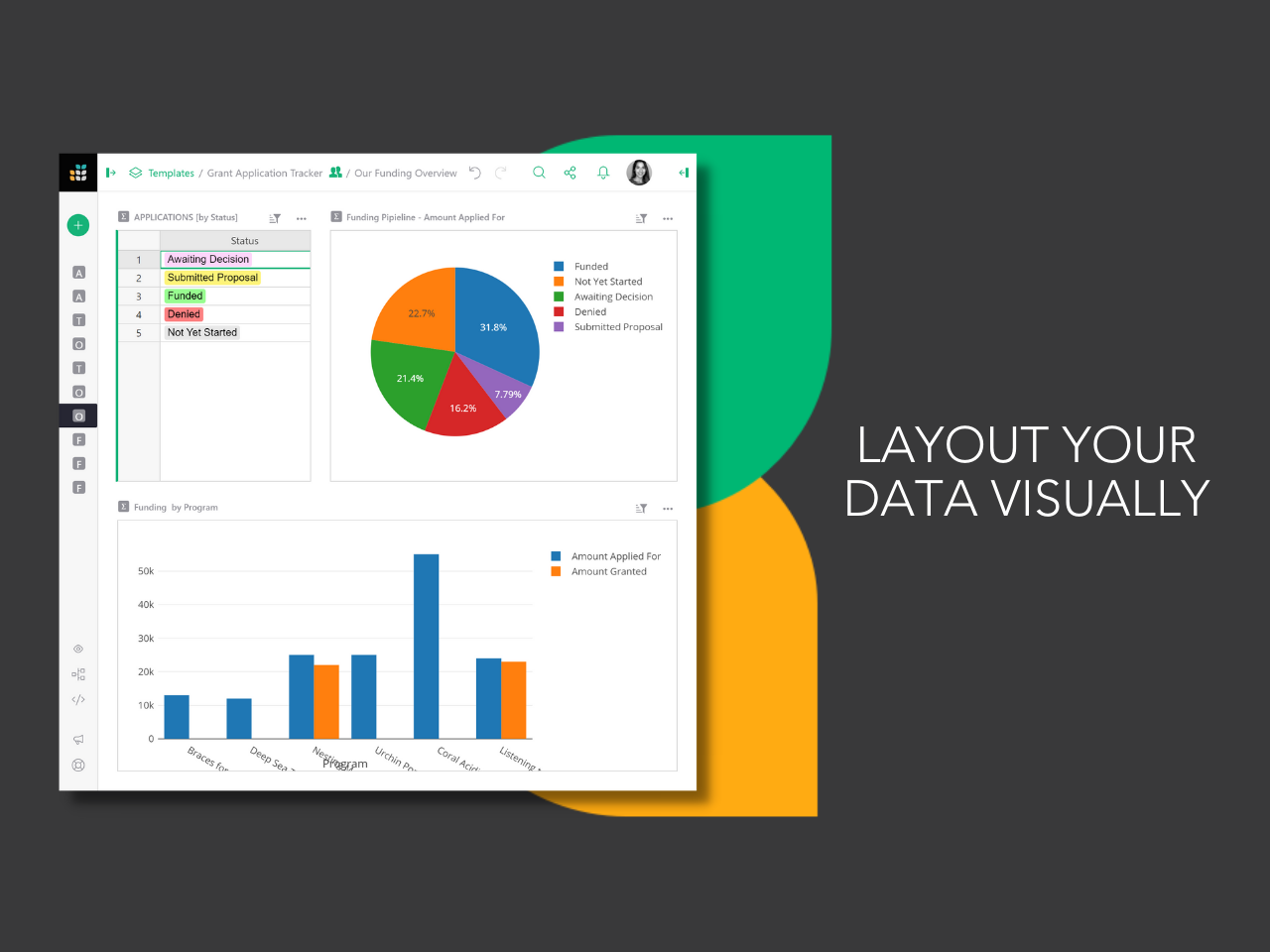
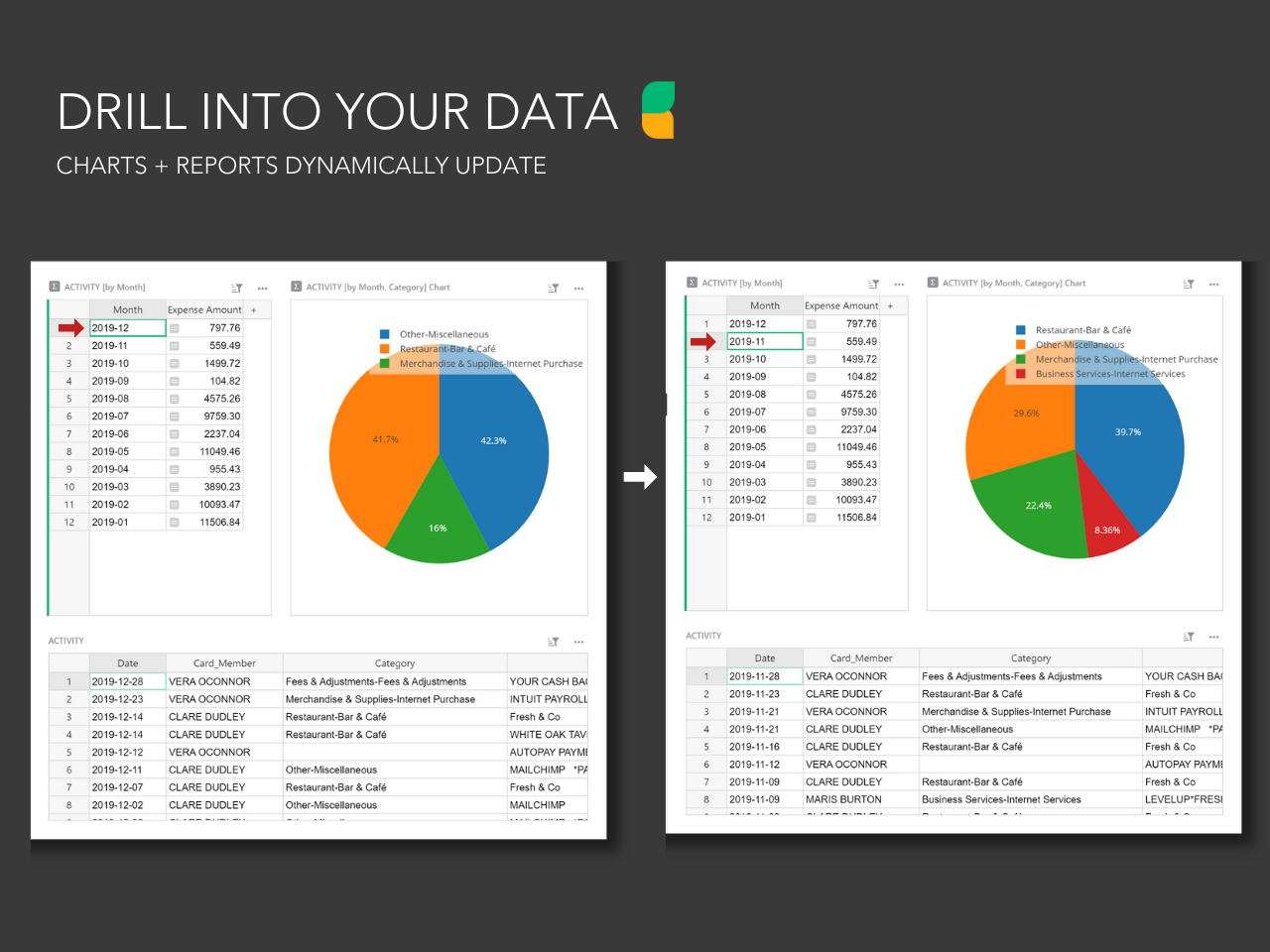
Grist combines the capabilities of spreadsheets, databases and app builders. Using a familiar spreadsheet interface, information can be organized as a relational database, and dashboards built using drag-and-drop. Solving spreadsheet problems Ensures data is well-structured and stored in one place with no duplication, no spreadsheet-wrangling, no merging documents. Collaboration on sensitive data Data is protected…
$8
per month per user
Stackby
Score 9.0 out of 10
N/A
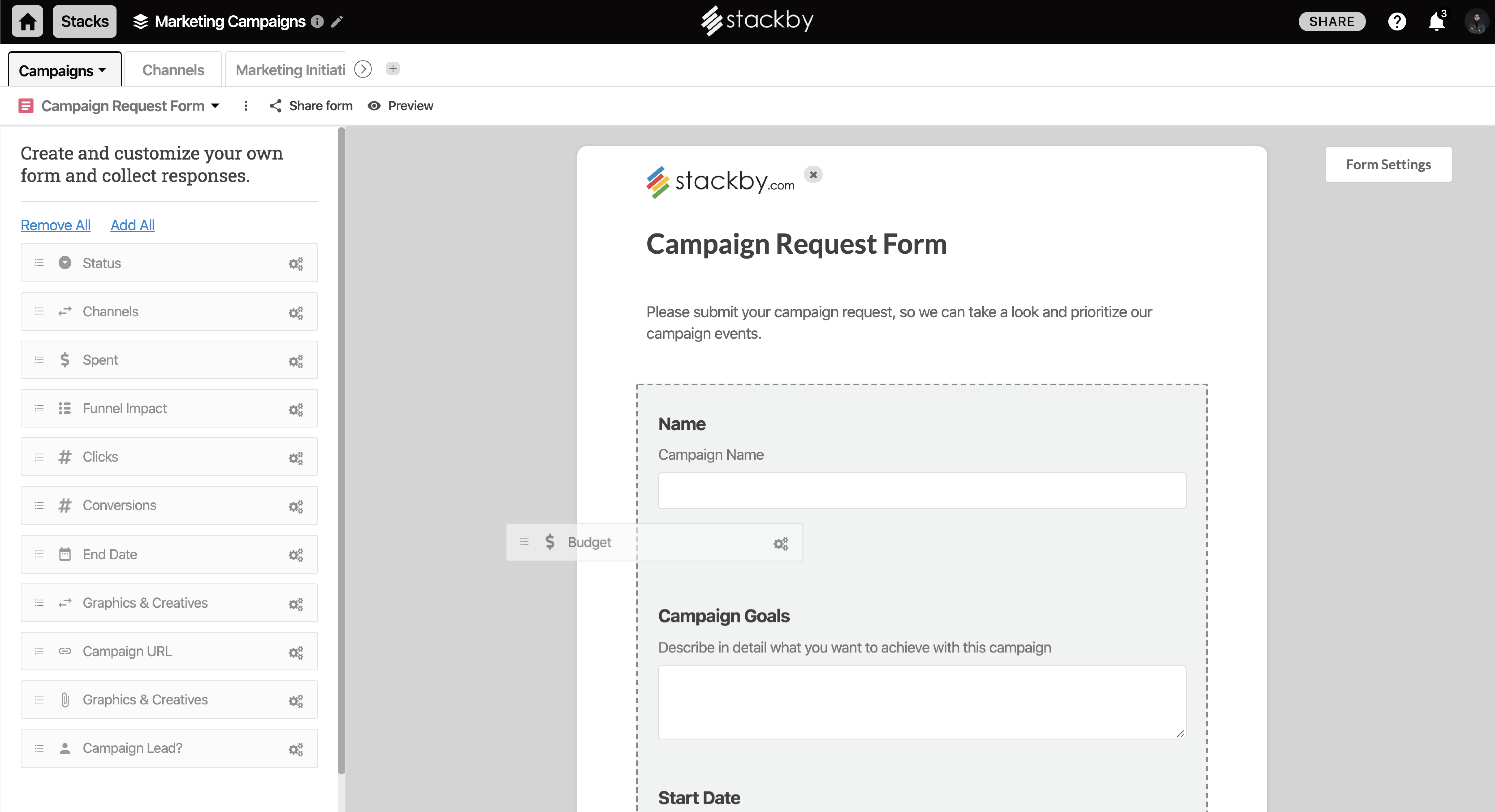
Stackby is designed to bring together the simplicity of spreadsheets, the functionality of databases and integrations with best business APIs to let anyone build their own tools, the way they want. No coding needed. Users can build a database from scratch, import data from pre-existing sources like spreadsheets or Google Sheets, or choose from over 100 pre-built templates across multiple categories. Stackby offers over 25 unique column types like text,…
$6
per month per user
Pricing
Grist
Stackby
Editions & Modules
Pro
$8
per month per user
Enterprise
Contact Sales
Personal
$6
per month per user
Economy
$10
per month per user
Business
$20
per month per user
Business Plus
$35
per month per user
Enterprise
Custom
Offerings
Pricing Offerings
Grist
Stackby
Free Trial
Yes
Yes
Free/Freemium Version
Yes
Yes
Premium Consulting/Integration Services
No
No
Entry-level Setup Fee
No setup fee
No setup fee
Additional Details
—
20% discount for annual pricing.
More Pricing Information
Community Pulse
Grist
Stackby
Considered Both Products
Grist
Verified User
Anonymous
Chose Grist
I still have subscriptions to both of the above and use them sporadically. Infinity is less user friendly in terms of copying data and moving around the tables, entering data using the keyboard only as I tend to do on a spreadsheet. For this reason, I tended to move across to …
We came to Grist from monday.com. Grist is a clean layout and not cluttered. The ease of use is great and it's to the point. There are some areas that are not right out of the box easy to use, such as their formulas and python coding. However, they will help you achieve what you need. Amazing customer service. They not only showed me an example of what I was looking for but explained step by step how to get there. Which in return teaches me about their software. You will need some patience for this is not a quick and go type of spreadsheet software. But no worries, it can get the job done. Thank you, Grist :)
Based on my experience, I can provide specific scenarios where Stackby is well suited and others where it may be less appropriate: Project Management: Stackby is an excellent choice for project management scenarios. Its ability to create custom databases, track tasks, assign responsibilities, and collaborate in real-time makes it highly effective for managing and monitoring project progress. CRM and Sales: Stackby is well suited for managing customer relationships and sales processes. Its customizable database structure allows for organizing customer information, tracking leads, managing deals, and generating reports. The ability to integrate with other tools further enhances its usefulness in CRM and sales workflows. Content Planning: Stackby is a great fit for content planning scenarios. Users can create databases to manage editorial calendars, track content ideas, assign tasks to team members, and monitor content performance. Collaboration features facilitate seamless content collaboration and ensure timely publishing.
Implement the same views available on desktop into the mobile app
Internal automations (like Airtable)
Ability to implement and display info as a dashboard (like Airtable)
Polish up the formatting of formulas, inputting them causes user frustration due to the formula input cursor jumping around
Better intelligence and ease of inputting data in bulk i.e have the fields automatically identify what data is being input and format appropriately (like Airtable does)
Stackby is overall pretty easy to use, especially if you're used to something like Airtable or SmartSuite. Some of the pages seem like near exact clones (though they put their own creative spin on things). I'd prefer a slighty fresher interface (like SmartSuite), but I'm willing to sacrifice that for the better price and great customer service.
I still have subscriptions to both of the above and use them sporadically. Infinity is less user friendly in terms of copying data and moving around the tables, entering data using the keyboard only as I tend to do on a spreadsheet. For this reason, I tended to move across to Stackby prior to using Grist instead of using Infinity. Stackby works well, and has some features that are better than Grist (Predominantly the powerups that I use, and integrations that I don't). However, Grist is still a level above in manipulation of data using python (or Excel functions too), the ability to use widgets and the table duplicated in a seperate page.
I have also tried Ora.Pm. Infinity has better graphical interface, but nowhere near as many features and the UI isn't as effective (i.e, moving around with keys). Grist has a much more technical interface and it comes from being more of a database/interactive spreadsheet vs Stackby. Grist has much more functionality in terms of formulas, but is much harder to learn to use and less other functionalities. Ora.PM is more of a test at a task management app, and doesn't compare - Stackby is much better.
It's saved a lot of time in both creating an advertising database and managing it week to week effectively. I had previously created in others that haven't worked, and this does, saving me a good 1 hour weekly, and 5 hours or more each time I had problems with the last ones
Being able to stay on track with this has meant I'm following up at the right time (advertisers) and keeping a professional manner and not losing business due to missed communication
Saving me $ from buying a program like Access (or Airtable monthly) and then the learning curve that that has. This has a much easier learning curve to say the least.