The Heroku Platform, now from Salesforce, is a platform-as-a-service based on
a managed container system, with integrated data services and ecosystem for deploying modern apps. It takes an app-centric
approach for software delivery, integrated with developer tools and
workflows. It’s three main tool are: Heroku Developer Experience (DX), Heroku
Operational Experience (OpEx), and Heroku Runtime.
Heroku Developer Experience (DX)
Developers deploy directly from tools like…
$25
per month
Octopus Deploy
Score 10.0 out of 10
Mid-Size Companies (51-1,000 employees)
Australian company Octopus Deploy offers their eponymous automated deployment and release management software that integrates with the user's preferred CI server and adds deployment & ops automation capabilities. Octopus Deploy enables developers, release managers, and operations folks to bring all automation into a single place. The vendor states that by reusing configuration variables, environment definition, API keys, connection strings, permissions, service principals, and automation logic,…
$12
Pricing
Heroku Platform
Octopus Deploy
Editions & Modules
Production
$25.00
per month
Advanced
$250.00
per month
Cloud
Free 30 day trial
unlimited targets/users/projects
Server
Free 30 day trial
unlimited targets/users/projects
Enterprise
Starting at $18 per month
Enterprise
Starting at $18 per month
Server
Starting at $12 per month
Cloud
Starting at $12 per month
Offerings
Pricing Offerings
Heroku Platform
Octopus Deploy
Free Trial
No
Yes
Free/Freemium Version
No
Yes
Premium Consulting/Integration Services
No
No
Entry-level Setup Fee
No setup fee
Optional
Additional Details
—
Octopus Server edition is available as a 30 day free trial on our unlimited tier for any scenario, including production, and commercial use. After the trial period ends you can keep your working configuration and upgrade to a paid license and continue deploying uninterrupted.
Octopus Cloud is an alternative that is hosted by us, and is also available as a 30 day unlimited trial. No credit card is needed to create a Octopus Cloud trial instance. You can convert the Cloud trial to a paid instance at any time during or after the trial period, and keep all of your instance configuration.
Octopus also offers an Enterprise tier which offers advanced features for teams at scale including, advanced high availability, insights & DORA metrics, ServiceNow & Jira Service Management integration, unlimited instances, 24/7 support & service credits, and a Customer Success Manager.
Volume discounts are available above 500 targets, and temporary bursting for certain scenarios is supported.
Heroku was more extensive in terms of its operating and scaling from what we witnessed by looking into other options and trying to find the best operating system for a new platform.
Heroku Platform is cheaper to begin with compared to DigitalOcean or Amazon Fargate. The configuration user interface is also arguably easier to understand. With its user friendliness and cheaper tiers, Heroku Platform was our pick to host some of our applications that were …
I believe Azure App Service is pretty similar to Heroku as you can in both deploy your backend applications. However, the dyno concept and it's drastically simple web dashboard makes Heroku a much better and sane alternative to Azure app service. In Heroku, you get abstracted of …
Kuberbetes is an easily scalable docker based option which should need minimal DevOps, however, it has a pretty high learning curve with many decisions that need to be addressed as well as monitoring, logging and security concerns.
Heroku has the advantage of simplifying the development and integration with some services (which in Heroku they call addon) wherein other platforms, certainly for those who don't have much experience, it will take much more development time.
Heroku, in my opinion, is the easiest platform to deploy and host web applications on. From collaboration to deployment, everything is well thought out and bulletproof. If you need advanced server functionality, like a VPC, machine-to-machine communication, etc., you will …
We also use Cloud 66 which provides some of Heroku's features, at a lower price. It still cannot compare to Heroku's ease of use and ability to easily deploy new staging environments though, so we will always use Heroku for at least some of our projects.
Heroku is an all in 1 package for deploying and running your services. It provides an easy to use setup and run for 90% of cases. If you have a more complicated infrastructure, you'd definitely need to move to another hosting provider. But if as long as you can operate within …
Heroku has advantages over Docker, Google App Engine and AWS products, but it depends largely on your use case. If you are already in AWS, it's probably in your best interest to stay with AWS products. However, other "Cloud Formation/Orchestration" products like Docker are …
We kicked the tires on OpenShift before deciding on Heroku, and found the platform to be much less intuitive and well-documented than Heroku. It felt like we were constantly trying to implement workarounds for esoteric platform problems, and eventually the work became too …
For a different project, Aptible surpassed Heroku when it came to meeting HIPAA-related requirements, though it offers much less flexibility with add-on services (for obvious reasons). Google App Engine had a much more complicated deployment model and seemed unnecessarily …
To this day no other PaaS matches Heroku in ease of use and maturity. If you want to stay 100% focused on your unique product/service rather than wasting time on boilerplate hosting issues, I can highly recommend Heroku. I personally use it for all of my own websites …
Heroku is the more expensive option for hosting compared to some of the cloud platforms we investigated, but it's worth it for us because of the plug-and-play nature of Heroku deployment. We can be up and running in a few minutes and know with precision how much it will cost us …
Heroku has the easy facility to deploy and host applications while others have to configure a lot. The price of the services is high for others. But within Heroku pricing and easy to maintain under the same roof.
Some APIs are specifically developed to be deployed to certain platforms and usually decision which platform to use is not developer's. Another question is deployment cost and pricing model; in specific cases after price comparison Heroku is often selected among other cloud …
Heroku is a really great platform to get up and running QUICKLY and efficiently. What Heroku is really great at that other services are lacking is ease of use, documentation. It is really great for beginning developers and awesome to get up and running to take care of lots of …
I feel Heroku is lightyears ahead of all other PaaS offerings. To me the competition is between PaaS and self-hosted cloud, not between Heroku and other PaaS providers.
We also use Ansible, which is much broader and platform/tool diverse. Octopus [Deploy] currently serves a niche for us - .Net and .Net Core deployments. It is capable of doing other things, but it does its original function better than broader tools like Ansible.
I used TFS back when it was called that, and that was a mess. ADO isn't as bad but has many limitations and things that are hard to do. The main difference is I ENJOY working in Octopus Deploy. Not so much with ADO. I'm always trying to figure out things that are stupid. …
Octopus showed better cost numbers than Azure DevOps and more flexibility against GitLab CI/CD. Octopus customization in step templates that can be reused and easily created gives big advantages against many of its competitors. Octopus was selected for these features and …
Octopus Deploy was the obvious choice at the time, its strong .net support, robustness, ease of use, and integration into an existing process was a big plus. Also, Octopus Deploy was kind enough to give my organization a not for profit community licence. In addition, the …
This software, unlike Chef, is much easier to configure or manage, since its platform provides documentation or tutorials on how to use it, besides its interface is much more modern and easy to use, it allows you to choose where you want carry out the implementations of the …
I am not aware of other products like Octopus that are available, but it is a great product for our company. We can stay ahead of the game by allowing developers to deploy code in a continuous deployment model while still maintaining the overrall infrastructure and enabling …
TeamCity is focused more on the build process. It's deployment capabilities are weak compared to Octopus. Bamboo is a proper competitor, but it is far more costly for our needs. The free version of Octopus has proven incredibly competent and sufficient for our needs, and …
There aren't really any competitors in the land of ASP.NET. Deployment is too ad-hoc. Other tools exist that have massive downsides, like Web Deploy. Most aren't even supported anymore. You could argue that containers (Docker) are a competitor, but containers cannot be used for …
Octopus Deploy is a deployment focused tool. Its purpose is to manage deployment environments. Tools like TeamCity and Visual Studio Team Services are Continuous Integration tools. You can accomplish many of the same tasks in TeamCity and VSTS but their focus on CI also means …
We looked at IBM UrbanCode Deploy and Release and Microsoft VSTS while looking for Application Release Automation tools. While VSTS doesn't work with cross-platform technologies IBM UrbanCode Deploy commands a premium price for the features it offers. Also, it needs UrbanCode …
Heroku is very well-suited to early stage and/or rapidly changing projects. It is great for getting moving quickly or changing direction quickly. In scenarios where there is already scale or well-defined requirements, it may be preferable to set things up directly on AWS or another cloud provider to avoid the additional costs of Heroku as the middleman.
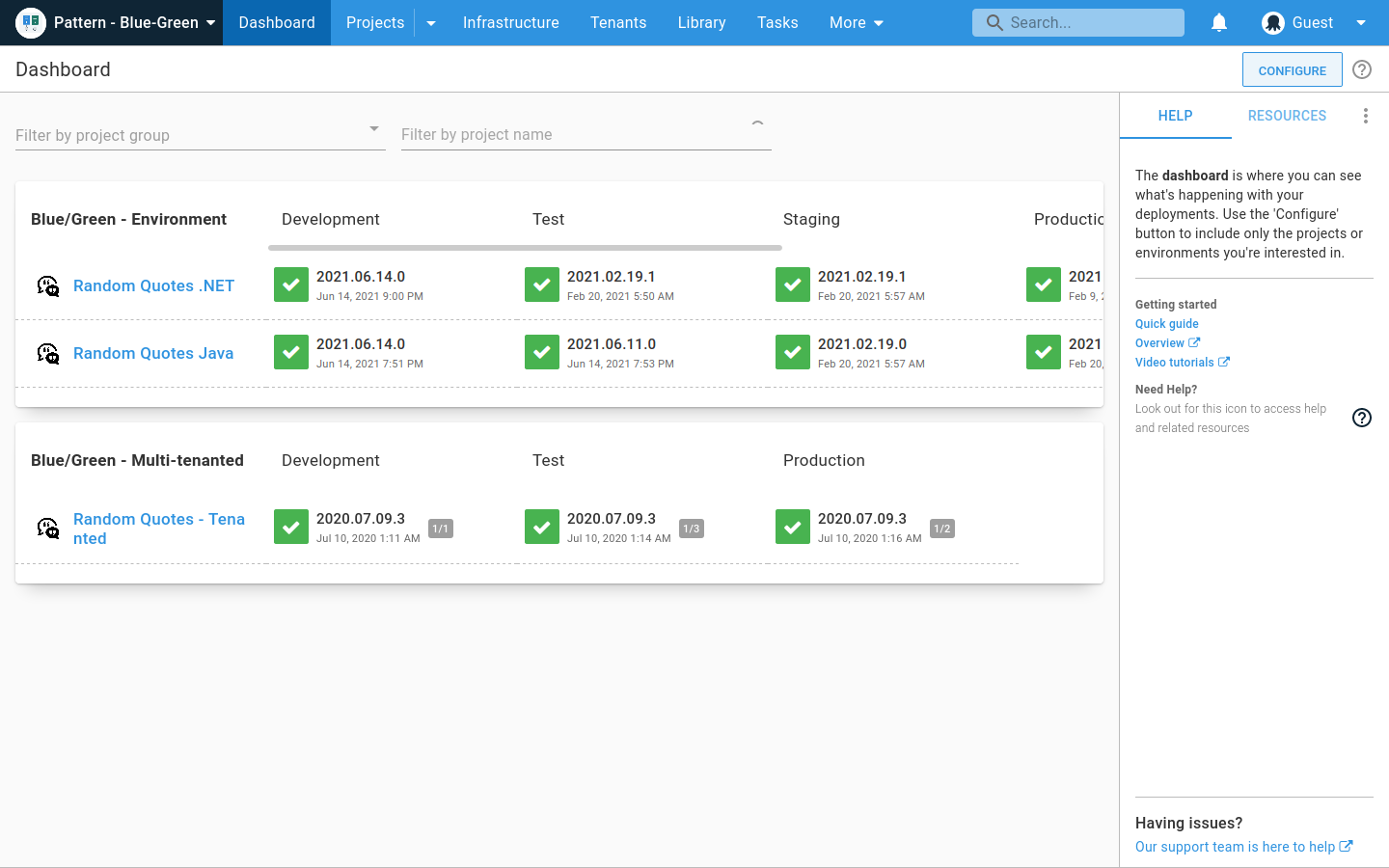
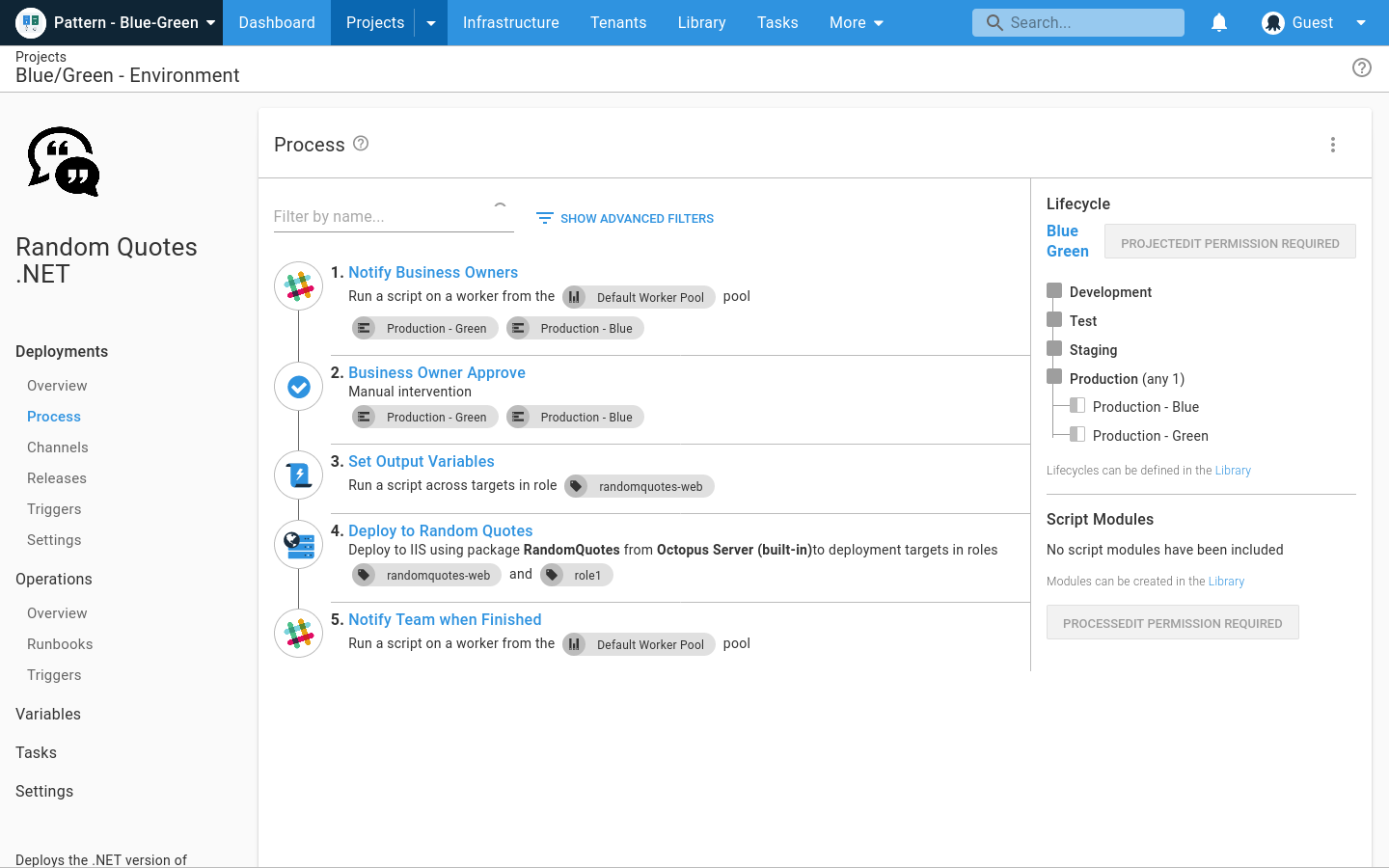
The ability to manage different stages and define a workflow is very useful for ops troubleshooting as well as deployment. You can see which version each environment has for each project, and promote or redeploy versions.
You can view deployment logs and dig deep into problems or long deployment steps.
Finding old releases can be a pain, and there isn't a good way to compare releases.
It does not really lend itself well to viewing what the content of a release is further than the version number. Ideally, you would be able to tie a deployment to the builds from the build server as well as specific commits from source control.
Many different platforms, languages, and operating systems are supported. You can deploy to your own server or the cloud. You can deploy to Windows, Linux, etc.
Many different "step templates" are included, which make it very easy to deploy what you want, how you want. Such as deploying over SSH, FTP, etc.
Support is very responsive and personable. You won't just be talking to a robot or a script. They will either solve your problem or understand it enough to solve it in a future release.
Their documentation is well thought-out and very helpful. I have found very few missing pieces.
Could be less expensive, although you get what you pay for
Sleeping apps can be an annoyance: Heroku automatically puts your apps in sleep mode and they have to spin back up after periods of inactivity. Much of this can be solved but it requires working around the built-in functionality. I understand why they do it but it's an area that could be improved.
Restrictions to server access means you can't customize as much as you could if you owned the server. But again, this is also a benefit because it's about convention over configuration. So you can't configure as much, but then, you typically don't have to.
Support for non-Microsoft applications needs to be improved to bring it on par with other comparable automation tools.
It doesn't yet provide integration options with other IT management tools like JIRA and HP Support to implement continuous delivery and true DevOps processes.
Support for AWS/Azure has been included very recently and it's not still very mature and feature rich and is expected to improve further in upcoming releases.
Heroku is a critical and core part of our infrastructure that is serving our customers well. We are very satisfied with the cost of our solution. While it would be difficult to move away from Heroku, we have no plans to do so. We have had no major issues with it and it is a pleasure to use. Other products on the market might offer comparable functionality, but until we expose a need that Heroku cannot satisfy, we'll stay the course.
If you have basic backend and Git knowledge, deploying to Heroku is a breeze. It now supports many types of backends, including hybrid backends (ex: nginx + application server) through its build pack system. The dashboard is easy to use, and the CLI tools are well designed. Accessing the add-ons is also easy. It uses an SSO-type system so you don't have to re-sign in to view the add-on dashboards.
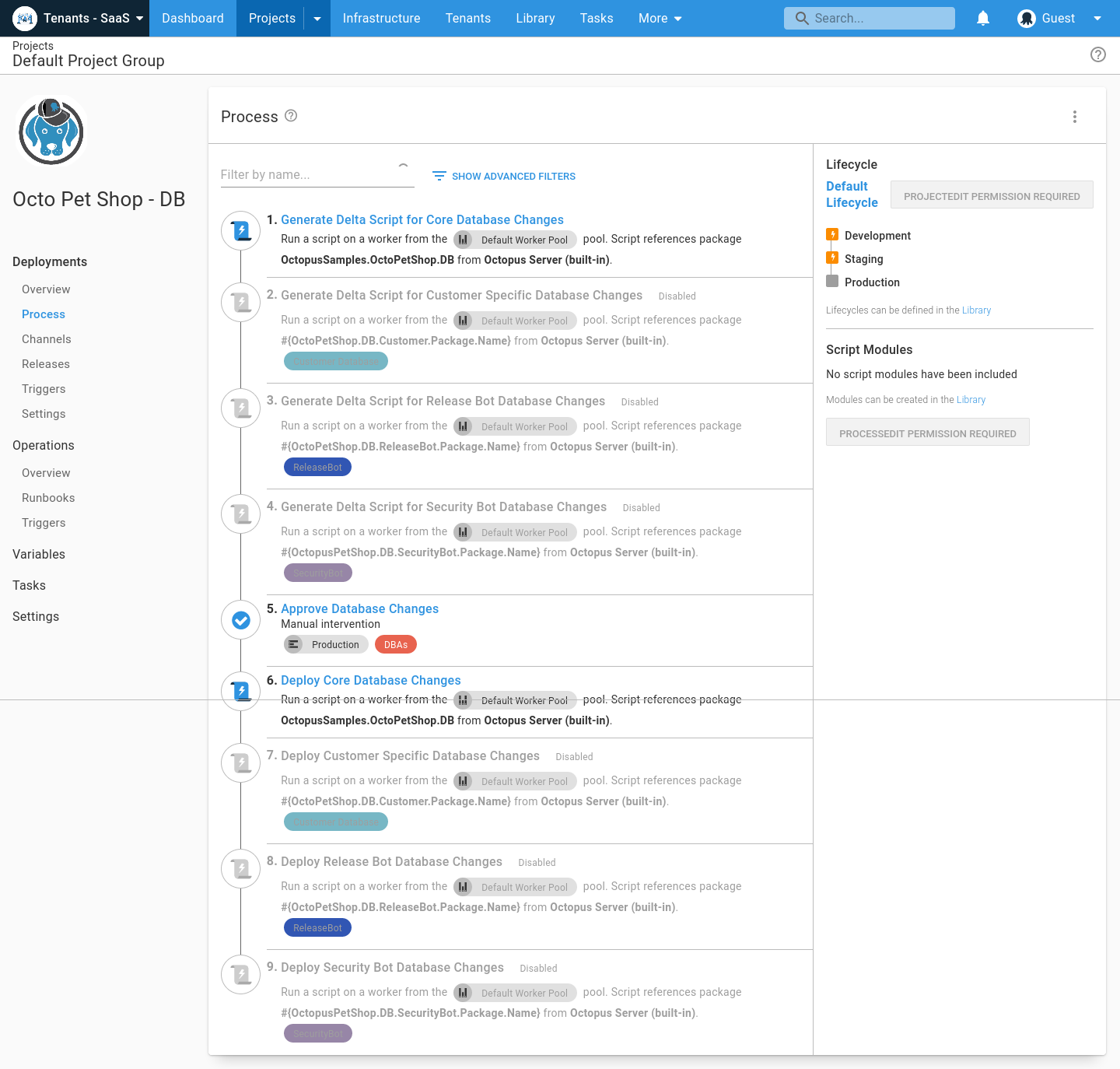
Some functionality feels slightly hidden in the menu system. For example: script modules are in the same menu as packages, where I feel that are not related entities. One is code for the deployment, the other is the thing that you are deploying...
Heroku availability correlates pretty strongly to AWS US EAST availability. We had a couple of times where there was a Heroku-specific issue but not for the last 7-8 months.
Octopus Deploy is a software that runs very effectively, is easy to use, does not require such a high learning curve, provides the necessary tools to carry out the functions it offers, making it a very flexible software, it also allows that can be configured according to the needs of the user and provides integrations with other very advantageous tools since they are carried out in a very favorable way.
I've used it for many years without facing any major problem. It's not hard at all to get used to it, it's documentation is outstanding and simple. We are close to 2020 and I don't think most of the existing companies or startups should still face old problems such as wasting time deploying code and calculate computing resources.
Octopus Deploy support has always been there for us, even when using the free tier, we get responsive hands-on help. We haven't needed to use that level of support since the documentation is clearly written, and help is readily available within the interface itself. Using Octopus Deploy is a truly joyful experience.
Be ready to pay a bit more than expected in the beginning if you're migrating from a big server. The application is probably not ready for the change and you have to keep improving it with time.
It's also important to consider that you can't save anything to the disc as it will be lost when your application restarts, so you have to think about using something like S3.
Heroku has advantages over Docker, Google App Engine and AWS products, but it depends largely on your use case. If you are already in AWS, it's probably in your best interest to stay with AWS products. However, other "Cloud Formation/Orchestration" products like Docker are typically lacking the ease-of-use factor that allows you to get up and running with Heroku quickly.
Octopus Deploy was the obvious choice at the time, its strong .net support, robustness, ease of use, and integration into an existing process was a big plus. Also, Octopus Deploy was kind enough to give my organization a not for profit community licence. In addition, the product comes from a local Brisbane based company and it is always good to support local businesses when you can.
Any automated deployment process will save your company a ton of money on testing and bugs. When you don't automate your deployments, you can't be certain that what you are moving between environments is the exact same code with the same or appropriate configuration. What you tested might not be what got deployed.
We've saved a lot of money using Octopus over the mostly manual process we were using before. We've removed a lot of the errors that come from manual, human intervention.
Octopus has also allowed us to accomplish more with fewer people. It is easy to bring new people up to speed on the deployment process, and we can be confident of success after very little training.