The Heroku Platform, now from Salesforce, is a platform-as-a-service based on
a managed container system, with integrated data services and ecosystem for deploying modern apps. It takes an app-centric
approach for software delivery, integrated with developer tools and
workflows. It’s three main tool are: Heroku Developer Experience (DX), Heroku
Operational Experience (OpEx), and Heroku Runtime.
Heroku Developer Experience (DX)
Developers deploy directly from tools like…
$25
per month
WSO2 Choreo
Score 8.7 out of 10
N/A
Since WSO2's June 2021 acquisition of Platformer, the company now offers and supports Choreo, the former Platform IPaaS and low-code cloud native engineering for API Developers.
$0
1 project, up to 5 components. $100 in Choreo infrastructure credits per month.
Pricing
Heroku Platform
Choreo by WSO2
Editions & Modules
Production
$25.00
per month
Advanced
$250.00
per month
Free
$0
1 project, up to 5 components. $100 in Choreo infrastructure credits per month.
Pay-As-You-Go
$150
per month Up to 10 projects and 30 components. $150 per component per month. Pass-through infrastructure costs.
Enterprise
Custom Quote
per year Unlimited projects and components. Discounts based on annual commitments available. Pass-through infrastructure costs, or use a data plane.
Offerings
Pricing Offerings
Heroku Platform
WSO2 Choreo
Free Trial
No
No
Free/Freemium Version
No
Yes
Premium Consulting/Integration Services
No
No
Entry-level Setup Fee
No setup fee
No setup fee
Additional Details
—
1 step is a maximum of 500ms of compute time. An incoming event, message, or outgoing API call is a minimum of 1 step.
More Pricing Information
Community Pulse
Heroku Platform
Choreo by WSO2
Features
Heroku Platform
Choreo by WSO2
Platform-as-a-Service
Comparison of Platform-as-a-Service features of Product A and Product B
Heroku is very well-suited to early stage and/or rapidly changing projects. It is great for getting moving quickly or changing direction quickly. In scenarios where there is already scale or well-defined requirements, it may be preferable to set things up directly on AWS or another cloud provider to avoid the additional costs of Heroku as the middleman.
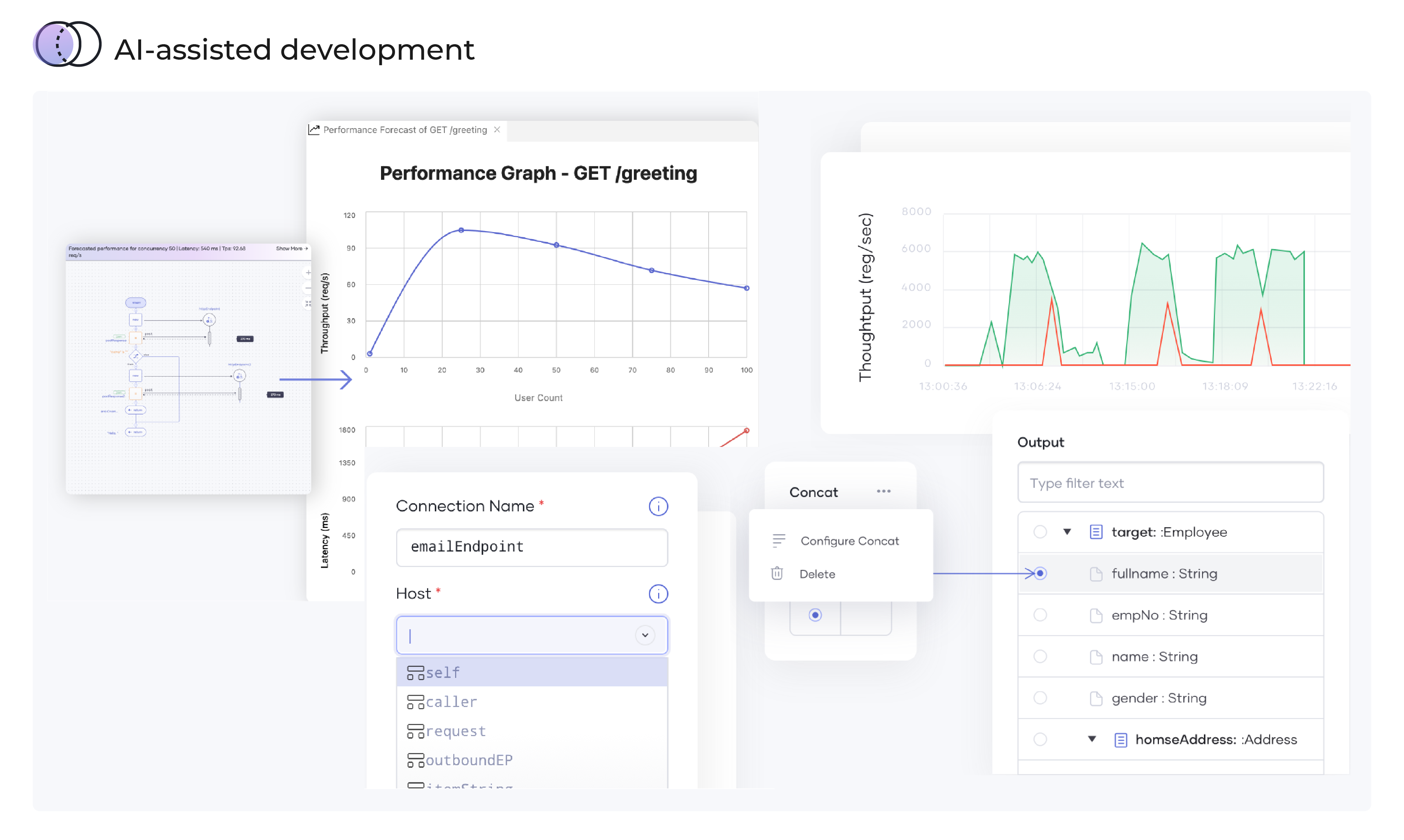
While you are developing your code, my case is codes for bots, you'll have more power and if you have an API ally that shows forecasts of latencies and throughputs: Choreo by WS02 is that friend. It is very ideal in giving insights on intelligent data mapping, code anomalies as you develop the codes or applications.
Could be less expensive, although you get what you pay for
Sleeping apps can be an annoyance: Heroku automatically puts your apps in sleep mode and they have to spin back up after periods of inactivity. Much of this can be solved but it requires working around the built-in functionality. I understand why they do it but it's an area that could be improved.
Restrictions to server access means you can't customize as much as you could if you owned the server. But again, this is also a benefit because it's about convention over configuration. So you can't configure as much, but then, you typically don't have to.
Heroku is a critical and core part of our infrastructure that is serving our customers well. We are very satisfied with the cost of our solution. While it would be difficult to move away from Heroku, we have no plans to do so. We have had no major issues with it and it is a pleasure to use. Other products on the market might offer comparable functionality, but until we expose a need that Heroku cannot satisfy, we'll stay the course.
If you have basic backend and Git knowledge, deploying to Heroku is a breeze. It now supports many types of backends, including hybrid backends (ex: nginx + application server) through its build pack system. The dashboard is easy to use, and the CLI tools are well designed. Accessing the add-ons is also easy. It uses an SSO-type system so you don't have to re-sign in to view the add-on dashboards.
Heroku availability correlates pretty strongly to AWS US EAST availability. We had a couple of times where there was a Heroku-specific issue but not for the last 7-8 months.
I've used it for many years without facing any major problem. It's not hard at all to get used to it, it's documentation is outstanding and simple. We are close to 2020 and I don't think most of the existing companies or startups should still face old problems such as wasting time deploying code and calculate computing resources.
Be ready to pay a bit more than expected in the beginning if you're migrating from a big server. The application is probably not ready for the change and you have to keep improving it with time.
It's also important to consider that you can't save anything to the disc as it will be lost when your application restarts, so you have to think about using something like S3.
Heroku has advantages over Docker, Google App Engine and AWS products, but it depends largely on your use case. If you are already in AWS, it's probably in your best interest to stay with AWS products. However, other "Cloud Formation/Orchestration" products like Docker are typically lacking the ease-of-use factor that allows you to get up and running with Heroku quickly.