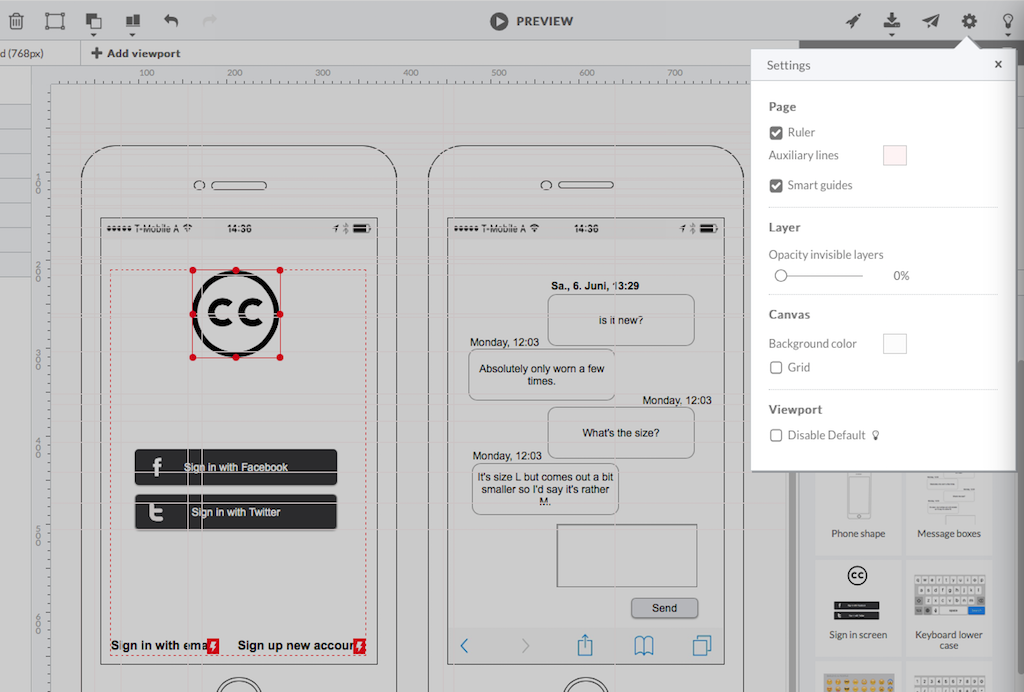
HotGloo is an online wireframing and prototyping tool. This solution has been designed for all those engaged in the concept, design and development of web or app projects: project managers, information architects, usability experts, freelancers, concept people, digital agencies, web companies, publishers, web designers, web developers and many more. The vendor’s value proposition is that this solution makes it easy to wireframe web and mobile sites and to collaborate with others due to the…
$13
up to 4 users, 2 active projects, unlimited reviewers
Lucid Visual Collaboration Suite
Score 8.5 out of 10
N/A
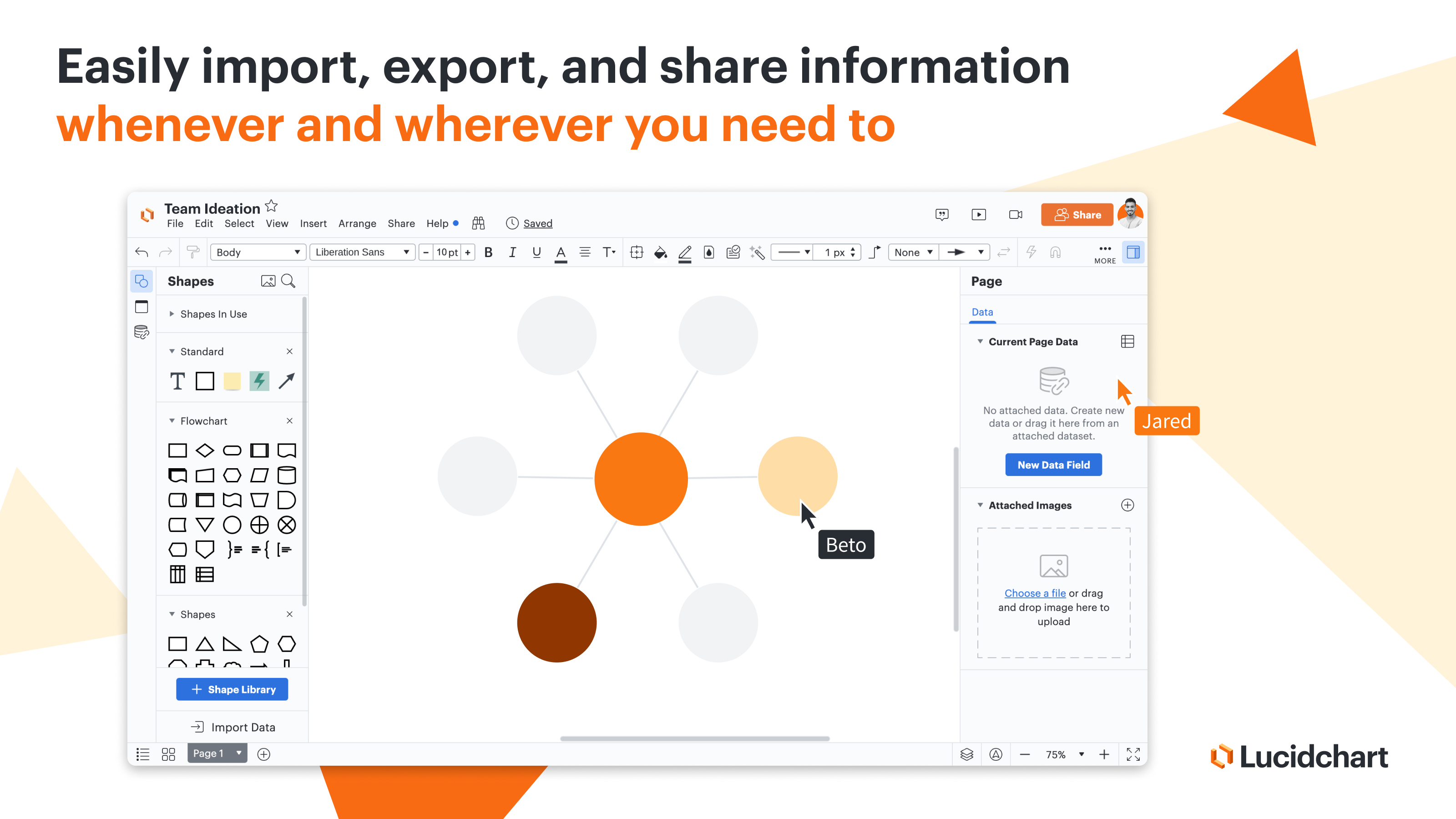
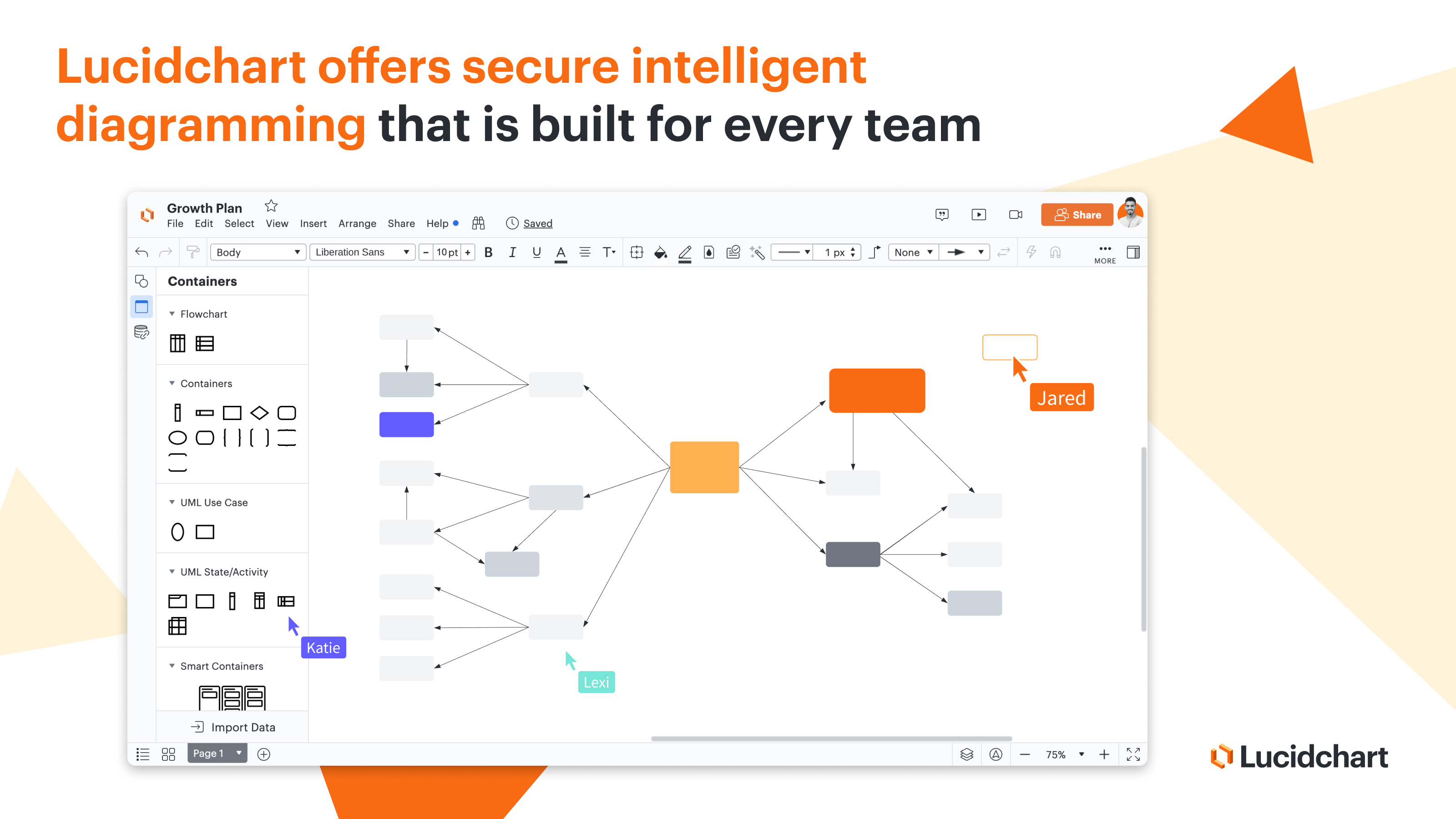
The Lucid Visual Collaboration Suite empowers teams to ideate, plan, design, build, and launch game-changing solutions from a shared infinite canvas.
$0
Pricing
HotGloo
Lucid Visual Collaboration Suite
Editions & Modules
Group
$13
up to 4 users, 2 active projects, unlimited reviewers
Team
$27
up to 10 users / 6 active projects / unlimited reviewers
Agency
$54
up to 20 users / 15 active projects / unlimited reviewers
Enterprise
150 +
More users and projects, priority support. Get in touch for an individual quote.
Free
$0
Individual
$9
per month per user
Team
$10
per month per user (3 user minimum)
Enterprise
.
per year
Offerings
Pricing Offerings
HotGloo
Lucid Visual Collaboration Suite
Free Trial
Yes
Yes
Free/Freemium Version
No
Yes
Premium Consulting/Integration Services
No
No
Entry-level Setup Fee
No setup fee
Optional
Additional Details
The billing period starts on the day you upgrade from the free trial to a paying plan. If you pay by credit card the service is billed in advance on a monthly basis and is non-refundable. There will be no refunds or credits for partial months of service, upgrade/downgrade refunds, or refunds for months unused with an open account. If you do choose to cancel your account in the future, you will never be charged again, but you are responsible for charges already incurred up until your cancellation. For monthly recurring payments we accept Visa, MasterCard and American Express through our online payment system. You can also prepay any account for 12 months with credit card. In certain cases we also take money transfers – please contact us beforehand if you want to use this option.
HotGloo was extremely intuitive to use, particular for users who were not from a UX background. The wide-ranging widget library and elements available meant little domain knowledge was required to get up and running with the product. The product was supported by a great online …
Being able to export the finished wireframe to HTML was a huge time saver for me and my team. Getting to that next step quickly and seamlessly was a massive help. Not only that, but other tools that do this, we have not as much luck. HotGloo's functionality was a step above the …
HotGloo is tailored to this use case and therefore considers the right user needs. I think one strength is that it focuses on the main aspect. There are other tools, that have more extensive features. However, those are then more complex and not so well made for the specific …
Draw.io is probably the closest but not as slick an experience and less collaborative tools (as of when I last used them).
Miro/Canva/Figma/Powerpoint can all mimic the functionality but are not explicitly designed for flow charting so you're fighting the UI as they want to do …
While all of the other platforms we have evaluated and some we even use, Lucid has it's own unique solution and aesthetic that we find to work well for us for many of our different deliverables. There is no "One-App-Does-All" solution out there, however, when it comes to …
Based on my personal experience, Lucid Visual Collaboration Suite is head and shoulders above any other competitor. Canva is good, but not intuitive at all. Miro is good as well, but not nearly as appealing and still lacks some of the logical functions that LucidSpark has. I’ve …
Lucid Visual Collaboration Suite is the best in class for documenting anything technical. It has all the templates you would need to represent anything from AWS, Microsoft as well as workflows for business processes. Other tools might cover just one of each of these things, but …
I've used Visio for block diagramming before, but using Lucid is like having google suite and microsoft 365 in one. We get to make all of our block diagrams as easily as visio, but we get the collaboration and sharing functionality that comes with google suite. It stacks up …
I usually use excalidraw for more ad hoc realtime visualizations, but I usually use Lucid Visual Collaboration Suite charts when I need to work on a visualization to present in a document / presentation
Lucid Visual Collaboration Suite has a more professional feel, an easier way of organizing and a simpler look. Miro, while very similar, has more aggressive color schemes and a more toy like UI that does not inspire as much confidence in our stakeholders.
I did not select Lucid Visual Collaboration Suite. That decision was taken by others in the organization. Given a choice, I am not sure I would have selected Lucid Visual Collaboration Suite. Miro was already established and, with a local client, was a better user experience in …
Much better, it doesn't get the steps in lines even a tenth as much as Visio, can use custom shapes as actual shapes rather than images, and aligns much easier. Lucid Visual Collaboration Suite is easily the best and I have tried about 4-5 programs over the last 5 years.
Miro had an advantage with the unlimited canvas until Lucidchart recently added that feature. Lucidchart seems to be better designed for creating drawings, incredibly technical or software architectural diagrams. Miro appears to be more designed for non-technical folks as a …
Draw.io is a free tool which has very limited functionality. Some of the advanced features like AI based generation and templates are not available in other applications. Also, I’ve used bot framework for different purposes. If customer wants to collaborate and they don’t have …
I have used Miro, but we use them for different things. There's not much I can compare as we use them only for what each one of them is strong, but if I had to compare, Miro doesn't have the power to deal with database diagrams like Lucid Visual Collaboration Suite Lucidchart …
I like Lucid Visual Collaboration Suite more than both of those for the ease of use and collaboration. Miro is similar with collaboration but didn't find as easy to use and Visio is similar to use but a bit harder to collaborate with.
Lucidchart is well beyond Microsoft Visio and is constantly improving. Visio is pretty much stagnant and hasn't been improved for several years, Lucid is constantly adding new functionality like AI powered functions and tools. We have no reason to pay for Visio licenses when …
HotGloo is well suited to a dispersed team of users who are looking to collaboratively wireframe and prototype their latest web solutions. It's extremely intuitive and comes with a large widget library meaning the newest user can be up and running very quickly. In browser access means it's extremely accessible whether you're working in a room together or across the country at home.
It is hard to think of ways in which Lucid Visual Collaboration Suite would not be best suited to provide an effective tool for any organization to find success in its use. Whether it is a visual display to map an organizational structure, a collaboration to find an answer of how to improve workflow, or even to display the upcoming budget needs, working in Lucid can seamlessly provide that!
Serverless. You don't need to install another program to create diagrams, you just open a new tab and there you are, ready to go.
Collaboration. You don't need to update your colleague diagram by creating a new file and creating a new file version, you both are in the same diagram and you and all the team are free to update it at any time, at the same time, you are seeing the same thing. That is really helpful and time-saving.
Shapes. It has any shape that you can think of and Lucidchart is always updating them, I can create an Azure solution architecture, an AWS one, an old on-premise solution. Or just put standard shapes to describe a business process. Providing so many specific shapes help the diagram to express specific information, and for specific teams, that's less text and more visual information, you don't need to put a text below a standard database shape (this is an Azure SQL database), you just put the azure shape and done. That....is beautifully helpful.
The interface is easy to use and understand and most features feel very familiar from the start. There are so many features and functions that users may not know it can be done without some instruction. Lucid's champion network is a great, fun resource to learn more about the product.
I would rate the overall support for Lucidchart as a 9. The support provided is generally robust and responsive. Their help center, tutorials, and webinars offer extensive resources for users. The ticket-based support system is effective, providing timely resolutions to most issues. Moreover, they actively gather user feedback, demonstrating a commitment to continuous improvement
HotGloo is tailored to this use case and therefore considers the right user needs. I think one strength is that it focuses on the main aspect. There are other tools, that have more extensive features. However, those are then more complex and not so well made for the specific work I use it for. Thus, I like HotGloo also because of the element and symbols library. Which has the right depth and detail - no more, no less then needed.
Based on my personal experience, Lucid Visual Collaboration Suite is head and shoulders above any other competitor. Canva is good, but not intuitive at all. Miro is good as well, but not nearly as appealing and still lacks some of the logical functions that LucidSpark has. I’ve also used Apple FreeForm quite a bit, which is a free software with Apple. Once again you can accomplish the same things in any of these software, but Lucid Visual Collaboration Suite is so much better to the point that it is 3-4 times faster to use Lucid than Free Form or Canva.
Though I can't necessarily provide hard numbers, I can confidently say that Lucidchart has saved countless hours for myself and my teams as we don't need to try to develop some type of complex diagram using markup or any kind of code.
I have previously been able to build a complete ERD using Lucidchart in a past position, which the company never had before. It ended up being used by countless teams in the company and ultimately in a large-scale data stack migration effort.