Chose IBM API Connect
Ease of use of the product and pricing of the product.

| Product | Rating | Most Used By | Product Summary | Starting Price |
|---|---|---|---|---|
 IBM API Connect | N/A | IBM API Connect is a scalable API solution that helps organizations implement a robust API strategy by creating, exposing, managing and monetizing an entire API ecosystem across multiple clouds. As businesses embrace their digital transformation journey, APIs become critical to unlock the value of business data and assets. With increasing adoption of APIs, consistency and governance are needed across the enterprise. API Connect aims to help businesses… | N/A | |
 Anypoint Platform | N/A | The Anypoint Platform developed by MuleSoft and acquired by Salesforce in early 2018 is designed to connect apps, data, and devices anywhere, on-premises or in the cloud. This platform was built to offer out-of-the-box connectors as well as tools that architects and developers can adopt quickly to design, build and manage the entire lifecycle of their APIs, applications, and products. | N/A |
| IBM API Connect | MuleSoft Anypoint Platform | |||||||||||||||
|---|---|---|---|---|---|---|---|---|---|---|---|---|---|---|---|---|
| Editions & Modules | No answers on this topic | No answers on this topic | ||||||||||||||
| Offerings |
| |||||||||||||||
| Entry-level Setup Fee | No setup fee | No setup fee | ||||||||||||||
| Additional Details | — | — | ||||||||||||||
| More Pricing Information | ||||||||||||||||
| IBM API Connect | MuleSoft Anypoint Platform | |
|---|---|---|
| Considered Both Products |  IBM API Connect  Luis Abatista Delivery Manager Middleware & Automation (Technology Integration) Chose IBM API Connect Prior to adopting IBM API Connect, there were two main competitors, MuleSoft. Although in the integration capabilities MuleSoft seemed to have an advantage, and regarding developer experience, IBM API Connect had a set of enterprise features for the API management.  Angus Bagchee associate director Chose IBM API Connect IBM API CONNECT competitors have the following advantages:
 Manish Bhattacharya Staff Engineer Chose IBM API Connect IBM API Connect and Apigee are both robust API management platforms. IBM API Connect was selected for its strong integration capabilities, hybrid cloud deployment options, and comprehensive analytics. It aligns well with organizations seeking flexibility and control over their … |  Anypoint Platform  Charles Ahn Director Chose Anypoint Platform Mulesoft is a more modern, flexible, and faster-performing integration suite than traditional providers.  Gaurav Pandey - PMP,ITIL,CSM SAP Technical Manager Chose Anypoint Platform Overall a better experience in pricing negotiation with the Sales team. The breadth of services offered by Mulesoft was really important and the expertise offered by our consulting partner influenced the decision. The overall deployment was completed well within the timelines. …  Nikhil Kohli Service Delivery Lead Chose Anypoint Platform The main problem with this software is the different connector type that is used for different protocols except for a different SAP connector. There is only one connector called SAP. It will be great if there will have a different connectors like idoc, RFC, proxy, etc.  Kamta Prasad Technical Lead Chose Anypoint Platform Anypoint Platform is really very easy to adopt for application integration. Simple UI and easy data weave language allows user to focus on business portion only. The API management and deployment of application are hassle free. We have selected Anypoint platform because it is …  Vaibhav Khanna ☁⚡ Salesforce Consultant Chose Anypoint Platform Dell Boomi is kind of similar in drag and drop implementation. However, it doesn't have as many connectors (shapes in Dell Boomi). Moreover, it also doesn't have deployment stuff on its own. Informatica is way behind Dell Boomi and Anypoint Platform, but users are still using it …  Rajarshee Mukhopadhyay Associate Consultant Chose Anypoint Platform Compared to Dell Boomi the API management suite of Mulesoft is much mature, however if its only about the integration , then i would always go for Dell Boomi, as there is no infrastructure setup that needs to be done from the developer's end. APIGEE api management is as good as …  Deepak Kushwaha Tech Arch Sr. Analyst Chose Anypoint Platform The main reason why we chose Anypoint API Manager is because it is well suited with the APIs developed in Mule ESB. AWS, on the other hand, is a very good tool but still evolving and offers a small set of API management features.  Ankit Goyal Technical Consultant Chose Anypoint Platform Dell Boomi and Talend Data Integration  Federica Bianco Integration architect Chose Anypoint Platform It enables customers to expose their APIs in a very simple and fast way. It can be used by non-expert developers. It is compliant with all major connection and data representation world standard. |
| IBM API Connect | MuleSoft Anypoint Platform | ||||||||||||||||||||||||
|---|---|---|---|---|---|---|---|---|---|---|---|---|---|---|---|---|---|---|---|---|---|---|---|---|---|
| API Management |
| ||||||||||||||||||||||||
| Cloud Data Integration |
|
| IBM API Connect | MuleSoft Anypoint Platform | |
|---|---|---|
| Small Businesses |  NGINX Score 9.2 out of 10 |  Make Score 8.9 out of 10 |
| Medium-sized Companies | NGINX Score 9.2 out of 10 |  IBM App Connect Score 9.5 out of 10 |
| Enterprises | NGINX Score 9.2 out of 10 | IBM App Connect Score 9.5 out of 10 |
| All Alternatives | View all alternatives | View all alternatives |
| IBM API Connect | MuleSoft Anypoint Platform | |
|---|---|---|
| Likelihood to Recommend | 8.5 (0 ratings) | 7.6 (0 ratings) |
| Likelihood to Renew | 9.1 (0 ratings) | 9.0 (0 ratings) |
| Usability | 8.5 (0 ratings) | 7.0 (0 ratings) |
| Support Rating | - (0 ratings) | 6.8 (0 ratings) |
| IBM API Connect | MuleSoft Anypoint Platform | |
|---|---|---|
| Likelihood to Recommend |
Luis Abatista Delivery Manager Middleware & Automation (Technology Integration) |
|
| Pros |
|
Kamta Prasad Technical Lead |
| Cons |
|
|
| Usability |
Manish Bhattacharya Staff Engineer |
|
| Support Rating | No answers on this topic |
|
| Alternatives Considered |
|
|
| Return on Investment |
|
Nikhil Kohli Service Delivery Lead |
| ScreenShots | IBM API Connect Screenshots   | Anypoint Platform Screenshots 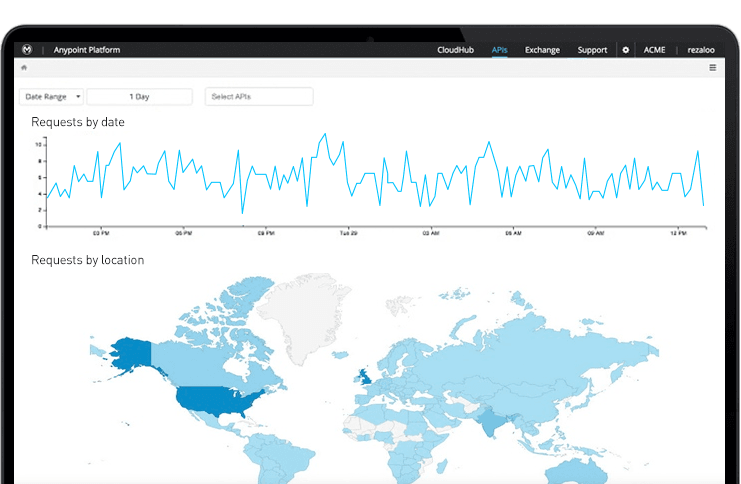 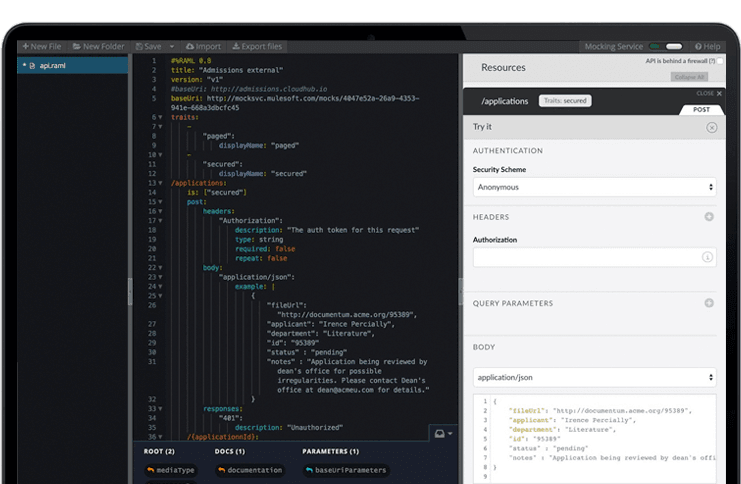 |