IBM’s App Connect is a cloud-based data integration platform with data mapping and transformation capabilities within connectors between high-volume systems. App Connect also offers near-real time data synchronization and an API builder that is adaptable to the user’s coding skill level.
N/A
Anypoint Platform
Score 7.8 out of 10
N/A
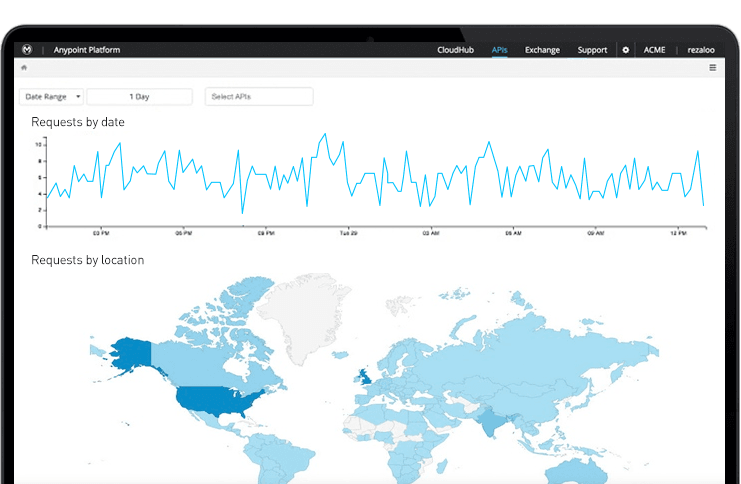
The Anypoint Platform developed by MuleSoft and acquired by Salesforce in early 2018 is designed to
connect apps, data, and devices anywhere, on-premises or in the cloud. This platform was built to
offer out-of-the-box connectors as well as tools that architects and developers can adopt quickly to
design, build and manage the entire lifecycle of their APIs, applications, and products.
N/A
Pricing
IBM App Connect
MuleSoft Anypoint Platform
Editions & Modules
No answers on this topic
Offerings
Pricing Offerings
IBM App Connect
Anypoint Platform
Free Trial
Yes
Yes
Free/Freemium Version
No
Yes
Premium Consulting/Integration Services
No
No
Entry-level Setup Fee
No setup fee
No setup fee
Additional Details
—
—
More Pricing Information
Community Pulse
IBM App Connect
MuleSoft Anypoint Platform
Considered Both Products
IBM App Connect
Verified User
Anonymous
Chose IBM App Connect
IBM App Connect started as MQSeries Integrator (MQSI) more than 20 years ago. In the IT environment, this is like an eternity. And this allowed a lot of customer experience and needs to be embedded in the product. Without it becoming a legacy application. The changes done in …
I used the IBM WebSphere DataStage tool which is an ETL tool where we extract transform and load. This tool is a little tougher to understand than App Connect. For example, to build a job in App Connect is easier than DataStage. We can schedule the job to run in the same …
IBM API Connect is positioned ahead of Apigee in the Gartner report. But in my opinion the development experience and the data transformation capability is way better in Apigee and it’s a proved solution and has a huge client list. (I have worked on an American Express …
We did not select Cast Iron as our iPaaS solution, it was the weakest competitor in the field that we evaluated. Our experience was that it was not nearly as easy to learn, without in-depth training and guidance, and the developer UI was extremely buggy. We subjected each of …
WebSphereCast Iron is preferred for our sales and delivery teams over Informatica. We find the products and teams for WebSphere Cast Iron easier to work with here and find WebSphere Cast Iron better when integrating with non-Salesforce systems. WebSphere Cast Iron struggles to …
We selected IBM App Connect Enterprise due to our confidence in IBM as a long-term partner and our history with their integration technology (Message Broker/Bus). IBM App Connect provides the robustness and high reliability needed for our core on-premises systems, with proven …
The choice of IBM App Connect was a strategic decision driven by the urgent need for agile, user-friendly, and cost-effective application and data integration. While DataPower, webMethods, and API Connect are powerful tools in their own rights, their primary focuses as security …
AWS is a very good tool but still evolving and offers a small set of API management features. The main reason why we chose MuleSoft Anypoint Platform API Manager is because it is well suited with the APIs developed in Mule ESB.
Once we have moved all of our system integration APIs to the MuleSoft Anypoint Platform, we will need to communicate with a wide variety of external systems. All of our business and service logic is stored in the aforementioned core systems. Anypoint Platform (and all of our …
Overall a better experience in pricing negotiation with the Sales team. The breadth of services offered by Mulesoft was really important and the expertise offered by our consulting partner influenced the decision. The overall deployment was completed well within the timelines. …
Once we use [MuleSoft] Anypoint Platform to host all our system integration APIS, we need to exchange data with a lot of different resources. Those listed systems are our main systems that hold all business and logic behind our service. The integration from Anypoint Platform …
We selected Mulesoft for speed of implementation. We did not have the luxury of time and needed a solution that can be learned and implemented within weeks so we can take advantage of newly formed partnerships. The training that was provided to use during our pre-sales and …
We believe Anypoint Platform is best in breed and has features that match nearly any other iPaaS offering. It also allows for accomplishing much more challenging and complex integrations due to the ability to connect to nearly any system, use custom connectors, and embed …
The main problem with this software is the different connector type that is used for different protocols except for a different SAP connector. There is only one connector called SAP. It will be great if there will have a different connectors like idoc, RFC, proxy, etc.
Anypoint has tons of capabilities baked in one platform, and other competitors like Built.io or Workato may not have all those like Anypoint Exchange. However where these products shine are in usability, as it's ridiculously easy to build integrations using Built.io. I was …
Anypoint Platform is really very easy to adopt for application integration. Simple UI and easy data weave language allows user to focus on business portion only. The API management and deployment of application are hassle free. We have selected Anypoint platform because it is …
Dell Boomi is kind of similar in drag and drop implementation. However, it doesn't have as many connectors (shapes in Dell Boomi). Moreover, it also doesn't have deployment stuff on its own.
Informatica is way behind Dell Boomi and Anypoint Platform, but users are still using it …
Compared to Dell Boomi the API management suite of Mulesoft is much mature, however if its only about the integration , then i would always go for Dell Boomi, as there is no infrastructure setup that needs to be done from the developer's end.
The main reason why we chose Anypoint API Manager is because it is well suited with the APIs developed in Mule ESB. AWS, on the other hand, is a very good tool but still evolving and offers a small set of API management features.
API led architecture focus with a decent API ecosystem for developer collaboration, policy management and declarative implementation. Batch processing, visualization, Anypoint MQ and ObjectStore leave a lot to be explored. Multiple deployment models make it worth considering.
It enables customers to expose their APIs in a very simple and fast way. It can be used by non-expert developers. It is compliant with all major connection and data representation world standard.
We provide options to customers to choose from the best tools. Customers are the decision makers. Personally, because of open-source and large community base, MuleSoft is the repo in the market.
It is a powerful tool with smart intelligence. The drag and drop feature makes my work easy. The tool has great connecting support which is the best reason to use the tool on a daily basis. Powerful functionality with designing and implementing APIs. Hosted on public IP.
IBM App Connect is well-suited to serve as a central integration hub, particularly for scenarios involving data transformation, complex routing logic, and dynamic backend routing. It excels at enabling legacy system modernization and supports real-time, event-driven architectures effectively. However, it is less appropriate for simple point-to-point integrations or for use cases requiring workflow process management and human task orchestration, where BPM or lightweight automation tools may be more suitable.
MuleSoft Anypoint Platform is best tool in the market for developing APIs with complex structures communicating with various different types of applications including web applications as well as legacy applications. Also applications including database connectivity for fetching and updating data in the DB tables. I cant think of any scenario which MuleSoft Anypoint Platform could not be used for developing the integrations.
Provides wide range of popular connectors like salesforce, netsuite, sftp and many more. A user can easily integrate with those services using specific connector.
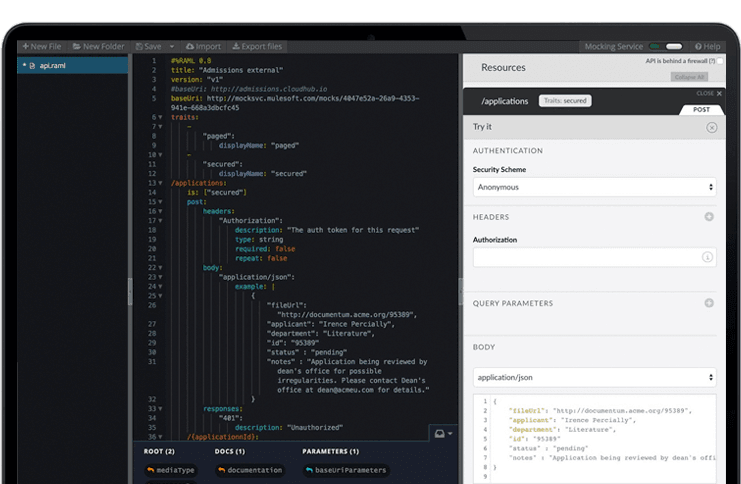
Support API development using RAML and desing tool. The platform is very good in data type classification.
Cloud deployment and post deployment monitoring is easy. A user can configure application worker as per need. Alert and notifications are real time.
Has more features than what we really need so we're paying for more than we use. Sort of like paying for an Abrams tank when all we really need is a Toyota Corolla.
Not a value product, tends to be expensive.
Takes a while for developers to learn to use Mulesoft Anypoint.
It is the best on-premise application to cloud integration in the market. I guess IBM is planning to integrate IBM App Connect with the IBM API Connect solution.
You can do some really powerful things with this system. The overall design is an attempt to make configurable some of the routine tasks/common functionality, but allow for development/customization of the core of the application.
MuleSoft Anypoint Platform is really very easy to adopt for application integration. Simple UI and easy data weave language allows user to focus on business portion only. The API management and deployment of application are hassle free.
Anypoint Platform support is very responsive. There is also a huge knowledge base and an active online forum where answers to most questions can be found. When needed support engages the engineering group so adequate solutions or workarounds are always provided.
We selected IBM App Connect Enterprise due to our confidence in IBM as a long-term partner and our history with their integration technology (Message Broker/Bus). IBM App Connect provides the robustness and high reliability needed for our core on-premises systems, with proven scalability to the cloud. Its key strength is enabling deep integration by combining low-code with the power of complex, custom logic, ensuring the platform's capabilities exactly matched our need to handle complex flows.
Once we have moved all of our system integration APIs to the MuleSoft Anypoint Platform, we will need to communicate with a wide variety of external systems. All of our business and service logic is stored in the aforementioned core systems. Anypoint Platform (and all of our APIs) makes it easy to connect to various other platforms. In order to link to these many other systems, connectors and/or components are utilized, and they are simple to configure and integrate.