IBM Planning Analytics, powered by IBM TM1®, is an integrated planning solution designed to promote collaboration across the organization and help keep pace with the speed of modern business. With its calculation engine, this enterprise performance management solution is designed to help users move beyond the limits of spreadsheets, automating the planning process to drive faster, more accurate results. Use it to unify data sources into one single repository, enabling users to build…
$825
per month 5 users
SAP BPC (Business Planning and Consolidation)
Score 8.5 out of 10
N/A
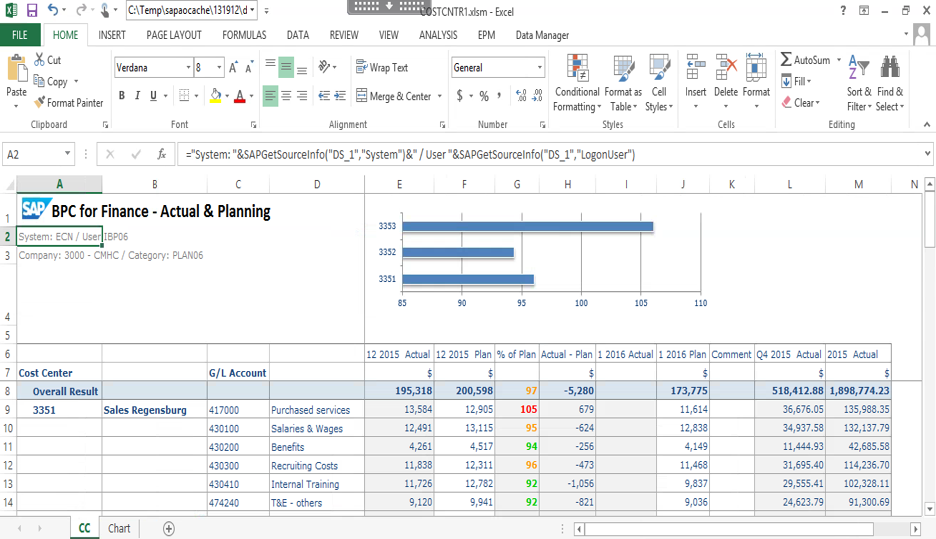
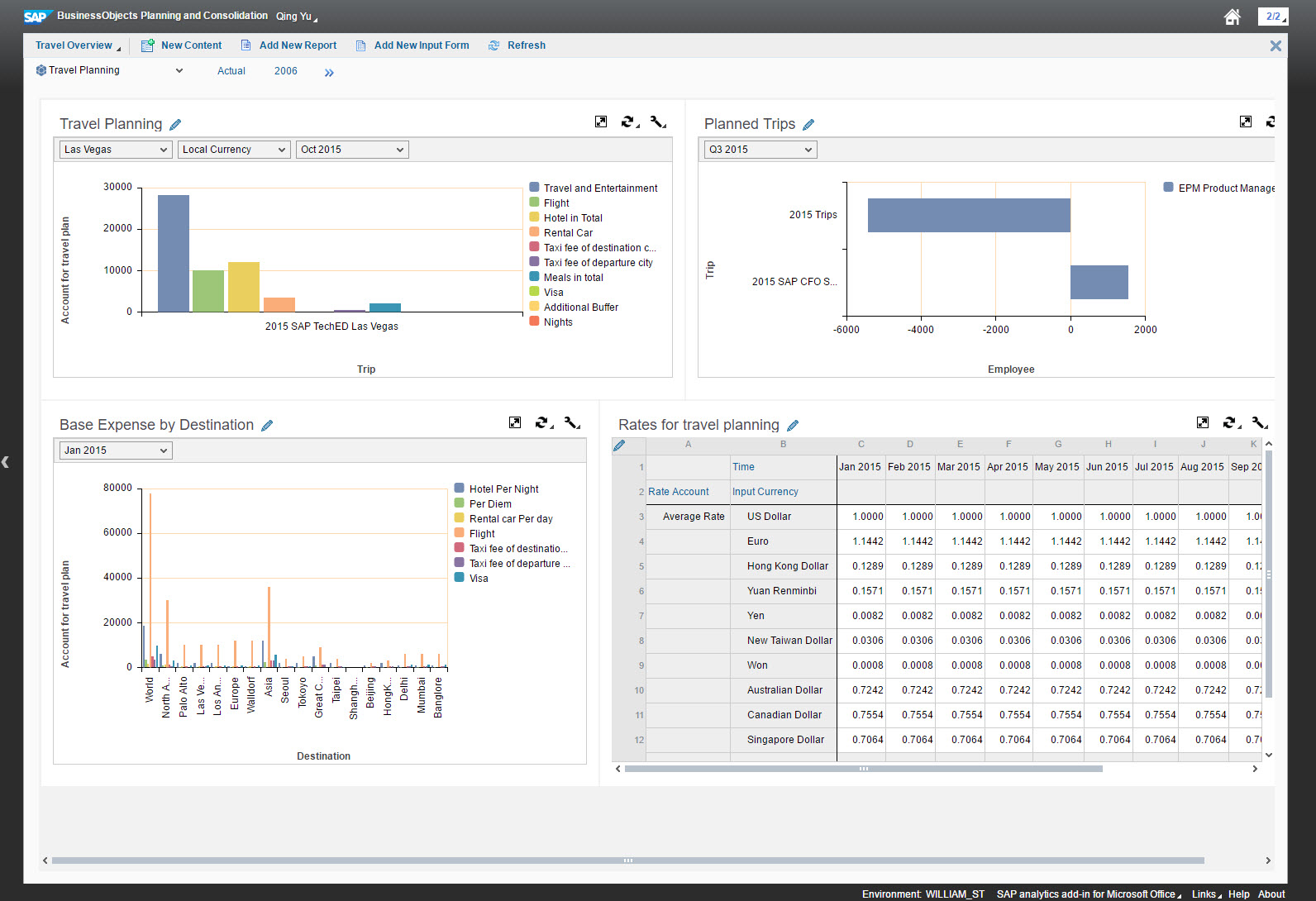
The SAP BPC software is designed to help users plan and achieve a faster, more accurate close. The SAP BPC software aims to help users spend more time growing their business and less time closing books. The vendor’s value proposition is that their software delivers planning, budgeting, forecasting, and financial consolidation capabilities in a single application. This, in turn, enables them to easily adjust plans and forecasts, speed up budget and closing cycles, and ensure compliance with…
It includes Oracle Cloud EPM Planning, Anaplan, and Adaptive Insight before deciding to choose IBM Planning Analytics. We selected Planning Analytics because of its work with complicated and many area models, the capability to work with big amounts of data, and compatibility …
Other options, namely Anaplan, Oracle EPM Cloud, and SAP Analytics Cloud, were also considered. Anaplan's interface lacked analytical depth. For product design metrics, flexibility was not as good in Oracle EPM Cloud. The final choice was moved by the fact that it was driven …
Prior to making the decision to go with IBM Planning Analytics, we had considered such options as Anaplan, Oracle Hyperion, and SAP Analytics Cloud. Despite the collaborative solutions offered by Anaplan and the good connection with other systems by SAP, the superb set of tool …
In this case, Vena and Planful are considered as other products that can be compared with IBM Planning Analytics, but among them, IBM Planning Analytics is more optimal in terms of user interface and integration. Its preconfigure risk assessment model and its format and …
This was an older verions that was also very good, but the new IBM Planning Analytics is a far better tool that enables better scenario planning or what-if analysis.
Planning Analytics integrates seamlessly with Cognos Analytics to support all aspects of our Financial Reporting against both dimensional (TM1) and relational and ad hoc data sources
Why IBM Planning Analytics when compared to Oracle Hyperion: Better excel integration Less data movement and duplication Better cloud offering More aforeable licensing
IBM Planning Analytics with Watson will be up and running more quickly and be easier to maintain if modeling flexibility, scale, and the ability to plan at greater levels of detail are important requirements.
I am personally trying to explore the features of SAP analytics cloud in order to find if it's possible to integrate other sources of data and api based integrations, but I'm still on it while using the IBM planning analytics for my project currently. But looking at the intial …
I worked with Hyperion a long time ago. It was not a Oracle product yet. One great feature of this solution that was really great at the time, was the modeling process of ir, with a very robust engine for sparse cubes. the performance was excellent at the time. But today I can …
IBM Planning Analytics with Watson is much more flexible and scalable in comparison. IBM PAW is the clear winner for our organization's successful planning and analysis needs.
Anaplan does not handle sparsity; this is very problematic for large volume data sets (many 0's). There also are limitations to the number of dimensions that can be used in a module. If more dimensions are required, then separate modules need to be built and intertwined. IBM PA …
Because of its ability in planning, budgeting and forecasting or work progress.it has made it easy in driving sales hence profitability and lowering costs,also with ability to forecast the decision making has never been made this easier. The reasons for selecting are on its …
Compare to its competition it has good visual and graphical interface that helps to customized according to user needs. It helps to apply the best possible algorithm according to different model scenario that provides the best possible results. Predictive forecasting and AI …
Chose SAP BPC (Business Planning and Consolidation)
Sage BPC is very much ahead of Dimensions in multiple areas. The speed and ease of reporting with Sage is very good when compared (although the bank reconciliation task is one thing that i feel is much more effort on Sage and takes more time than previous). We selected SAP BPC …
Chose SAP BPC (Business Planning and Consolidation)
SAP BPC was decided to be implemented into our company due to the added value compared to other competitors who offer the same systems. Although SAP BPC has room for improvement, the ease of use was the deciding factor that resulted in the company picking it. Organization, …
Chose SAP BPC (Business Planning and Consolidation)
SAP Analytics Cloud is the future of planning for SAP data sources. The features in SAP Analytics Cloud are modern and user friendly but not all scenarios from SAP BPC are covered yet.
Chose SAP BPC (Business Planning and Consolidation)
The main advantage SAP BPC (Business Planning and Consolidation) has over Tableau, or Business Warehouse is that the data can be input and reported via Excel spreadsheets instead of navigating the rather clunky world of SAP. The data in SAP BPC (Business Planning and …
Chose SAP BPC (Business Planning and Consolidation)
I am not too familiar with other products in this space. This was picked right before I started working at the organization. I am only in a support role for SAP BPC.
Chose SAP BPC (Business Planning and Consolidation)
We selected BPC because our Company is SAPified from the backbone. Has native and proven integrations so to start we only have to activate the pre-installed SAP Business Content and configure based in our current metadata (entities, chart of accounts, intercompanies, cost …
Chose SAP BPC (Business Planning and Consolidation)
Actually, for this client, no alternative has been evaluated, because SAP BPC was already in place and already installed previously However, in my opinion, once a large company has an SAP-based structure, it is quite understandable that the same company continues to use SAP …
Chose SAP BPC (Business Planning and Consolidation)
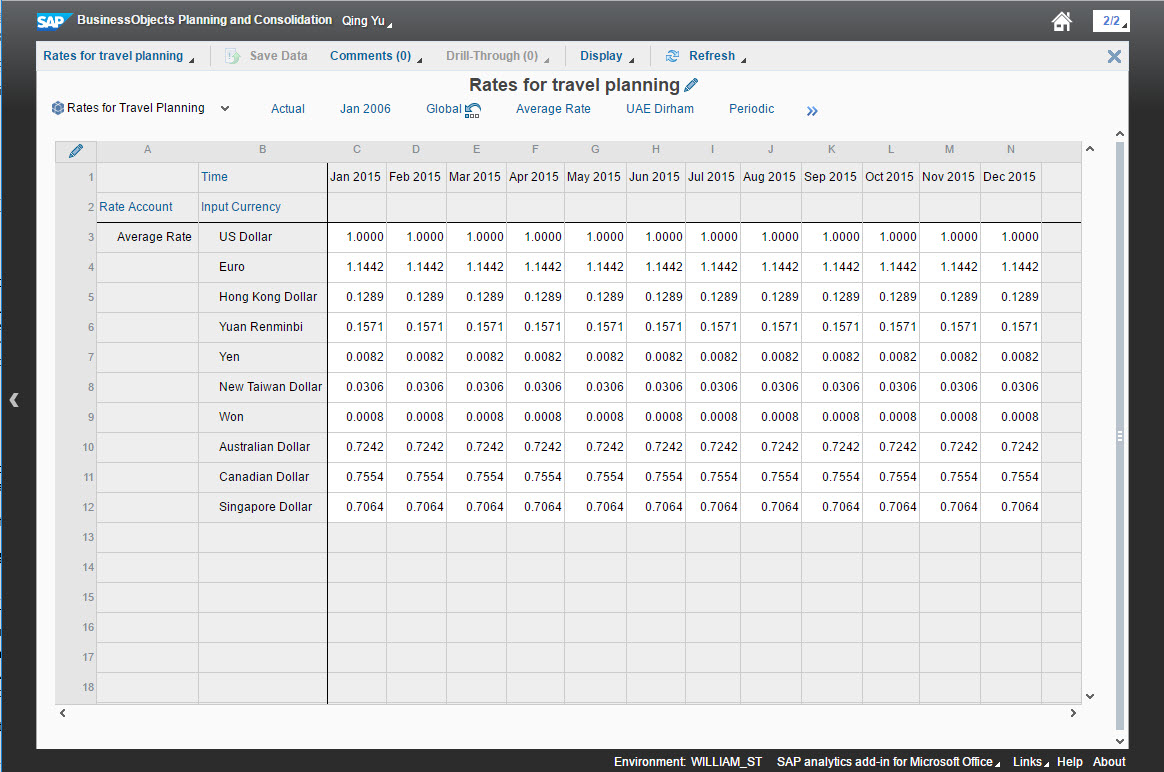
BPC was chosen primarily due to the revenue calculations it was capable of. The other factor in BPC's favor was the seamlessness of the multi-currency capabilities.
Chose SAP BPC (Business Planning and Consolidation)
With Hyperion we struggled as it didn’t have integrated planning and consolidation, whereas BPC does have it. BPC is easier for reporting as it is Excel-based. Also BPC has prepackaged business process flows that helped a lot. Hyperion on the other hand has a faster response …
For a CFO or a COO to do budgeting and planning, IBM Planning Analytics would be essential. It is a tool that can take in multiple data sources and showcase them in a multidimensional way. If you are looking just for a BI or reporting tool, Planning Analytics would be considered "overkill".
For a large company trying to bring processes and functions together with one tool, SAP BPC is a great solution. It requires hours of effort to implement and configure, which would not be appropriate for smaller companies. SAP BPC also requires dedicated resources to maintain the system on a day to day basis, as well as an administrator type personnel who can troubleshoot slow performance or issues with the system. You also need users who are willing and exciting to use this system and actually trust that this is a solution.
Allows for full integration of data to be analyzed in real time. Although we still load actuals on a delayed basis (2 business days after month end), when developing the budget, we not longer have to do a full loading process from a different application into BPC prior to being able to report and analyze the current budget status to prior budget versions or actuals.
It is easy to learn basic report building. The hardest part is learning the available dimensions and the different possible combinations and their results, but that will also vary from company to company depending on the complexity of the industry.
Since IBM Cognos Express is suitable only for medium data warehouse environment, we are not sure if this tool solves the long term need as the business keeps growing rapidly. So its a 50/50 ratio to renew Express license. But having said that, the components of IBM Cognos Express are also available in other Cognos BI suites like Cognos 10.x version. So we will probably upgrade our environment to IBM Cognos 10.x which comes with more new features.
IBM Planning Analytics is generally good in terms of functionalities. It can be used reduce time for budget planning, resource planning, demand forecasting, etc. The performance of IBM Planning Analytics is acceptable, but user interface can be improved. It would be good to see new features that allow users to customise the dashboard.
Although I find the IBM Planning analytics documentation quite time consuming, their support with email and call is something i can term as very considerate and patient, I have had few calls about the features and how i would want to implement them within my projects, and the teams have been super helpful to resolve my issues
SAP BPC training content and trainers are very good. The training is structured and provides a very good understanding of the product features and functionalities. I attended 6 separate training sessions of week-long or more. I had very good experience in all the sessions. The training is organized very well.
For strong technical teams and flexibility IBM Planning Analytics is the way to go. For quicker adoption and less technical teams Anaplan is the best option. If consolidation, financials, and moving from legacy tools are main focus than OneStream will be a really good choice. If deeply invested into SAP already than the SAP BPC will be the best fit to maintain the investment.
Sage BPC is very much ahead of Dimensions in multiple areas. The speed and ease of reporting with Sage is very good when compared (although the bank reconciliation task is one thing that i feel is much more effort on Sage and takes more time than previous). We selected SAP BPC (Business Planning and Consolidation) as we have multiple foreign entities and a team in India producing reports so needed one package that could reliably provide information in one currency and show it clearly.
When originally implemented (as the predecessor product Outlooksoft) BPC took ASU from trying to budget and forecast for a 2B enterprise out of spreadsheets and into a far more consolidated tool. It has saved us considerable time over the years and paid for itself several times over.
BPC also allows us to present our budget in multiple different views to support management, board and departmental reporting.