IBM Watson Studio enables users to build, run and manage AI models, and optimize decisions at scale across any cloud. IBM Watson Studio enables users can operationalize AI anywhere as part of IBM Cloud Pak® for Data, the IBM data and AI platform. The vendor states the solution simplifies AI lifecycle management and accelerates time to value with an open, flexible multicloud architecture.
N/A
Posit
Score 10.0 out of 10
N/A
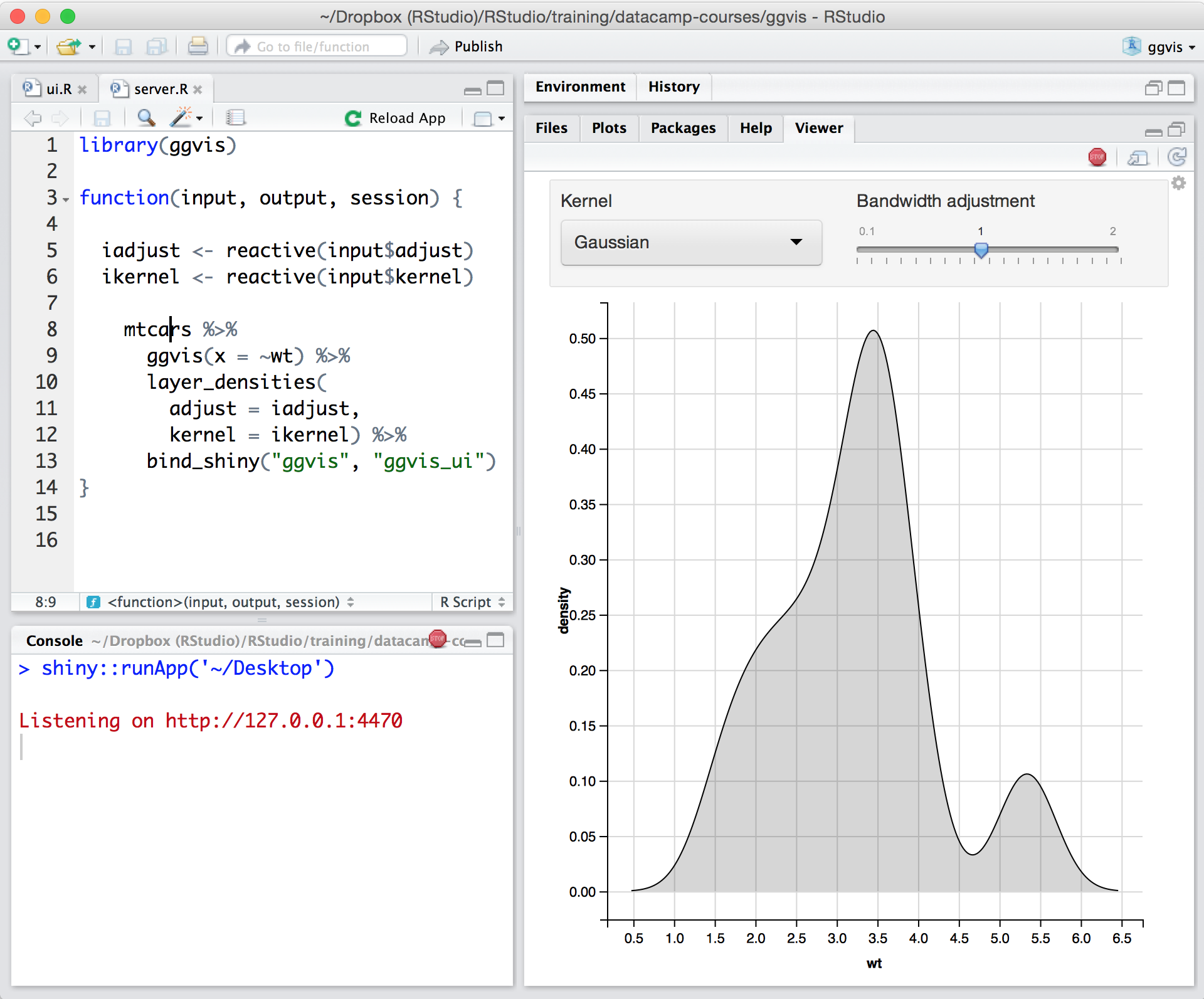
Posit, formerly RStudio, is a modular data science platform, combining open source and commercial products.
With my experience on Jupyter Notebook I think both are good and currently more comfortable with Watson Studio product. With Jupyter it's open source (free) is always good. "Lots of languages (50), data visualization with Seaborn, work with the building blocks in a flexible and …
Watson Studio was our choice in data management because its "all-in-one" packaging. Watson studio also stood out to us because it was more affordable and free for our organization to try out. We also greatly value the open source ecosystem Watson Studio has fostered.
The learning curve for DSX is smaller compared to other tools. The data science user base often has preferred tools that they have used previously which are often not DSX which makes adoption of DSX by trained data scientists harder than new users.
First, I have to deploy H2O myself. Then 4 paradigm cannot customize code and run customized code as easily as IBM DSX. Last, I should say AliPAI is a good alternative, but it's too expensive.
I wanted an environment that can support multiple users without any restrictions. Also, R-Studio does not provide a collaborative environment for multiple users. The Auto feature selection in the SPSS modeler is a good node in DSx which helps make statistical decisions on …
SPSS - Totally different approaches, SPSS UI is now a well-known name with a well-established user base who we consider aren´t going anywhere but Statistics.
Modeler - A proven analytical solution with capabilities to deal with huge datasets, scalability offers you now the …
When developing the use case we considered using a big data platform for developing the required analytics. After evaluating the alternatives and costs we considered that using a big data platform would be too expensive for the kind of studies we are developing in the company. …
The mix of proprietary and open-source benefits that DSx offers gives me more flexibility than any other options I have encountered. I have the custom program building capability of Anaconda with the built-in predictive models of SPSS Modeler. I have more visualization …
The IBM Data Science Experience enables data scientists to collaborate through projects, to which they can add notebooks, data, data connections, and other users they want to collaborate with. In Jupyter notebooks they can use Python, R, or Scala, when needed with Apache Spark, …
It has a lot of features that are good for teams working on large-scale projects and continuously developing and reiterating their data project models. Really helpful when dealing with large data. It is a kind of one-stop solution for all data science tasks like visualization, cleaning, analyzing data, and developing models but small teams might find a lot of features unuseful.
In my humble opinion, if you are working on something related to Statistics, RStudio is your go-to tool. But if you are looking for something in Machine Learning, look out for Python. The beauty is that there are packages now by which you can write Python/SQL in R. Cross-platform functionality like such makes RStudio way ahead of its competition. A couple of chinks in RStudio armor are very small and can be considered as nagging just for the sake of argument. Other than completely based on programming language, I couldn't find significant drawbacks to using RStudio. It is one of the best free software available in the market at present.
Ability to scale across the company is limited based on the users license, cannot share a dashboard to the general view of the company.
Ability to retain session - not simple method to customize view per user (e.g., once session is ended, the users will return next time to the baseline view).
Ability to enable communication between multiple users - leave notes, tag other users, or share specific view.
There is no other platform that meets our needs. Even if it was terrible we would still use it but fortunately for us it is a very solid project with a great support team. I hope in the future to expand our use and get more licences as well as upgrade to RStudio workbench but for now we are very happy.
For someone who learns how to use the software and picks up on the "language" of R, it's very easy to use. For beginners, it can be hard and might require a course, as well as the appropriate statistical training to understand what packages to use and when
RStudio is very available and cheap to use. It needs to be updated every once in a while, but the updates tend to be quick and they do not hinder my ability to make progress. I have not experienced any RStudio outages, and I have used the application quite a bit for a variety of statistical analyses
I received answers mostly at once and got answered even further my question: they gave me interesting points of view and suggestion for deepening in the learning path
Since R is trendy among statisticians, you can find lots of help from the data science/ stats communities. If you need help with anything related to RStudio or R, google it or search on StackOverflow, you might easily find the solution that you are looking for.
The main reason I personally changed over from Azure ML Studio is because it lacked any support for significant custom modelling with packages and services such as TensorFlow, scikit-learn, Microsoft Cognitive Toolkit and Spark ML. IBM Watson Studio provides these services and does so in a well integrated and easy to use fashion making it a preferable service over the other services that I have personally used.
RStudio was provided as the most customizable. It was also strictly the most feature-rich as far as enabling our organization to script, run, and make use of R open-source packages in our data analysis workstreams. It also provided some support for python, which was useful when we had R heavy code with some python threaded in. Overall we picked Rstudio for the features it provided for our data analysis needs and the ability to interface with our existing resources.
I think that RStudio scales pretty well based on the size of the datasets I'm using. It has multithreading capabilities unlike some other statistical analysis programs which is very useful in cutting down on time. The format of RStudio's syntax also makes it very easy to replicate regardless off the scale of the analysis and data set
Using it for data science in a very big and old company, the most positive impact, from my point of view, has been the ability of spreading data culture across the group. Shortening the path from data to value.
Still it's hard to quantify economic benefits, we are struggling and it's a great point of attention, since splitting out the contribution of the single aspects of a project (and getting the RStudio pie) is complicated.
What is sure is that, in the long run, RStudio is boosting productivity and making the process in which is embedded more efficient (cost reduction).