Informatica PowerCenter was data integration technology designed to form the foundation for data integration initiatives, application migration, or analytics. It is a legacy product.
N/A
TIBCO Data Virtualization
Score 8.6 out of 10
N/A
TIBCO Data Virtualization is an enterprise data virtualization solution that orchestrates access to multiple and varied data sources and delivers the datasets and IT-curated data services foundation for nearly any solution.
Basically the two solutions have, more or less, the same functions and features.The difference, for me, is that ThreatQuotient make more features over the security and I think is oriented to a SOC enviroments.
InformaticaExchange Connectors is oriented to the quality, …
Informatica PowerCenter is highly flexible and scalable for different types of data and it has any inbuilt function to transform our data into the meta data structure. Some of the tool sets such as TDM, is good in some ways but need EBF more than often when running into any …
Informatica is a mature enterprise data integration platform for ETL jobs. Informatica has a suite full of tools other than PowerCenter that can be used for various use cases. It makes sense to know what the entire suite offers rather than just power center so large …
PowerCenter is simply so robust and refined that most other apps cannot do as much as it can. Even Informatica’s own Cloud version is so anemic as to not even compare against it. While from that perspective it feels bloated with too much to navigate through, many of those …
SSIS is a good entry into ETL, for smaller organizations or Microsoft-centric companies. It's strengths lie in its ease-of-use, quick turnaround, and simplicity. Its weaknesses lie in scalability and re-usability (you can achieve re-usability, however segmentation is at the …
While Talend offers a much more comfortable interface to work with, Informatica's forte is performance. And on that front, Informatica Enterprise Data Integration certainly leaves Talend in the dust. For a more back-end-centric use case, Informatica is certainly the ETL tool of …
Microsoft SSIS, Ab Initio and IBM DataStage are evaluated against Informatica. Informatica scored well on licensing, hardware infrastructure flexibility and Big Data connectivity
PowerCenter is very similar to DataStage, in that they both deal with the movement and manipulation of data from one source/system to another. As we use both extensively at my company, I cannot say how it compares beyond that both are well liked and widely used. I would assume …
PowerCenter can be run from different types of OSs and can integrate with multiple types of databases and applications compared to SSIS. PowerCenter performs better with any type of database due to its ability to use native drivers to read as well as load data. Due to its seam …
PowerCenter is the industry leader when it comes to interfacing with multiple source and target systems. The graphical interface increases employee productivity while reducing human resource expenditures and training requirements. These other tools offer some similar …
We have used and are still using SQL Server for database technology. TIBCO Data Virtualization apparently reduced development time in ingesting data, but it could not hold strong against SQL server in terms of querying performance.
Have started tinkering with Starburst and it seems to be a good tool, with predictable performance. TIBCO DV would certainly need to up its game wrt the overall design vis-à-vis hardware and its optimization.
Dremio is a newer and more nimble envisioning of TDV and really scales in a more manageable and predictable way. The technology behind dremio addresses many of the limitations in scalability and cost that we encountered with TDV in an impactful way. TDV still has a place for …
TIBCO Data Virtualization is set apart from competition. There are tools that just do not compare in the space of science. It is truly a one of a kind BI tool that is in a league of its own. I will continue to not only use TIBCO Data Virtualization, but I will spread the word …
We evaluated Informatica and Boomi but stuck with TDV because of our relationship with them. We started with Composite, then CDV (Cisco Data Virtualization), and not using TDV.
Tibco is a more mature environment that targets corporate requirements whereas Power BI has many built-for-purpose use cases at a department, division, or team level and Tableau is more geared toward custom visual development.
Since TIBCO Data Virtualization can be implemented with wide range of products with other TIBCO Products so this makes TIBCO stand out from other products.
Tableau Desktop is a tool that is used to visualize data from different data sources and develop dashboards that can be published on various platforms. Here integration is not required and data can be directly attached. In tableau data mapping cannot be done where as TIBCO Data …
1. We have evaluated the Denedo data virtualization tool, which uses the same concept of TIBCO Data Virtualization, but it lags in Custom adaptor supports and the availability of adaptors 2. As TIBCO Data Virtualization is a pioneer in data virtualization, so TIBCO Data …
We did not need to evaluate another technology in the same category for data virtualization, since we are 100% sure of the capabilities and benefits that we would have with TIBCO Data Virtualization, both for market positioning as well as success stories from other companies. …
In the retail industry, you want to penetrate more and more market areas and increase your company's market share compared to other competitors. For more penetration, one needs to increase CSL( Customer service Level). For this company need to analyse what they are currently …
I was not involved in the purchasing decision of TIBCO Data Virtualization. TIBCO Data Virtualization does provide us with a good reporting tool that can access various data sources in order to review the analytics and make future decisions. It can be used on-premise or in …
When we evaluated the pros and cons of each of the competitor applications, what we found is that the pros in Tibco outweigh the cons by a decent margin. Tibco gave us great confidence when we evaluated it in terms of its ability to connect with all the data sources we had in …
Both products are comparable and we use them for different departments and data. Tibco is better in terms of responsiveness and implementation. The cost of implementation and maintenance is lower also and is easier for our users to use. It is easier for us to maintain in the …
Honestly, we decided to use Microsoft Power BI over TIBCO Data Virtualization for our visualization purpose. TIBCO is up against Power BI by having a long list of different data sources compared to the list of data sources available in Power BI. TIBCO is a good tool but for …
The key decision to select TIBCO over other products was made by the client team in which I did not have any role, however after using the product I can say that the new age of data science calls for a new shift in data visualization tools. The incorporation of AI takes it to …
[TIBCO Data Virtualization] is [has great performance] and [the] overall cost is much reasonable than other competitors. The wide range of services/features make it the perfect solution for our data needs. [TIBCO Data Virtualization] has always met our quality needs.
TIBCO Data Virtualization was more robust with an array of features that other tools did not have. Working with the team was easy and the support was very responsive.
Very versatile and user-friendly software that allows you to deploy results quickly, on the fly even. Data transparency and business efficiency are improved tremendously, without the need for an extensive training program or course. Snowflake, Tableau, and Yellowfin are better …
Informatica Powercenter is the centerpiece of our overall enterprise data warehouse strategy. It's a critical enablement to ensure we can feed in multiple data stream and transform them into digestible data within our data warehouse. With its flexible capabilities and API availability, we were able to feed in industry standard data format as well as home grown data structure. Overall, we are very pleased with their capability and contribution to our data warehouse strategy.
TIBCO Data Virtualization is well suited for customers who are challenged to deal with extracting data from dozens of different sources and systems, and do not have the time and liberty to hire data engineers and/or ETL developers to write dozens or hundreds of complex ETLs. However, there are situations where TIBCO Data Virtualization severely underperforms, and those are where we are dealing with large volumes of data, in tera bytes or peta byte scale system. For example, a messaging queue which sends 200 million messages every hour will choke TIBCO Data Virtualization if the technology is chosen to route the data.
One of the challenges of PowerCenter is the lack of integration between the components and functionality provided by PowerCenter. PowerCenter consists of multiple components such has the repository service, integration service, metadata service. Considerable time and resources were required to install and configure these components before PowerCenter was available for use.
In order to connect to various data sources such as Netezza database or SAS datasets, PowerCenter requires the installation and configuration of separate plug-ins. We spent considerable time trouble-shooting and debugging problems while trying to get the various plug-ins integrated with PowerCenter and get them up and running as described in the documentation.
PowerCenter works well with structured data. That is, it is easy to work with input and output data that is pre-defined, fixed, and unchanging. It is much more difficult to work with dynamic data in which new fields are added or removed ad-hoc or if data format changes during the data ingest process. We have not been as successful in using PowerCenter for dynamic data.
One of the challenges of learning PowerCenter is that it is difficult to find documentation or publications that help you learn the various details about PowerCenter software. Unlike SAS Institute, Informatica does not publish books about PowerCenter. The documentation available with PowerCenter is sparse; we have learned many aspects of this technology through trial and error.
The tool is very flexible and will meet most, if not all, of your data transformation needs. It is an expert-level tool, so building your knowledge-base and user-base (and keeping that base healthy!) is very important. But it will pay off with strong data management and the ability to leverage that data in ways you haven’t thought of yet. Bottom line, data is money, and PowerCenter helps you monetize your data.
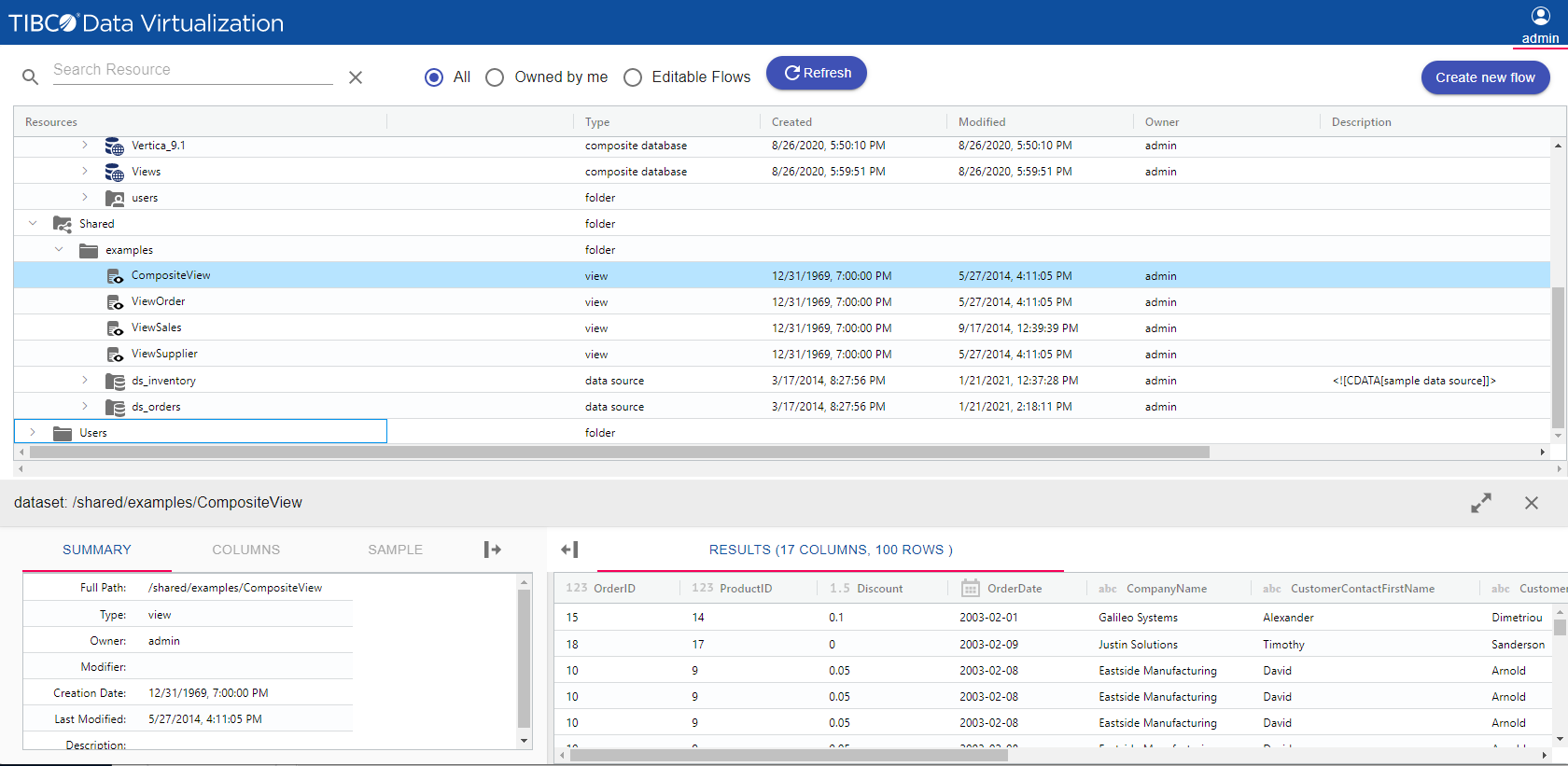
TDV's interface is a bit dated and not entirely intuitive. Would recommend some UX design review as the interface leaves a bit to be better understood to be used by users without inherent knowledge of Tibco. Overall I'd suggest more improvement here to ensure usability by a lesser tech audience.
Positives; - Multi-user development environment. - The speed of transformation. - Seamless integration with other Informatica products. Negatives; - There should be fewer windows, to maintain developers' focus while using. You probably need two big monitors when you start development with Informatica Power Center. - Oracle Analytical functions should be natively used. - E-LT support as well as ETL support.
This product's performance is very consistent. It is extremely rare for templates to fail. I've been using this software for 5 years and find it to be both simple and powerful. The impact within the company has been very positive as different processes in different areas, such as data analysis, development, and integrations, have been improved, and, best of all, it has not affected the users. Various systems with which it is connected in order to obtain information.
Informatica power center is a leader of the pack of ETL tools and has some great abilities that make it stand out from other ETL tools. It has been a great partner to its clients over a long time so it's definitely dependable. With all the great things about Informatica, it has a bit of tech burden that should be addressed to make it more nimble, reduce the learning curve for new developers, provide better connectivity with visualization tools.
On a few occasions I have asked TIBCO technical support for help because I have adapted perfectly to their tools, but in those few that I have communicated with their technical team I have received personalized, attentive, responsible attention and I am always assisted by an expert staff the topic. A TIBCO technical support technician spent more than an hour helping me to solve a problem in the initial stage of implementation in my department and this is something that I always appreciate.
The training was helpful. I was able to understand how to use TIBCO for the data load process that we implemented and how to perform various troubleshooting steps based on the training I received. The technician was thorough and took the time to answer any questions. Once we were shown how to use TIBCO in the test environment, we were able to configure the production environment ourselves.
Other vendors have clearer, more visual implementation documentation. We also did not have our data architect and and server administrator available full-time for implementation. In the future, we will secure the necessary internal resources.
Basically the two solutions have, more or less, the same functions and features.The difference, for me, is that ThreatQuotient make more features over the security and I think is oriented to a SOC enviroments. InformaticaExchange Connectors is oriented to the quality, integration and distribution of the data in order to ensure the reliability and access of data from different sources, as well as the integration in a single repository of enterprise data (External/internal)
We did not need to evaluate another technology in the same category for data virtualization, since we are 100% sure of the capabilities and benefits that we would have with TIBCO Data Virtualization, both for market positioning as well as success stories from other companies. great renown worldwide. From the first day of use, it meets our needs to provide the expected solutions.