
Anil Pratap Singh
Director
Chose SolarWinds ipMonitor
Datadog, Dynatrace and Microsoft System Center

| Product | Rating | Most Used By | Product Summary | Starting Price |
|---|---|---|---|---|
 SolarWinds ipMonitor | N/A | SolarWinds ipMonitor is a lightweight performance monitoring tool. It enables monitoring from a single console and out-of-the-box visibility, with some automation available. | $1,570 installation | |
 ScienceLogic SL1 | Enterprise companies (1,001+ employees) | ScienceLogic is a system and application monitoring and performance management platform. ScienceLogic collects and aggregates data across and IT ecosystems and contextualizes it for actionable insights with the SL1 product offering. | N/A |
| SolarWinds ipMonitor | ScienceLogic SL1 | |||||||||||||||
|---|---|---|---|---|---|---|---|---|---|---|---|---|---|---|---|---|
| Editions & Modules |
| No answers on this topic | ||||||||||||||
| Offerings |
| |||||||||||||||
| Entry-level Setup Fee | No setup fee | Required | ||||||||||||||
| Additional Details | — | ScienceLogic SL1 offers four tiers: SL1 Advanced – Application Health, Automated Troubleshooting and Remediation Workflows SL1 Base – Infrastructure Monitoring, Topology & Event Correlation SL1 Premium – AI/ML-driven Analytics, Low-Code Automated Workflow Authoring SL1 Standard – Infrastructure Monitoring – with Agents, Business Services, Incident Automation, CMDB Synchronization, Behavioral Correlation To get pricing for each tier, please contact the vendor. | ||||||||||||||
| More Pricing Information | ||||||||||||||||
| SolarWinds ipMonitor | ScienceLogic SL1 | |
|---|---|---|
| Considered Both Products |  SolarWinds ipMonitor Anil Pratap Singh Director Chose SolarWinds ipMonitor Datadog, Dynatrace and Microsoft System Center  Umair Mehboob Senior Devops Engineer Chose SolarWinds ipMonitor We were trying to evaluate different providers and ipMonitor suited us because we had on-prem and cloud instances and management decided to check the paid tool. The ipMonitor is a very responsive tool and it served the purpose well but as IT is evolving and needs are changing, …  Emma Jones Smith Senior Software Engineering Chose SolarWinds ipMonitor LogicMonitor is software with a fast-loading interface, with integrated alerts, so establishing them is simple due to its pre-configurations. However, SolarWinds ipMonitor [has] more complete characteristics because its interface is modern and easy to use. It offers fast and …  Rekha Yadav Development Team Lead Chose SolarWinds ipMonitor The way SolarWinds has clubbed the features and capabilities in SolarWinds ipMonitor is not available in other 3rd party or native tools. Even if they are available then they are very costly. I think SolarWinds is positioning ipMonitor so as to test their footprint on SaaS …  Dylan Eikelenboom Security Officer Chose SolarWinds ipMonitor Both alternatives were great offerings, but were too extensive for our business needs. We needed something that had very low set-up costs, was easily usable, and did all the basics we need; performance metrics analysis, rogue IP detection, network mapping. In the end, along …  Arnab Mukherjee ITSM and Project Management Consultant Chose SolarWinds ipMonitor SolarWinds NPM provides more functionalities than ipMonitor. It is for medium - large enterprise and provides lots of monitoring options.  Nikhil Kumar Sharma Associate Consultant Chose SolarWinds ipMonitor Although there are very less SaaS based tools available in the market, SolarWinds is somewhere in middle as compared to other tools such as LogicMonitor and ScienceLogic. Reason being the timing of the product launch and features enhancement. However current capabilities in …  Mike Mozola Senior Systems Engineer Chose SolarWinds ipMonitor I had some limited exposure to Zabbix that was provided by the client for monitoring the existing network. I found it not as informative as I previously experienced using ipMonitor and we were preparing for a network migration. I ended up setting up remote monitoring using …  Rob Bates Public & Private Cloud 4th Line Senior Engineer Chose SolarWinds ipMonitor There are some great free or low-cost tools out there. It all depends on your budget and size. We have used a wide variety of products over the years but we recently switched our entire monitoring backbone to SolarWinds products only. They cover just about everything and …  Jason Martin Managed Services Network Engineer Chose SolarWinds ipMonitor I've used simple scripted monitoring tools before, used IP monitor until we upgraded the enterprise to one scalable tool that can replace and upgrade per SLA SOX compliance standards. I moved to a larger company (much larger) and we don't use SolarWinds here. We use WUG which …  Mike Maner Network Systems Engineer Chose SolarWinds ipMonitor We have used Pasessler PRTG and ManageEngine OpsManager. Both are good products, but aren't really monitoring products, they are more management products with monitoring built in. The smaller footprint of ipMonitor, as well as the historical data storage options, were a better …  Christian Gaarn System Administrator Chose SolarWinds ipMonitor We are currently switching from IpMonitor to Orion. |  ScienceLogic SL1  Douglas Bosch Senior Solution Architect Chose ScienceLogic SL1 ManageEngine Site24x7, ManageEngine OpManager and HPE OneView  Jas Singh Platform Engineer Chose ScienceLogic SL1 Agentless product that can integrate easily with other product and also allow us to automate tasks, example closing tickets when events are cleared automatically which user interactions.  Alejandro Thickett Automation & Tooling Engineer Chose ScienceLogic SL1 ScienceLogic SL1 has a greater understanding and maturity on what Infrastructure monitoring needs to be and has to include at a decent price point for what it offers compared to its competitors.  Amit Sanwal Windows Engineer Chose ScienceLogic SL1 SL1 is able to offer way more enhanced monitoring than UIM. We have used UIM for quite a long time and the benefits offered by SL1 are much higher. |
| SolarWinds ipMonitor | ScienceLogic SL1 | |||||||||||||||||||||||||||||||||
|---|---|---|---|---|---|---|---|---|---|---|---|---|---|---|---|---|---|---|---|---|---|---|---|---|---|---|---|---|---|---|---|---|---|---|
| Network Performance Monitoring |
| |||||||||||||||||||||||||||||||||
| AIOps Features |
|
| SolarWinds ipMonitor | ScienceLogic SL1 | |
|---|---|---|
| Small Businesses |  NinjaOne Score 9.0 out of 10 | No answers on this topic |
| Medium-sized Companies |  PingPlotter Score 9.3 out of 10 |  Sumo Logic Score 9.4 out of 10 |
| Enterprises | PingPlotter Score 9.3 out of 10 |  ignio AIOps Score 8.1 out of 10 |
| All Alternatives | View all alternatives | View all alternatives |
| SolarWinds ipMonitor | ScienceLogic SL1 | |
|---|---|---|
| Likelihood to Recommend | 9.0 (0 ratings) | 8.6 (0 ratings) |
| Likelihood to Renew | 8.2 (0 ratings) | 8.1 (0 ratings) |
| Usability | 8.2 (0 ratings) | 9.6 (0 ratings) |
| Availability | - (0 ratings) | 9.7 (0 ratings) |
| Performance | - (0 ratings) | 8.2 (0 ratings) |
| Support Rating | 8.8 (0 ratings) | 6.5 (0 ratings) |
| In-Person Training | - (0 ratings) | 8.2 (0 ratings) |
| Online Training | - (0 ratings) | 8.7 (0 ratings) |
| Implementation Rating | - (0 ratings) | 7.0 (0 ratings) |
| Configurability | - (0 ratings) | 10.0 (0 ratings) |
| Ease of integration | - (0 ratings) | 8.0 (0 ratings) |
| Product Scalability | - (0 ratings) | 8.0 (0 ratings) |
| Vendor post-sale | - (0 ratings) | 9.1 (0 ratings) |
| Vendor pre-sale | - (0 ratings) | 8.9 (0 ratings) |
| SolarWinds ipMonitor | ScienceLogic SL1 | |
|---|---|---|
| Likelihood to Recommend |
Dylan Eikelenboom Security Officer |
|
| Pros |
Anil Singh Director |
 Wian Crous Software Developer |
| Cons |
Emma Jones Smith Senior Software Engineering |
|
| Likelihood to Renew |
Mike Maner Network Systems Engineer |
|
| Usability |
Nikhil Kumar Sharma Associate Consultant |
Amit Sanwal Windows Engineer |
| Reliability and Availability | No answers on this topic |
|
| Performance | No answers on this topic |
|
| Support Rating |
Rekha Yadav Development Team Lead |
|
| In-Person Training | No answers on this topic |
 Benjamin Gerber Technical Lead |
| Online Training | No answers on this topic |
|
| Implementation Rating | No answers on this topic |
|
| Alternatives Considered |
Rekha Yadav Development Team Lead |
|
| Scalability | No answers on this topic |
|
| Return on Investment |
Umair Mehboob Senior Devops Engineer |
|
| ScreenShots | SolarWinds ipMonitor Screenshots     | ScienceLogic SL1 Screenshots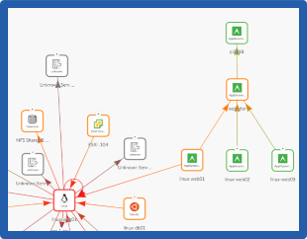      |