JFrog Artifactory vs. Octopus Deploy

Overview
ProductRatingMost Used ByProduct SummaryStarting Price
JFrog Artifactory
Score 8.3 out of 10
N/A
JFrog Artifactory is a software repository management solution for enterprises available on-premise or from the cloud, presented as a single solution for housing and managing all the artifacts, binaries, packages, files, containers, and components for use throughout the software supply chain. JFrog Artifactory serves as a central hub for DevOps, integrating with tools and processes to improve automation, increase integrity, and incorporate best practices along the way.
$150
per month unlimited users
Octopus Deploy
Score 10.0 out of 10
Mid-Size Companies (51-1,000 employees)
Australian company Octopus Deploy offers their eponymous automated deployment and release management software that integrates with the user's preferred CI server and adds deployment & ops automation capabilities. Octopus Deploy enables developers, release managers, and operations folks to bring all automation into a single place. The vendor states that by reusing configuration variables, environment definition, API keys, connection strings, permissions, service principals, and automation logic,…
$12
Pricing
JFrog ArtifactoryOctopus Deploy
Editions & Modules
Pro
$150
per month unlimited users
Enterprise X
$950
per month unlimited users
Pro X
$27,000
per year
Enterprise X
$48,000
per year
Enterprise +
Custom Pricing
Enterprise +
Contact Us
per year
Cloud
Free 30 day trial
unlimited targets/users/projects
Server
Free 30 day trial
unlimited targets/users/projects
Enterprise
Starting at $18 per month
Enterprise
Starting at $18 per month
Server
Starting at $12 per month
Cloud
Starting at $12 per month
Offerings
Pricing Offerings
JFrog ArtifactoryOctopus Deploy
Free Trial
NoYes
Free/Freemium Version
YesYes
Premium Consulting/Integration Services
NoNo
Entry-level Setup FeeNo setup feeOptional
Additional DetailsOctopus Server edition is available as a 30 day free trial on our unlimited tier for any scenario, including production, and commercial use. After the trial period ends you can keep your working configuration and upgrade to a paid license and continue deploying uninterrupted. Octopus Cloud is an alternative that is hosted by us, and is also available as a 30 day unlimited trial. No credit card is needed to create a Octopus Cloud trial instance. You can convert the Cloud trial to a paid instance at any time during or after the trial period, and keep all of your instance configuration. Octopus also offers an Enterprise tier which offers advanced features for teams at scale including, advanced high availability, insights & DORA metrics, ServiceNow & Jira Service Management integration, unlimited instances, 24/7 support & service credits, and a Customer Success Manager. Volume discounts are available above 500 targets, and temporary bursting for certain scenarios is supported.
More Pricing Information
Community Pulse
JFrog ArtifactoryOctopus Deploy
Considered Both Products
JFrog Artifactory
Chose JFrog Artifactory
  • Strong services expertise
  • Strong customer focus
  • Product functionality and performance
Chose JFrog Artifactory
JFrog pipelines are being used in the same ecosystem as an integrated environment, to support CI-CD devops journey. This eventually helps the existing team to use both the features of the same product in a seamless way.Similar Xray, can be used as a secure measure to protect …
Chose JFrog Artifactory
JFrog Artifactory has a much more friendly GUI, making package exploration less of a chore to do. Other than that, their features are pretty much comparable to each other. Both support multiple types of packages; both have API that can integrate well with CI/CD pipelines.
Chose JFrog Artifactory
I've worked in multiple organizations and used almost every reputed Artifact management tool and I found JFrog best and it's a very mature product also easy to use and manage.
Chose JFrog Artifactory
We migrated away from Sonatype Nexus a few years ago as it did not support the highly available architecture in AWS which we were seeking. It also didn't have the broad package support that [JFrog] Artifactory does.
Chose JFrog Artifactory
I used both Nexus and JFrog. It seems that, overall, JFrog is up a notch.
Octopus Deploy
Chose Octopus Deploy
We also use Ansible, which is much broader and platform/tool diverse. Octopus [Deploy] currently serves a niche for us - .Net and .Net Core deployments. It is capable of doing other things, but it does its original function better than broader tools like Ansible.
Chose Octopus Deploy
I used TFS back when it was called that, and that was a mess. ADO isn't as bad but has many limitations and things that are hard to do. The main difference is I ENJOY working in Octopus Deploy. Not so much with ADO. I'm always trying to figure out things that are stupid. …
Chose Octopus Deploy
Octopus showed better cost numbers than Azure DevOps and more flexibility against GitLab CI/CD. Octopus customization in step templates that can be reused and easily created gives big advantages against many of its competitors. Octopus was selected for these features and …
Chose Octopus Deploy
Octopus Deploy was the obvious choice at the time, its strong .net support, robustness, ease of use, and integration into an existing process was a big plus. Also, Octopus Deploy was kind enough to give my organization a not for profit community licence. In addition, the …
Chose Octopus Deploy
Azure DevOps Server (formerly Team Foundation Server), Azure DevOps Services (formerly VSTS) and Visual Studio IDE
Chose Octopus Deploy
This software, unlike Chef, is much easier to configure or manage, since its platform provides documentation or tutorials on how to use it, besides its interface is much more modern and easy to use, it allows you to choose where you want carry out the implementations of the …
Chose Octopus Deploy
I am not aware of other products like Octopus that are available, but it is a great product for our company. We can stay ahead of the game by allowing developers to deploy code in a continuous deployment model while still maintaining the overrall infrastructure and enabling …
Chose Octopus Deploy
TeamCity is focused more on the build process. It's deployment capabilities are weak compared to Octopus. Bamboo is a proper competitor, but it is far more costly for our needs. The free version of Octopus has proven incredibly competent and sufficient for our needs, and …
Chose Octopus Deploy
There aren't really any competitors in the land of ASP.NET. Deployment is too ad-hoc. Other tools exist that have massive downsides, like Web Deploy. Most aren't even supported anymore. You could argue that containers (Docker) are a competitor, but containers cannot be used for …
Chose Octopus Deploy
Octopus Deploy is a deployment focused tool. Its purpose is to manage deployment environments. Tools like TeamCity and Visual Studio Team Services are Continuous Integration tools. You can accomplish many of the same tasks in TeamCity and VSTS but their focus on CI also means …
Chose Octopus Deploy
We looked at IBM UrbanCode Deploy and Release and Microsoft VSTS while looking for Application Release Automation tools. While VSTS doesn't work with cross-platform technologies IBM UrbanCode Deploy commands a premium price for the features it offers. Also, it needs UrbanCode …
Best Alternatives
JFrog ArtifactoryOctopus Deploy
Small Businesses
Git
Git
Score 10.0 out of 10
GitLab
GitLab
Score 8.7 out of 10
Medium-sized Companies
Git
Git
Score 10.0 out of 10
GitLab
GitLab
Score 8.7 out of 10
Enterprises
Git
Git
Score 10.0 out of 10
GitLab
GitLab
Score 8.7 out of 10
All AlternativesView all alternativesView all alternatives
User Ratings
JFrog ArtifactoryOctopus Deploy
Likelihood to Recommend
8.2
(0 ratings)
8.6
(0 ratings)
Likelihood to Renew
-
(0 ratings)
8.0
(0 ratings)
Usability
7.3
(0 ratings)
8.4
(0 ratings)
Performance
-
(0 ratings)
8.5
(0 ratings)
Support Rating
8.9
(0 ratings)
8.2
(0 ratings)
Ease of integration
-
(0 ratings)
8.5
(0 ratings)
User Testimonials
JFrog ArtifactoryOctopus Deploy
Likelihood to Recommend
It works at scale and a large number of accessible pipelines for searching, repository updates and indexing will become easier. JFrog provides end-to-end solutions for all DevOps needs. With this, Jfrog Artifactory specifically implements the management of highly available repositories, with a smooth interface and integration with all the main CI tools on the market.
Read full review
  • The ability to manage different stages and define a workflow is very useful for ops troubleshooting as well as deployment. You can see which version each environment has for each project, and promote or redeploy versions.
  • You can view deployment logs and dig deep into problems or long deployment steps.
  • Finding old releases can be a pain, and there isn't a good way to compare releases.
  • It does not really lend itself well to viewing what the content of a release is further than the version number. Ideally, you would be able to tie a deployment to the builds from the build server as well as specific commits from source control.
Read full review
Pros
  • Stores and Manages build artifacts and packages.
  • Works as container registry as well.
  • Easily manages local and remote repositories along with live replication.
Read full review
  • Many different platforms, languages, and operating systems are supported. You can deploy to your own server or the cloud. You can deploy to Windows, Linux, etc.
  • Many different "step templates" are included, which make it very easy to deploy what you want, how you want. Such as deploying over SSH, FTP, etc.
  • Support is very responsive and personable. You won't just be talking to a robot or a script. They will either solve your problem or understand it enough to solve it in a future release.
  • Their documentation is well thought-out and very helpful. I have found very few missing pieces.
Read full review
Cons
  • CI/CD integration. We understood they do have a pipeline, so our organization already started with Jenkins, and my understanding is that not many orgs are using the JFrog pipeline.
Read full review
  • Support for non-Microsoft applications needs to be improved to bring it on par with other comparable automation tools.
  • It doesn't yet provide integration options with other IT management tools like JIRA and HP Support to implement continuous delivery and true DevOps processes.
  • Support for AWS/Azure has been included very recently and it's not still very mature and feature rich and is expected to improve further in upcoming releases.
Read full review
Likelihood to Renew
No answers on this topic
Would be a 10 except for the retirement of the free Community Edition.
Read full review
Usability
The main problem that seems intractable is getting the checksum of the artifact. Managing container artifacts is a game changer for us during project execution, as the container artifact type exposes all base image and Docker file steps. This makes debugging or analysis easier. Jfrog Artifactory provides promotion feature and can automated from one environment repo to another environment repo before the deployment occurs.
Read full review
Some functionality feels slightly hidden in the menu system. For example: script modules are in the same menu as packages, where I feel that are not related entities. One is code for the deployment, the other is the thing that you are deploying...
Read full review
Performance
No answers on this topic
Octopus Deploy is a software that runs very effectively, is easy to use, does not require such a high learning curve, provides the necessary tools to carry out the functions it offers, making it a very flexible software, it also allows that can be configured according to the needs of the user and provides integrations with other very advantageous tools since they are carried out in a very favorable way.
Read full review
Support Rating
Support tickets take days to respond. The most basic of questions that should be knocked out in a few hours don't get answers for days. Tickets are also closed without resolution.
Read full review
Octopus Deploy support has always been there for us, even when using the free tier, we get responsive hands-on help. We haven't needed to use that level of support since the documentation is clearly written, and help is readily available within the interface itself. Using Octopus Deploy is a truly joyful experience.
Read full review
Alternatives Considered
JFrog pipelines are being used in the same ecosystem as an integrated environment, to support CI-CD devops journey. This eventually helps the existing team to use both the features of the same product in a seamless way.Similar Xray, can be used as a secure measure to protect your containers and can be used as a Static Code analysis tool which can also be integrated in a Devops CI pipeline as a Left shift security strategy.
Read full review
Octopus Deploy was the obvious choice at the time, its strong .net support, robustness, ease of use, and integration into an existing process was a big plus. Also, Octopus Deploy was kind enough to give my organization a not for profit community licence. In addition, the product comes from a local Brisbane based company and it is always good to support local businesses when you can.
Read full review
Return on Investment
  • We now have a solid, reliable binary repository that can survive a regional outage in AWS when deployed properly
  • It has allowed us to focus on building mature CICD pipelines without having to worry about an unreliable binary repository.
Read full review
  • Any automated deployment process will save your company a ton of money on testing and bugs. When you don't automate your deployments, you can't be certain that what you are moving between environments is the exact same code with the same or appropriate configuration. What you tested might not be what got deployed.
  • We've saved a lot of money using Octopus over the mostly manual process we were using before. We've removed a lot of the errors that come from manual, human intervention.
  • Octopus has also allowed us to accomplish more with fewer people. It is easy to bring new people up to speed on the deployment process, and we can be confident of success after very little training.
Read full review
ScreenShots

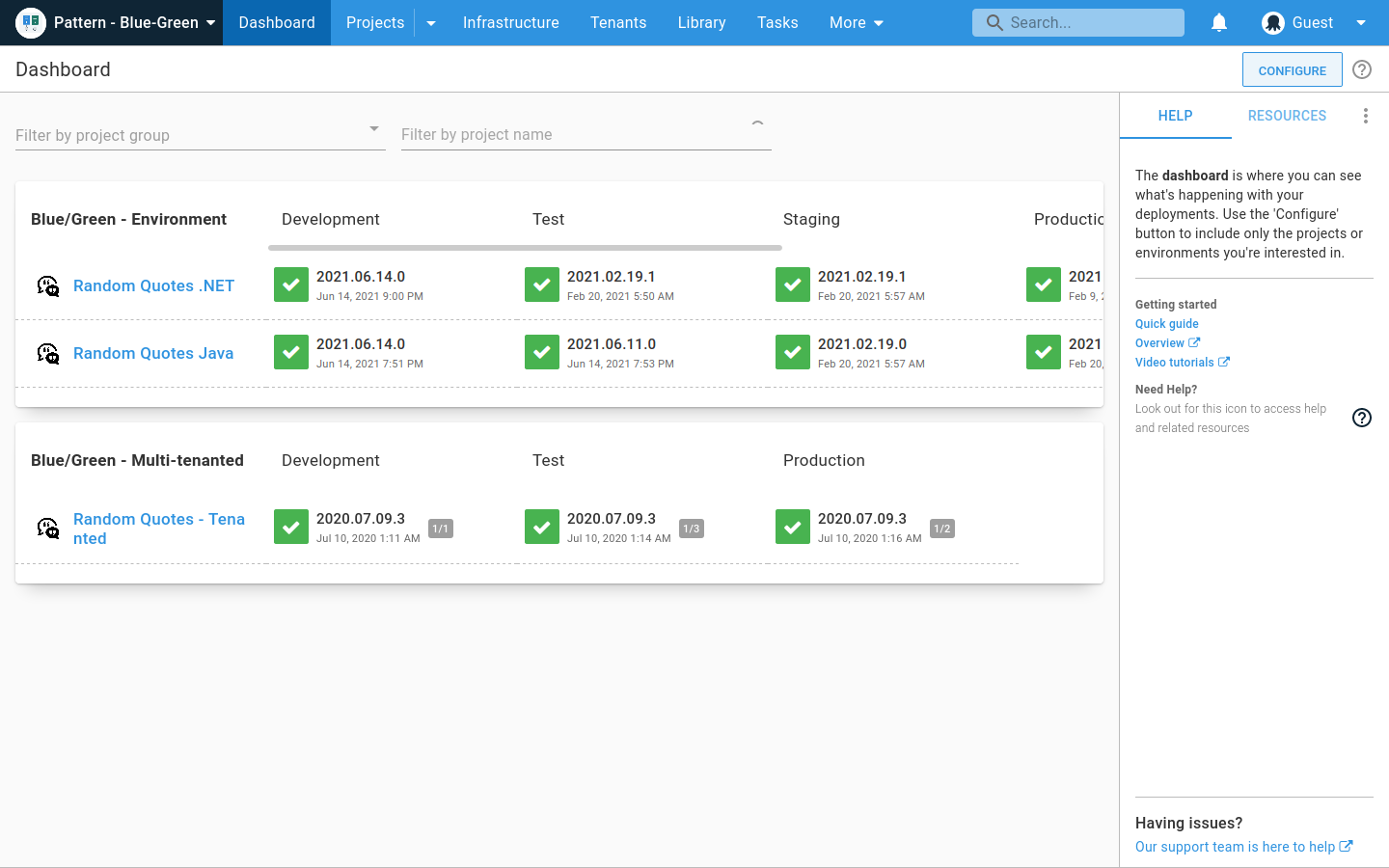
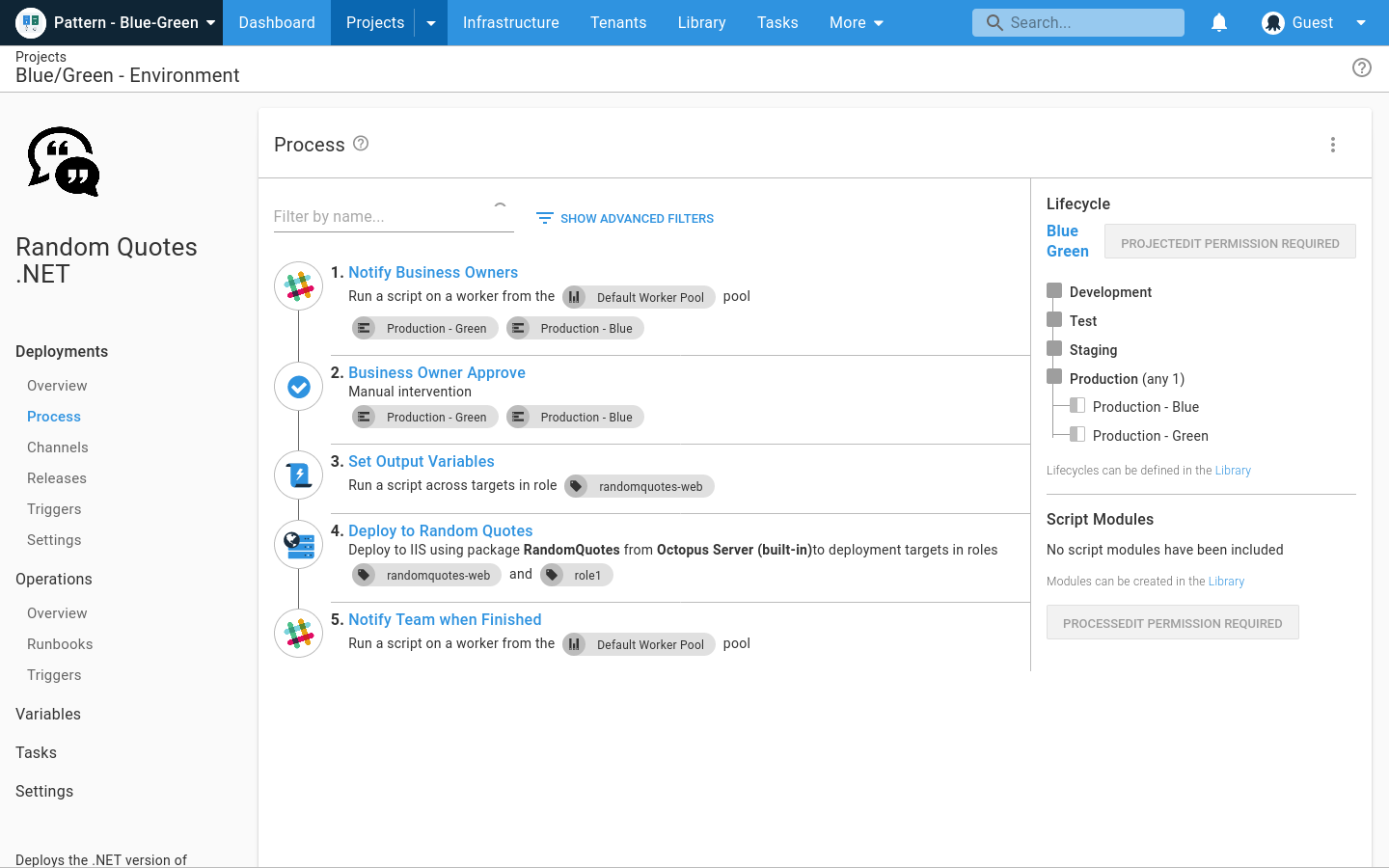
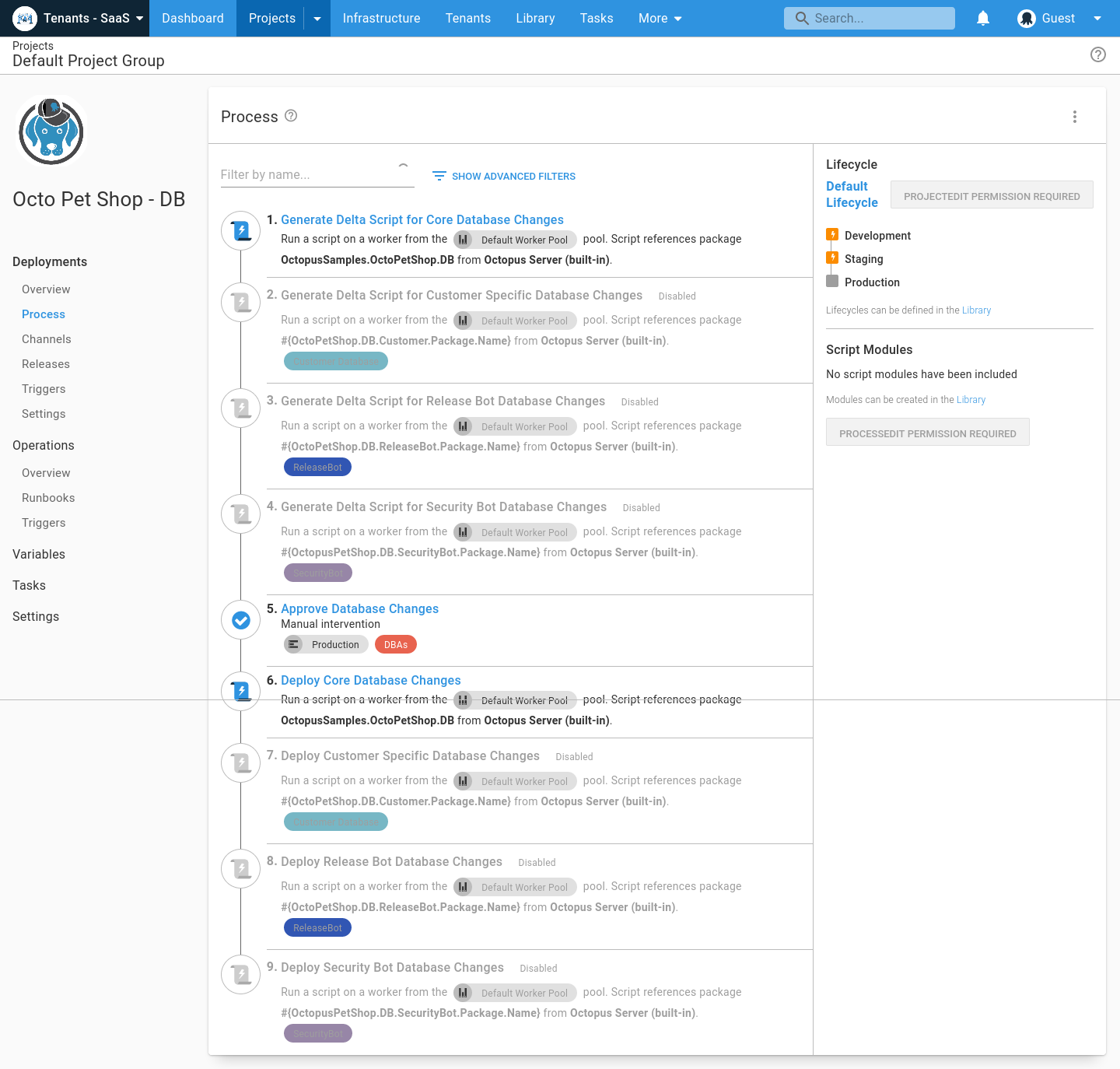
Octopus Deploy Screenshots

Screenshot of Screenshot of Screenshot of Screenshot of Screenshot of Screenshot of