Chose Joomla
Comparing to other Platform handling user management is easy with Joomla.
various extensions really helpful for core level applicatiion
various extensions really helpful for core level applicatiion

| Product | Rating | Most Used By | Product Summary | Starting Price |
|---|---|---|---|---|
 Joomla | N/A | Joomla! is a free and open source content management system used to publish web content. Included features are page caching, RSS feeds, printable versions of pages, news flashes, blogs, polls, a search function, and support for language internationalization. | N/A | |
 Moodle | N/A | Moodle is an open source learning management system with hundreds of millions of users around the globe and translated into over 100 languages, used by organizations to support their education and training needs. | N/A |
| Joomla! | Moodle | |||||||||||||||
|---|---|---|---|---|---|---|---|---|---|---|---|---|---|---|---|---|
| Editions & Modules | No answers on this topic | No answers on this topic | ||||||||||||||
| Offerings |
| |||||||||||||||
| Entry-level Setup Fee | No setup fee | Optional | ||||||||||||||
| Additional Details | — | — | ||||||||||||||
| More Pricing Information | ||||||||||||||||
| Joomla! | Moodle | |
|---|---|---|
| Considered Both Products |  Joomla  Richard Gosler Managing Director Chose Joomla Wordpress has to be preloaded with a stack of plugins and a cache just to match 'out of the box' Joomla! That's why we switched.  Sanjeev Raghuwanshi Joomla Developer Chose Joomla At the starting of my career, I got Joomla! to work on, SO I learned about Joomla!. Initially, it was tough to learn component development but after [learning] something, I like to do it.  Sergey Gvozdetskiy Sales Manager Chose Joomla Joomla! provides a good starting point with all templates, both free and paid.  Fernanda Ministerio Especialista de Desenvolvimento Industrial Chose Joomla We tested other platforms like Wordpress, Magento and some local CMS. But Joomla offered us better resources for generating content. Joomla is a CMS suitable for many types of projects, especially if you have several people editing content at the same time.  Nuno Reis CIO (Chief Information Officer) Chose Joomla As a user, it is more than OK for those standard daily operations like publishing and editing or comment management. As a developer, I have a very different perspective. Joomla! is not my favorite platform. Only ready-to-use tools like Wix can be less friendly than having to …  Lonela Marinela Senior Product UX/UI Designer-Developer Chose Joomla There are many themes and other design assets for Joomla! we can use from paid and free libraries throughout the internet. WordPress on the other hand is also very good and useful, comparatively Joomla! offered more features and at a better price.  Vinny Hebert Owner Chose Joomla Part of Joomla core, which is what comes with Joomla when you install it, is it's Access Control Lists. It allows you to not only control which users can access what, but allows you to create custom groups and have unique access per group. WordPress can't do that without a …  Jason Montoya Virtual Chief Growth Officer (CGO) Chose Joomla Wordpress is designed in a way to make it fairly fool-proof for the admin, but in this approach, it handcuffs the user from having control or making it easy to do, in many cases, what are basic things (changing the title, URL segment, etc...). With the exception of the …  Josh Randall Co-Owner, Operations & Marketing Manager Chose Joomla We selected Joomla because of the available extensions met are needs at the time.  Lisa Keyser Owner | Principal Chose Joomla Joomla! is the #2 Open Source CMS behind WordPress, which we also use, and ahead of Drupal, which we have evaluated but decided not to pursue. Joomla! generally performs better than WP for clients that need more complexity to their websites, including flexibility in templating, …  Miles Szkoda Web Content Manager Chose Joomla I think Joomla is on-par with Drupal and Umbraco and similar platforms, but WordPress does seem to be above it. WordPress has become so common that there are more and more features becoming available to it that exceed the Joomla platform and make it hard to compete with. …  Brittney Collier Marketing Assistant Chose Joomla I have selected Joomla when I needed an easy content management platform for a team of beginners. It's not as easy to customize or optimize like WordPress or Wix sites, but it's a great introduction until you are ready for the more advanced features offered by these alternative …  Ricardo Melo Network Analyst 1 Chose Joomla Joomla has a more general and wide use, more documentation, forums and community that develops many templates and extensions for almost all purposes. It has a great web-based administration environment and, with the correct permissions setting, it can be prepared for a regular …  Chris Putnam Senior Web Developer Chose Joomla Joomla is one of the least intuitive options and has had some issues with updates in the past, as compared to WordPress. Magento has similar issues, but Joomla doesn't have as much flexibility as Magento (and of course, Joomla does not have e-commerce features built-in). … |  Moodle  Pierre Tassel Phd, Researcher Chose Moodle Compared to Google classroom, Moodle is more flexible and more comprehensive. But the interface is a bit outdated and not very mobile-friendly. Additionally, Google classroom has nice integration with other Google's workspace tools. Google lack tools such as CodeRunner to be …  Mehmet Kanat CISO (Chief Information Security Officer) Chose Moodle Excellent community support, it is very affordable and also about costs.  Joe Foran Director Of Information Technology and HIPAA Privacy Officer Chose Moodle Moodle, being open source, is the foundation a lot of other tools like it are based on. It provides almost all of the same functionality and feature set as Google Classtoom, Canvas, etc., although those products are a bit more polished. All can do content delivery, progress …  Philip Mojares Math Teacher Chose Moodle For me, Moodle is more user-friendly because it has simpler graphical user interface and it provides the functionalities that my students and I enjoyed using. Moodle is more interactive as well and it provides efficiency in uploading, downloading, restoring and backing up …  Stacey Broughton Assessment Platform Coordinator Chose Moodle I have used other testing only platforms that have nowhere near as many functions and flexibility as Moodle.  Ramindu Deshapriya Lead Consultant - Technology Chose Moodle Moodle is better in terms of its price point (free) and its management learning curve.  Josh Musson ISR Chose Moodle It is hard to compare them with each other as they are so different. They really can't compare as they are two completely different platforms. But Moodle is great in all aspects, I like Slack for communication as well. But when it comes to tasks, Moodle handles it better …  Amy Westby High School Counselor Chose Moodle Moodle is similar to these programs, but it doesn't have all the social interaction several of these other programs have.  Grant Adendorff Human Resources Executive Chose Moodle Moodle is free and open-source, therefore deficient in a meaningful move in the training needle.  Suleman Ahmad Senior Software Developer Chose Moodle We have also developed of our own quiz launcher, but the features/flexibility that Moodle provides us can't be matched.  Christopher Power Virtual Enterprise Coordinator/Educator Chose Moodle Edmodo provides a simple platform but does not provide the depth of assignments that Moodle does. Moodle provides more assignment types, grading, deadlines, and shifting of assignments from one week to the next. Moodle is significantly more advanced in terms of what it can do …  Andrea Samadi Founder Chose Moodle When setting up our LMS in 2014, we started with a product called LearnDash that was not designed for the school market. When we moved to Moodle, we looked at Edmodo and went with Moodle for the cost to launch and get our courses up and running. We are a smaller company were … |
| Joomla! | Moodle | ||||||||||||||||||||||||||||||||||||||||||
|---|---|---|---|---|---|---|---|---|---|---|---|---|---|---|---|---|---|---|---|---|---|---|---|---|---|---|---|---|---|---|---|---|---|---|---|---|---|---|---|---|---|---|---|
| Security |
| ||||||||||||||||||||||||||||||||||||||||||
| Platform & Infrastructure |
| ||||||||||||||||||||||||||||||||||||||||||
| Web Content Creation |
| ||||||||||||||||||||||||||||||||||||||||||
| Web Content Management |
| ||||||||||||||||||||||||||||||||||||||||||
| Learning Management |
|
| Joomla! | Moodle | |
|---|---|---|
| Small Businesses |  ManageWP Score 10.0 out of 10 |  iSpring Learn Score 9.6 out of 10 |
| Medium-sized Companies |  RWS Tridion Sites Score 9.0 out of 10 |  Schoology Learning Score 9.7 out of 10 |
| Enterprises | RWS Tridion Sites Score 9.0 out of 10 | Schoology Learning Score 9.7 out of 10 |
| All Alternatives | View all alternatives | View all alternatives |
| Joomla! | Moodle | |
|---|---|---|
| Likelihood to Recommend | 9.4 (0 ratings) | 8.0 (0 ratings) |
| Likelihood to Renew | 10.0 (0 ratings) | 10.0 (0 ratings) |
| Usability | 10.0 (0 ratings) | 8.0 (0 ratings) |
| Availability | 9.9 (0 ratings) | 9.0 (0 ratings) |
| Performance | 7.8 (0 ratings) | 10.0 (0 ratings) |
| Support Rating | 10.0 (0 ratings) | 7.4 (0 ratings) |
| Online Training | 8.0 (0 ratings) | 6.0 (0 ratings) |
| Implementation Rating | 8.7 (0 ratings) | 9.8 (0 ratings) |
| Ease of integration | - (0 ratings) | 9.0 (0 ratings) |
| Product Scalability | 9.9 (0 ratings) | 9.0 (0 ratings) |
| Joomla! | Moodle | |
|---|---|---|
| Likelihood to Recommend |
|
|
| Pros |
Sergey Gvozdetskiy Sales Manager |
 Marianna Rader Assistant Professor of Psychology |
| Cons |
|
|
| Likelihood to Renew |
 Leontine Vandermeer Owner |
 Steve Covello Instructional Designer/Rich Media Specialist |
| Usability |
|
 Rebecka Anderson eLearning Specialist |
| Reliability and Availability | No answers on this topic |
 Pamela Akins eLearning Specialist, ITTS |
| Performance |
 James Fauria Webmaster \ Web Developer for the City of Pomona |
 Helen Ware Director of Electronic Learning |
| Support Rating |
 Jen Garfinkel-Canseco Owner - Web Designer/Developer/Marketer |
Philip Mojares Math Teacher |
| Online Training |
 Johann Joubert Owner |
 Mike Sebolt Instructional Technology |
| Implementation Rating |
 Rita Lewis Freelance Web Designer and Content Strategist |
|
| Alternatives Considered |
|
Joe Foran Director Of Information Technology and HIPAA Privacy Officer |
| Scalability | No answers on this topic |
Pamela Akins eLearning Specialist, ITTS |
| Return on Investment |
Lisa Keyser Owner | Principal |
 Robin Sargent Manager of Learning and Development |
| ScreenShots | Moodle Screenshots   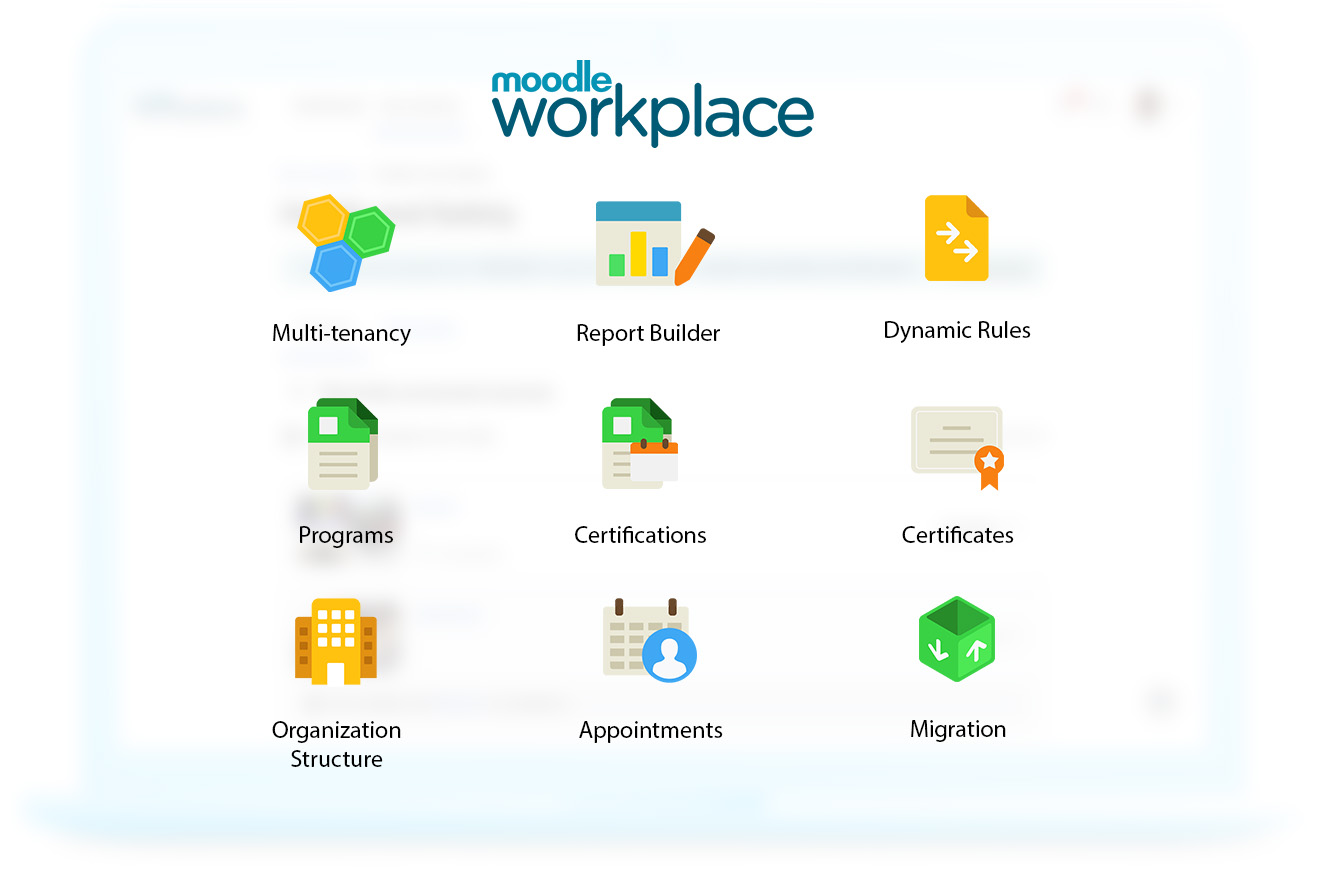   |