Chose Progress Kendo UI
No such other products used so far except "Telerik"

| Product | Rating | Most Used By | Product Summary | Starting Price |
|---|---|---|---|---|
 Progress Kendo UI | N/A | Kendo UI is a JavaScript UI toolkit that allows users to build responsive web-based apps integrated into their framework of choice (jQuery, Angular, React, or Vue). The vendor’s value proposition is that Kendo UI offers a large library of popular and configurable components ranging from sophisticated grids and charts to basic buttons, so users don’t have to waste development time building their UI. The vendor also says the large library of customizable themes means users can easily deploy a… | $999 per developer, royalty-free | |
 Progress Telerik | N/A | With Telerik UI libraries, Progress aims to equip .NET ninjas with a full arsenal of weapons, helping to create beautiful, modern and future-proof applications quickly and intuitively. The vendor states that with its over 1,250 UI components for all .NET platforms, as well as various themes, skins and customization options, Telerik users report cutting development time by up to 50 percent. Web | $999 per developer, royalty-free |
| Progress Kendo UI | Progress Telerik | |||||||||||||||
|---|---|---|---|---|---|---|---|---|---|---|---|---|---|---|---|---|
| Editions & Modules |
|
| ||||||||||||||
| Offerings |
| |||||||||||||||
| Entry-level Setup Fee | No setup fee | No setup fee | ||||||||||||||
| Additional Details | — | — | ||||||||||||||
| More Pricing Information | ||||||||||||||||
| Progress Kendo UI | Progress Telerik | |
|---|---|---|
| Considered Both Products |  Progress Kendo UI  Abraham García Web Development Manager Chose Progress Kendo UI MariaDB Platform  Victor Naranjo Software Engineer II Chose Progress Kendo UI We currently use data tables in most of our applications that require a grid to be able to asynchronously perform CRUD operations on our web applications. It has served us well but Kendo UI has more widgets and better documentation to get the job done. Given the time, we would …  Jyoti Mohite Software Engineer II Chose Progress Kendo UI We wanted to use software which is easy to learn and implement for UI. we did some research and used few controls and we found that we can go with kendo UI. Look and feel wise Kendo fits perfectly. so we decided to use it through out the product. it is good software in …  Abhay Gandhi Senior Manager Chose Progress Kendo UI Didn't feel the need to look outside Progress Kendo UI.  David Billingham Owner and Managing\Technical Director Chose Progress Kendo UI Being a Telerik/Progress user we didn't look much further  Louis Kemp Senior Software Developer Chose Progress Kendo UI The Kendo UI controls are more professional in appearance, better documented and simpler to integrate into our software applications. It takes us less time to implement the Kendo UI controls in our projects than comparable offerings from other vendors or open-source …  Curtis Cibinel Cloud Architect Chose Progress Kendo UI Other products were not evaluated because Kendo UI was established as a solid option and we already leveraged UI for Ajax and UI for Winforms controls. I have experience with dojo/dijit, YUI, and jQuery controls but all are substantially more primitive that Kendo and related … |  Progress Telerik  Eric Johansson Senior Developer Chose Progress Telerik While the more expensive to use for a small shop(for example syncfusion is free to start), the quality paid for itself in no time flat. Other options are either half baked, have lock in and will become quite expensive once you hit a treshhold, or plain simply didn't mesh with …  Rob Barker Software Development Manager Chose Progress Telerik Progress Telerik UI is the most complete multi-framework/platform in existence. Without it, you will find yourself having to traverse half a dozen other component providers each with varying degrees of license requirements and update schedules. Sure you might find a single …  Doug Thompson Full Stack Senior Developer Chose Progress Telerik Telerik Support (pre-progress) is awesome, way better than Infragistics or Syncfusion. Syncfusion is a little cheaper. They all have Grid components (like Excel) then there are a few edge cases of having different controls to another to show off. Once you know what UI tech you …  Joshua Garrison Software Engineer Chose Progress Telerik I have tried another library called JqWidgets. Telerik makes setting up UI elements much easier than JqWidgets. It is better documented as well.  Gary Davis Director Chose Progress Telerik The existing Microsoft technologies already support many of the controls provided by Progress Telerik UI and may be used as an alternative, of course. They will not have the full-featured functionality you will find in Progress Telerik UI but are available. There are also other … Abhay Gandhi Senior Manager Chose Progress Telerik Nothing else other than Telerik. Jyoti Mohite Software Engineer II Chose Progress Telerik We have not used any other product for UI. We are using Telerik from start and continuing using it. Features offered by Telerik are sufficient for our product and we are fully utilizing all features provided by Telerik. Performance of all UI controls are great so over all …  Enrico Collenzini Owner - Project Manager and software analyst Chose Progress Telerik Thanks to the functionalities contained in Telerik tools we are able to create complex interfaces and satisfy the requests of our customers. Especially for increasingly frequent requests to use applications on mobile devices. With Telerik we have been able to solve many … |
| Progress Kendo UI | Progress Telerik | |
|---|---|---|
| Small Businesses |  Syncfusion® Essential Studio® Score 6.1 out of 10 | Syncfusion® Essential Studio® Score 6.1 out of 10 |
| Medium-sized Companies |  React Score 9.3 out of 10 | React Score 9.3 out of 10 |
| Enterprises | React Score 9.3 out of 10 | React Score 9.3 out of 10 |
| All Alternatives | View all alternatives | View all alternatives |
| Progress Kendo UI | Progress Telerik | |
|---|---|---|
| Likelihood to Recommend | 8.2 (0 ratings) | 10.0 (0 ratings) |
| Likelihood to Renew | 8.8 (0 ratings) | 10.0 (0 ratings) |
| Usability | 9.0 (0 ratings) | 9.5 (0 ratings) |
| Availability | 9.1 (0 ratings) | - (0 ratings) |
| Performance | 9.1 (0 ratings) | - (0 ratings) |
| Support Rating | 7.5 (0 ratings) | 9.3 (0 ratings) |
| Implementation Rating | 8.1 (0 ratings) | 9.0 (0 ratings) |
| Configurability | 8.2 (0 ratings) | - (0 ratings) |
| Ease of integration | 8.2 (0 ratings) | - (0 ratings) |
| Product Scalability | 8.2 (0 ratings) | - (0 ratings) |
| Vendor post-sale | 9.1 (0 ratings) | - (0 ratings) |
| Vendor pre-sale | 9.1 (0 ratings) | - (0 ratings) |
| Progress Kendo UI | Progress Telerik | |
|---|---|---|
| Likelihood to Recommend |
|
|
| Pros |
 Sergiu Pascutiu Senior Analyst, Business Data and Systems - Research and Innovation |
|
| Cons |
|
|
| Likelihood to Renew |
|
|
| Usability |
Abraham García Web Development Manager |
Doug Thompson Full Stack Senior Developer |
| Reliability and Availability |
 Alejandro Javier Fernandez Silva Web Project Leader | No answers on this topic |
| Performance |
| No answers on this topic |
| Support Rating |
|
Gary Davis Director |
| Implementation Rating |
 Clay Horste Software Developer III |
|
| Alternatives Considered |
|
|
| Scalability |
| No answers on this topic |
| Return on Investment |
 Thangadurai Narayanan Software Architect |
|
| ScreenShots | Progress Kendo UI Screenshots   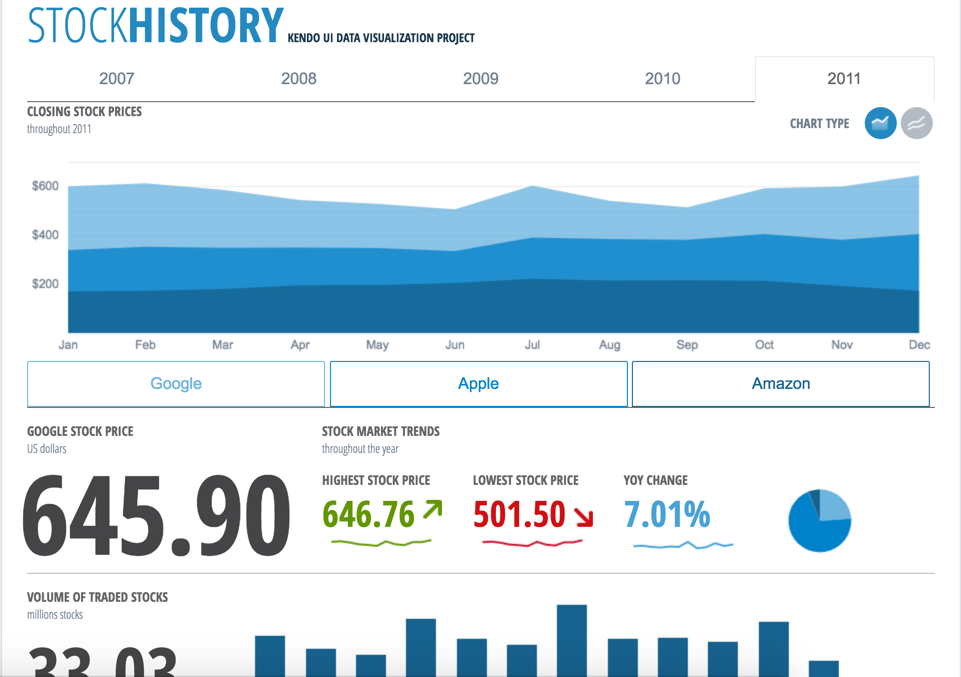 | Progress Telerik Screenshots     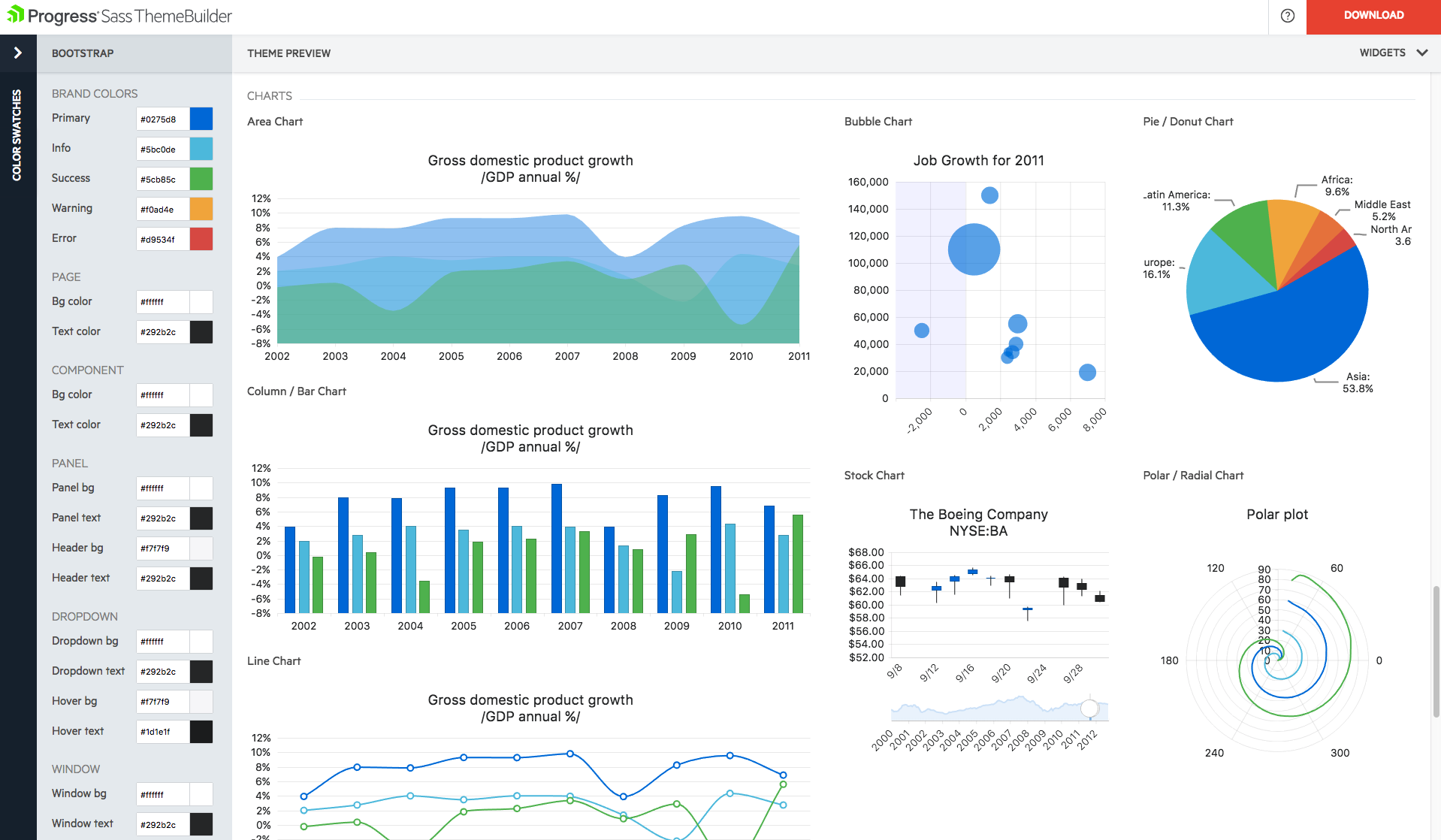 |