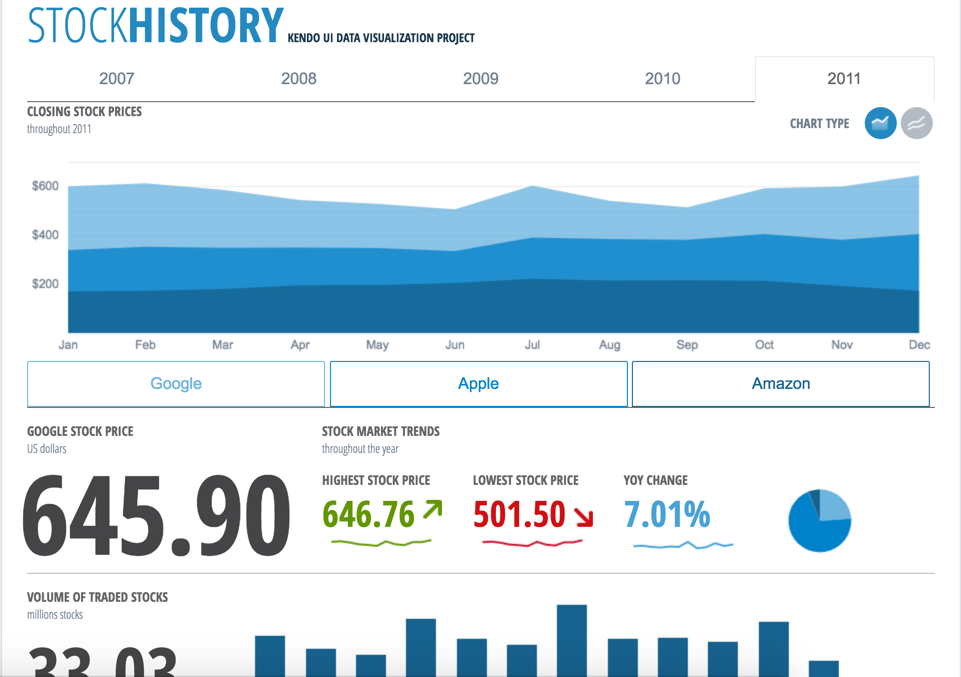
Kendo UI is a JavaScript UI toolkit that allows users to build responsive web-based apps integrated into their framework of choice (jQuery, Angular, React, or Vue). The vendor’s value proposition is that Kendo UI offers a large library of popular and configurable components ranging from sophisticated grids and charts to basic buttons, so users don’t have to waste development time building their UI. The vendor also says the large library of customizable themes means users can easily deploy a…
$999
per developer, royalty-free
Zoho Creator
Score 9.5 out of 10
Mid-Size Companies (51-1,000 employees)
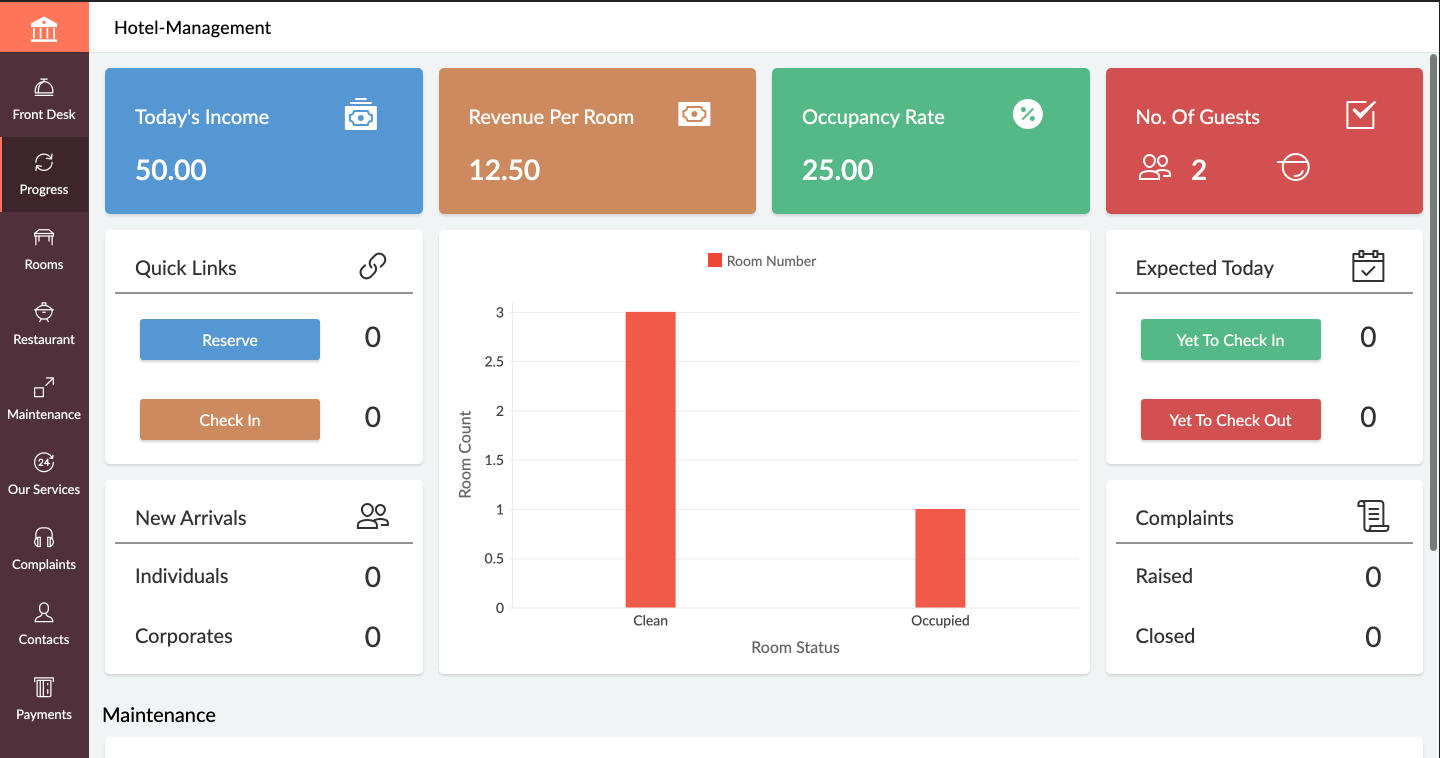
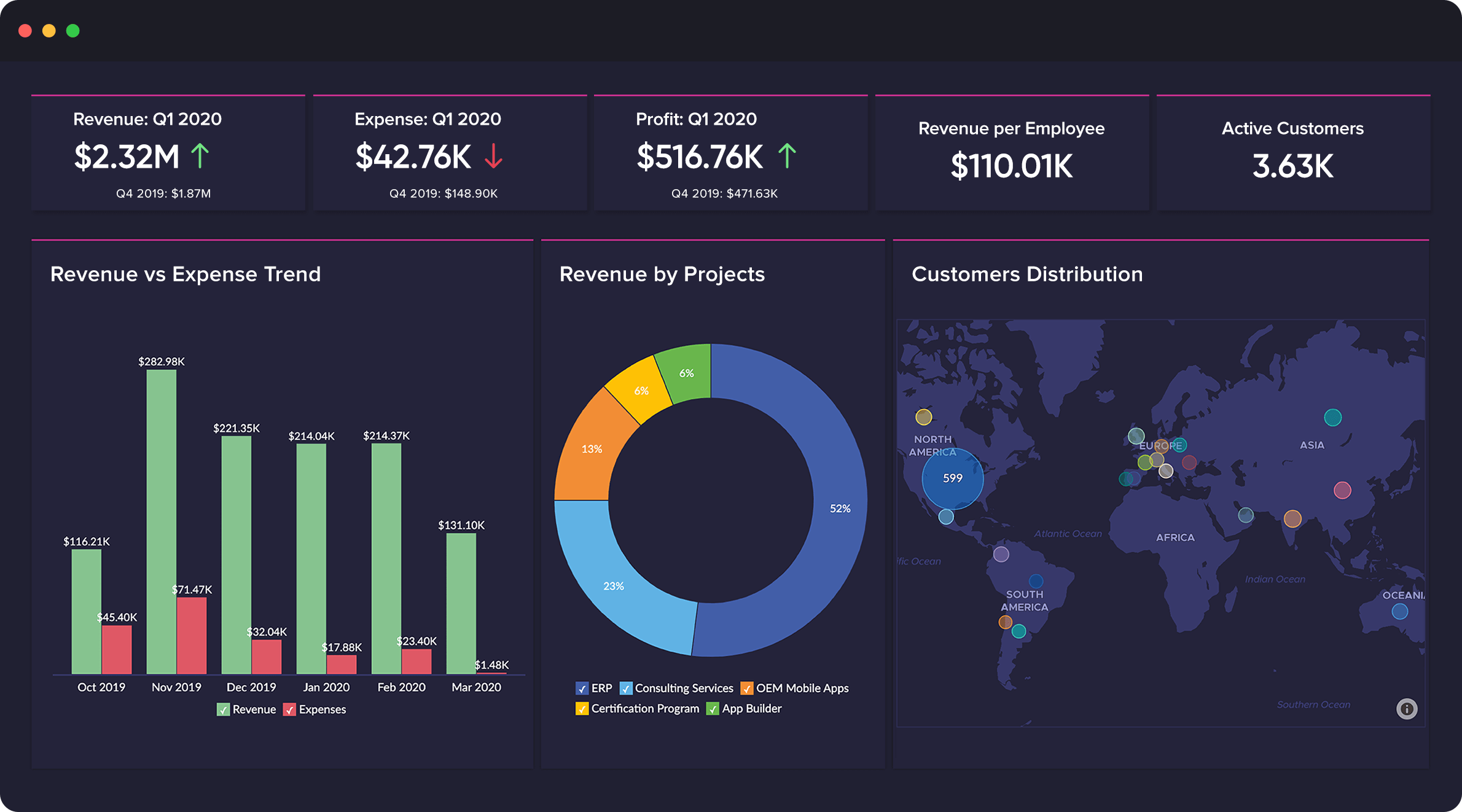
Zoho Creator is a low-code application development platform for building enterprise-class applications that run on mobile, tablet, and web. It is designed to allow users to create custom forms, configure workflows, build pages, and deploy apps quickly.
$8
per month per user
Pricing
Progress Kendo UI
Zoho Creator
Editions & Modules
Kendo UI with Priority Support
$999
per developer, royalty-free
DevCraft UI
$1,299
per developer, royalty-free
DevCraft Complete
$1,499
per developer, royalty-free
DevCraft Ultimate
$2,199
per developer, royalty-free
Standard
$8
per month per user
Professional
$20
per month per user
Enterprise
$25
per month per user
Offerings
Pricing Offerings
Progress Kendo UI
Zoho Creator
Free Trial
Yes
Yes
Free/Freemium Version
No
Yes
Premium Consulting/Integration Services
No
No
Entry-level Setup Fee
No setup fee
Optional
Additional Details
—
Add-ons:
Customer Portal: $100/month onwards
Premium Support : 20% of license fees
Enterprise support: 25% of license fees
I did not experience the other product that has such an integrated and user-friendly feature. It works more like an everyday query with the UI element in a totally aesthetic and attractive view. With the Kendo library, we don't need to develop every UI component from the …
We currently use data tables in most of our applications that require a grid to be able to asynchronously perform CRUD operations on our web applications. It has served us well but Kendo UI has more widgets and better documentation to get the job done. Given the time, we would …
We wanted to use software which is easy to learn and implement for UI. we did some research and used few controls and we found that we can go with kendo UI. Look and feel wise Kendo fits perfectly. so we decided to use it through out the product. it is good software in …
The Kendo UI controls are more professional in appearance, better documented and simpler to integrate into our software applications. It takes us less time to implement the Kendo UI controls in our projects than comparable offerings from other vendors or open-source …
We honestly didn't look at very many others, we asked other people who work on similar tasks in the area and made our selection based off of their recommendations of Telerik and our experience using the open-source components for a trial. When Telerik/Kendo got the job done …
When we purchased Kendo UI, it was Telerik, and it was much further ahead at that time than Syncfusion was. This is the main reason we opted for Kendo. The controls also looked much more polished that Syncfusion's controls did at that time--and they still do, in the current …
Kendo UI is superior to Infragistics Ignite UI. Kendo UI elements are more reliable and compatible. Kendo UI provide more features and is easier to implement
Other products were not evaluated because Kendo UI was established as a solid option and we already leveraged UI for Ajax and UI for Winforms controls. I have experience with dojo/dijit, YUI, and jQuery controls but all are substantially more primitive that Kendo and related …
Kendo is easy to set up and upgrade. It is easy to use for developers and we can make attractive UI, so it automatically increases business. Kendo UI provides more control on UI fields as it has various properties associated with it. We can use the mask property for accepting …
Kendo is more configurable. It has a great support base and community. It's well suited to integrate with ASP.NET MVC. It's well suited to integrate with AngularJS. You can create generic and dynamic controls which are configurable. With grids it provides higher …
Zoho Creator stands out for its balance of affordability, ease of use, and powerful customization options. While it may not offer the same level of enterprise-scale features as platforms like OutSystems or Mendix, it provides a robust solution that meets the needs of many …
zoho creator is quite a good option with zoho books, but need lot of integration.and the reason for choosing zoho creator is its reliability and easy to create and scale.
I could use Excel to do what I need but prefer to use Zoho Creator for the main reasons of being very secure, fast, easily accessible, cloud based, etc. The CSV import option is a huge time saver, I can import CSV or TXT files directly into Zoho Creator in seconds.
Well, We had reviewed many applications during last 5 years and we moved with Zoho Creator, due to its technical support capabilities along with per user Cost which they provided. The mix of both worked for us and we moved.
It is almost same and easy to use. Anyone can deploy the application and use the services in the platforms. It depends on the company use case that how they will use the products to use services. But a lot of improvement can be done to introduce multiple management and white …
Zoho Creator Platform can integrate and combine different views and databases from different platforms and expand the features that you can get out of them.
Zoho Creator offers more functionalities than Zapier but has lesser integrations than Zapier. Compared to Honeycomb.io, I find Zoho Creator easier to work on.
Trello is a very different kind of tool, and what it does is better in that it is far simpler. But there's no way Trello could ever maintain the same kind of data that Zoho Creator does. It's not really a fair comparison because Trello isn't intended to be the same kind of tool …
We decided that proprietary programming language and develop the software from scratch would cost us more than our budget, and also it would take a lot of time we didn't have. Zoho Creator was chosen besides any other proprietary way to develop a software because it's low code …
I've looked into this app but never really considered using it. Zoho Creator has met and exceeded all our expectations as a database management app there's been no need to stack it up against others.
Manager - Research and Development, Rubber Technology
Chose Zoho Creator
Lower cost and easier implementation. I had been creating "cloud" solutions using active server pages (ASP) with a MS Access directory back-end before Zoho Creator. I did not want the worry of maintaining a server and required an easier way to build database forms. I was one of …
I've used Knack previously. It has better/easier controls over user authenticated access and a better/more fun to use UI. However it is less flexible than Zoho Creator. With Zoho I can pretty much do anything I can dream up. Knack is powerful, but more limited than Zoho Creator.
Features
Progress Kendo UI
Zoho Creator
Low-Code Development
Comparison of Low-Code Development features of Product A and Product B
Kendo UI works well if developing web UI applications which have simple layout designs. - Good A scenario where there are a lot of Kendo widgets on a single UI page, and each has a complex initialization. - Not so good
If you are using some application of Zoho and want some more functionality into it, Use Zoho creator to develop a separate app as per requirement and integrate it with your Zoho App. Small organization can use creator to make apps but it can be used for small range of storage, For Large organization , it may be not feasible.
Kendo Grid for presenting a timeline of research grants as they are being approved. Our users love the ability to export the data to various mime formats.
Kendo Scheduler for presenting the upcoming calendar events in the available conference rooms in a building. This is used together with a 3rd party vendor API for appointment booking.
Kendo Treeview is used to present a hierarchy of topics that our users can navigate through easily.
Kendo UI is always moving forward and staying current with latest development trends. While that is beneficial, that can cause some issues when supporting customers (particularly government) that don't move their IT infrastructure along nearly as fast. A prime example is web font icons. Great and easy to use, but where Kendo UI utilizes web font icons as the sole means of displaying an icon, not all organizations (again, especially government) allow the use of these. There have been times where Kendo UI became unusable and we had to downgrade to a version a few years old. Makes continued payment for licenses sometimes feel wasted as we may not be able to always use the new releases
Kendo UI has a wonderful feedback system and they do indeed listen to the community. However, there do seem to be some instances where there is large support for a new feature/component and it never gets addressed. It is easy to understand that not all ideas are easy or even prudent to implement, but would be nice to see a better follow-up on ideas with a current status
Refreshing Kendo UI grids is simple, yet the standard API method causes the grid to return to the default state. We have many use cases where we would love to update the grid data but need current grid state (such as expanded detail rows, sorts, filters, etc) preserved after the grid is updated so that users do not have to perform grid actions again to return to the desired state.
In the C5 Version, User Management was easy, but in C6 due to the by default integration of analytics, we at our end are not able to deactivate the users, which can be improved as to add new user, we need to have the control at our end.
While integrating with third party software's, creator should develop mechanism to use multiple applications using common points
Though the system is very easy to use and develop, UI customization option should be provided with similar low code facility
Since we are using Kendo on a legacy product, there is likely a time when we will no longer support it. We are evaluating Kendo for our future product, in which case we may continue to use Kendo for an extended period of time.
Today Zoho Creator is included in our current plan from Zoho One, but if it was needed to pay apart it should be done because the software we created became very important for our team. The use of Zoho Creator contributes to endorse the Zoho One subscription year after year.
My initial score would be 10, but I am aware of the high price for its implementation. Therefore, I would recommend it only in large projects where a large profit margin can be obtained. But in general, I recommend it. I am currently using it without problems.
Its quite easy if one has the need, interest and passion to build applications and solutions through low-code. One example would be, that my finance head who has absolutely nothing to do with tech and apps, is now able to create apps and manage Zoho Creator all by himself. So its all about the interest and how much time we put to learn the tool. Having said that, its quite easy to learn the tool and create anything that's within our scope of knowledge.
In an earlier comment, I mentioned Zoho's excellent uptime. I have been using the system for over 6 years, and have experienced only momentary outages, and of those, only a hand full over the years. It is extremely reliable
We do not integrate Zoho with other systems at this time, but rarely are searches, database exports, record edits or creation tasks ever slow enough to notice. It is quite usable
Overall, we are satisfied with the support offered by the Progress Kendo UI team. We had raised few helpline incidents in the past and they have been resolved timely by the team. Also, we were satisfied with the level of information and support provided by the team.
I recommend Zoho Creator very often. A lot of companies go big earlier than they need to and spend way too much on SalesForce & Marketo. I worked for a small company with some limited budget that pivoted to sell it's product to the Enterprise. Zoho Creator was incredibly easy to set up, intuitive to use, and contains all the most essential features that most users need and seek in SalesForce. We integrated with MailChimp & Unbounce and were able to be incredibly useful in acquiring leads, nurturing them, and tracking pipeline in Zoho Creator. Our small sales team found it very easy to use and loved it.
I think the main thing is to get into a Kendo mindset. Components that I've used in the past had a much different mindset and I think it got in my way. Sometimes I would use something different if I felt that the Kendo component was being too obstinate. I would go back later and replace that with the Kendo component when I had time to work with it further.
Even if it is a easy to use platform, it got some issues on the implementation that could easily handle by IT teams. In our scenario this team don't exist anymore, and the business/marketing team had their expectations that it was quickier to be implemented. So, consider a professional help on this implementation could be cost more (of cource) but it would be helpful to manage the issues and expectations.
I did not experience the other product that has such an integrated and user-friendly feature. It works more like an everyday query with the UI element in a totally aesthetic and attractive view. With the Kendo library, we don't need to develop every UI component from the beginning. It was one of the faster development of applications.
Trello is a very different kind of tool, and what it does is better in that it is far simpler. But there's no way Trello could ever maintain the same kind of data that Zoho Creator does. It's not really a fair comparison because Trello isn't intended to be the same kind of tool as Zoho Creator, however.
Zoho is incredibly versatile. Much thought was put in to the way the platform functions. I've yet to face a situation where Zoho would not be able to do what I needed. That being said, because of its power, it can also be a bit intimidating technically. Simple needs are simple. More complex needs are ... more complex! Overall, it's a powerful, robust platform
Positive impact is that it helps development team to focus on business logic rather than developing UI control and that resulted in good productivity savings. productivity saving is significant (like 30% of product development cost).
With using Zoho Creator we are able to build apps that we may otherwise pay a pretty penny for. We may risk some features we could get from a 3rd party app but the fact that the data we do collect can easily syn with our CRM and Accounting systems makes up for this.
Negatively speaking, it takes time to fine tune and really craft your application. I am not a coder, nor do I have a coding background, so patience is key as you design and build out your application.