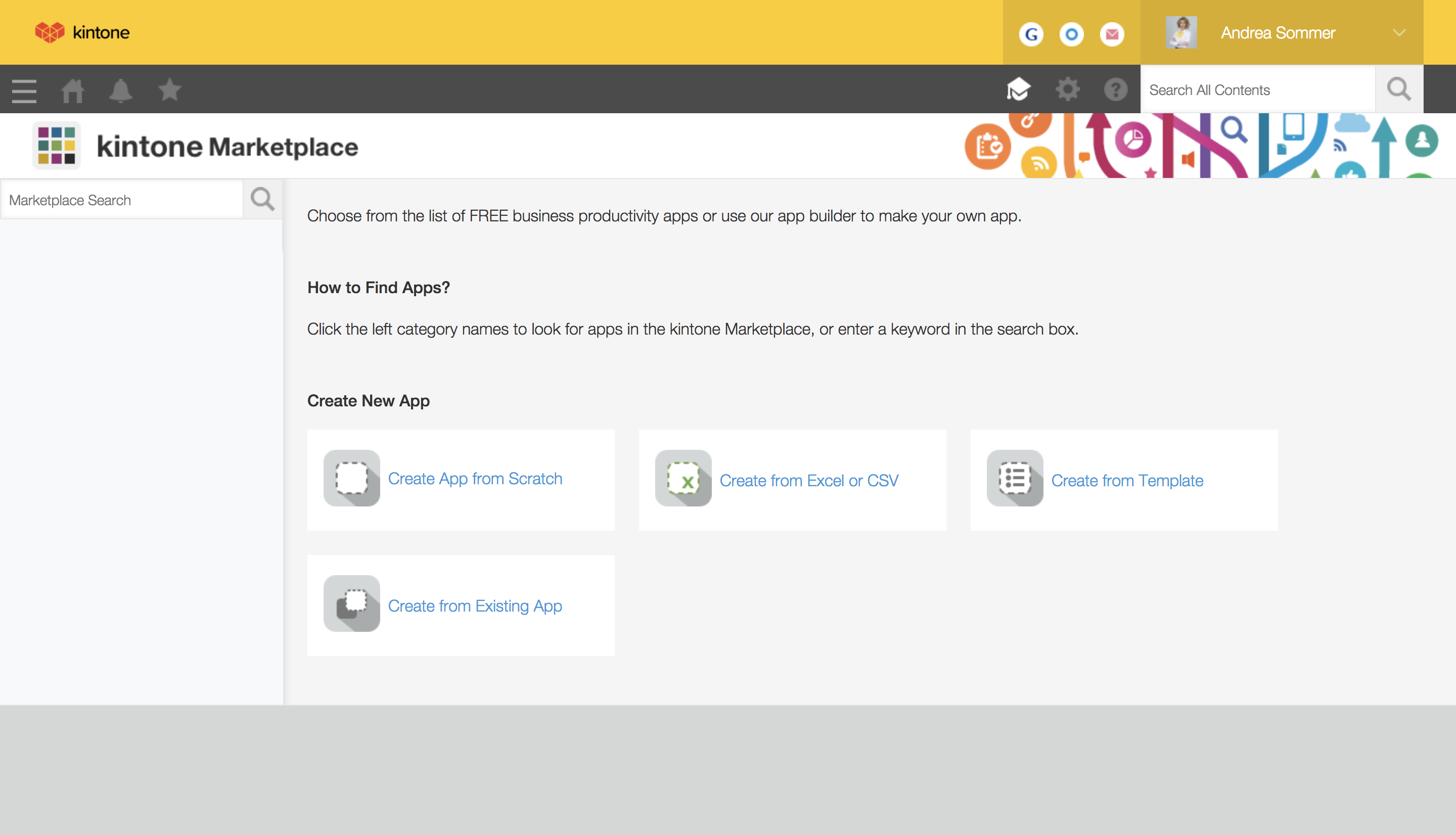
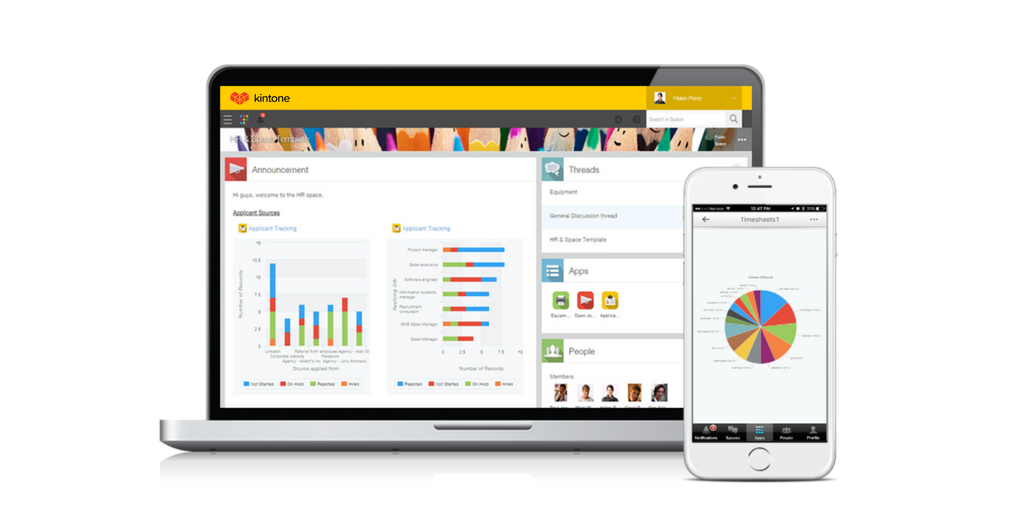
Kintone is a customizable digital workplace platform that lets the user manage data, tasks, and communication in one central place. Over 30,000 customers use Kintone’s no-code platform with more than 1.5 million database and workflow applications custom built for their businesses. The no-code drag-and-drop interface can be used to create custom database applications. Whether it’s sales leads, customer quotes, or inventory management, it can be organized in Kintone and viewed from the…
$24
per month per user
Oracle BPM Suite
Score 8.5 out of 10
N/A
The Oracle Business Process Management Suite is an integrated environment for developing, administering, and using business applications centered around business processes.
N/A
Pricing
Kintone
Oracle BPM Suite
Editions & Modules
Professional Subscription
$24
per month per user
No answers on this topic
Offerings
Pricing Offerings
Kintone
Oracle BPM Suite
Free Trial
Yes
No
Free/Freemium Version
No
No
Premium Consulting/Integration Services
No
No
Entry-level Setup Fee
Optional
No setup fee
Additional Details
All subscriptions have a minimum requirement of 5 users.
—
More Pricing Information
Community Pulse
Kintone
Oracle BPM Suite
Features
Kintone
Oracle BPM Suite
Low-Code Development
Comparison of Low-Code Development features of Product A and Product B
Kintone
9.4
Ratings
11% above category average
Oracle BPM Suite
-
Ratings
Platform Security
9.50 Ratings
00 Ratings
Platform User Management
9.60 Ratings
00 Ratings
Reusability
9.50 Ratings
00 Ratings
Platform Scalability
9.60 Ratings
00 Ratings
Reporting & Analytics
Comparison of Reporting & Analytics features of Product A and Product B
Kintone
-
Ratings
Oracle BPM Suite
6.0
Ratings
31% below category average
Dashboards
00 Ratings
6.00 Ratings
Standard reports
00 Ratings
6.00 Ratings
Custom reports
00 Ratings
6.00 Ratings
Process Engine
Comparison of Process Engine features of Product A and Product B
Kintone
-
Ratings
Oracle BPM Suite
7.4
Ratings
12% below category average
Process designer
00 Ratings
8.00 Ratings
Process simulation
00 Ratings
7.00 Ratings
Business rules engine
00 Ratings
9.00 Ratings
SOA support
00 Ratings
8.00 Ratings
Process player
00 Ratings
8.00 Ratings
Support for modeling languages
00 Ratings
7.00 Ratings
Form builder
00 Ratings
4.00 Ratings
Model execution
00 Ratings
8.00 Ratings
Collaboration
Comparison of Collaboration features of Product A and Product B
Kintone
-
Ratings
Oracle BPM Suite
6.0
Ratings
33% below category average
Social collaboration tools
00 Ratings
6.00 Ratings
Content Management Capabilties
Comparison of Content Management Capabilties features of Product A and Product B
Kintone is great if you want a software that will help you in managing your data, and keep track of which tasks are assigned to whom. It also helps to streamline communication and information in one central place. However, it is not for you if you are looking for something complex that has to manage a lot of data.
Oracle BPM is part of [the] Middleware SOA suite. Hence Oracle BPM can be directly installed with Oracle WebLogic. Oracle BPM comes with [a] standard out of the box portal. Recently Oracle has introduced another Web based portal to design processes. Standard Oracle BPM workflows can be created using the Jdeveloper. Deploying BPM apps are easy to deploy over Weblogic. All features with Weblogic can be utilized with Oracle BPM. Oracle BPM is [a] standard Middleware product and can make excellent front end applications.
I feel that Kintone is not well enough known yet. This means that other apps/APIs are not necessarily easy to connect with Kintone. Yes, you can use Zapier though for interfacing with other apps.
It would be great if it could give more customized options to change the look and format of certain things. You can make price quote apps, for example, but have to rely on 3rd party apps or programming skills to customize the look and fields.
If you make a table as an input field, it cannot connect to other internal Kintone apps for lookups and such.
I think there is more potential to make more customized data graphs.
Extremely complicated to work with. The WYSIWYG is of no help either since it very buggy and poorly designed. If you are a business or functional user, you will have a hard time using the application.
The Oracle's "Using" and "Implementing" guides are nearly useless with no examples and case studies and there is no documentation available to learn or understand the process.
Very few skilled developers are available in market who really understand how to implement Oracle BPM suite.
I still think that there's a room for Kintone's future, and high expectations for them in additional features and innovative tools and supports. Truly hope that they will support email features, and standardized supports for various plug-ins with the 3rd party software and apps. In the meantime, we will have to consider our ways of doing our work in all aspects
Kintone is agile app and most of the time we can easily come up with new apps. However, there should be more feature-based drag and drop and or a visual-based usability, as we all want to minimize the number of clicks and dropdown menu selections as much as possible. Thanks.
The support from Kintone has been excellent. On numerous occasions, customer service representatives have proactively reached out to us to see if we needed help with anything. They also scheduled Zoom calls one month after we went live to go over any questions we had. Additionally, they assigned a local account representative to check in on us periodically to provide any necessary help.
Everyone has their own tastes of things and way they want to work. Asking them to adapt to the changes with the new tools or apps is always difficult. We would want to start with a very small but best example within the organization, which in our case was that the employees will not be bothered by the bosses by being asked to find the documents, status of the progresses, or major things/requests/projects.
Kintone is the easiest product to create from and the cost is the lowest I believe. In addition, reconfigurability and extendability are great. If you look for a low code tool, you can try Kintone. But as same as another low code tool, don't expect too much.
All are fairly similar in capabilities, but the Oracle BPM Suite has good support for BPMN 2.0, integrates well with open standards and has an excellent design/development platform when compared to the other BPM vendors. The Oracle BPM Suite integrates well with the complimentary Oracle Fusion Middleware products that typically accompany a BPM implementation, making it a part of an overall well integrated solution set. Oracle BPM also has very good monitoring, reporting and analytics support built-in.
When we moved to Oracle BPM many years ago, it was a huge uplift for our business processes because we didn't have any tool to model flows except Outlook and Excel.
We established and streamlined the manufacturing workflows that were needed with the growth of the business.
We discovered after a while that the ROI was not great since along with the cost of the tools, we had to account the cost of development from the software team too. It took a lot of time to deliver our first automations due to the big learning curve needed for Oracle BPM.