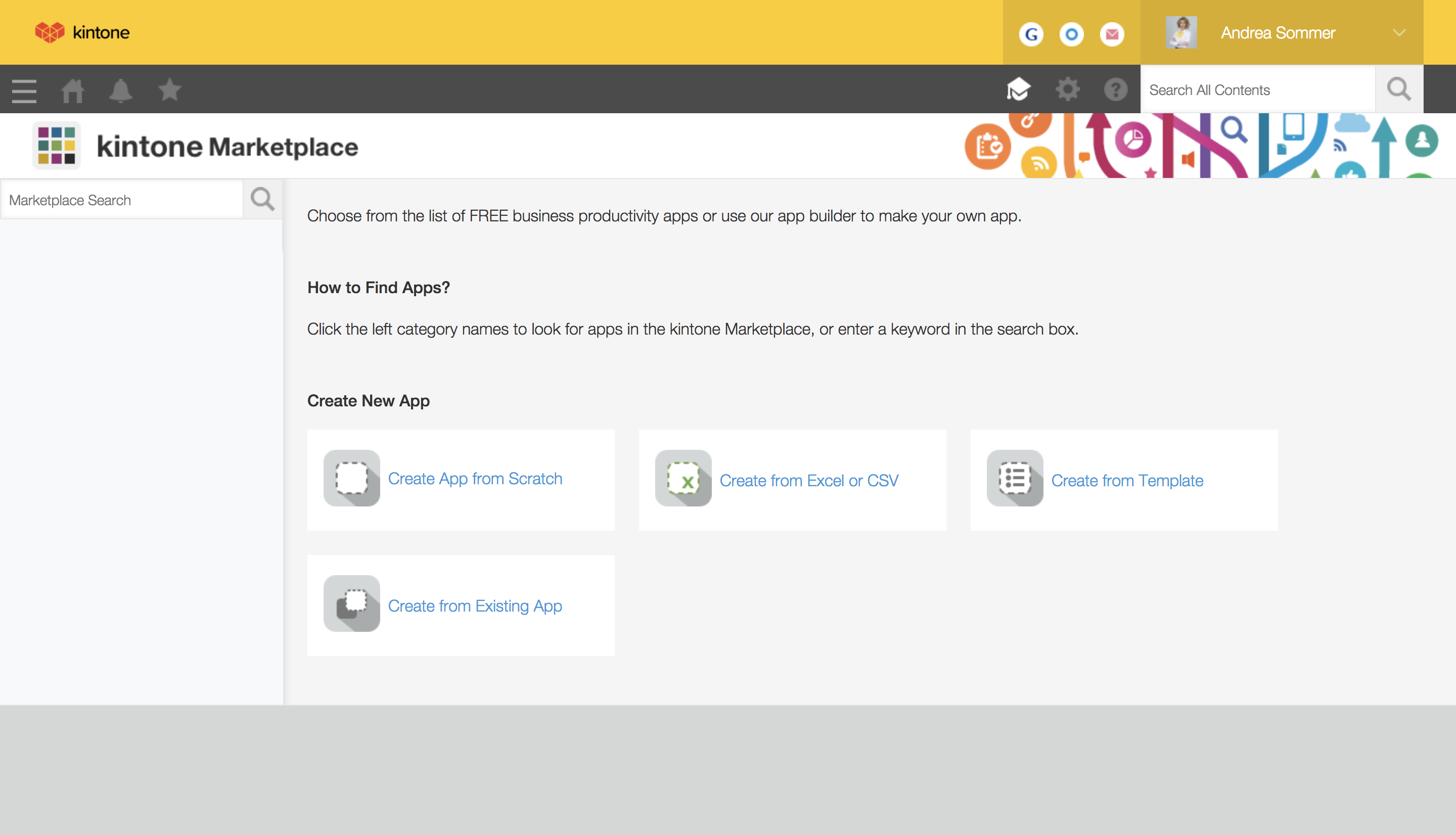
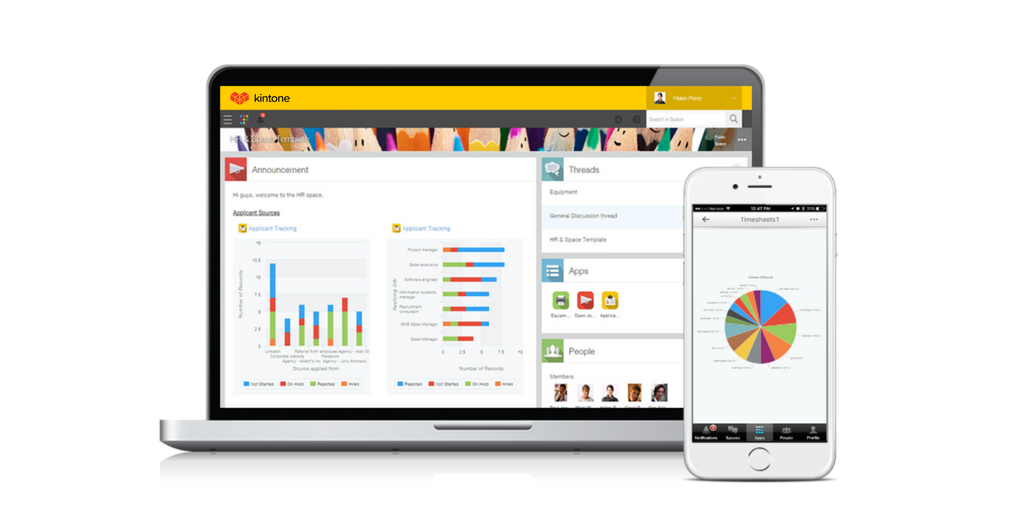
Kintone is a customizable digital workplace platform that lets the user manage data, tasks, and communication in one central place. Over 30,000 customers use Kintone’s no-code platform with more than 1.5 million database and workflow applications custom built for their businesses. The no-code drag-and-drop interface can be used to create custom database applications. Whether it’s sales leads, customer quotes, or inventory management, it can be organized in Kintone and viewed from the…
$24
per month per user
Todoist
Score 9.0 out of 10
N/A
Doist, a company boasting an entirely globally distributed workforce, offers Todoist, a project management platform emphasizing the needs of a distributed workforce. The application emphasizes tracking events over time with advanced closed task and progress reporting, with custom graphics for sharing or ease of review.
$8
per month per user
Pricing
Kintone
Todoist
Editions & Modules
Professional Subscription
$24
per month per user
Business
$8
per month per user
Offerings
Pricing Offerings
Kintone
Todoist
Free Trial
Yes
Yes
Free/Freemium Version
No
Yes
Premium Consulting/Integration Services
No
No
Entry-level Setup Fee
Optional
No setup fee
Additional Details
All subscriptions have a minimum requirement of 5 users.
We tested Pipedrive with the free 30-day trial. We did not like the standard layout. It was not customizable to our liking, and it could not perform the functions we were looking for in our daily business workflow.
We transferred our data records from google sheets to Kintone. While they aren't very comparable, the amount of tools and analysis that Kintone allowed us to do were far superior to Google Sheets.
Again, I came along after the implementation of Kintone. Kintone does provide plenty of customization and personalization within the program without the ability to code HTML.
Kintone is the easiest product to create from and the cost is the lowest I believe. In addition, reconfigurability and extendability are great. If you look for a low code tool, you can try Kintone. But as same as another low code tool, don't expect too much.
It's more flexible and better looking than its competitors. But the main reason is that after extensive searches for a product that would support our requirements, Kintone was the only one that claimed to be able to do so. After building the project, it works as expected. We …
Kintone is the best value for the dollar amount. It is also based on JavaScript (as far as the more in-depth customizations go) so you don’t have to learn a new language. Quickbase was extremely expensive for what it offered and FileMaker Pro required learning their custom …
We spent 6 months working with programmers and customer service representatives from ActiveCampaign to try to customize ActiveCampaign for our needs. ActiveCampaign employees finally told us that our use-case was too complicated for their system since it was not designed to do …
Kintone won out based on a few factors. MS Access can be a good alternative, but you can have trouble with sharing the data when needed. We like the mobile app that Kintone provides as well. Compared to Trello, the price of Kintone was better, considering the differences in …
These systems have always lacked customization which is really where Kintone shines. That being said, Salesforce did allow a certain level of customization on a more grand scale for a giant company I worked. for.
Salesforce was very difficult to navigate and I couldn't figure out how to use it. Their interface is not very user-friendly. I contacted someone for help and they gave me a very typical business presentation, which was not useful. I figured out how to use Kintone immediately, …
Monday.com — I used this in my previous job and loved it for tracking stages and tasks (and I color-code everything), but at the time it was more clunky on raw data. It may have improved in this since then? Kintone is strong on data and I still color-code everything! …
Kintone allowed me to test its product more fully than other platforms. Scalable pricing was an incentive, as was the ability to create apps to perform diverse functions, like scheduling and project management. Kintone's help documentation enabled me to really play around with …
We selected Kintone because it was the best combination of price and function. We needed something that could grow and scale with the organization, and that included looking at future prices. We didn't want to invest in something if we would be priced out five new users later. …
Kintone is much more customizable and user-friendly than Access. We also have experience with Service Point - Kintone is again, much more customizable. We would love a two-way interface between Kintone and Service ice Point. That would be a tremendous bonus for capturing & …
Microsoft Dynamics frequently updates to change layout, functionality, etc. Things then get hard to relearn where everything is and what functions have been added, lost, or replaced. It also didn't add much flexibility to customize.
Caseworthy is a very large extensive database that is excellent. However, Kintone is affordable for our small non-profit (with only one employee). We would be swimming in the complexity of Caseworthy.
Notion and ClickUp are pretty similar. I find them useful for an entire team, and for creating docs and things like that. For a basic task management system though, it's overkill and I would lose tasks constantly (not be able to find them). Trello is better for a flow with …
Compared to other tools, Todoist offers a stronger focus on completing tasks compared to more complex project systems. We chose a combination of Asana (projects) and Todoist (more detailed task tracking), mutual integration and synchronization works flawlessly. We have …
Todoist is better than Asana for the reason being that it focuses on task management rather than projects. If a task that is in Todoist suddenly becomes a project or more of a long term thing, then I will duplicate the task in Asana as to track it's progress, stay on time, etc.
At one point, I used both Excel and Numbers to help keep track of my to do list… They were effective and so so far as it goes, but Todoist, in general prove to be the more superior program. The fact that I could easily color code and reassign tasks, and also the satisfaction of …
I've tried using project management software and other task management tools in the past but I have always come back to Todoist for its ease of use and simple yet effective functionality. It does a specific thing and does it really well without trying too hard or overextending …
Todoist is more focused on its goal than Google Keeps and is far more intuitive to use. For example, with just a click we see immediately that Todoist provides a way to distill tasks so that we only see what's immediately pertinent to us, via the Filters (which can be …
If I were to choose mutually exclusively, I would rather have Todoist: To-Do List & Task Manager than all those 3 Google apps combined; but if Todoist: To-Do List & Task Manager come out with an in-house calendar, then it would be super awesome.
[Todoist: To-Do List & Task Manager] is significantly simpler and cheaper than most of the alternatives and doesn't complicate the management of tasks with a plethora of unnecessary features. While all the alternatives have strong feature sets, what Todoist does better than any …
Todoist: [To-Do List & Task Manager] is easier to use and makes it easier to assign owners and determine a due date. I feel more confident that I know where and how a task will be tracked when I use [Todoist: To-Do List & Task Manager] versus any other similar software[.]
Todoist: To-Do List & Task Manager is much more simple with the ability to remove tasks from a single list rather than moving the item. The price point is very low and even the free features of often enough for my needs. The ability to quickly add items, have them synced to my …
Todoist: To-Do List & Task Manager is great for individual and personal use but isn't the best for team projects. It's too difficult to set up project tasking across multiple users with multiple tasks and multiple due dates.
Slack has a lot of options but was not what we needed. If we would go back to a more detailed tool we would use Ryver as that has more functions we would actually use. TickTick is great but somehow Todoist: To-Do List & Task Manager worked out better for us, but that is a very …
Todoist: To-Do List & Talk Manager is so much better than Google Tasks for one simple reason: nested project folders. There's also the smart text recognition when entering tasks in Todoist that makes it so much easier.
I prefer Todoist over Microsoft Notes. Todoist offers reminders and such to make sure we are not forgetting to do something that might've slipped off our plate. Microsoft Notes is simply just a great way to take notes. Using both is great, but we mainly stick to Todoist because …
Todoist: To-Do List & Task Manager is a more focused to-do app than monday.com or even Trello. It is simple yet flexible. However, Kanban power users will be underwhelmed by the limited functionality of the new board view. I hope that Doist will keep up the rapid pace of …
I like Todoist better than Asana, Slack, and Boardable, but it may be simply because I don't use Todoist as a shared SaaS. Airtable serves a different main function (project management database), but inherent in it is the possibility of a large shared to-do list. Both Asana and …
There are so many task managers out there that it comes down to business needs and user preference. I selected Todoist because, for our particular business setup, it checked all the boxes. It's flexible, it's not limited to one ecosystem, and the price is exceptional. It can be …
I found that Todoist was the easiest way to organize all my tasks in multiple ways. I could be organized by date, priority, create sub-tasks, larger "areas" to keep things sorted. Others have a lot of the same options but not as good. I also really like how the app works on …
Asana is more project oriented and I really did not use it much, We used Trello with our team and while I liked it for projects, it really did not work for me with tasks. I have used many task managers over the years, and none can stack up to Todoist: To-Do List & Task …
Kintone is great if you want a software that will help you in managing your data, and keep track of which tasks are assigned to whom. It also helps to streamline communication and information in one central place. However, it is not for you if you are looking for something complex that has to manage a lot of data.
[Todoist: To-Do List & Task Manager is] fantastic for small teams or for personal use. Really simple and easy to use so requires very little in the way of onboarding and gets people engaged quickly in the tasks they need to complete. May not be perfect where more complex usage is required but integrates with other tools so time tracking and other add ons are more than possible through other tools.
Being able to manage tasks across multiple devices and platforms is absolutely critical to me. If I am out of the office, the tasks will be on my phone. But they are also readily accessible on the web, on my desktop, and on my iPad.
There are several ways to organize your tasks... via Projects, Labels, Boards, Lists, etc. that allow users to use Todoist to fit their productivity workflow. I use them all and I have been delighted to see how Todoist has continued to improve and advance the Todoist application over the years.
I rely extensively on recurring tasks which allow me to never forget a birthday, monthly submission, chore at home, etc. Todoist offers many ways to manage recurring tasks, such as, "every week", "every April 8", "every fourth Thursday in November", etc.
I feel that Kintone is not well enough known yet. This means that other apps/APIs are not necessarily easy to connect with Kintone. Yes, you can use Zapier though for interfacing with other apps.
It would be great if it could give more customized options to change the look and format of certain things. You can make price quote apps, for example, but have to rely on 3rd party apps or programming skills to customize the look and fields.
If you make a table as an input field, it cannot connect to other internal Kintone apps for lookups and such.
I think there is more potential to make more customized data graphs.
Task Dependencies - Particularly for business projects, I'd love if we could make one team member's task dependent on another's where we could say "do this task 3 days after another one is complete"
No Two Factor Authentication - For me personally, I like to keep all my passwords secure and backed up by two-factor authentication. Just wish this was something Todoist offered!
Adding Start Date & End Date - Sometimes I set an end date farther in the future, but I'm not alerted that I need to be working on it before then to achieve that due date. If I look at the "Next 7 Days" section, I can see upcoming tasks, but ideally, I'd love to be able to set a start date and an end date so it could appear in today's tasks without needing to be completed today.
I still think that there's a room for Kintone's future, and high expectations for them in additional features and innovative tools and supports. Truly hope that they will support email features, and standardized supports for various plug-ins with the 3rd party software and apps. In the meantime, we will have to consider our ways of doing our work in all aspects
Kintone is agile app and most of the time we can easily come up with new apps. However, there should be more feature-based drag and drop and or a visual-based usability, as we all want to minimize the number of clicks and dropdown menu selections as much as possible. Thanks.
Excellent features and concept, simple implementation, but the software is not very clear in training new users and communicating features. The occasional unexplained crash or freeze is not handled gracefully by the desktop software, requiring either the user or tech support to manually restart.
The support from Kintone has been excellent. On numerous occasions, customer service representatives have proactively reached out to us to see if we needed help with anything. They also scheduled Zoom calls one month after we went live to go over any questions we had. Additionally, they assigned a local account representative to check in on us periodically to provide any necessary help.
I've been able to find answers to any questions I have in the support documents. You can explore key features and view ideas and best practices for getting organized with Todoist. You can also fill out a support form to submit a request for customized help if you run into anything not covered in the support documents.
Everyone has their own tastes of things and way they want to work. Asking them to adapt to the changes with the new tools or apps is always difficult. We would want to start with a very small but best example within the organization, which in our case was that the employees will not be bothered by the bosses by being asked to find the documents, status of the progresses, or major things/requests/projects.
Kintone is the easiest product to create from and the cost is the lowest I believe. In addition, reconfigurability and extendability are great. If you look for a low code tool, you can try Kintone. But as same as another low code tool, don't expect too much.
Todoist is more focused on its goal than Google Keeps and is far more intuitive to use. For example, with just a click we see immediately that Todoist provides a way to distill tasks so that we only see what's immediately pertinent to us, via the Filters (which can be customized and set to various priority levels). Also, Todoist's project board is something Google Keep doesn't even offer, it really can't even compete with Todoist simply because Todoist does so much more and was obviously designed with the business professional in mind.