LogPoint vs. Logstash

Overview
ProductRatingMost Used ByProduct SummaryStarting Price
LogPoint
Score 3.7 out of 10
N/A
LogPoint detects, analyzes and responds to threats within an organization’s data for faster security investigations. LogPoint is dedicated to helping overloaded security analysts work more efficiently with accelerated detection and response. LogPoint's SIEM solution with UEBA provides…N/A
Logstash
Score 8.0 out of 10
N/A
N/AN/A
Pricing
LogPointLogstash
Editions & Modules
No answers on this topic
Offerings
Pricing Offerings
LogPointLogstash
Free Trial
YesNo
Free/Freemium Version
NoNo
Premium Consulting/Integration Services
NoNo
Entry-level Setup FeeNo setup feeNo setup fee
Additional Details
More Pricing Information
Community Pulse
LogPointLogstash
Considered Both Products
LogPoint
Logstash
Chose Logstash
MongoDB and Azure SQL Database are just that: Databases, and they allow you to pipe data into a database, which means that alot of the log filtering becomes a simple exercise of querying information from a DBMS. However, LogStash was chosen for it's ease of integration into our …
Chose Logstash
Logstash can be compared to other ETL frameworks or tools, but it is also complementary to several, for example, Kafka. I would not only suggest using Logstash when the rest of the ELK stack is available, but also for a self-hosted event collection pipeline for various …
Chose Logstash
Logstash is similar to any service which can be the single point to collect and transform data. Kafka is a very good candidate, but it fails for applications not using Kafka. Kafka streams do pretty much the same thing. On one hand, I personally trust Kafka more, but then Kafka …
Chose Logstash
Logstash is a part of ELK stack which is a standard choice of many vendors across the world for logging & monitoring in a datacenter environment
Features
LogPointLogstash
Security Information and Event Management (SIEM)
Comparison of Security Information and Event Management (SIEM) features of Product A and Product B
LogPoint
6.3
Ratings
20% below category average
Logstash
-
Ratings
Centralized event and log data collection8.20 Ratings00 Ratings
Correlation8.00 Ratings00 Ratings
Event and log normalization/management8.30 Ratings00 Ratings
Deployment flexibility6.50 Ratings00 Ratings
Integration with Identity and Access Management Tools6.20 Ratings00 Ratings
Custom dashboards and workspaces7.60 Ratings00 Ratings
Host and network-based intrusion detection7.30 Ratings00 Ratings
Data integration/API management4.50 Ratings00 Ratings
Rules-based and algorithmic detection thresholds6.40 Ratings00 Ratings
Response orchestration and automation3.60 Ratings00 Ratings
Reporting and compliance management6.40 Ratings00 Ratings
Incident indexing/searching2.70 Ratings00 Ratings
Best Alternatives
LogPointLogstash
Small Businesses
LevelBlue USM Anywhere
Score 3.8 out of 10
SolarWinds Papertrail
Score 8.9 out of 10
Medium-sized Companies
Sumo Logic
Sumo Logic
Score 9.4 out of 10
Logz.io
Logz.io
Score 7.0 out of 10
Enterprises
Sumo Logic
Sumo Logic
Score 9.4 out of 10
Sumo Logic
Sumo Logic
Score 9.4 out of 10
All AlternativesView all alternativesView all alternatives
User Ratings
LogPointLogstash
Likelihood to Recommend
7.3
(0 ratings)
10.0
(0 ratings)
Likelihood to Renew
8.2
(0 ratings)
-
(0 ratings)
Usability
6.8
(0 ratings)
-
(0 ratings)
Support Rating
8.3
(0 ratings)
-
(0 ratings)
In-Person Training
9.1
(0 ratings)
-
(0 ratings)
User Testimonials
LogPointLogstash
Likelihood to Recommend
LogPoint is incredibly useful for pulling information from various log sources and combining them together to offer insights into suspicious or potentially malicious behaviour. It is not intuitive and can take some time to get used to. Once you're up and running though, it's easy to onboard new log sources. Search queries can again be tough to get used to, but LogPoint support is really helpful and can offer assistance with writing more complex searches.
Read full review
Logstash is a must in an ELK stack, which I am sure is going to be the #1 case. At any point when you have several sources, Logstash can be the common point to aggregate, and categorize those data. Then send this new data to its destination. Very handy. It is free and open source. It may not be appropriate to analyze data-sets dependent on each other but from a different data source. Reason being Logstash works on data at hand, and not wait for other data to arrive. It would be unwise for Logstashh to handle complicated, long-running transformations because this is injected and ejected. The faster you do it, the safer.
Read full review
Pros
  • Technical support team is fast and competent
  • License management and cost
  • Log parsing
  • New logs can be provided to the support team for parser creation
  • High Availability architecture does not cost more
Read full review
  • Plugin ecosystem allows modular extensions.
  • Tight integration into the Elastic.com products of Beats and Elasticsearch, so minimal setup is required when using those tools.
  • Filter plugins are powerful for extracting and enriching input data.
Read full review
Cons
  • Stability (weird issues)
  • Transparency (hard to investigate issues)
  • Search template should be improved
Read full review
  • Memory: Logstash is a HOG, if you are deploying it on commodity (i.e. cheap and old) hardware: You will need at least 2GB, just for Logstash. So don't expect to run your entire ELK stack on one AMD Athlon machine.
  • Overlap: Logstash fills in an area of the ELK stack that makes the most sense: as a log file transformer / shipper. However, if you start breaking that stack, with the addition of other components- you start seeing where features of Logstash may be implemented or solved in the additional components much easier (or better, or to a higher degree of resolution)
  • More Overlap: Since my team employs Syslog-ng extensively- Logstash can sometimes get in the way (and this may be a problem for DevOps stacks overall): You can configure Syslog to record certain information from a source, filter that data, and even export that data in a particular format. Logstash will pick that data up, and then parse it. However, if you don't keep your Syslog-ng configuration files, and your Logstash configuration files in sync, your results will not be what you expected, and this will translate into (sometimes) hours/days of work, hunting down a line item in a configuration file.
Read full review
Likelihood to Renew
We are confident with the solution and we are using it daily
Read full review
No answers on this topic
Usability
LogPoint has quite a steep learning curve. The UI is not intuitive, with some bits of functionality being hidden in places you might not think to look. The search syntax is also quite difficult to master. However, once you overcome these obstacles, LogPoint is actually very easy to use.
Read full review
As I said earlier, for a production-grade OpenStack Telco cloud, Logstash brings high value in flexibility, compliance, and troubleshooting efficiency. However, this brings a higher infra & ops cost on resources, but that is not a problem in big datacenters because there is no resource crunch in terms of servers or CPU/RAM
Read full review
Support Rating
Support team is very fast to answer and very kind.
Read full review
No answers on this topic
In-Person Training
Really nice person with huge skills on LogPoint
Read full review
No answers on this topic
Alternatives Considered
LogPoint is easier to implement and less expensive.

Read full review
MongoDB and Azure SQL Database are just that: Databases, and they allow you to pipe data into a database, which means that alot of the log filtering becomes a simple exercise of querying information from a DBMS. However, LogStash was chosen for it's ease of integration into our choice of using ELK Elasticsearch is an obvious inclusion: Using Logstash with it's native DevOps stack its really rational
Read full review
Return on Investment
  • Keep the same team to manage more IT resources
  • Having a better logs visibility
Read full review
  • It is very difficult to give any figures on ROI, as it depends on many factors, and in a Telcocloud environment, it is much complex to find out; however, I would give some points below on ROI
  • ROI based on flexibility is very high, as it reduces the time to find RCA
  • ROI based on integration is very high because it supports multi-vendor environments, avoiding vendor lock-in & works across multi-cloud setups
  • ROI on resource consumption is less because Logstash in 2-3 times more resource-intensive as compared to its lightweight alternatives resulting in latency
Read full review
ScreenShots

LogPoint Screenshots

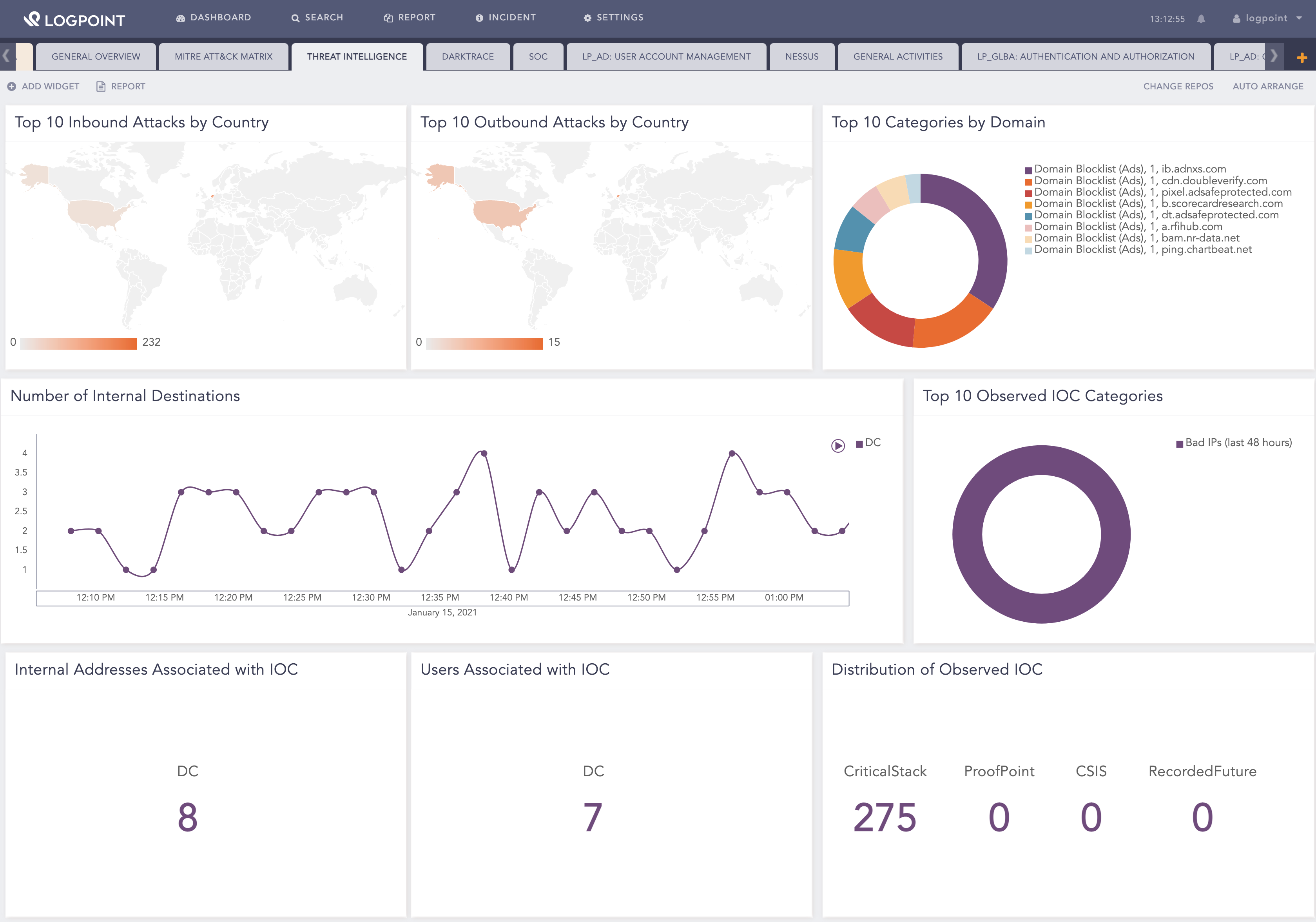
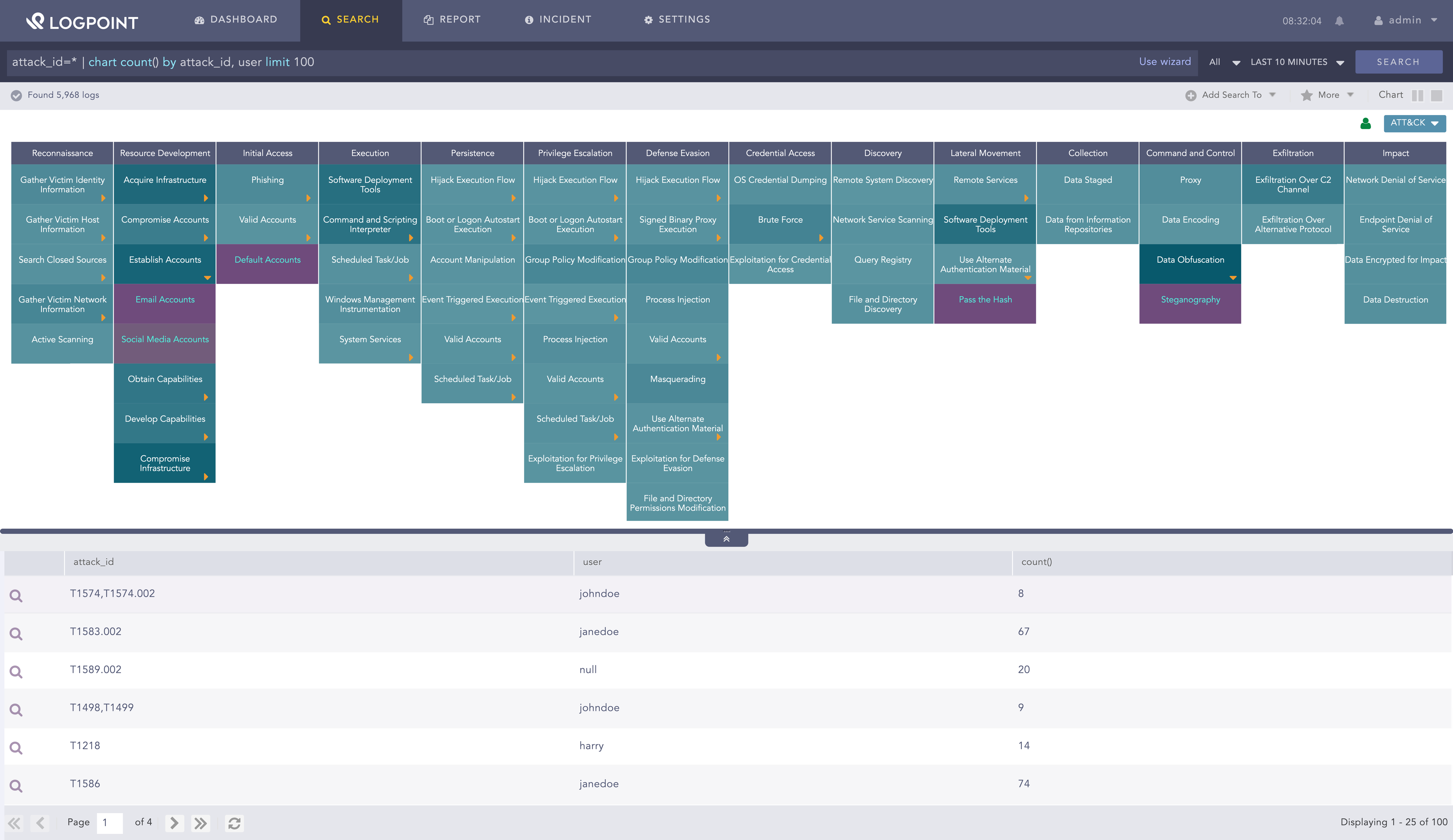
Screenshot of LogPoint SIEM dashboardScreenshot of LogPoint UEBA dashboardScreenshot of LogPoint threat intelligence dashboardScreenshot of All LogPoint alerts are mapped to the MITRE ATT&CK framework