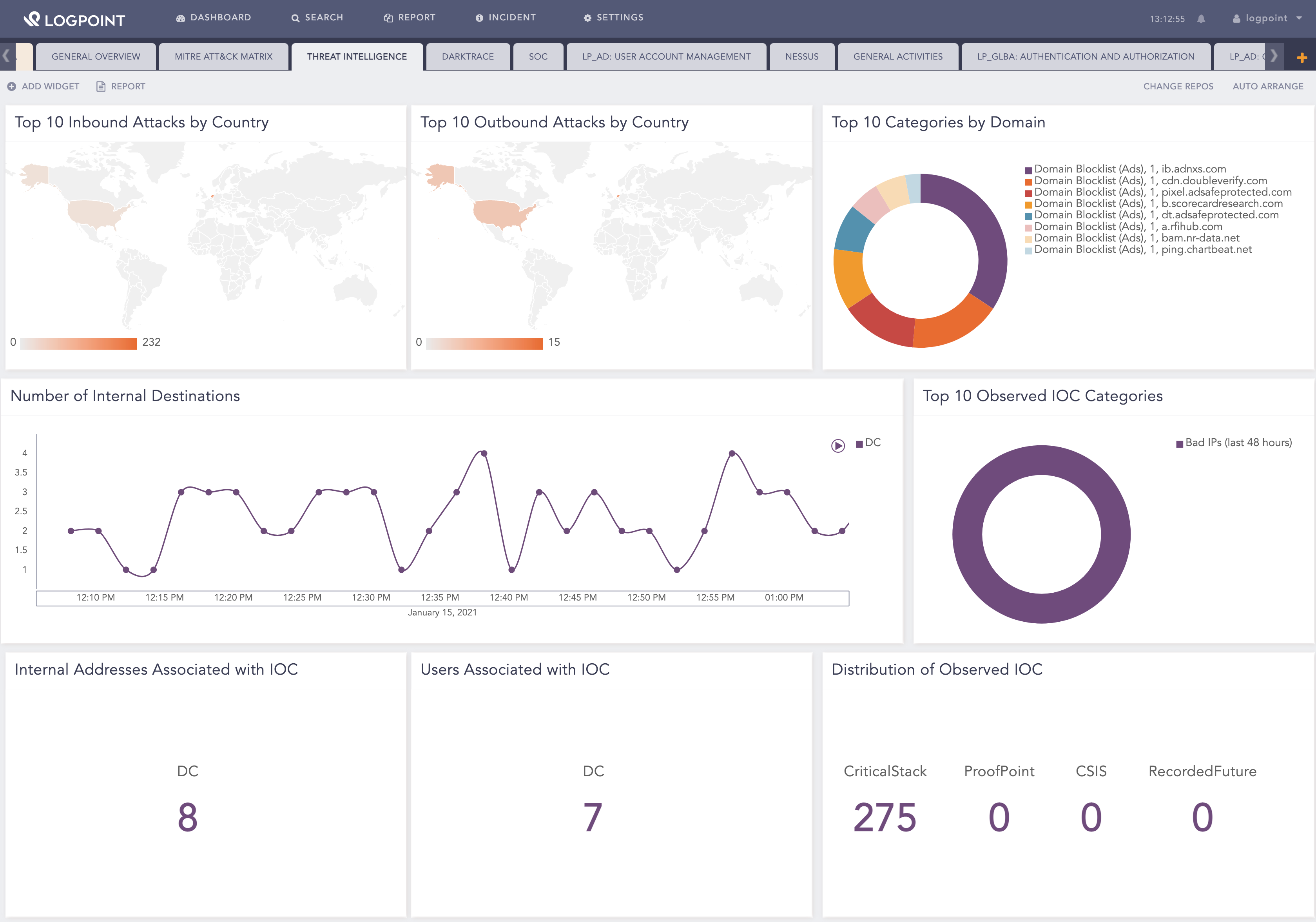
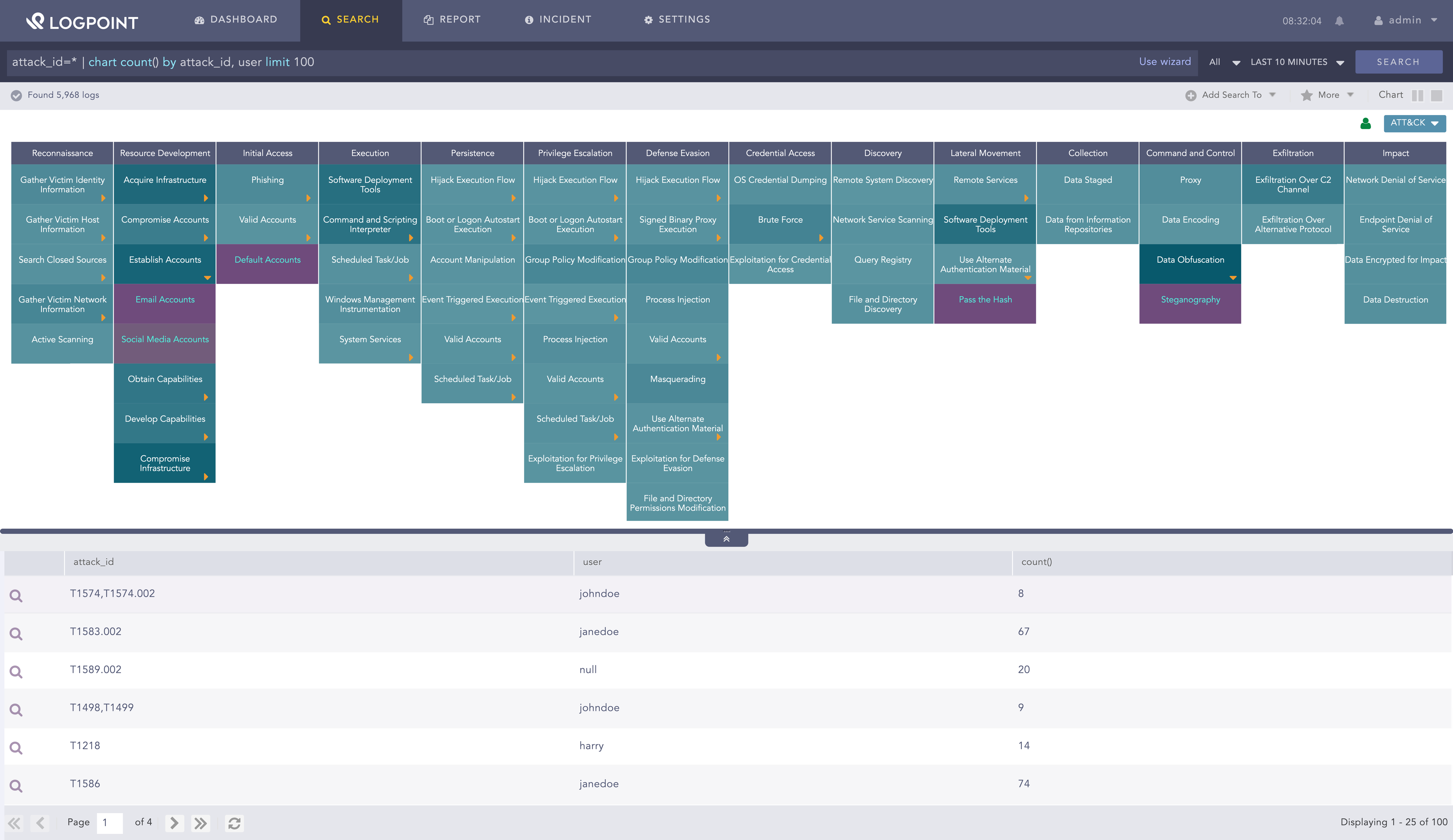
LogPoint detects, analyzes and responds to threats within an organization’s data for faster security investigations. LogPoint is dedicated to helping overloaded security analysts work more efficiently with accelerated detection and response. LogPoint's SIEM solution with UEBA provides…
N/A
Microsoft Sentinel
Score 8.6 out of 10
N/A
Microsoft Sentinel (formerly Azure Sentinel) is designed as a birds-eye view across the enterprise. It is presented as a security information and event management (SIEM) solution for proactive threat detection, investigation, and response.
We decided to go with Microsoft Sentinel because it works really well with Microsoft tools we are already using. Microsoft Sentinel's intelligent features detect and resolve problems more quickly than Sumo Logic. It also allows us to pay for what we use and grow as we need. …
Well, primarily we use different stuff like CrowdStrike. We use different sign-on features. We primarily use those different products because we support a wider ecosystem.
Splunk, Google, SecOps. I look at how it stacks up based on the fact that it's the primary solution that we sell. So I think it stacks up really well. Why do we select it? Well, we selected it primarily because we're a very large Microsoft partner. The technology is very good …
Well before there was Microsoft Sentinel, you had other competing products like ArcSight or Splunk, et cetera. I think they have their own qualities, but the Microsoft integration story is really why we're using it.
We use intune to protect endpoints and we pull logs from all the endpoints through the intune connector into the Microsoft Sentinel SIEM and that way we can run rules on those logs to find anomalies.
Elastic seems to have a much better interface for log search and is able to filter out noise. Microsoft Sentinel also appears to generate a lot of false positives.
Elastic is some carbon for various use cases. So because Elastic is a very, very wrong history in the market. So Sentinel is very recent for products from my understanding.
Prior to using Sentinel, we were using Splunk specifically Splunk Enterprise Security and Splunk Cloud, so their on-prem and their cloud-based products. We switched originally for cost reasons, specifically cost control, but I have found that the ability to create reports, the …
Based on the overall infrastructure configuration that we have and also after analysing various solutions provided by Microsoft Sentinel, we came to a conclusion that the Microsoft Sentinel is the best option for us to help us in overall threat detection on our custom servers, …
I use most of the Sims that are out there, but RSAs, old Sim Log, logic, elastic, a lot of them. Sumo, we checked out Sumo too. We're a Microsoft shop and live almost entirely on top of a Microsoft ecosystem. We are considering other Microsoft security products to integrate …
As mentioned, the product was part of the purchase of several Microsoft Suites that we did earlier last year and with 200 licenses included, we can exclude those from the other SIEM and SOAR product, it just work well with the Microsoft's environment that we partially have Is …
The key advantage of using Sentinel lies in Microsoft already being a renowned name in cloud services. Hence, the Collection of data at the cloud scale across all users, devices, applications, and infrastructure, both on-premises and especially in the MS Cloud, is super easy. …
ArcSight is an on-prem solution that has a different approach than Sentinel.
In a basis this product is more complex to maintain and deploy. The query functionality in Sentinel is more powerful and easier to maintain. ArcSight has a much slower performance and an interface that …
We don't need to maintain a third-party SaaS solution or spend any time integrating it since Microsoft Sentinel is the ideal option to give a single point of attack detection and alert monitoring.
Microsoft Sentinel really goes the extra mile when it comes to an SIEM that slowly improves toward a proper SOAR, this may be the best selling point of the entire solution. Highly scalable, cloud-based, and nearly perfect when dealing with Microsoft-based infrastructures, …
Most of those have been out in the industry for a longer time, so they have a lot more user friendliness to them. So I'd say it's in the mix. It's just not as high as it should be or I would expect it to be.
Previous to Azure Sentinel, we were using the McAfee SIM and it just wasn't keeping up with the times and that was the choice of moving to Azure Sentinel.
LogPoint is incredibly useful for pulling information from various log sources and combining them together to offer insights into suspicious or potentially malicious behaviour. It is not intuitive and can take some time to get used to. Once you're up and running though, it's easy to onboard new log sources. Search queries can again be tough to get used to, but LogPoint support is really helpful and can offer assistance with writing more complex searches.
We use it because when a user sees the suspicious activity on his account, Microsoft Sentinel gives alerts to the user's system and the admin system as well. When a user of one of our systems clicked a spam email, that email was trying to install a virus on our server, but Microsoft Sentinel gave an alert to the user and admin both, so that is why our team was able to fix that issue with Microsoft Sentinel very fast. However, it will not be the best option for you if your team is utilizing every feature but you are on a tight budget.
It is a good tool for threat detection and analysis of the threats. We are using this tool for real time threat detection on our employee machines as well as some servers.
It provides various options for collecting data sources by leveraging multiple sources using data connectors. This helps us in gathering data from multiple sources such as our servers as well as our employee machines.
One good thing about this tool is automated incident response thereby increasing the security of servers.
It takes some time to learn how to use and install it properly, and it does not connect effectively with external PaaS systems such as Salesforce CRM, Salesforce Commerce Cloud, and so on.
Microsoft can simplify the display of the logs to make them easier to study, and the user interface occasionally delays, which can also be enhanced.
LogPoint has quite a steep learning curve. The UI is not intuitive, with some bits of functionality being hidden in places you might not think to look. The search syntax is also quite difficult to master. However, once you overcome these obstacles, LogPoint is actually very easy to use.
The Microsoft Azure Sentinel solution is very good and even better if you use Azure. It's easy to implement and learn how to use the tool with an intuitive and simple interface. New updates are happening to always bring new news and improve the experience and usability. The solution brings reliability as it is from a very reliable manufacturer.
Microsoft Sentinel excels in cloud-native scalability, Microsoft ecosystem integration, and AI-driven threat detection with UEBA and Fusion rules, offering faster deployment and lower costs (48% cheaper per Forrester) than Splunk, QRadar, Exabeam, SentinelOne, Securonix, and Wazuh. It lags in third-party integrations and syslog parsing. Organizations choose Microsoft Sentinel for its cost-effectiveness, automation, and Microsoft synergy, especially in Azure-heavy environments, though Splunk and Exabeam lead in flexibility and UEBA, respectively.
As any cybersecurity product, this has to be more with risk to avoid loss in case of a ransomware that more than relate to a productivity increase. Maybe the impact could be that instead of having people that are checking 24/7 the dashboard, you could implement Sentinel and have less people checking that or people with less expertise. So the saving will be a minor but will be a saving in the cost of your team.