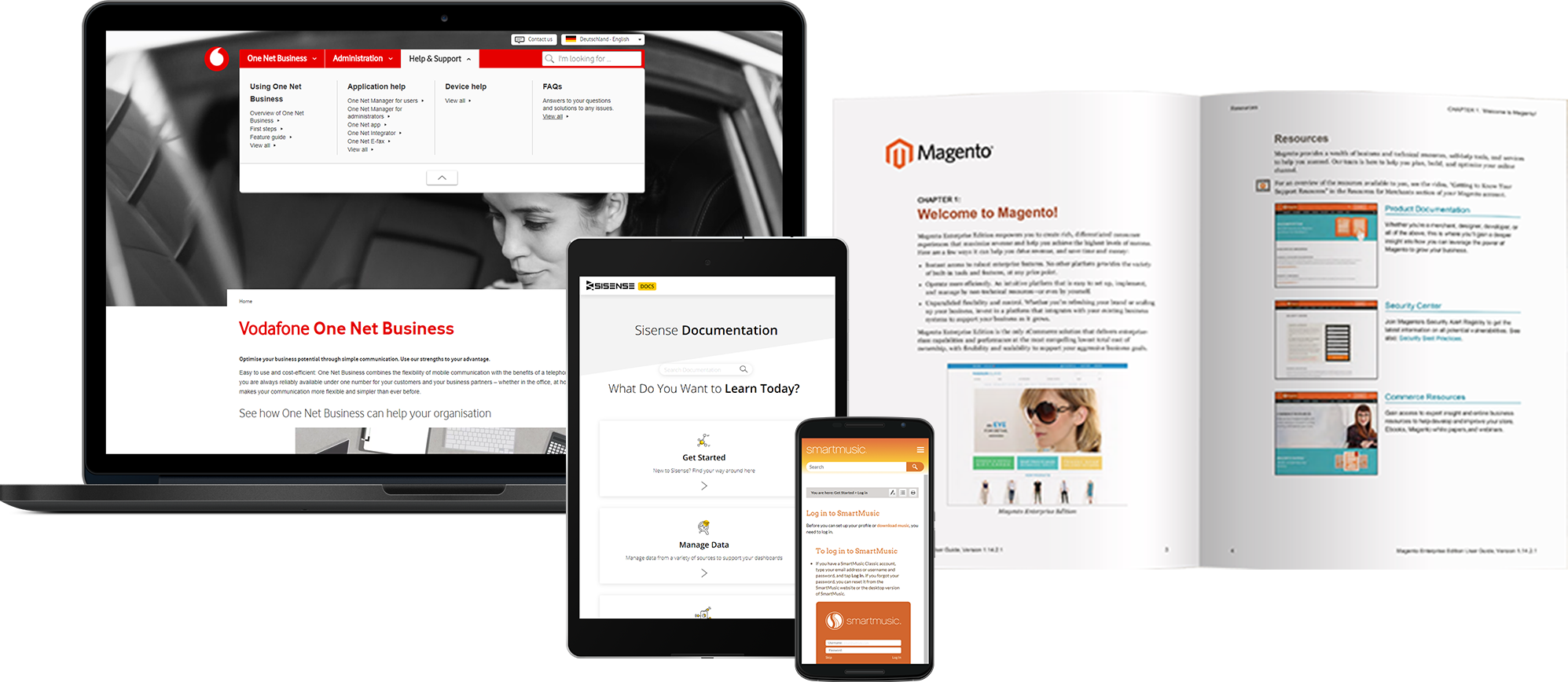
MadCap Software, headquartered in La Jolla, offers MadCap Flare, a help authoring and technical writing tool featuring onboarding and support from MadCap, and a set of modules for designing advanced guides, aids, and web or application help aids.
$1,500
per year
Sanity
Score 8.8 out of 10
N/A
Sanity from the company of the same name in San Francisco is a platform for structured content that comes with an open-source editing environment called Sanity Studio that users can customize with JavaScript and a real-time hosted data store.
$0
Pricing
MadCap Flare
Sanity
Editions & Modules
MadCap Central
$1,500
per year
MadCap Flare
$1,999
per year
MadCap AMS
$2,999
per year
Free
$0
Growth
$15
per month per seat
Enterprise
Custom Pricing
per month per seat
Offerings
Pricing Offerings
MadCap Flare
Sanity
Free Trial
Yes
No
Free/Freemium Version
No
Yes
Premium Consulting/Integration Services
No
No
Entry-level Setup Fee
No setup fee
No setup fee
Additional Details
Includes a 12-month Platinum-level Maintenance Plan.
MadCap Flare has its problems, but it serves our team well as an authoring software. This would not be the case if we needed to regularly collaborate on articles, as Flare is prone to conflict issues when another person dares to breathe near an open topic. When working individually, though, it's fine. I'd love to see improvements to design, performance, and stability, but Flare remains one of the best softwares on the market for our needs as an authoring team. MadCap Central is well-suited to internal reviewing when every member is comfortable with Flare (the errors it tends to introduce set aside). SMEs, though, tend to find it hard to use. It's cluttered, some styles don't render, and it just seems like a failed attempt to reproduce Google Docs. I'd love to see improvements there, to help get our SMEs to want to use Central.
Suited for - Headless CMS - when your blogs are less in number and you want to only work within free tier - when you only want to use their dedicated location to host your CMS Less appropriate - when you need to host your cms on your cloud
MadCap Flare is in desperate need of an overall redesign. It relies heavily on dozens and dozens of tiny buttons that contain dozens of nested features. Clicking the wrong button can cause your software to freeze and crash. Building targets can be an absolute mystery, as far as all the files involved. It also has a tendency to freeze and crash. There's typically a huge learning curve for new hires who've never used it--nothing is intuitive.
MadCap Flare provides for proper single-sourcing of content for an array of needs. Wikis are incredibly limited, static and hard to manage, and content quickly becomes obsolete.
- There is no fear of hitting a limit and suddenly having to start paying 500$ per month when you have been using it for free for a while - You don't have to worry about infrastructure because datasets are available as a service - With an open-source UI based on React, you don't have any limits to what you can build - For some reason, I could not find a service that provided schema as code before Sanity, and I cannot understand how anyone could think this was a good idea.