Mailgun is a transactional email API service which was owned and supported by Rackspace (acquired in 2012) and then spun off in 2017 as an independent and standalone entity. It is now supported by Sinch since that company's acquisition of Mailgun and Mailjet, through acquiring Pathwire.
$35
per month
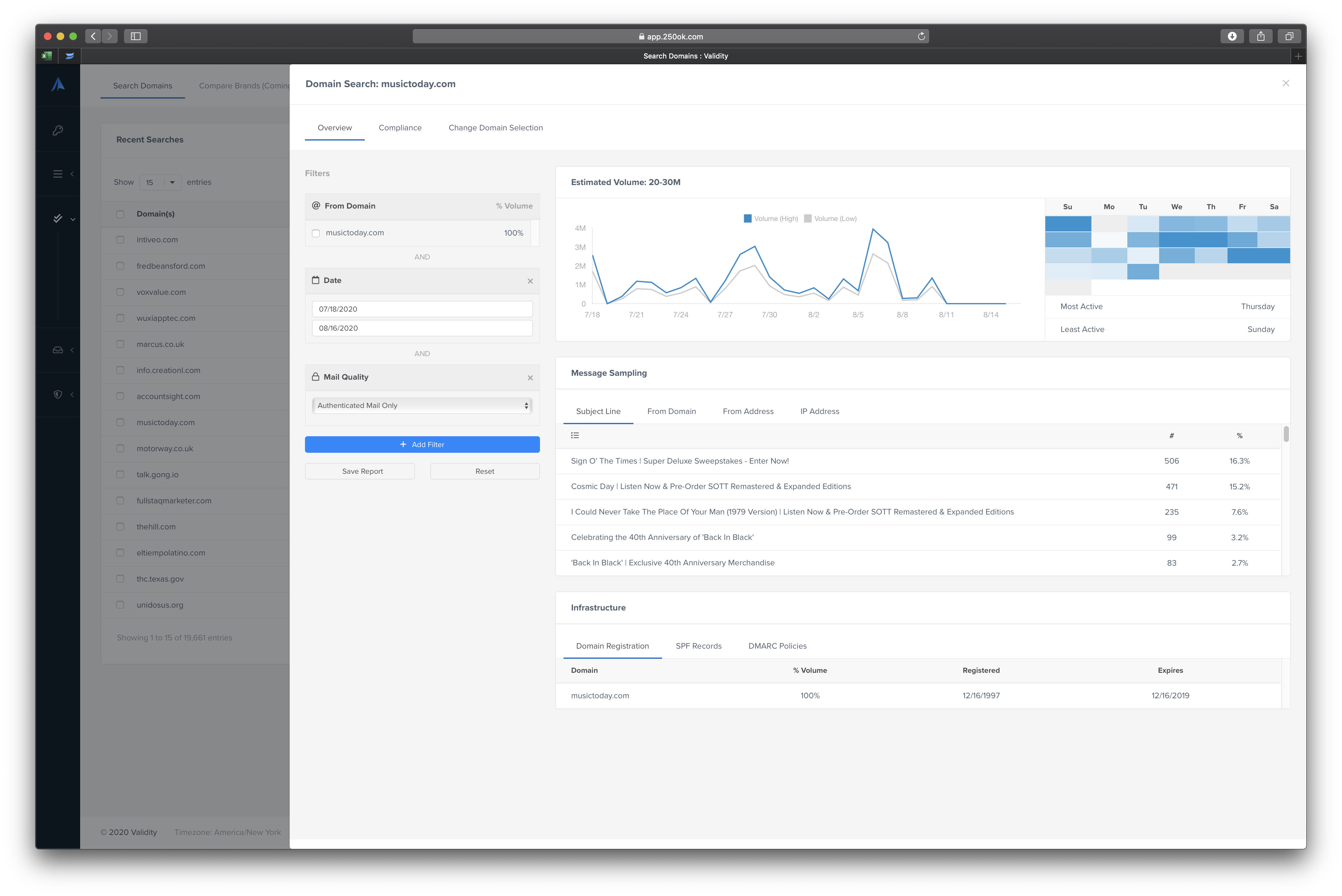
Everest (Return Path + 250ok)
Score 10.0 out of 10
N/A
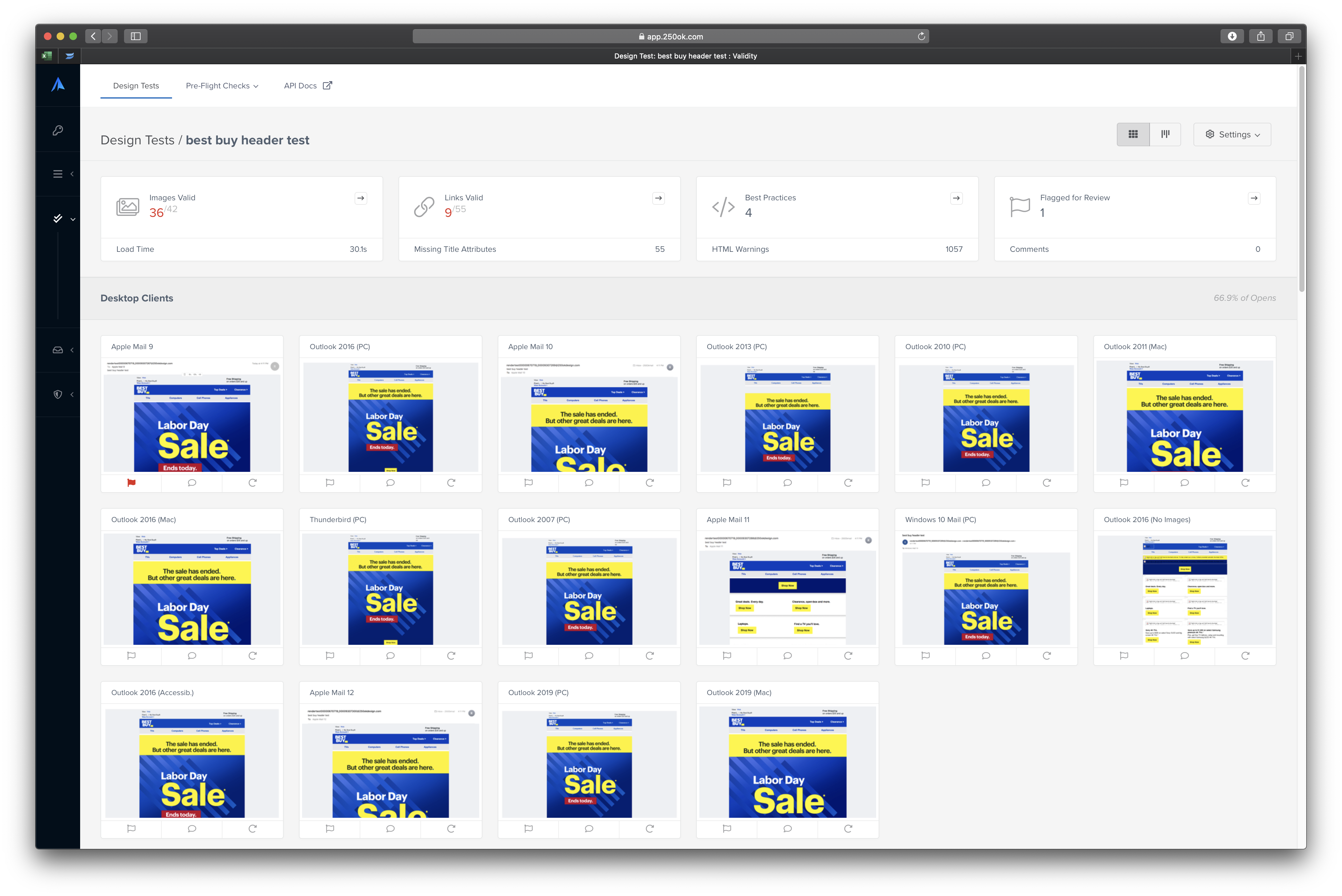
Everest is an integrated email success platform providing crucial insights and deliverability guidance so users can reach more people, increase engagement, and improve efficiencies of their email programs. Everest helps to improve email deliverability by getting complete visibility into email marketing metrics and sender reputation, understand the audience and deliver content that is timely, personalized, and functions flawlessly on any device, and get a holistic view of a company's…
$20
per month
Pricing
Sinch Mailgun
Everest (Return Path + 250ok)
Editions & Modules
Foundation
$35
per month
Growth
$80
per month
Scale
$90
per month
Flex
Free
Elements
$20
per month
Elements Plus
$525
per month
Professional
Custom Pricing
Enterprise
Custom Pricing
Offerings
Pricing Offerings
Sinch Mailgun
Everest (Return Path + 250ok)
Free Trial
Yes
No
Free/Freemium Version
Yes
No
Premium Consulting/Integration Services
No
No
Entry-level Setup Fee
No setup fee
No setup fee
Additional Details
—
—
More Pricing Information
Community Pulse
Sinch Mailgun
Everest (Return Path + 250ok)
Features
Sinch Mailgun
Everest (Return Path + 250ok)
Email & Online Marketing
Comparison of Email & Online Marketing features of Product A and Product B
Sinch Mailgun
-
Ratings
Everest (Return Path + 250ok)
6.1
Ratings
26% below category average
WYSIWYG email editor
00 Ratings
5.00 Ratings
Dynamic content
00 Ratings
5.30 Ratings
Ability to test dynamic content
00 Ratings
6.40 Ratings
Landing pages
00 Ratings
5.00 Ratings
A/B testing
00 Ratings
6.50 Ratings
Mobile optimization
00 Ratings
3.30 Ratings
Email deliverability reporting
00 Ratings
8.00 Ratings
List management
00 Ratings
7.00 Ratings
Triggered drip sequences
00 Ratings
8.00 Ratings
Reporting & Analytics
Comparison of Reporting & Analytics features of Product A and Product B
Sinch Mailgun
-
Ratings
Everest (Return Path + 250ok)
6.1
Ratings
23% below category average
Dashboards
00 Ratings
7.20 Ratings
Standard reports
00 Ratings
6.70 Ratings
Custom reports
00 Ratings
4.50 Ratings
Pre-Send Testing
Comparison of Pre-Send Testing features of Product A and Product B
Even with the list of negatives, Mailgun is still a great solution for how easy it is to work with and how ubiquitous it is to find examples and libraries out there on the internet. The company has great support and are usually quick to address and fix things. I do think they have some room for improvement with the lack of templates and the outdated UI log handling/filtering.
Every new or established brand should be using Everest. It doesn't matter what you're trying to say in your emails—if they're not reaching the inbox, no one is listening or reading. Everest gives you the insight you need to understand your inbox placement, reputation and so much more.
Inbox placement data using seed list: It tells you about your inbox placements, spam, missing, and complaints. Very useful data that tells you that you are on the road!
Sender score for all I.Ps: Tells you quickly about your I.P score, helps you work fast as you know everything is fine, saves a lot of time.
Online support: Support from specialist, have an expert to guide in tough times to suggest options or to support your action strategy.
Mailgun is used by spammers, and sometimes your assigned mail server will get blacklisted because of other users on it.
If you end up with a mail server that is blacklisted, your mail will go nowhere. And, below the $300 and up pricing tiers, there is no one at Mailgun to help you get this problem resolved. You are just stuck.
In other words, Mailgun is unreliable as a mission-critical service. I would strongly recommend using a service with better processes in place.
A good tutorial on how to leverage it would be helpful. Navigating is easy, but there's a lot of information and it takes a while to understand what everything means.
The reporting feature is intimidating, creating anew one isn't as user-friendly as the rest of the interface.
I understand what seeds are, but for new users, a very basic tutorial on what they are and why they are used would be helpful. Right now you have to have a baseline understanding of them before using it.
Return Path helps us stay ahead of the curve and are a partner in helping us optimize our email program. They also keep us up-to-date on email laws and the changing ecosystem so that we are prepared and ready for changes, whether they're behavioral, legal or technology-driven. I definitely consider Return Path a necessary ingredient to sustaining a healthy email program.
The time for the initial setup is very quick, since you can start sending (thus developing) from their sandbox in no time. The actual configuration involves, as usual, some DNS changes that may require time but are well explained and documented. Once everything is set up, there are a lot of monitoring tools that you can use to optimize your lists.
There have been a few minor outages through the years, but nothing more than a few minutes. These small outages are to be expected in any kind of a SaaS product, but Mailgun handles them very well. We designed our software to just retry sending after a while if there is an outage. As far as I know, we have never had to do more than a few retry cycles. This is all automated on our end, so we rarely even notice. Our customers have never noticed any mail sending outages.
The API and the deliverability of emails is excellent. Their API is very responsive and performs perfectly fine. I have no complaints there. Their management interface though (accessed through the web) is pretty slow though. Searching through lists of emails when I'm tracking down a problem for a customer can take 10+ seconds which is annoyingly high for a modern web app.
MailGun's support staff is both friendly and helpful. They were very instrumental early on with helping out during the setup process by answering questions, providing documentation on best sending practices, detailing information about the advantages of sending from a dedicated IP rather than an IP pool, and helping us to remove ourselves from blacklists.
Absolutely fantastic support. It runs circles around the competition. They regularly reach out and chat, even if it's just to see if there's any issues we need to discuss. They clearly want the business and don't forget you once you sign the contract which is an issue with other similar services.
I joined my company after the implementation was nearly complete. We used the Return Path tool as we slowly increased our send volume in Marketing Cloud to monitor IP reputation and inbox placement.
Not really a con but I typically choose SendGrid over Mailgun simply because I've been using SendGrid for so long. Overall, SendGrid and Mailgun are both rock solid and very affordable. You could probably flip a coin on which one to use. I would definitely look into SendGrid's Accelerate Program too.
Like I said before, Return Path is really the budget bundle. You get a lot of service for how much you pay. Since I am currently at an early stage startup, we could not afford Litmus, so having Return Path is crucial. The partnership with Salesforce also allowed us to get it at pretty low cost.
Over the past six years, Mailgun has scaled with our growth very easily. We haven't had to make any code changes to handle our larger volume today, and their pricing has scaled naturally with our growth. As far as I know, there is nothing we will need to do in order to grow 10-fold. Mailgun just handles the load really well.
Return Path has helped me enable better email delivery for our global partners e.g. some of our applications that send email to consumers in Australia or Europe.
Some of the functions that we utilized with Return Path were proving to be costly based on what the business needs were for us. That is why we cut back on some of the services we utilized.