ThreatDown (formerly Malwarebytes for Business), combines Malwarebytes' endpoint security capabilities in four bundles. The basic Core tier includes incident response, Next-gen AV, device control, vulnerability assessments, and the ability to block unwanted application.
$345
per year per endpoint (minimum 5)
Microsoft Defender for Endpoint
Score 8.7 out of 10
N/A
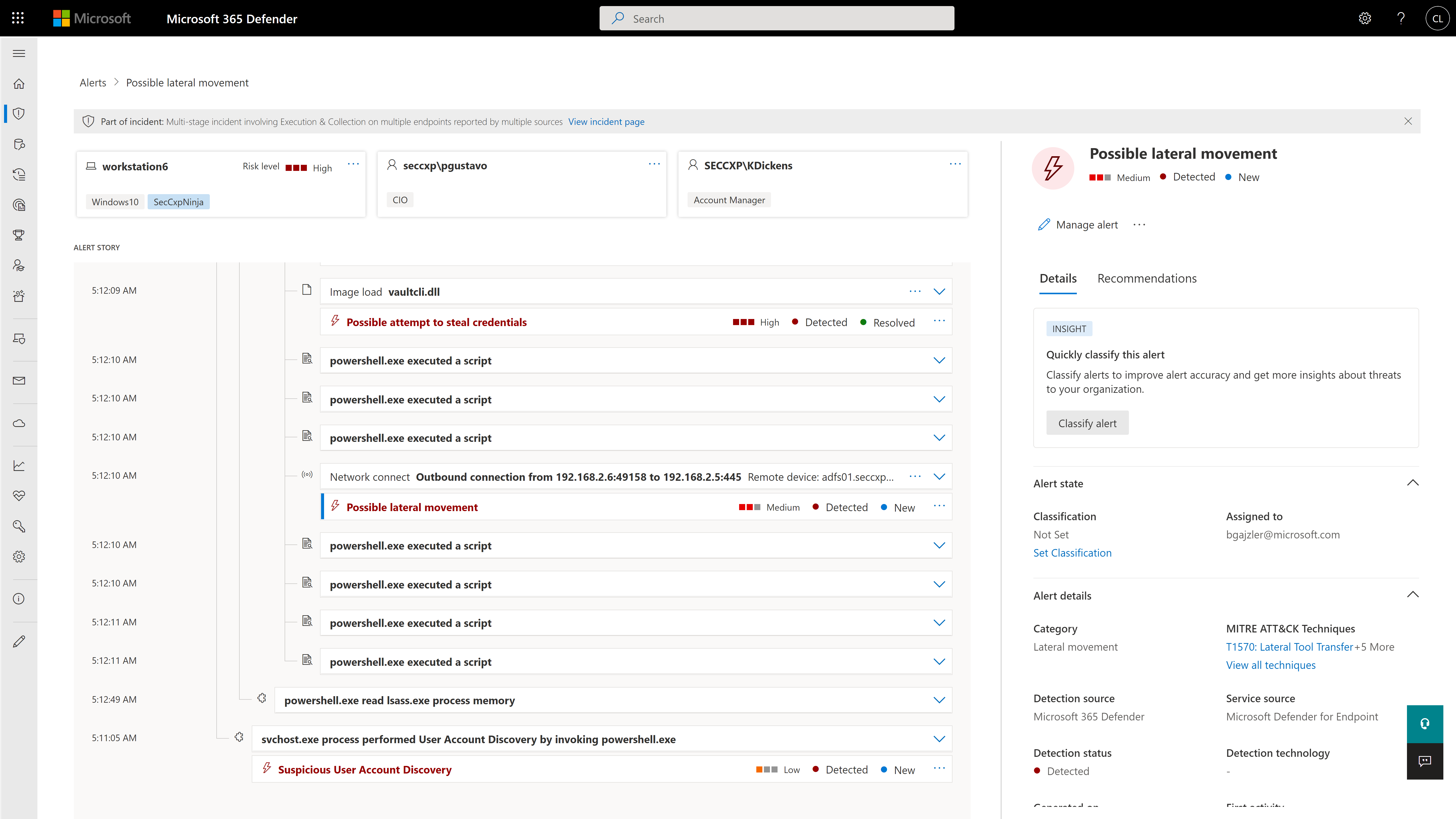
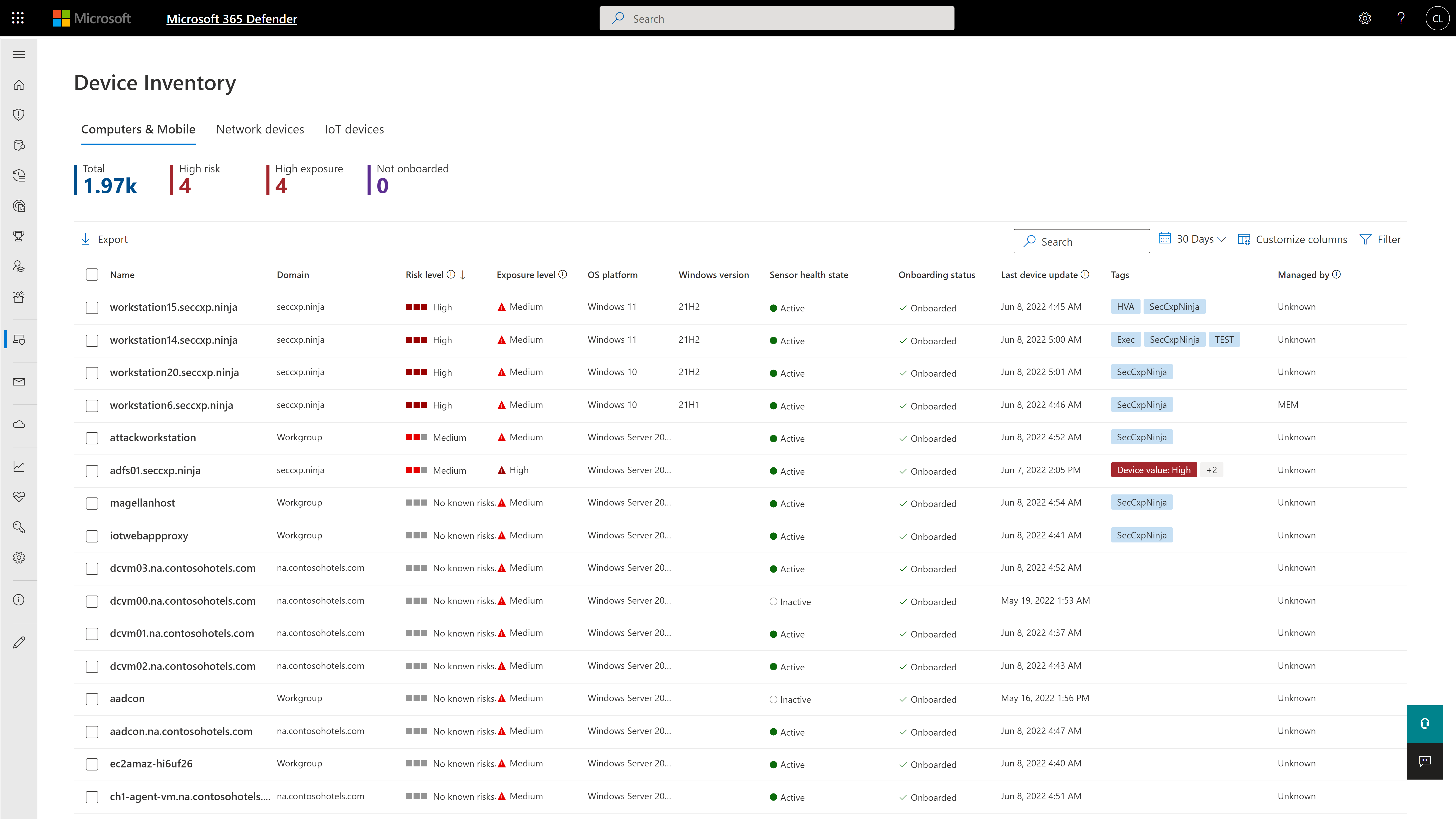
Microsoft Defender for Endpoint (formerly Microsoft Defender ATP) is a holistic, cloud delivered endpoint security solution that includes risk-based vulnerability management and assessment, attack surface reduction, behavioral based and cloud-powered next generation protection, endpoint detection and response (EDR), automatic investigation and remediation, managed hunting services, rich APIs, and unified security management.
$2.50
per user/per month
Pricing
ThreatDown, powered by Malwarebytes
Microsoft Defender for Endpoint
Editions & Modules
Core
$345
per year per endpoint (minimum 5)
Advanced
$395
per year per endpoint (minimum 5)
Elite
$495
per year per endpoint (minimum 5)
Ultimate
$595
per year per endpoint (minimum 5)
Academic
$2.50
per user/per month
Standalone
$5.20
per user/per month
Offerings
Pricing Offerings
ThreatDown, powered by Malwarebytes
Microsoft Defender for Endpoint
Free Trial
Yes
Yes
Free/Freemium Version
No
No
Premium Consulting/Integration Services
No
No
Entry-level Setup Fee
No setup fee
No setup fee
Additional Details
Optional Add-Ons include server and mobile device protection. Server protection ranges from $129 to $179 per annum depending on service tier. Mobile security is $10 per device, no matter the service tier. A 10% discount is offered for choosing a two-year billing plan.
—
More Pricing Information
Community Pulse
ThreatDown, powered by Malwarebytes
Microsoft Defender for Endpoint
Considered Both Products
ThreatDown, powered by Malwarebytes
Verified User
Anonymous
Chose ThreatDown, powered by Malwarebytes
ThreatDown, powered by Malwarebytes, performs so many more functions than simple, traditional anti-virus tools. The cost is less than most others too! The centralized deployment and management console is super-easy to use, yet highly functional. In this day and age, I’m a bit …
Selected this because it seemed like a good solution. After 2 years of using, I find that the system had not been working for FOUR MONTHS! even though system reported that ALL WAS WELL
It's no contest. Cisco AMP, Umbrella and Endpoint use vast amounts of resources and provide little protection when compared with Malwarebytes. One client recently replaced Cisco with MWB and found over 7,300 vulnerabilities on 352 endpoints, including 120 listed as Critical …
I think Malwarebytes Endpoint Protection is hands down better from any point of view other than price. Malwarebytes is a little bit more costly than Webroot. However, Malwarebytes detects more threats, protects against more malicious URL's, allows more in customization of …
In the past, we've used McAfee, ESET, and Trend Micro. Each of these has their pros and cons, and all are variably priced. They are all overall "good enough" antivirus software, but what makes Malwarebytes Endpoint Protection stand out more is that it's more affordable, it's …
We chose Malwarebytes Endpoint Protection after reviewing hundreds of reviews from peers and calculating to cost of ownership and ROI which Malwarebytes handily beat any potential competitors we dealt with. They really worked with us to come up with a plan and a price that …
Avast and Bitdefender. Malwarebytes works well in the background, with little input require from the user. The software does not seem to slow down the network while it is scanning. The increase in security level justifies the upfront cost of implementing this type of protection.
In my experience, Malwarebytes doesn't compete with other endpoint protection products but it complements them for a more effective defense in depth strategy. While it is possible to run Malwarebytes as your only endpoint protection solution, I have found it best to use it in …
We have not used any other product consistently. We occasionally have used SuperAntiSpyware as an added scanning too, but do rely on or install it on our machines.
It provides excellent cover in terms of ransomware, and when running various testing tools to see the effectiveness, it scored much more highly than our existing product. It also has excellent recovery options, with the roll back feature. I selected it because of the experience …
I stick with Malwarebytes Endpoint Protection because of the simplicity of deploying and managing the product and policies. Most importantly - because it works to defend our network and systems so well that we have had little to no need for intervening on any items. …
We used some of the other products as our endpoint protection and they were not up to today's threats. Malwarebytes found threats the others let in from the 1st day we used it. We knew right then we had made the right choice.
Malwarebytes Endpoint Protection is dedicated to protecting against and the remediation of malware. No other product does it better. Their consumer version of the software is often refereed to by other security products and security researchers to clean infected systems. It …
We have not used anything else other than Microsoft Defender for Endpoint. Maybe we've used other antivirus software like Sophos and things like that. They're just not all encompassing and that's why we moved to use this product.
I have been working with customers that they are transitioning from Sentinel One, CrowdStrike to Defender for Endpoint, right? So I think it's because they see the value in the product and also they see how much they can save in terms of the cost for companies because they …
We previously used CrowdStrike on our servers. However, the seamless integration of Microsoft Defender (MD) with XDR and the entire Microsoft ecosystem led us to choose Microsoft Defender for Endpoint (MDE).
What we love more about this product is the way this pro gets integrated into the other family of solutions, especially Defender for Identity or the XDR solutions. We think that the market, the customers are full of unattended consults coming out from different vendors and that …
Microsoft Defender for Endpoint is more advantageous in our windows heavy infrastructure and it was unparalled in the ease of integration with windows endpoints. Security breaches, system crashes and outages with other competitors like Crowdstrike made it easier for us to go …
CrowdStrike Falcon is also a good solution for endpoint protection which offer EDR Soultion, threat hunting and AI driven threat protection. Sophos Intercept X combines next-gen antivirus with advanced EDR capabilities with its deep learning technology, exploit prevention, and …
Microsoft Defender for Endpoint is unique for its effortless deployment into the Microsoft ecosystem, where it taps the broadest set of threat intelligence from more than 1.5 billion endpoints. Its state-of-the-art AI-powered automated investigation and remediation minimize …
We started onboarding macOS devices on jamf and started managing it. Because Defender for Endpoint is not working as expected for and compared to price and functionality we are switching from it.
CrowdStrike and SentinelOne. CrowdStrike, you have to deploy it, but it's the defender, it's already baked into the operating system. Same thing with SentinelOne.
I'm not familiar. It's just been one year plus that I started using, so I've just started using Defender, so I really don't know how to compare it with others.
I would say at the end all they are doing the same, but with the benefit that we don't need to install anything. So it's just kind of enabling and then the functionality is available, so other products need to be installed, which is not necessary with the defend
We use Defender in the cloud. We are currently using Defender in the cloud and also evaluating the XDR solution for programmatic. It's just arguments, the defense in depth. You have Defender Endpoint and then you have what you have in the cloud as well, so it's just augmenting …
Before using Defender for Endpoint, we basically had the starter version of the Microsoft product, which comes prebuilt into the system. We had them using in the initial run, but then what usually happened was the employees started disabling it, and that usually made, we guys …
I am a big fan of Tanium actually, so I think it is good. Tanium seemed like it was maybe a little bit easier, but maybe the capability was lacking. Maybe that's the reason why it seems like Defender for Endpoint might be a little harder to understand. There might just be more …
CrowdStrike Falcon, and Sentinel One are other big ones that we use a bit. Cisco Secure Endpoint we've evaluated as well. Cisco Secure endpoint capability-wise doesn't match up to Defender, SentinelOne, and CrowdStrike both do, but the cost profiles are a bit higher. So most of …
I would say not to name specific company names, because I'm a partner with one of them and that's the account that I work with. But I use some competing solutions that I would say are pretty heavy from an overhead perspective with the agent that has to be installed in the …
I would absolutely recommend Malwarebytes Endpoint Protection to a colleague and I have recommended it to many of my peers in the IT world. Malwarebytes is well suited for any environment that requires protection from mal/ransomware which is most companies these days. In particular for companies that host their own big data that the operation of the company relies on. The only place Malwarebytes Endpoint Protection may not be AS appropriate would be one where there is near zero reliance on computers, networks and data.
Because of its integration with Windows, it is very easy to deploy and manage. Any IT department should be able to leverage the software and interface. The admin portal provides weighted recommendations that comprise the Secure Store, offering admins, security teams, and business owners valuable insights into their security footprint without requiring a strong security background. The software would be ideal for small and mid-sized businesses that cannot dedicate resources to security. Larger enterprises would also benefit, but may require the enhanced license.
The biggest plus with this software is that you can manage all the clients from a management console. You can push the install/updates through it. If the client cannot connect to the management console, then it will update directly from their website. This means you are always up to date and protected.
The software on the client machine has very low overhead so it doesn't affect the performance.
You can create policies based on the types of users or by the department. You can customize these policies so it will let you micro-manage the clients.
One, it's crazy lightweight, so compared to some of the competitors that we also have used with our security services, it's really lightweight and so I don't have a lot of overhead on the system that it's running on.
So the fact that Defender for Endpoint still works with signatures is actually, I don't know, a little difficult for us because, I mean, since Microsoft trusts those signatures, you can easily inject code. And we've done it many times. To show that you can inject code through vulnerabilities like CV 2013, 99, and 33 but still keep the signature. So because of the trust of those signatures, the malware just kind of slides into the environment without Defender knowing. That's the first part. The second part is that the behavioral analysis is not precisely its Prime. It's not Defender's best capability for endpoints. So, Defender does not identify all behaviors considered by other EDRs in the market.
When I first used the tool in my home systems MANY years ago, I wished for a Business version. I was once at a focus group for a major antivirus company, and one attendee’s feedback to “what could we do better?” was “buy out MalwareBytes and add it to your tool”. I’ve used the Business version since it first became available, and have continued to be a dedicated user through the many iterations and improvements
Microsoft Defender is closely catching -up in market with existing competitors they have added DLP endpoint & DLP Network and Cloud DLP solution last year with OCR capabilities. I would say Microsoft Defender is not legacy Vendor in end point security, the need to learn from other vendors in market and focus on new XDR technologies, which is going to be new battle for all vendors
It simply works. It doesn't require the hand-holding and monitoring that some other solutions do. It's simple to deploy and maintain, and adding custom content such as Exceptions require minimal effort. I’ve had to add a few exceptions for internal-use, in-house-developed tools, but it’s quite simple to do so within the online interface
Because in terms of the usability is easy to understand, it's easy to manage, obviously you need to have specific skills to do that, but I would say that even the console and the product is walking through the flow that you are looking for on this console.
Microsoft Defender for Endpoint chugs along just fine no matter what we throw at it and what systems it's running on. It doesn't take up a lot of resources either, so that's welcomed.
Whenever I've had a query for the support team, they have got back to me very quickly, and given me very well detailed advice on fixing whatever the issue I had was. They also pointed me to help documents and such where I could find more information if I needed
Overall support is really good for this product. Since it's a Microsoft product, you will get good support from a number of different resources, including knowledgebase articles on the web, support from Microsoft technicians, and documentation (which tends to very thorough). Also, there is a vast user support community for this product, so user support forums would also be another valuable channel to get help if needed. I don't envision too many people will have issues/problems with the product, as it tends to run good overall.
I first implemented this more than 10 years ago, when it required an in-site setup with SQL Server (or SQL Express), and even that was pretty easy. With the move to centralized web management some treats ago, it’s become even easier to deploy
Deployment was handled by our team here and everything went pretty smoothly. We did have a few hiccups in our test group, but that only took a bit to get ironed out.
I think Malwarebytes Endpoint Protection is hands down better from any point of view other than price. Malwarebytes is a little bit more costly than Webroot. However, Malwarebytes detects more threats, protects against more malicious URL's, allows more in customization of policies, has better administration GUI, and has better means of implementation.
Microsoft Defender for Endpoint offers strong integration with Microsoft 365 and Azure services, which provide a unified security experience. While McAfee Trellix is known for solid antivirus, Microsoft Defender excels in integration in the ecosystem.